
Greetings, relatives.
A lot of news out there. Thanks for stopping by Indian Country Today’s digital platform.
Each day we do our best to gather the latest news for you.
Okay, here’s what you need to know today:
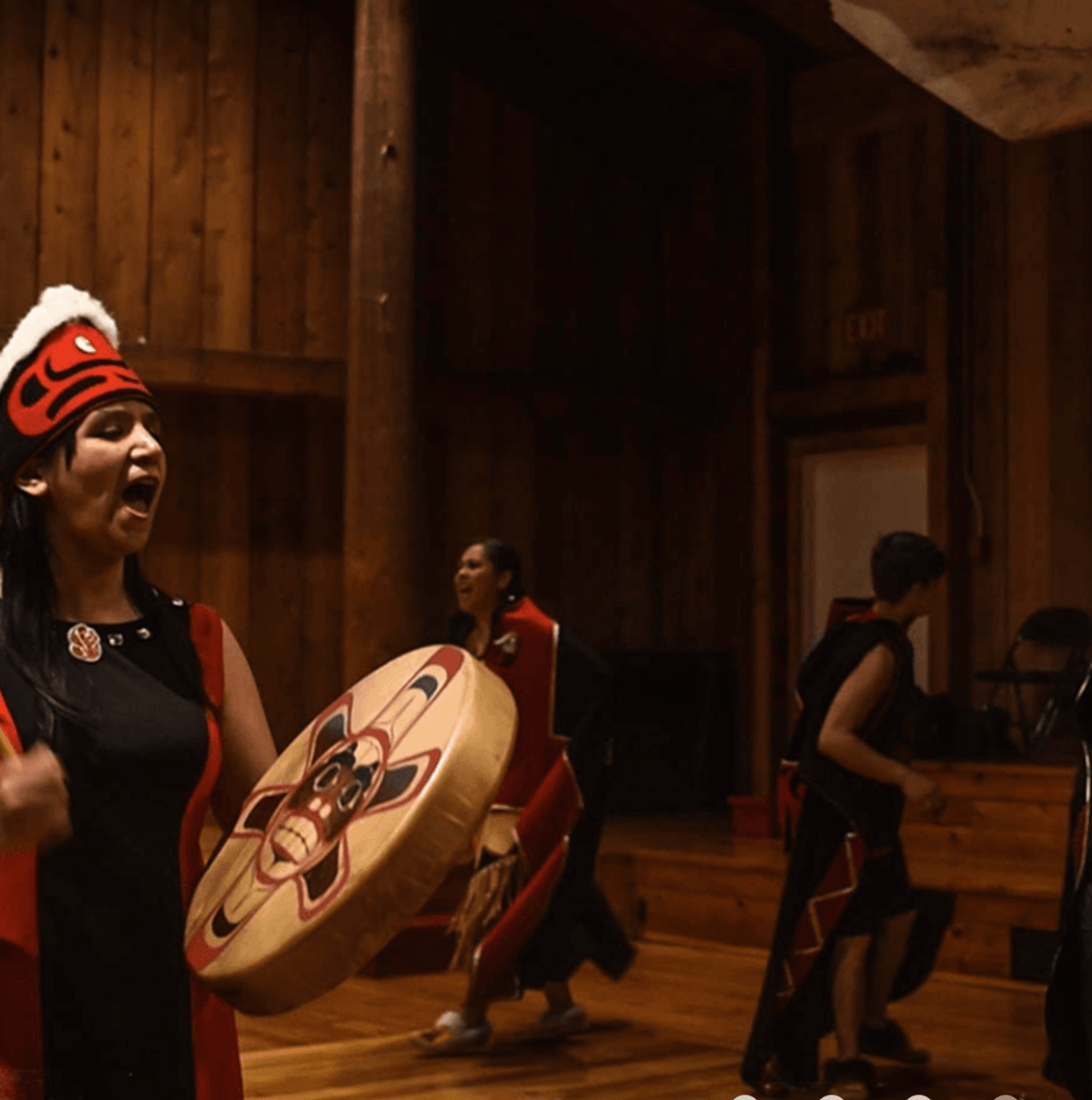
At first glance, Metlakatla looks similar to many of the other villages in Southeast Alaska: glacier-cut coastlines, dense temperate rainforests, dramatic mountains in the backdrop. But locals know better — there is something distinctly different about the place. Spend enough time there, and you’ll notice it too. Metlakatla Indian Community is the only federal reserve in Alaska, and is not a part of the Alaska Native Claims Settlement Act.
“It’s not just a feeling or perception. ANCSA is a fundamentally different system than a reservation system,” said Gavin Hudson, Tsimshian, who is the Metlakatla Field Representative to the Bureau of Indian Affairs and was previously on the Metlakatla Tribal Council. “And those differences are reflected in how a community views itself.”
Fifty years ago, the community of 1,400 was caught in the crosshairs of a monumental decision: should they keep their reserve status, or should they join other Indigenous Alaskans as part of the Alaska Native Claims Settlement Act?
If they had chosen to participate in the ANCSA system, they would have received a sizable payment, and the means to create a village corporation and regional corporation. They also would have been granted a significant portion of the surrounding acreage. However, the way they could have interacted with this land would’ve changed — their reserve status would have been revoked, and they would have to go through the corporations to manage the land, not their own tribal government… READ MORE. — Meghan Sullivan, Indian Country Today
—
SUPPORT INDIGENOUS JOURNALISM. CONTRIBUTE TODAY.
—
LISTEN to ICT’s newscast on the go
ARLINGTON NATIONAL CEMETERY, Virginia — The mid-Atlantic air is in the crisp 40s at 7 a.m. Dew sits on cars and the cool air is refreshing to the lungs. The grass, white steps and walkway to the Tomb of the Unknown Soldier sparkle when the golden sunrise hits them.
It’s quiet at the Tomb of the Unknown Soldier Plaza. The public and press can only whisper.
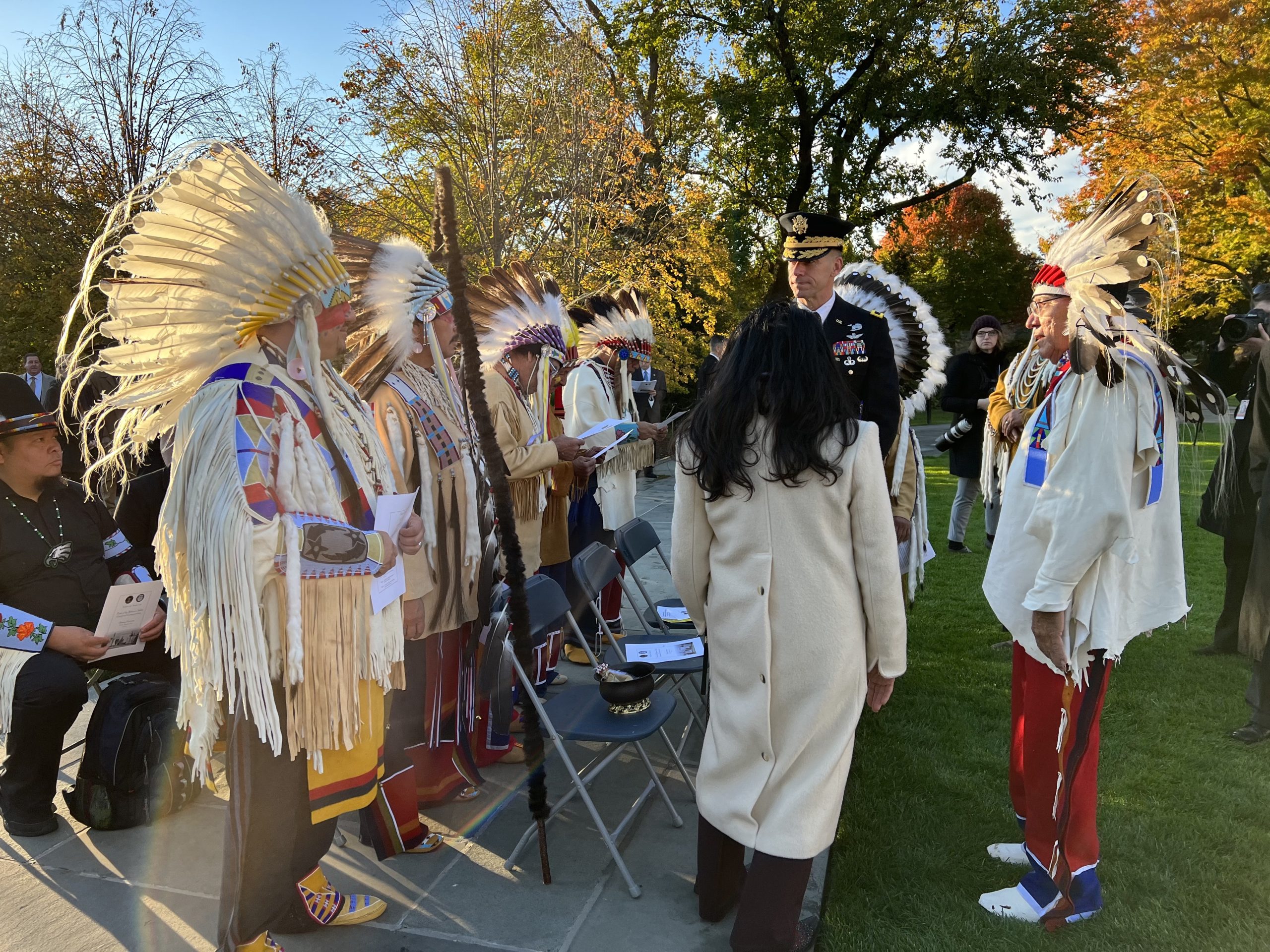
One by one, eight members of the Chief Plenty Coups Honor Guard from Pryor, Montana, placed a flower down in front of the Tomb of the Unknown Soldier and saluted the unknowns Tuesday morning. The eight members are descendants of Chief Plenty Coups.
Dozens more Crow Nation representatives, including students from Plenty Coups High School, follow suit. Jingling from the regalia can only be heard in the silence as they line up to lay down a flower.
It’s the first time in 96 years the public and visitors are allowed to approach the Tomb in the plaza. READ MORE. — Jourdan Bennett-Begaye. Indian Country Today
The Biden administration is weighing the market consequences of closing down Enbridge Line 5, an aging pipeline that carries Canadian oil and gas for 645 miles through Wisconsin, Michigan and then into Canada.
White House deputy press secretaryKarine Jean-Pierre said during a Nov. 8 press briefing she expects the U.S. and Canada to “engage constructively” in discussions about Line 5.
The discussions arise as the U.S. Army Corps of Engineers is preparing an environmental impact statement on Enbridge’s proposal to run a replacement segment through a tunnel that would be drilled beneath the Straits of Mackinac, which connects Lake Huron and Lake Michigan.
The announcement follows a Nov. 4 letter from Michigan’s 12 federally recognized tribes to Biden urging him to “lend unequivocal support to our efforts … to decommission the Enbridge Line 5 pipeline.”
The tribes have joined with Michigan’s Democratic Gov. Gretchen Whitmer, a Biden ally, and Attorney General Dana Nessel, in fighting the pipeline. READ MORE. — Mary Annette Pember, Indian Country Today
Rodney Butler was elected, for the fifth consecutive time, as chairman to the Mashantucket Pequot Tribe in Connecticut, confirmed by Public Affairs Director Lori Potter. He will serve for three years and has been since 2010, according to The Day.
He was also elected to a seventh tribal council, a position he’s held since 2003.
For more recent tribal election results, click here.
—
—
‘Life below Zero‘ cast member Ricko DeWilde explains what it takes to film a reality tv show. Plus, Jade Begay tells us about the COP26 summit in Scotland
In western Alaska, seven Yup’ik hunters, including a teenager, were stranded for a week after the Yukon River suddenly froze making boat travel impossible. A 3-day hunting trip ended up taking 12 days. They were rescued by a U.S. Coast Guard helicopter airlift.
The hunters planned to make a 120-mile trip from their home village of Pilot Station to the Bering Sea in one day, spend a day hunting, and return on the third day. They were all experienced hunters and had made the trip many times.
Initially all went as planned. The group had traveled through open water to the mouth of the Yukon River, camped overnight, and gone hunting. They camped a second night, and that’s when the trouble started, hunter Rex Nick, Yup’ik said.
“When everybody woke up, when we started moving around, I went to check, start up my motor. And I noticed my boat didn’t even, you know when you step in a boat, it moves around. It didn’t even move around. I tried bouncing on it. Nothing happened,” Nick said. READ MORE. — Joaqlin Estus, Indian Country Today
—
FOLLOW ICT ON SOCIAL MEDIA: FACEBOOK, TWITTER, INSTAGRAM, TIKTOK.
—
At the East Lawn Palms Mortuary & Cemetery in Tucson, Arizona, 11 years after Chris Moon died, his mother Marsha Begay Moon reflected on his legacy and the beautiful energy he brought into the paths he crossed.
She says continuing to share his story brings her heart joy.
“You could tell there was something unique and special about him,” Marsha said.
When it comes to Chris Moon’s legacy — who he was and the impact he left on this world — the short time with his mother in the cemetery only scratched the surface.
His energy was enormous and welcoming, and described as a “light” by those who knew him. READ MORE. — Carina Dominguez, Indian Country Today
- Are carbon markets the new gaming for tribes?Communities weigh whether economic benefits offset concerns.
- Latest New Mexico K-12 curriculum controversy: The proposed standards represent a new frontier in the clash over ‘critical race theory.’
- Indian Education Policy renewal ‘a step in the right direction’:The policy was adopted by the Arizona School Board of Education in 1985, then revised and adopted again in 2002. On Oct. 25, the board renewed the policy.
- Infrastructure bill includes investment in tribal nations:The Infrastructure Investment and Jobs Act heads to the president’s desk.
- ‘We’re here to call for climate justice’: ‘We’re drops in the ocean, but eventually, those drops add up to something big.’
- Post Office announces new postal stamps featuring Ojibwa artist George Morrison.
- Artist mixes street wear and Indigenous design, birch bark plague masks.
- Here We Are: Reclaiming Indigenous Identity in America.
We want your tips, but we also want your feedback. What should we be covering that we’re not? What are we getting wrong? Please let us know. Email dwalker@indiancountrytoday.com.


