
Greetings, relatives.
A lot of news out there. Thanks for stopping by ICT’s digital platform.
Each day we do our best to gather the latest news for you. Remember to scroll to the bottom to see what’s popping out to us on social media and what we’re reading.
Also, if you like our daily digest, sign up for The Weekly, our newsletter emailed to you on Thursdays. If you like what we do and want us to keep going, support and donate here.
Okay, here’s what you need to know today:
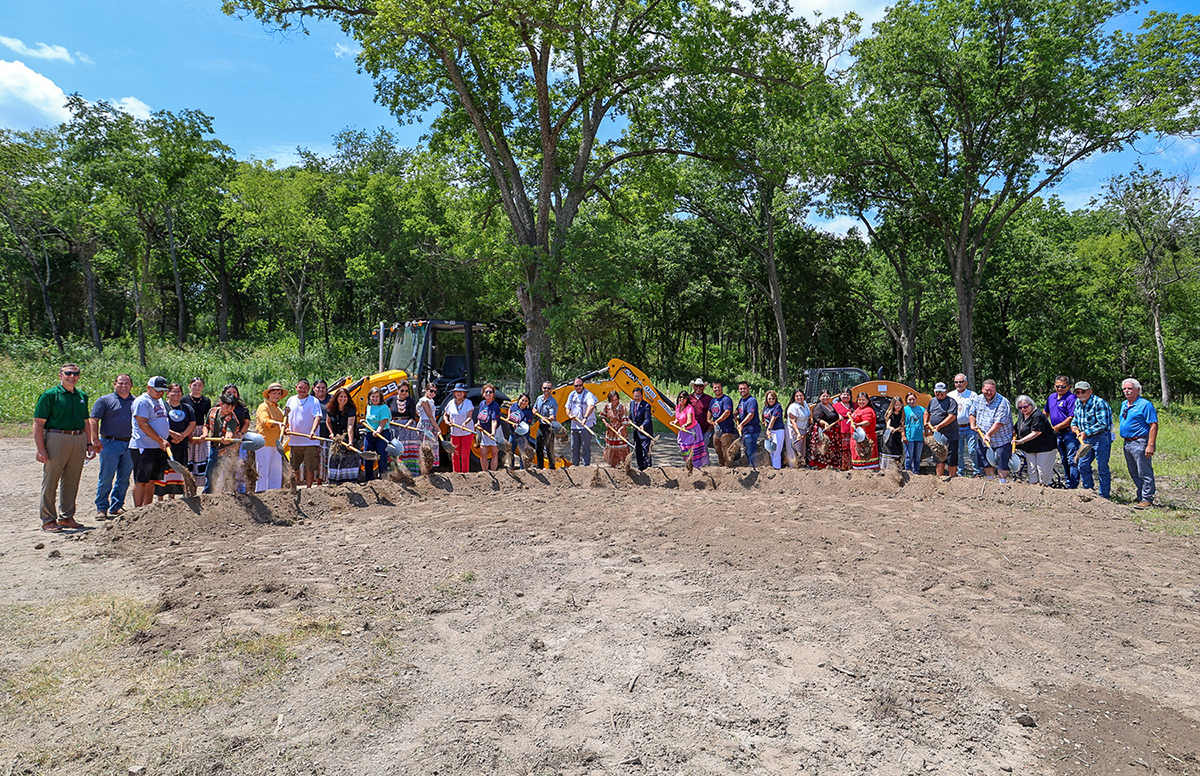
The Cherokee Nation broke ground Friday afternoon on a new park to be named after the late Chief Wilma Mankiller.
Cherokee leaders, and the family of Mankiller, hope the park will bring the Tahlequah community together in the spirit of Gadugi, which means “working together” in the Cherokee language. Gadugi is a Cherokee value that Mankiller emphasized during her time as chief.
“Every one of our values are important because they’re all wrapped in love,” said Cherokee Deputy Chief Bryan Warner. “To understand what it means to love, when maybe the rest of the world doesn’t love us… nobody in the modern world embodies that like Principal Chief Wilma Mankiller.”
The $10 million, 15-acre park will be built on property that was previously home to a septic manufacturing company. READ MORE — Felix Clary, ICT + Tulsa World
SUPPORT INDIGENOUS JOURNALISM. CONTRIBUTE TODAY
Around the world: Forced evictions undermine Maasai spirituality and sacred spaces in Tanzania, an Inuit organization helps celebrate National Indigenous Peoples Day in Ottawa, and a $1.5 million initiative aims to enhance Indigenous businesses in Queensland
TANZANIA: Maasai people faced forced evictions
The Tanzanian government issued new eviction notices in March affecting Maasai communities, with one notice in the Simanjiro district for the expansion of Tarangire National Park and another to eight villages for the expansion of Kilimanjaro International Airport, Mongabay reported on June 22.
So far, about 20,000 people from eight villages have been evicted and as many as a million people could be impacted if the government’s eviction plans continue for 2024, according to the Pastoralists Indigenous Non-Governmental Organization’s Forum, known as PINGO’s Forum. READ MORE — Deusdedit Ruhangariyo, Special to ICT
In a series of public meetings stretching from the Navajo Nation to Albuquerque, public officials and company representatives have unveiled a picture of a new hydrogen energy industry being built in the northwest corner of New Mexico.
The presentations reveal hydrogen production, transportation, power generation and carbon sequestration projects arcing across the Navajo Nation to Farmington, New Mexico, and down to the Interstate 40 corridor between Gallup and Albuquerque.
Most of the projects are underway, and it’s clear they’ll rely on fossil fuels.
Tallgrass Energy sits at the center of all this activity and has the backing of the state’s biggest political player, New Mexico’s governor. The Denver-based company operates more than 7,000 miles of natural gas pipelines stretching from Oregon to Ohio, and it’s going all-in on creating the necessary pieces of a new economic base in New Mexico’s second-largest fossil fuel producing region. The region’s natural gas holds the key to many of the projects. READ MORE — Capital & Main
Indigenous students enrolled in schools run by the Bureau of Indian Education (BIE) will have access to more comprehensive, culturally relevant agricultural training and education as part of a new partnership the BIE established with the Native American Agriculture Fund (NAAF).
“This partnership furthers BIE’s commitment to provide a high-quality, culturally relevant education while empowering Native communities and paving the way for a brighter future in Indigenous agriculture,” Assistant Secretary for Indian Affairs Bryan Newland said in a press release.
The Native American Agriculture Fund is a private, charitable trust created by the settlement of the class-action lawsuit Keepseagle v. Vilsack, according to its website. The fund provides grants to eligible organizations for business assistance, agricultural education, technical support, and advocacy services that support Indigenous farmers and ranchers.
“Agricultural education is a fundamental focus for NAAF, offering a pathway for students, producers, and Native communities to engage in tribal agriculture, sustain food systems, bolster credit and lending opportunities, and support tribal economies,” Native American Agriculture Fund CEO Toni Stanger-McLaughlin said in a press release. READ MORE — AZ Mirror
Sign up here to get ICT’s newsletter
This month, hundreds of Tlingit, Tsimshian and Haida tribal members gathered in Juneau for Celebration, a four-day, biennial cultural festival.
As they walked to Juneau’s convention center, attendees passed a black banner advocating “LandBack,” or the return of land to Alaska Native tribes.
Hundreds of miles away, in Anchorage, a federal judge is considering a legal case that could allow tribal governments, rather than Alaska Native corporations, to take authority over significant amounts of Alaska land.
Attorneys argued the case, known as Alaska v. Newland, in early May, and U.S. District Court Judge Sharon Gleason is preparing a ruling. READ MORE — Alaska Beacon
- ‘Dark legacy’: Boarding school commission gains ground in US Senate: A bill to create a Truth and Healing Commission moves to the Senate floor for consideration as another proposal moves through the House
- New sovereignty institute offers opportunity to study tribal law, government: Oklahoma City University School of Law assistant dean: ‘We are going to be the only kind of institute in the state and region that is really focusing on tribal sovereignty issues, as well as a place for research and support for sovereignty’
- ‘The Avengers’ Lakota dub hits Disney+: Project members share their on-set experiences and their hopes for Lakota youth
- How Supreme Court’s Florida ruling will impact U.S. betting
- Kinectify Unveils New Service on Microsoft Cloud for Sovereignty for Tribal Nations
- Justices seem set to allow emergency abortions in Idaho for now, a prematurely posted opinion says
We want your tips, but we also want your feedback. What should we be covering that we’re not? What are we getting wrong? Please let us know. dalton@ictnews.org.

ICT is owned by IndiJ Public Media, a nonprofit news organization. Will you support our work? All of our content is free. There are no subscriptions or costs. And we have hired more Native journalists in the past year than any news organization ─ and with your help we will continue to grow and create career paths for our people. Support ICT for as little as $10. Sign up for ICT’s free newsletter

