
Richard Arlin Walker
Special to ICT
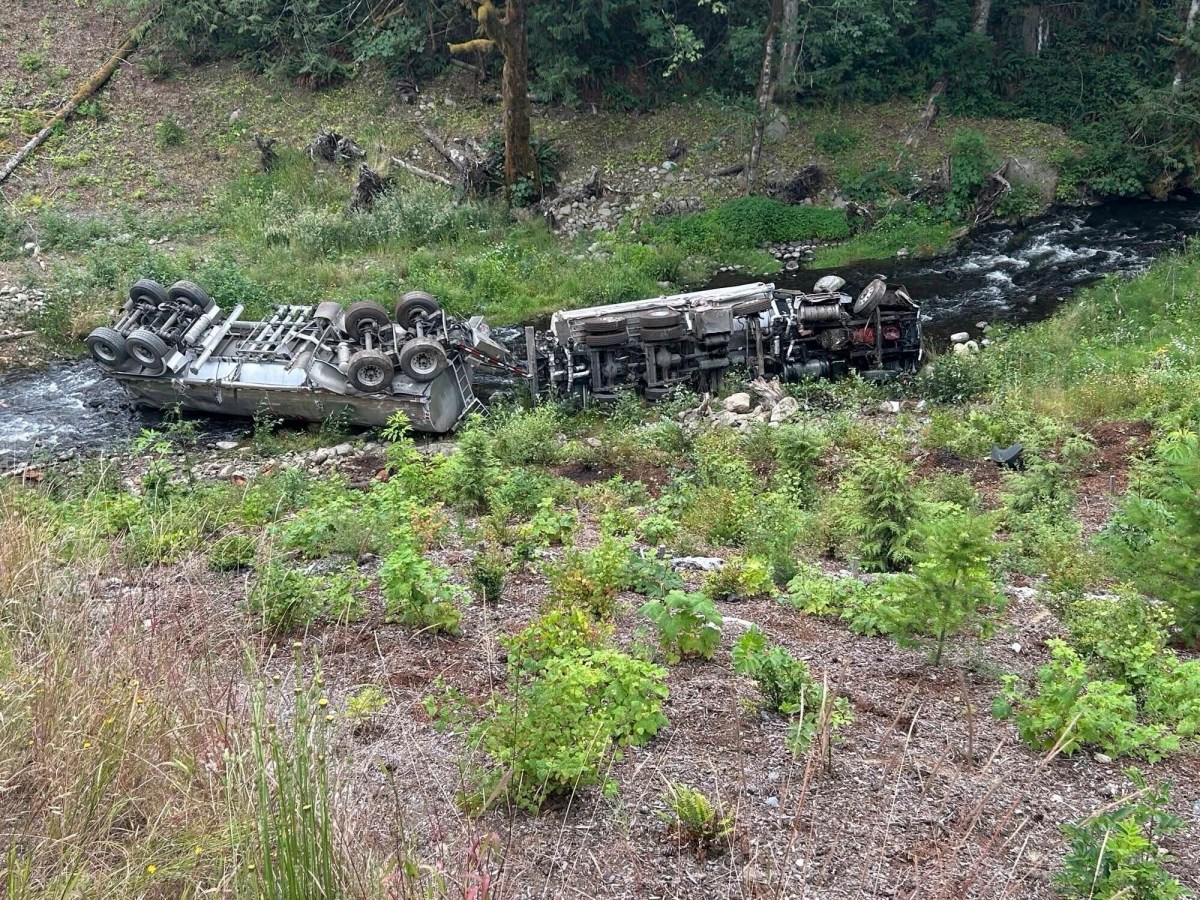
A tanker truck spill on Friday, July 18, in a creek that feeds into the Elwha River, killing several thousand salmon fingerlings in the creek and river, Lower Elwha Klallam Tribe Chairwoman Frances Charles told ICT.
Some 1,400 gallons of diesel and gasoline leaked from the truck, which overturned on Highway 101 into Indian Creek, in the Olympic Peninsula of Washington state. Response was quick: First responders deployed boom downstream in an effort to contain the spread of fuel, and multiple agencies began cleanup and assessment of environmental impacts.
Responders included the Lower Elwha Klallam Tribe, Jamestown S’Klallam Tribe, Port Gamble S’Klallam Tribe, and Makah Tribe; U.S. Environmental Protection Agency, U.S. Fish and Wildlife Service, National Marine Fisheries Service, and Olympic National Park; Washington state departments of Ecology and Fish and Wildlife; Clallam County Sheriff’s Office and Clallam County Fire and Rescue; and Petro-Card, the tanker truck’s owner. Petro-Card hired a spill response contractor. Wildlife experts also went to the scene.
“Responders captured what they could, and we continue to monitor Indian Creek,” she told ICT on July 19. The shoreline where the Elwha River meets the Strait of Juan de Fuca didn’t appear to be affected, Charles said, although monitoring was ongoing.
As she spoke, Charles said the smell of diesel and gasoline was still in the air at 5 p.m. July 19.
The Department of Ecology reported air monitoring readings were “not at a level above human health and safety,” but advised people in the area to “still be mindful of symptoms like headaches or dizziness and seek medical attention if needed.”
Out of caution, the City of Port Angeles temporarily shut down its drinking water intake on the Elwha River.
Washington Gov. Bob Ferguson said the spill was a “heartbreaking” setback in salmon recovery efforts on the Elwha River.
“This is a devastating accident for Indian Creek and the Elwha River,” said Ferguson, who planned to visit the site. “This spill is nothing short of heartbreaking for local tribes and other Washingtonians who rely on clean, healthy rivers and streams for their food and livelihoods.”
Cleanup and containment
Investigators were working over the weekend to determine why the dual-trailer rig left the road and overturned into Indian Creek at about 11 a.m. July 18. One trailer contained an estimated 3,900 gallons of diesel and the other up to 6,000 gallons of gasoline, the state Department of Ecology reported.
The rig was lifted and removed from the creek at 5 a.m. July 19, and containment and recovery efforts and environmental assessments continued through that day and the next. Cleanup contractors placed containment boom, replaced absorbents, and identified areas where fuel could be recovered.
“Shoreline, wildlife, and aquatic resource assessments are ongoing,” the Department of Ecology reported. “Fish kills have been observed in the affected area. Crews are documenting and assessing the extent of impacts in coordination with Tribal and wildlife response teams.”
The spill occurred in a sensitive environment where forest meets the sea. Bald eagles live there, as do the American dipper, brown pelicans, spotted sandpipers and other river and migratory birds. The Elwha River is habitat for five species of salmon, as well as steelhead, cutthroat trout, and lamprey.
Looking ahead
The Elwha River salmon population has been rebuilding since two dams on the river were removed in 2011-2014. The century-old hydropower dams blocked fish passage and inundated important cultural sites. The dams’ removal opened 45 miles of upstream habitat to salmon, and sediments that had been trapped behind the dams have washed downstream and rebuilt the beach on the strait.
The spill happened less than two weeks before the Lower Elwha Klallam Tribe hosts the 2025 Intertribal Canoe Journey, an annual gathering of Northwest Indigenous canoe cultures. More than 100 canoes are expected to arrive at Elwha’s shores on July 31, followed by a five-day potlatch. Elwha last hosted the Canoe Journey in 2005, after the tribal nation and its allies got the state to stop a construction project that disturbed human remains and ancestral belongings at an ancestral village site known as Tse-whit-zen.
“We have gone through some challenges — the desecration of Tse-whit-zen and the removal of the dams,” she said. “We have developed relationships over the years and those relationships have called us and offered to help. The prayers are coming in. We will continue to be strong.”
*Correction: The fuel spill killed several thousand salmon fingerlings in Indian Creek and in the Elwha River in Washington state. The location where the dead fish were found was incorrect in an earlier version of the story.
