
Chris Lomahquahu
ICT
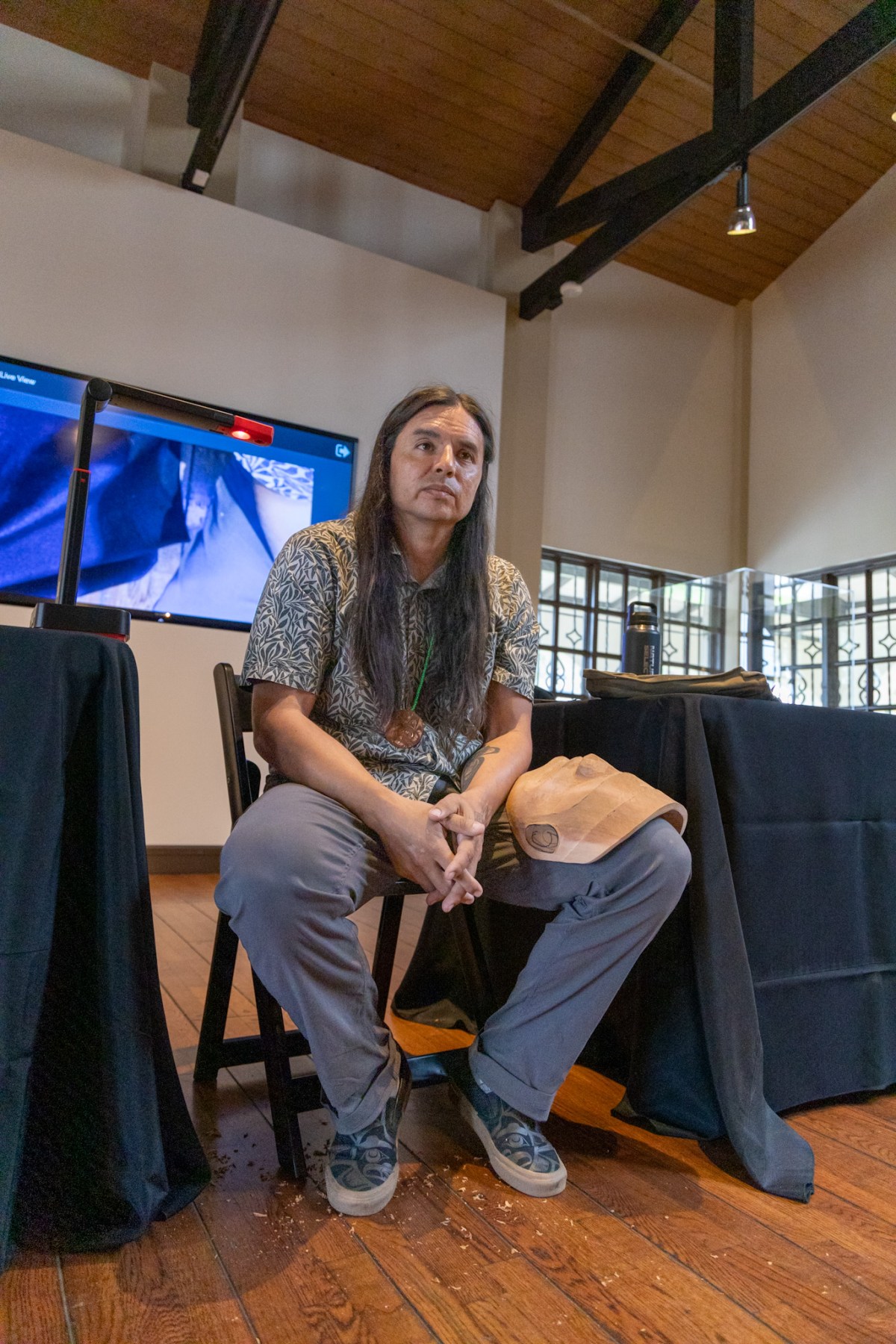
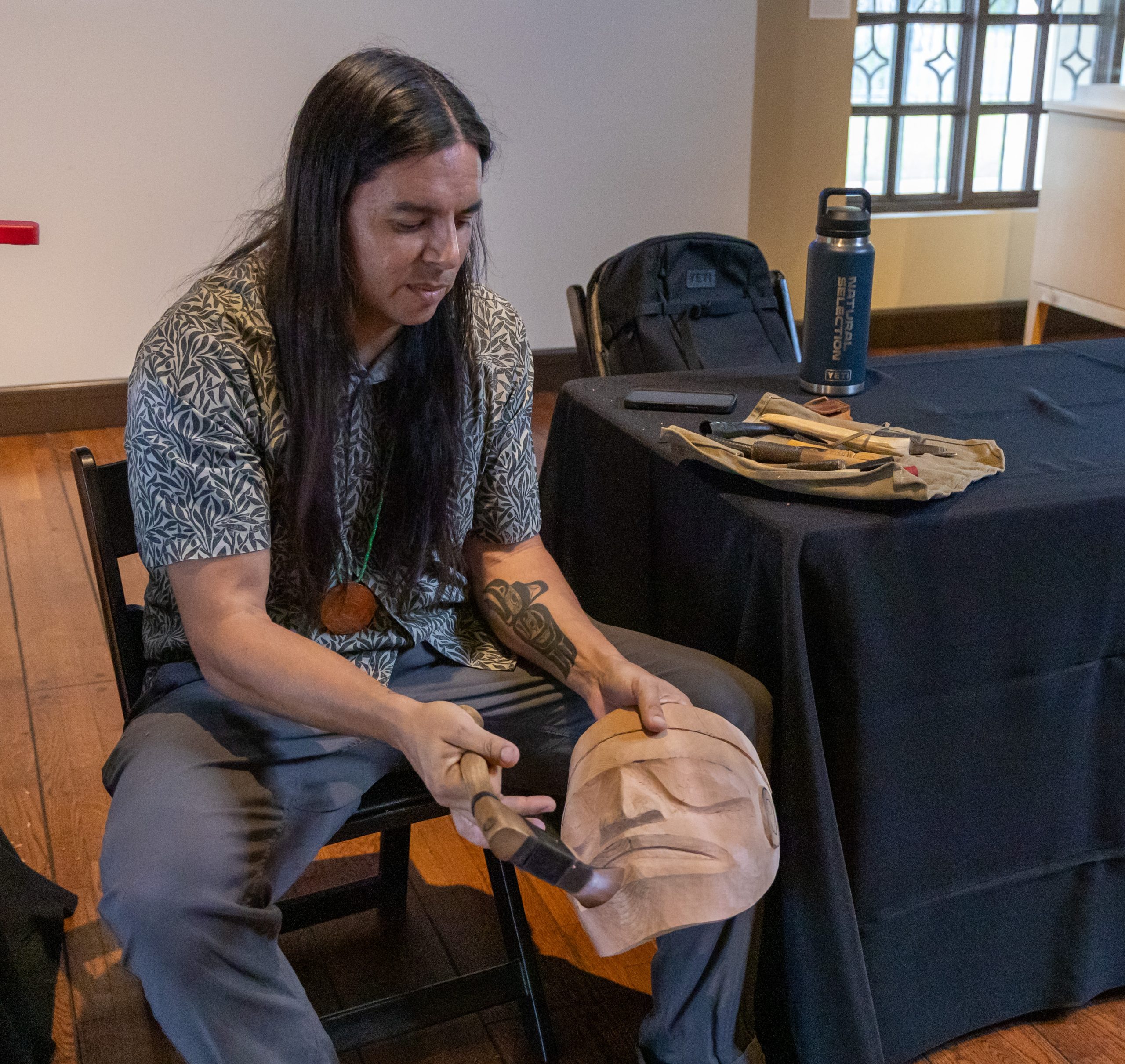
PHOENIX — James Johnson,Tlingit, shares his work to revise the culture of his people and other Indigenous groups along the Pacific Northwest and Alaska during a September speaking season at the Heard Museum in Phoenix.
Johnson has a personal connection to the artform as a citizen of the Tlingit Ch’áak’ Dakl’aweidi Clan (Eagle/Killerwhale), which is from Xutsnoowú Kwáan of Angoon, Alaska. He is also from a line of Tlingit of Dakl’aweidi’ Chiefs, who wore carved hats to denote their clanship, which is the inspiration for Johnson’s current pieces.
Much of Johnson’s work covers a variety of mediums, from wooden carvings of masks, sculptures, and canvas paintings of various animals associated with Tlingit culture, like the eagle, bear and killer whale.
Johnson was part of the Heard Museum’s First Friday event in September.
The Heard Museum also opened the “Early Days: Indigenous Art from the Michael Canadian Art Collection.” The traveling exhibition consists of artwork from the past and contemporary artists from throughout Canada by First Nations, Inuit and Métis people.
Despite being different in location and in art style from the Early Days exhibition, Johnson’s work is like many indigenous artists, who use their passed down knowledge to preserve the stories and culture. “The story can be told through everything, it can be told through a mask, a box, a paddle, a drum, it tells the story of our people where it came from,” said Johnson.
Much of Johnson’s artwork and carvings represents the generation’s examples that portray Tlingit life. It is a representation of the ocean, animals and clans that distinguish groups’ relations from each other.
“The history of our people was never written down, it was passed down generation to generation for thousands of years,” said Johnson of the carvings, which are made from red cedar.
Heavily influenced by the traditional form line style that utilizes bold and stylistic lines to form an image, Johnson said what differentiates the work of past generations to today’s artists, is the knowledge and resources used to create their work.
In the past, Johnson said, many of the color pigments were sourced from natural elements, some that were central to Tlingit culture. “Our ancestors used salmon eggs that were grounded up and mixed with color pigments to create their paint for their artform.”
Knowledge about how Tlingit artists made their works of art was on the fringes of disappearing due to the colonization of tribal communities across the United States and Canada. “By the turn of the 19th century, colonization had affected the Tlingit people, where everything that could have been done was done to destroy our culture and our way of life. So many pieces were destroyed and taken and scattered all over the world,” said Johnson.
He said as a Tlingit artist and carver, there is a bigger responsibility to create something that carry’s on a tradition that was started thousands of years ago. “These days, we are trying to pick-up the broken pieces that we have left and put them back together,” said Johnson.

Our stories are worth telling. Our stories are worth sharing. Our stories are worth your support. Contribute $5 or $10 today to help ICT carry out its critical mission. Sign up for ICT’s free newsletter.

