Connor Van Ligten
Indian Country Today
During her K-12 education, Jessica Lambert was usually the only Indigenous student in her grade. A citizen of the Choctaw Nation, Lambert often felt ashamed of her identity.
“Going through public education in a place where I was almost always the only Native kid in the school was horrible,” Lambert said. “I just never talked about being Native. It made me ashamed.”
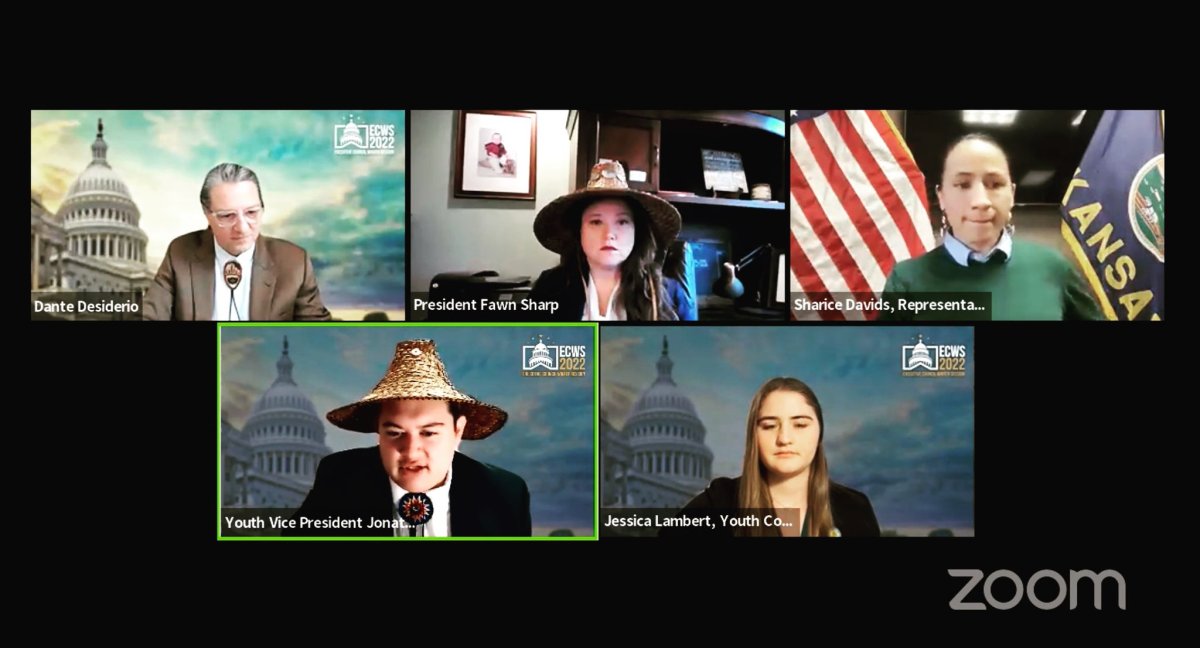
Those days for Lambert are over. Currently, she’s the co-president of the National Congress of American Indians Youth Commission which headed a leadership summit that aimed to train and develop the next generation of Indigenous leaders.
Together with Vice President Jonathan Arakawa, the NCAI Youth Commission led the Native Youth Leadership Summit last week. The NYSL’s goal is to train advocates and policy leaders for the next generation of Native youth.
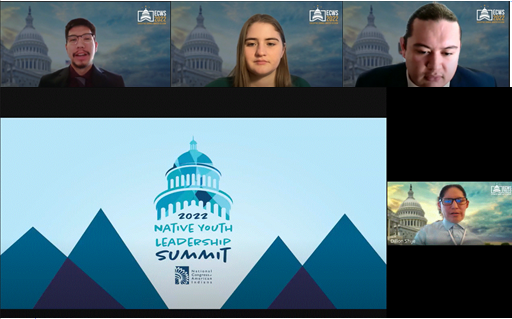
“This is really charting the course for Native youth, because not only are we growing as leaders, but we want our constituents to grow as leaders, and so we want to provide those resources to our constituents and all Native youth,” said Arakawa, Lower Elwha Klallam.
(Related: State of Indian Nations highlights progress, advocacy plans for the future)
Lambert and Arakawa named the three biggest issues facing Native youth — environmental assault, K-12 education, and mental health.
Healthy environments are core to survival, Lambert said. And education is important to instill pride in a Native youth’s own tribal identity.
“We are in a commodified educational system which is just like a can of processed food. It may taste good but it’s not good for you, and that is what’s represented in the U.S. educational system right now. Our full and accurate history is not being shared and the time is now that we changed the course,” Arakawa said.
Lambert believes teaching accurate Native history is not only important for Native students but for non-Native students to know as well. She cited how poor education could influence future political leaders and policymakers.
“Those are the [negative] narratives that non-Native people are hearing and those are the people who are going to be in positions of power in Congress,” Lambert said. “Even the presidency, and if they don’t know, how can we expect them to respect our sovereignty? To respect treaty rights? To fully understand who we are, as people and that we exist in the modern world?”
During the summit, NCAI offers numerous resources for teaching and training future leaders, from anything to teaching how to run meetings, educating them on various policy issues and informing them on how to participate in government and more. Various guest speakers also provide valuable insight on issues facing tribal nations.
“The entire youth commission had a hand in the meeting etiquette and professional development, and so teaching Native youth how to run a meeting professionally was really important, because our youth are going to be in our leadership positions sooner than later, and we need to provide those tools to our constituents on how to run a meeting smoothly,” Arakawa said.
All of this happened the same week as NCAI’s State of Indian Nations address. While the present Indian Country leaders are at work, the future generation is being developed.
“One great resource that we have is from Secretary Ben Schoonover from the Youth Commission,” Lambert said. “He has a template and guide on how to write a one-pager for policy issues, and I think that one is just super helpful. Especially when we think about how to present policy issues in a very digestible way, one-pagers are incredibly helpful in the policy area.”
A point of emphasis in the NCAI’s address was unity among tribal nations. In doing so, NCAI President Fawn Sharp, Quinault, said a better future for all tribal nations will be secured.
“Since the first time I stood here to deliver this address much has changed in the world around us,” Sharp said. “Yet when reality remains the 574 tribal nations, dozens of state-recognized tribal nations and millions of Native peoples across the United States are as strong and resilient as ever.”
Meanwhile, the summit is preaching that same unity to its young attendees.
“Regardless of where or how tribal nations come together, we’re stronger than ever. The NCAI is reflective of that, especially when we gather for our conferences. When all of our tribal nations are coming together it’s raising the roof,” Arakawa said. “It’s powerful to see all of our tribal nations come together, and our youth commission is pretty well spread out. No matter where I go in Indian Country, it reminds me of being at home with some of our elders because we all have the same teachings but done differently. We all come from a background of historical trauma, but we address that and confront it with multigenerational strength and resiliency.”

Our stories are worth telling. Our stories are worth sharing. Our stories are worth your support. Contribute $5 or $10 today to help Indian Country Today carry out its critical mission. Sign up for ICT’s free newsletter.