Felix Clary
ICT + Tulsa World
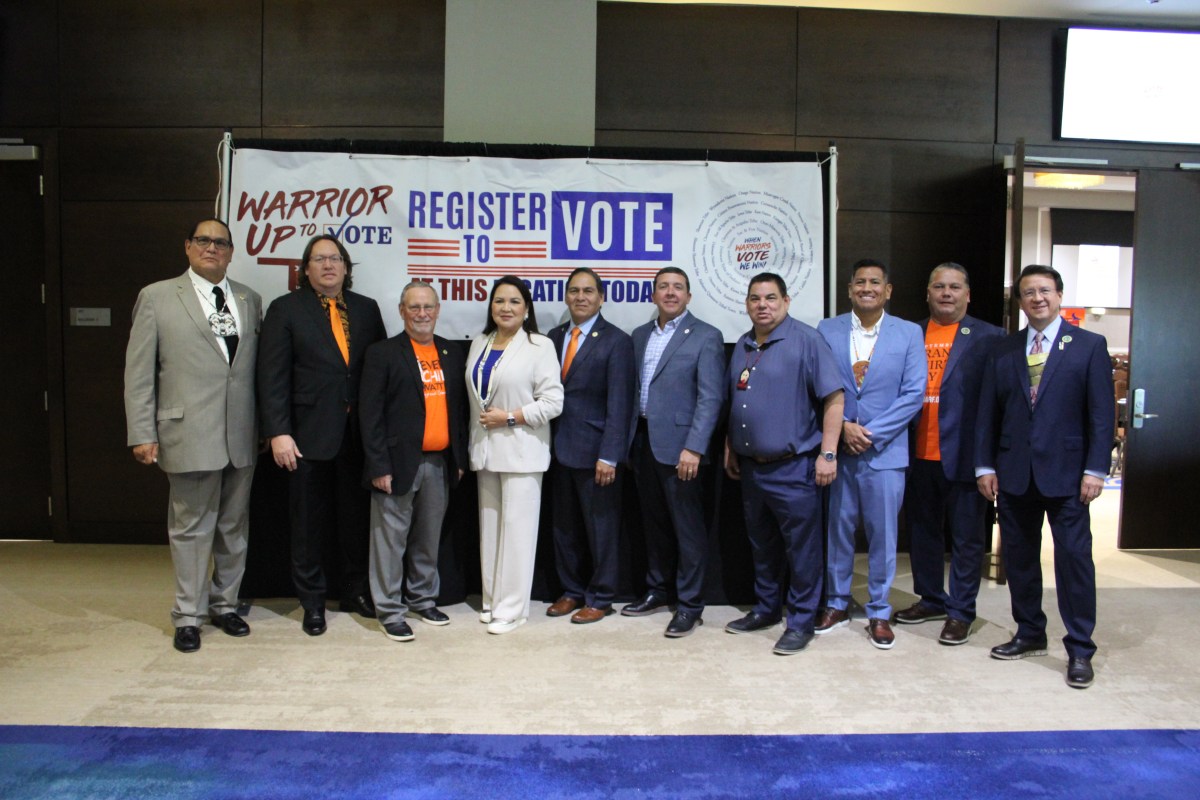
TULSA — Tribal leaders emphasized the importance of voting during a tribal sovereignty summit at the River Spirit Casino in Tulsa Sept. 30 as part of the Warrior Up to Vote tour.
The United Indian Nations of Oklahoma is stopping in more than 20 different towns across the state of Oklahoma to show tribal citizens what a pro-sovereignty agenda looks like. Their tour concludes in Tishomingo, in south-central Oklahoma,, at the Chickasaw Festival, Oct. 5.
“In 1996, Oklahoma was 26th in the nation in voter turnout. Today, we’re 50th. That can be undone. I’d like to see it undone, here, in Indian Country,” said Shawnee Chief Ben Barnes at the sovereignty summit Sept. 30. “When Ruth Bader Ginsburg was asked, ‘How many women should be in the United States Supreme Court,’ she said, ‘All of them.’ That’s what I say about congressional officers and senators. How many Indians should it be? All of them.”
Indian Gaming Association Chairman Ernie Stevens Jr., Oneida Nation, discussed the meaning of the term “warrior” as it relates to voting.
His grandmother survived five different boarding schools in the 1920s and lived to 103 years old.
“She was victorious, because she was determined,” Stevens said. “She out-maneuvered what the government attempted to do with her life, and she had a successful life. Despite everything they tried to do in terms of tying her hands back, or hitting her hand because she was left-handed, or disciplining her because she spoke her language. She lived a beautiful life and impacted us all because she was a warrior woman.”
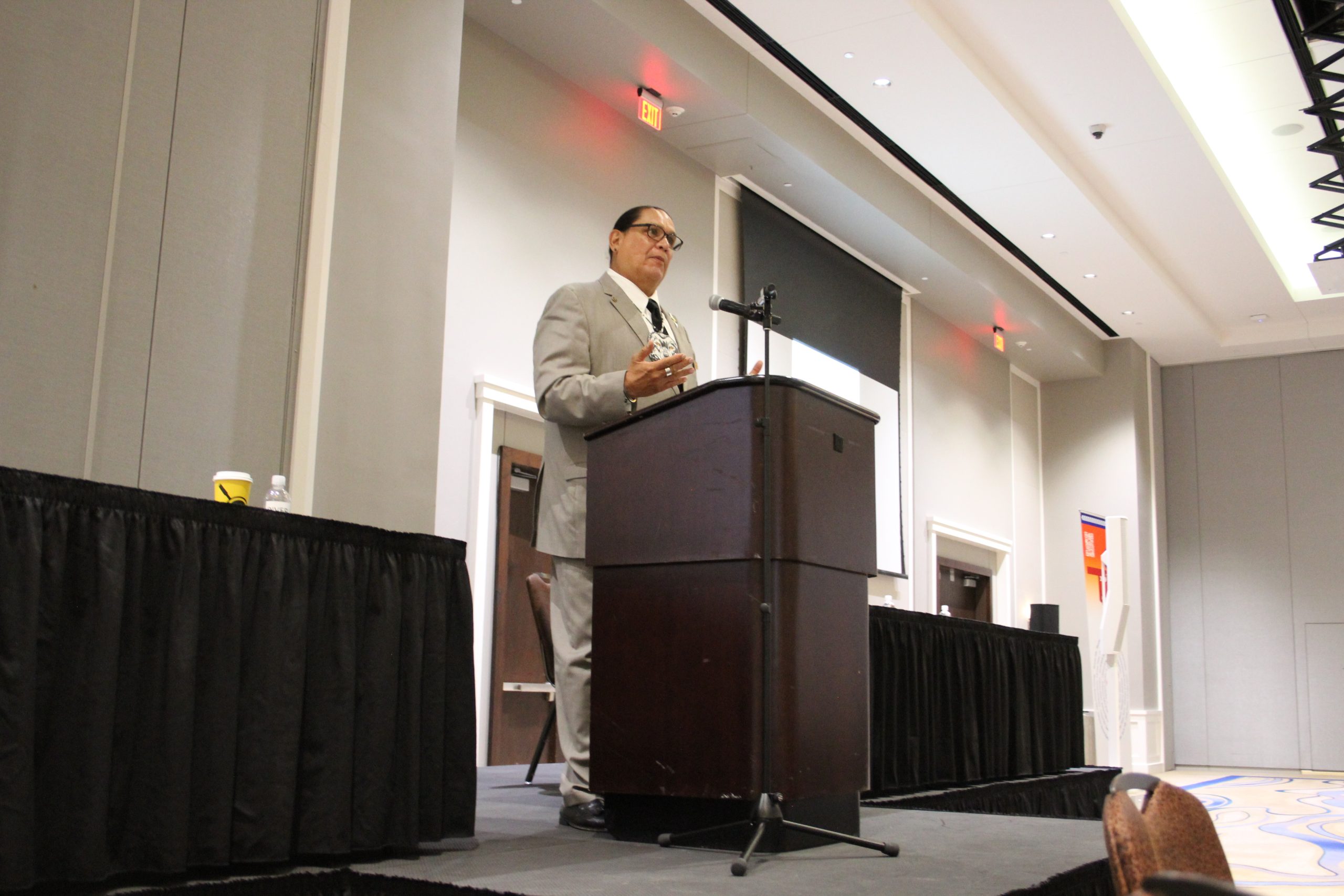

Stevens was one of many tribal leaders to reflect on his family’s boarding school history this morning, as Sept. 30 marks Orange Shirt Day for Native communities. Orange shirt day is a significant day in the Every Child Matters movement on which people wear orange in remembrance of the children who died at U.S. Indian boarding schools in the late 1800s and 1900s.
Stevens said he took his grandmother to vote for the last time when she was around 100 years old.
“She just kept showing the government that we’re winning this battle,” he said. “Our right to vote is built in our family, and our family will continue to build through the success of our getting out there to vote, protecting our world as we go forward.”
Tribal attorney Wilson Pipestem, Otoe-Missouria Tribe, from the Pipestem & Nagle, P.C. law firm in Tulsa reminded the audience that Oct. 11 is the deadline for voter registration, early voting begins Oct. 30, and that we are 36 days from the election on Nov. 5.
Pipestem said that Native candidate Sarah Gray, Cherokee Nation, who is running for Tulsa County Commissioner is changing the game of politics. He said that it’s easy to be “cynical about politics” and fall into thinking that those in office won because of financial support and endorsements.
“But Sarah Gray has upset that model,” Pipestem said. “She has knocked on thousands of doors. She is now the front-runner to win this seat for Tulsa County Commissioner, which is one of the largest districts in Oklahoma. You may have an advocate who is open to tribal issues, not just considering tribal issues. She’s not just for us, she’s from us.”
Pipestem stressed the impact Native voters could have, but also the growing support for tribal sovereignty among non-Native voters.
“When the Indian vote in Oklahoma wakes up, it’s going to change the state,” he said. “But also people want to work with the tribes. And that is because of all the good work that tribes in Oklahoma have done to where, if you’re now in rural Oklahoma, the tribes are providing better services for non-Indians and for Indians. So the impact of tribal sovereignty in this state and our ability to benefit the lives of people in this state is significant.”
Stevens said that the Indian gaming industry is a $41.9 billion industry that helps “provide an education, health care, public safety, and infrastructures.”
“People get frustrated with our success. You know, that’s their problem. Because you know what, we’re the 16th highest employer in the United States of America,” he said. “That helps us to understand the necessity for us to get out and vote.
Pipestem also discussed the importance of the Truth and Healing Commission on Indian Boarding School Policies Act, as the boarding school report may not be complete.
Interior Secretary Deb Haaland, Laguna Pueblo, and Assistant Secretary of the Interior for Indian Affairs Bryan Newland, Bay Mills Indian Community, from the Department of Interior released the final volume of the federal Indian boarding school report in July, listing the number of boarding schools that operated in the United States, and the number of children who died at the schools under a cruel assimilation policy.
“The Indian Boarding School Bill has run into some challenges… My folks went to boarding schools. There’s probably not a person in here who hasn’t been affected by federal Indian boarding schools. Now we’re trying to get this commission bill done that would have subpoena power to get information from different entities that have information about boarding schools and boarding school students. Some of that information, we still don’t know.

Pipestem explained that without the power of subpoena, not all of the information may be released by the churches and organizations that hold the names and numbers of children who died at the schools.
He said his concern about the bill is that it may not receive enough support from the U.S. House Republican leadership. The senate version, S.1723, was introduced by Massachusetts Sen. Elizabeth Warren while Kansas Rep. Sharice Davids, Democrat and Ho-Chunk, and Oklahoma Rep. Tom Cole, Republican and Chickasaw, introduced the house version of the bill, H.7227.
“The Republican leadership may say, ‘We’re not going to vote on this because we don’t want Sharice Davids to win,’” he said. “The other thing is the bill is about $90 million. To the federal government, that’s nothing, right? It’s not very much money, but you have to find the money to pay for this bill.”
Pipestem said that Cole, who holds the chair for the House Appropriations committee, is looking for that funding.

This story is co-published by the Tulsa World and ICT, a news partnership that covers Indigenous communities in the Oklahoma area.
Our stories are worth telling. Our stories are worth sharing. Our stories are worth your support. Contribute $5 or $10 today to help ICT carry out its critical mission. Sign up for ICT’s free newsletter.