
Joaqlin Estus
ICT
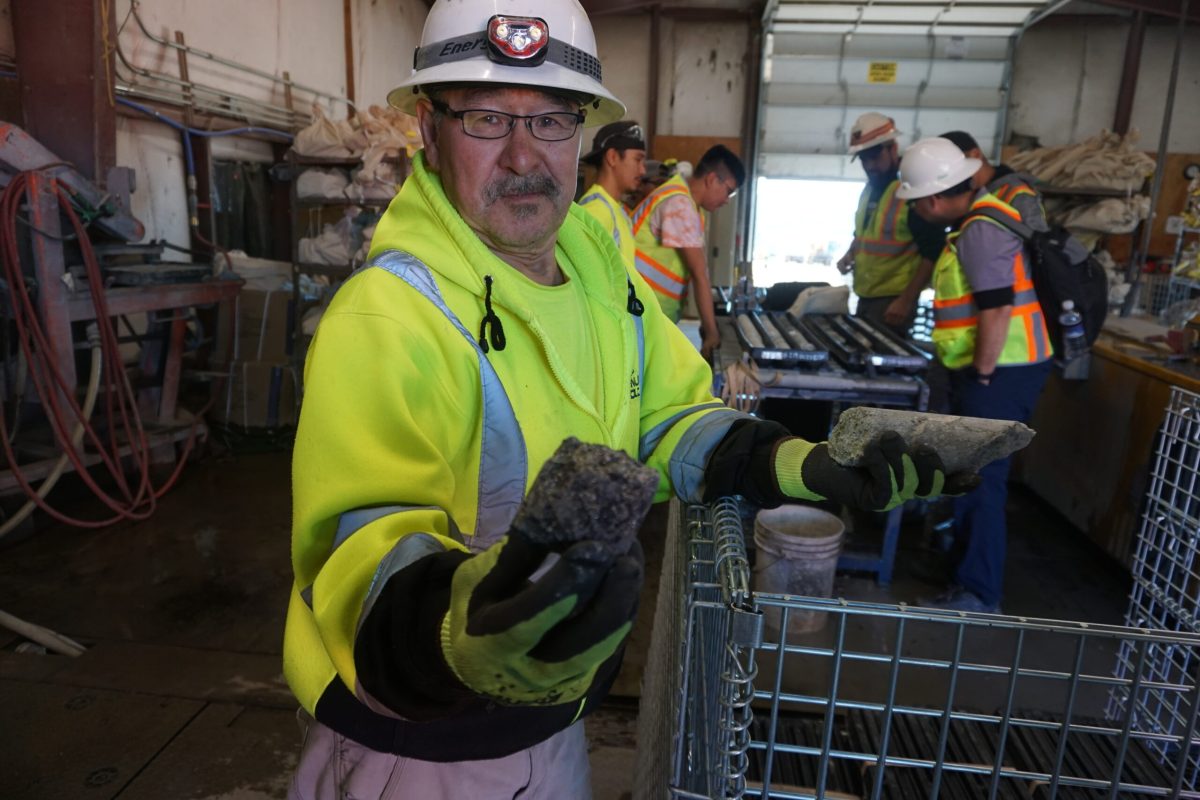
ANCHORAGE — Two Alaska Native corporations own and want to develop the site of what would be the world’s largest pure gold open-pit mine. They say the mine would bring jobs, a stronger economy and much-needed infrastructure to an impoverished region.
But some of their shareholders oppose the project. They say the mine threatens the core of the Yup’ik and Cupik way of life: subsistence, the gathering and sharing of food from nature. Three tribes have sued in federal court to halt the project.
The regional corporation for western Alaska, Calista and 10 village corporations that have combined into The Kuskokwim Corporation (TKC), have joined forces with Donlin Gold LLC to build the proposed mine.
The corporations are two of the more than 200 that were created under the Alaska Native Claims Settlement Act of 1971. It set up for-profit companies to receive 44 million acres and nearly a billion dollars for them to go into business and make a profit to disburse to their Native shareholders in the form of dividends. Corporate representatives say the site of the proposed Donlin Gold Project was specifically selected for its mineral potential.
Related:
— Alaska affirms water certificate for proposed Donlin mine
— Proposed Alaska gold mine worries area tribes
— Tribal lawsuit puts Donlin gold project in question
The proposed mine
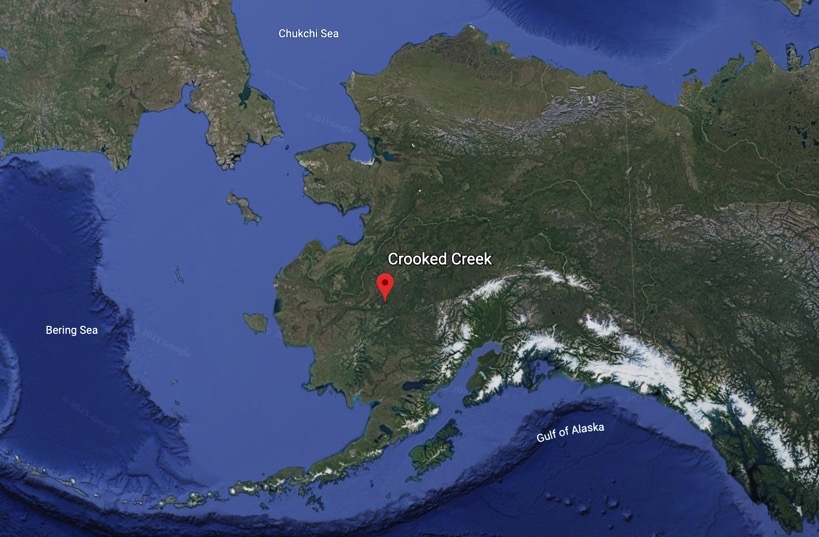
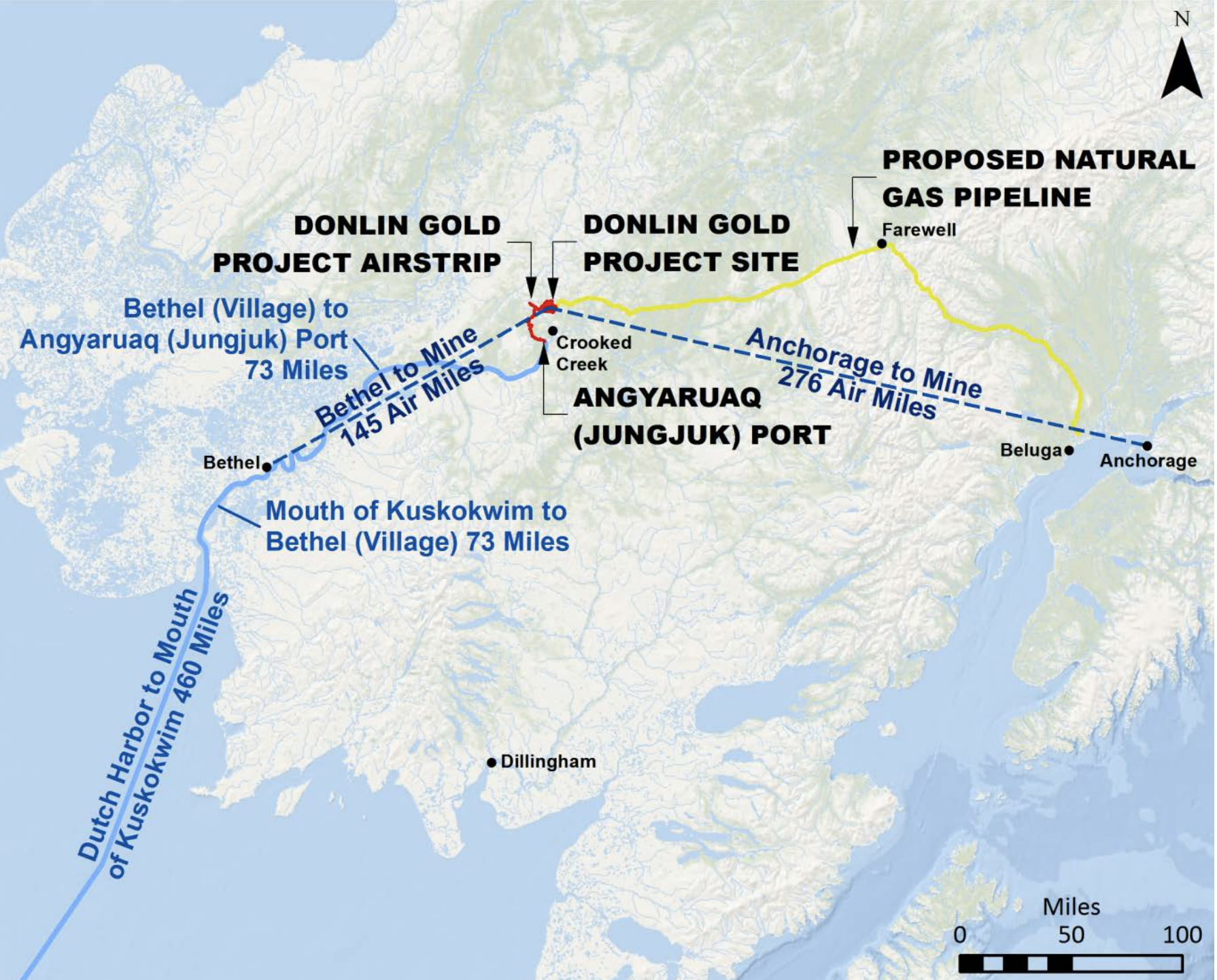
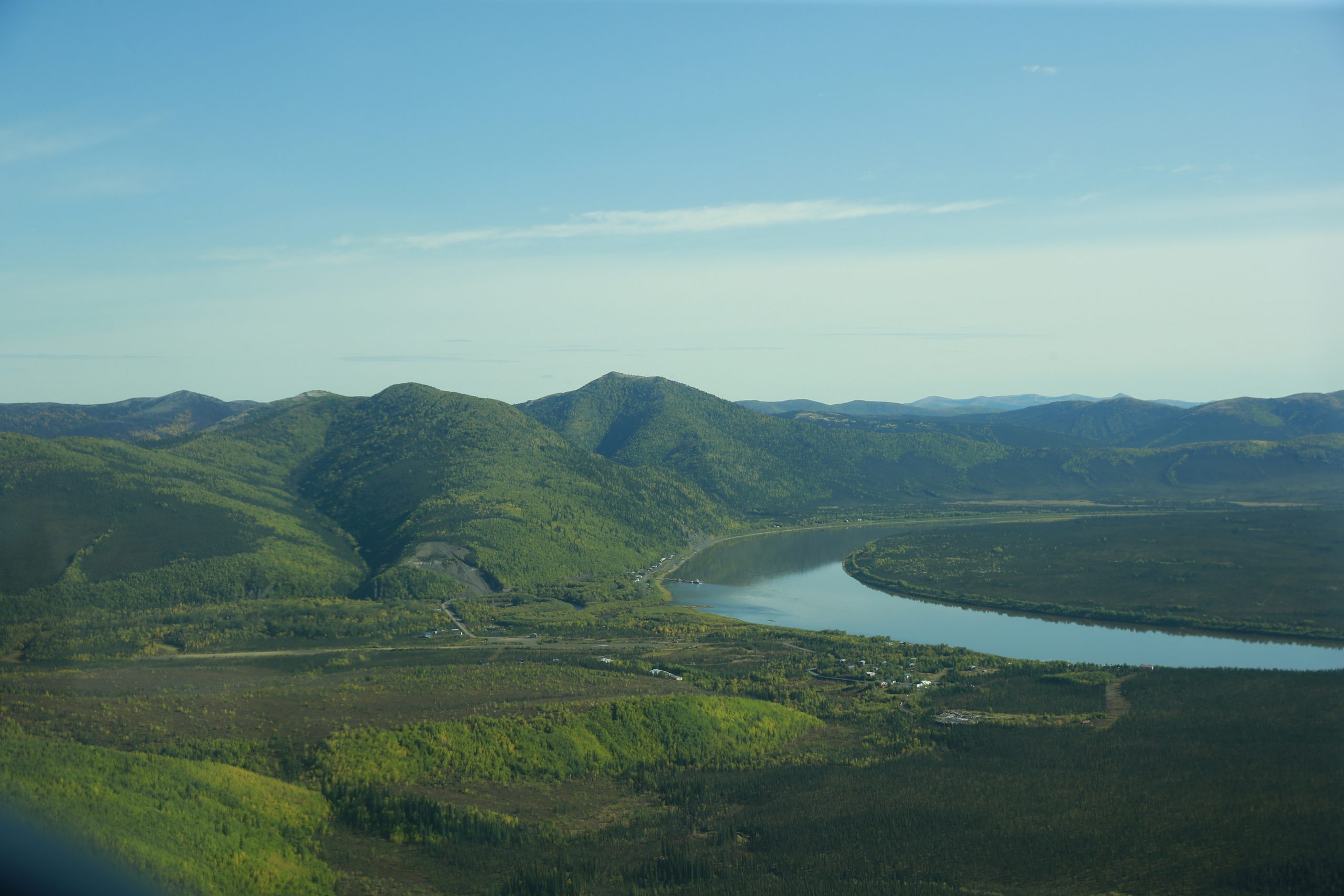
Donlin proposes to develop a large open-pit, hard-rock gold mine near Crooked Creek, which drains into a major river, the Kuskokwim. The project has received U.S. Army Corps of Engineers and Bureau of Land Management approvals to process an average of 59,000 tons of ore per day and to operate for 27 years. The mine would produce approximately 30 million ounces of gold.
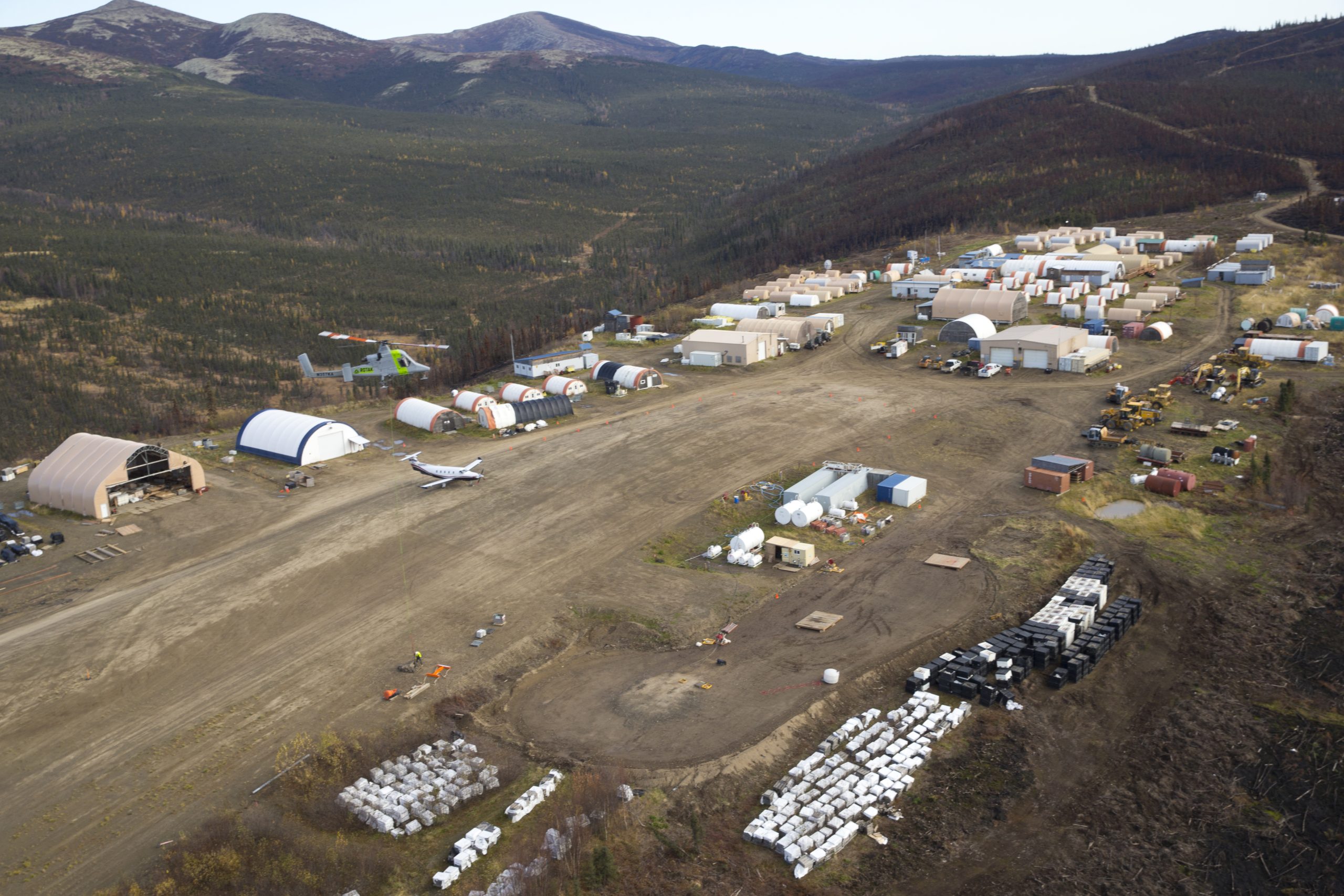
The proposed mining operation would include a processing plant, a port, airstrip, power plant, water treatment plant and roads. A pipeline would carry natural gas more than 300 miles from the Cook Inlet region in south central Alaska to the mine. The project would also include a 526-acre waste storage facility. Plans call for waste ore, or tailings, to be stored behind a dam and managed in perpetuity.
Proponents’ views
The Kuskokwim Corporation (TKC) President and CEO Andrea Gusty, Yup’ik, said, “environmental protections are a priority. So we have provisions in that surface use agreement that go above and beyond the state and federal regulations.”
She said in the lease agreement with Donlin Gold owners Barrick Corporation and Novagold, “we also negotiated our right as the landowner to be involved in the permitting process at the beginning. So by the time a permit makes it to a state or federal agency desk, we have already written our priorities into that permit.”
“We are involved in making sure that the project adapts to our region and our people rather than the other way around,” Gusty said. “There are a couple of direct project adaptations that were a result of the meetings we held.
“No. 1 was the gas pipeline,” she said. People were concerned about barge traffic to carry fuel to the mining site, and how the traffic would affect fish and people, especially during fishing season, she said. “So the project adapted. And that’s where the natural gas pipeline came in, so it would decrease any barging of fuel up and down the river.”
She said ”we continue to hear concerns and value each and every one of those concerns because it’s voices on both sides that I believe will make this project a stronger one at the end of the day. And we’ve heard this from Calista — who does own the gold, and has those subsurface rights — this project will not go forward unless it can be done in an environmentally responsible way.”
She also said the project will bring much-needed infrastructure such as lower fuel costs and broadband to the region.
Tisha Kuhns, Yup’ik, is vice president of Land and Natural Resources for Calista Corporation, and a tribal citizen of Akiachak Native community.
She said the tailings dam “is the strongest and most stable design,” and would be closely monitored to ensure its safety. The project would also add a safety feature not required by permitting agencies: an impermeable liner beneath the tailings pond, Kuhns said.
“Underneath the liner itself, there’s collection ponds where it will collect the additional water that does come through. But there’s also outlying monitoring inspection wells where water quality samples can be taken and that water can be rerouted back through the water facility treatment plant,” she said.
Tom Leonard, Cupik, is vice president of Corporate Affairs for Calista and is a tribal citizen from Chevak. He said the project would benefit both the regional economy and subsistence lifestyle.
“Because it is very, very expensive just to live, not only to practice subsistence, I really think it’s also going to help stop some of the out migration. Bethel is the largest community in the region, and it’s great that there are some job opportunities there.” But I think somebody from, like my home village of Chevak, or somebody from Crooked Creek, or somebody from Kwethluk shouldn’t have to move,” he said.
“So, the hope that will be brought by this project is to go work at the site for two weeks, come back home for two weeks so they have that time to spend with family and do their subsistence lifestyle. That is going to be a tremendous benefit for them,” Leonard said.
“This project can show that mining can be done right, as we in the state of Alaska have actively shown successes of mines here in the state. But what makes it more special is that it is Alaska Native owned. We have direct oversight of this project and that’s something really incredible,” he said.
Donlin responded to the lawsuit in a statement saying such litigation “is ubiquitous and expected” on major projects.
“Donlin Gold’s stakeholders fully believe that this lawsuit is meritless and are confident the actual record will once again fully support the agencies’ decisions,” the statement said in part. Meanwhile, the company said it and the owners will continue with permitting and drilling and technical work.
Opponents’ views
All that still leaves many unconvinced.
The project has met opposition from the Association of Village Council Presidents, which represents tribes in the region, 13 tribal governments, the regional Yukon Kuskokwim Health Corporation, and the National Congress of American Indians.
Opponents say if permitted to go forward, the project would jeopardize a core value of Yup’ik and Cupik cultures: subsistence, the gathering and sharing of food from nature.
Elder and tribal council member John Andrew, Yup’ik, of Kwethluk, spoke on the radio show “Native America Calling” on Monday. “There is a potential for chemical spills at the site and the barge traffic along with the proposed gas line from Cook Inlet.” He said the wake of barges is eroding river banks as it is, which he said will worsen with increased traffic.
Also, “if a natural disaster occurs, like the major earthquake back on March 27, 1964, (an earthquake that measured) 9.2 on the Richter scale, they’ll create a lot of damages,” Andrew said. Earthquakes could damage the natural gas pipeline and “could destroy those tailing dams to create spills to the river.”
Such a spill would spread toxic waste throughout the ecosystem, said Boris Epchook, Yup’ik, president of the Kwethluk tribe, on the same radio show.
Tribes have been calling on the U.S. Army Corps of Engineers “to protect our ways of life by rejecting this ill-conceived, outdated mine proposal,” said Anaan’arar Sophie Swope, director of the Mother Kuskokwim Tribal Coalition, in a statement. The coalition represents tribes opposed to the project.
“I would really like it to be known that the majority of the tribes of our region are not in support of this project and we should uplift that sovereignty,” Swope told ICT. “In a 2019 vote that was done by AVCP (the Association of Village Council Presidents), 34 of 56 tribes voted in opposition and I believe only two abstained.”
“We’re just really working to uplift their voices of opposition and make sure that they have a sound voice at the table throughout the entire process, and really just getting good government-to-government consultation between tribes and the permitting agencies that are involved,” Swope said.
“The Army Corps environmental impact statement process lacked climate analysis, relied on an incomplete human health impacts study, did not take into account the now occurring fisheries collapse in the Kuskokwim River, and contained wholly inadequate tribal consultation. Under the law, inadequate consultation alone should compel the Corps to conduct a new analysis,” she said.
Also, “the fact that this tailing pond has to be treated through perpetuity makes it really intense for the safety of the environment throughout the rest of time,” Swope said.
In the health assessment done for the mine “there are aspects of where depression, anxiety, and suicide of the region has a likelihood of 66 to 90 percent to increase in the region just because the project will be going on. It’ll just put more pressure on the locals that are here with more outside influences coming into the region,” Swope said
The three tribes who have filed lawsuits are the Orutsararmiut Native Council (of Bethel), Tuluksak Native Community, and the Organized Village of Kwethluk. Earthjustice is representing them in court. Attorney Maile Tavepholjalern said the Army Corps of Engineers relies on a flawed environmental analysis.
“For one thing, it doesn’t look at a catastrophic tailings dam spill. They only look at a 0.5 percent spill. Federal law requires that an agency look at the reasonably foreseeable adverse effects to the environment. Because the Army Corps didn’t look at a reasonably foreseeable tailings spill and its environmental impacts, that violated the law,” she said.
The joint record of decision and the Army Corps Clean Water Act 404 permit both rely on that final environmental impact statement so the lawsuit seeks to get both overturned, Tavepholjalern said.
“It’s also illegal in a couple of other ways,” she said. “The final environmental impact statement basically downplays the negative health impacts that were identified by the state of Alaska in a health impact assessment.”
“The final way in which we challenged that particular permit is that the Army Corps didn’t prevent predicted impacts to Kuskokwim River Rainbow smelt, which is an important subsistence and prey fish,” Tavepholjalern said.
Tribes also have three lawsuits pending in state court challenging state permits for the project.

Indian Country Today is a nonprofit news organization. Will you support our work? All of our content is free. There are no subscriptions or costs. And we have hired more Native journalists in the past year than any news organization ─ and with your help we will continue to grow and create career paths for our people. Support Indian Country Today for as little as $10.
