
Kaitlyn Budion
Maine Morning Star
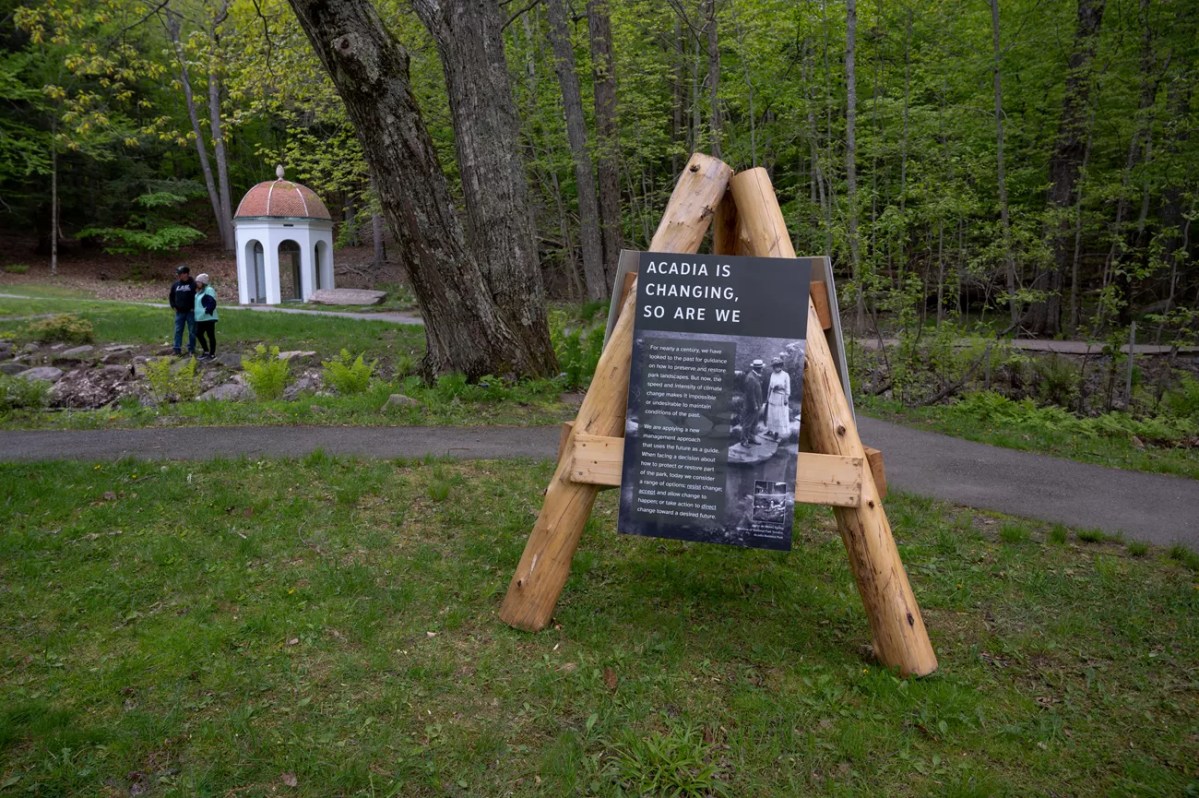
A federal judge has ordered the Trump administration to restore signs at national parks across the country, including signs on climate change and the Wabanaki Nations that were removed at Acadia National Park.
Todd Martin with the National Parks Conservation Association, said at Acadia signs had been removed from Cadillac Mountain, the Great Meadow, the Sieur de Monts Nature Center and Rockefeller Hall.
“That included several signs at Acadia National Park that talk about how climate change is already impacting the park, how it’s impacting the native vegetation in the park and how the National Park Service is changing its management strategies in a changing climate to help the park’s resources adapt to climate change,” Martin said.
He said Wednesday, June 17 that he did not know if any of those signs had been returned yet, but is hopeful they will be back for the park’s busy summer season.
“We’re just really thrilled that the four million people that visit Acadia each year will be able to see these signs and learn about how climate change is impacting the park and the deep connection of the Wabanaki tribes to Cadillac Mountain and to Acadia, so we’re hopeful that we’ll see the signs go back up in the coming weeks,” Martin said.
In March 2025, President Donald Trump issued an executive order for the National Park Service to remove signs that could “disparage Americans past or living” and distract from the “grandeur of the American landscape.”
Interior Secretary Doug Burgum followed that with a secretarial order in May to execute Trump’s executive order. A coalition of organizations, including the National Parks Conservation Association, filed a lawsuit over the policy.
And two weeks ago, U.S. District Court Judge Angel Kelley issued a preliminary injunction ordering the National Park Service to return signs by July 4, and provide weekly updates to the court on the restoration process.
Kelley wrote that the administration’s efforts, “ostensibly taken in the name of restoring dignity, instead seek to rewrite the Nation’s history with a white-out pen.”
“History cannot be faithfully told while excluding the experiences of communities whose contributions, struggles and achievements form an important part of our Nation’s story,” Kelley continued. “Indeed, at a time of facts and alternative facts, the only thing we must be able to rely on as undeniable truth is history. And telling the full truths of our shared story helps our Nation heal from past wrongs, rather than prolonging us.”
A spokesperson for the U.S. Department of the Interior said the administration is appealing the ruling.
“We fully believe politically charged language denigrating our Founding Fathers is inappropriate and only further divides Americans,” the unnamed spokesperson said in a statement. “Through President Trump, we have encouraged Americans to visit our cultural and historic sites and engage in meaningful conversations about the moments that have shaped our country. By telling the full story, every triumph, every challenge and every step towards a more perfect union we strengthen our shared understanding and ensure that future generations inherit not just the land we love, but the truth of the journey that brought us here.”
But the coalition behind the lawsuit celebrated the ruling and said the Trump administration is trying to sanitize history.
“People go to national parks to experience the national beauty,” Martin said, “but it’s also a great place to learn about American history, and we want to make sure that all visitors to our national parks understand the full history and science at our national parks, uncensored.”

