Joaqlin Estus
ICT
ANCHORAGE, Alaska — A village is suing to get more safeguards and a more in-depth environmental analysis of an open pit mine and transportation corridor to an ore-processing mill in Interior Alaska. The Manh Choh (or “big lake” in Athabascan) gold mine is already operating and, in fact, recently poured its first gold bar.
Tracy Charles-Smith, who is Upper Tanana Athabascan, is president of the federally recognized Native Village of Dot Lake. She told ICT, “the lawsuit is about the failure of the Army Corps of Engineers to have meaningful interaction and discussions about the potential for environmental annihilation of water, fish, food, our people, our health, and (about) the failure to do an environmental impact study prior to issuing a permit.”
The village said the Corps should rescind the permits it issued and conduct an in-depth environmental impact analysis. The analysis should include a health assessment that gives a “requisite hard look at the direct, indirect and cumulative impacts of the project on the tribe, its resources, and its subsistence uses,” the village’s lawsuit said.
“I would like safety measures in place. I’d like an environmental impact study. And I would like somebody to think about the health and welfare of Natives, their subsistence fishing and hunting and their health,” said Charles-Smith.
The Manh Choh mine is one of two projects operated by Kinross. The open pit mine is near the Native village of Tetlin, 200 miles southeast of Fairbanks. The second Kinross project, Fort Knox Mine, is about 25 miles northeast of Fairbanks. The two projects are 248 miles apart by road. The gold-bearing ore mined at Manh Choh is carried by truck to Fort Knox to be processed.
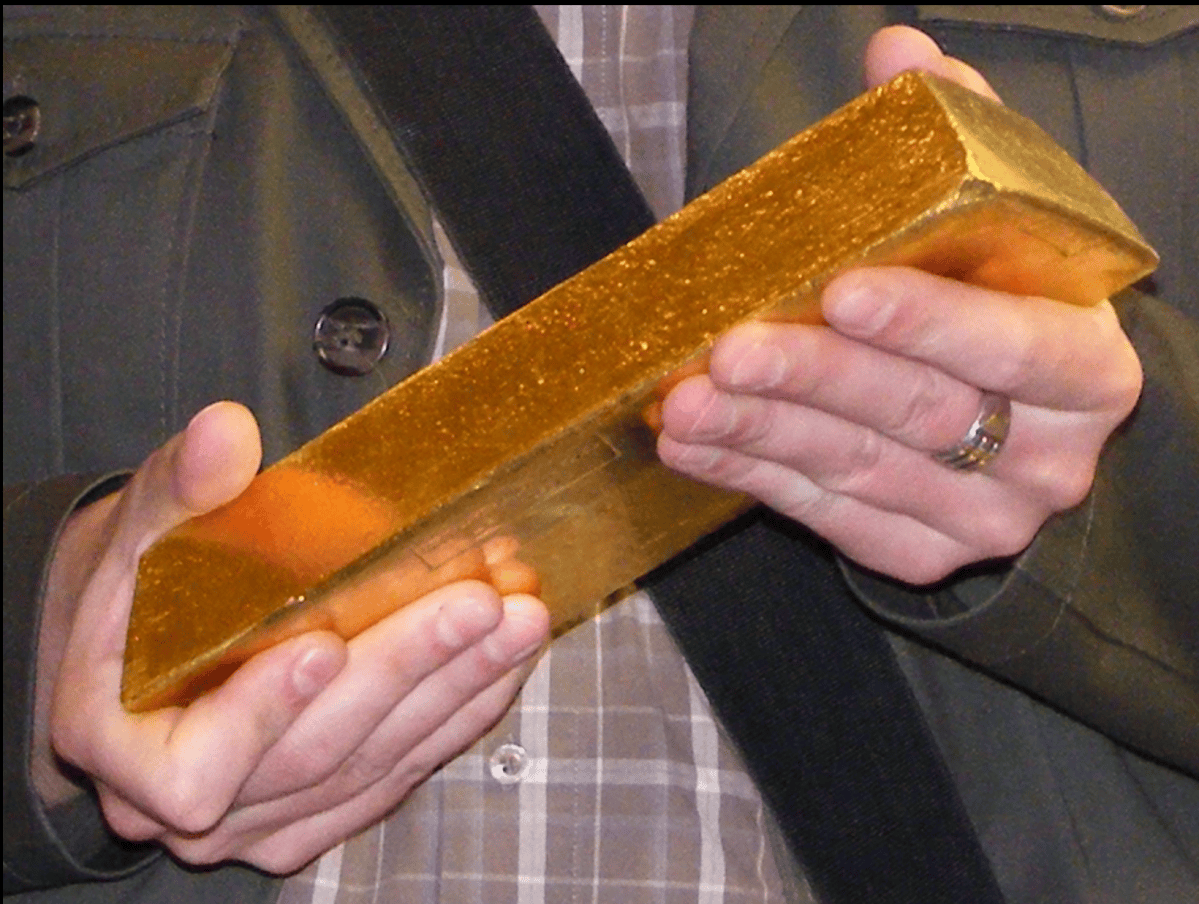
The developer, Kinross Alaska, poured its first gold bar from ore from the Manh Choh mine last week.
“Today (July 8) was a monumental day for Contango shareholders,” Rick Van Nieuwenhuyse, president and CEO for Kinross’ partner Contango, said in a prepared statement. “From the first discovery hole to pouring the first bar of gold emblazed with the special Manh Choh branding, it has certainly been a journey, but one that sets us up for future success.” The company said the 37.5-pound bar, valued at $1.4 million, is stamped with an eagle crest, the symbol of the Tetlin Native village, on whose land the mine is located.
“The eagle represents the interconnectedness of life and underscores the importance of conservation and respect for the land, a core principle in Athabascan culture, and a value Kinross Alaska shares,” said Van Nieuwenhuyse. Contango said Tetlin village council members all attended the celebration of the first gold bar pouring.
Kinross emailed ICT after the Dot Lake lawsuit was filed, saying, “Manh Choh continues to operate in Interior Alaska safely and successfully. Those involved in this project have strong ties to the communities and decades of experience working in the state.”
Kinross continued, “the project is both economically and environmentally responsible. We are minimizing the project footprint by hauling ore to Fort Knox for processing, avoiding the need for a mill or tailings storage facility. It utilizes existing infrastructure, primarily the highway system and the underutilized mill at Fort Knox.”
Kinross said the project exceeds all permitting requirements related to the project’s 5.2 acres of wetlands on private tribal land. “This includes submitting a robust application to the Army Corps of Engineers and incorporates studies proactively conducted in 2021 such as a noise impact analysis, cultural, archaeological, socio-economic modeling, project visibility study, air quality study and a subsistence study.
“Baseline studies included groundwater, surface water, climate, wildlife, fish, and geochemistry.
“We also conducted a rigorous public meeting schedule and continue to meet regularly with all communities,” Kinross said.
The company said it has engaged in a robust public consultation program based on free, prior and informed consent. “And while the community of Dot Lake, located nearly an hour and a half by road to the mine site on Tetlin tribal land, did not and still does not accept our invitation to meet, we continue to pursue opportunities for dialogue, first offered in early 2020. From 2021 to the end of the first quarter of 2024, our team has conducted 13,335 direct community engagements.”
Kinross said those activities include community as well as one-on-one engagements, meetings with the Tetlin community and village council, surrounding villages, the regional Doyon Native Corporation, and regional non-profit Tanana Chiefs Conference, and others. “In 2021 alone, 32 of those meetings were formal, open public meetings to discuss the project,” Kinross said.
Yet, Charles-Smith said, the mining company has refused to provide detailed information such as safety plans for transport of the ore passing by the village.
The Manh Choh mine is slated to operate for 4.5 years. Trucks will haul ore past Dot Lake 24 hours per day, seven days a week. They will make 2.5 trips per hour or 60 round trips per day — conditions permitting — according to a company fact sheet. The trucks, made up of tractors pulling two trailers each, are 95 feet in length, with a total weight of 82.5 tons per vehicle when loaded. That exceeds the allowable weight restrictions on two WWII-era bridges on either side of the village, Charles-Smith said.
Damage to the bridges she said would leave Dot Lake isolated from food supply chains and drive already high food prices even higher. The state plans to replace the bridges but not until 2026 and 2028.
The trucks carry ore that can oxidize and become acidic. The company said there will be minimal dust associated with Manh Choh transportation and the loads will be fully covered and secured.
“They say they have covers, but (the rock is) bouncing off the trucks,” Charles-Smith said, “The covers are torn. So you have this highly acidic ore that’s contaminating the roadways and wherever, damaging windshields and all of that.”
She said the village, including the lake where villagers fish, and the children’s school, are right on the highway. One study cited in the complaint said that 35 of 86 bus stop locations along the haul road route did not have appropriate sight stopping features necessary to avoid collisions between school buses and ore-hauling trucks in conditions, “such as ice and rain and overall road features.”
Kinross said many workers, including drivers, will live in Fairbanks and the communities surrounding the mine and will commute to their jobs. Others will stay at a campus in the center of the town of Tok.
When it comes to housing for workers, “we recognized from the start the importance of prioritizing safety,” Kinross said. “We met early on with community members from Tetlin, Tok, Mentasta, Northway, Healy Lake and Tanacross; we also requested meetings with the village of Dot Lake, but that invitation was not accepted. We listened, had open dialogue, and worked to address any concerns that were presented,” the company said.
“Due to what we heard during listening sessions, feedback from the Manh Choh Community Advisory Committee, and during the 14 community meetings we held prior to opening the campus facility, we put in place a management system and plan that goes far beyond what you might see at a similar facility. This includes 24-hour surveillance, limited access, dry campus, and random testing for drugs and alcohol,” Kinross said in its emailed statement.
Still, in its complaint the village said, “The presence of man camps on Indigenous land has been anything but benign. The U.S. Department of State’s Office to Monitor and Combat Trafficking in Persons noted that sex trafficking has increased near oil extraction camps.”
“There are data suggesting that Man Camps located in communities in Canada and the Lower 48 result in as much as a 70 percent increase in human trafficking, prostitution, domestic violence, substance abuse, and similar crimes. Indigenous women and children disproportionately suffer the brunt,” stated the complaint.
Charles-Smith said “right off the bat, that was very alarming. The man camp was what spurred us into action.’
“We just want to be healthy. We want our culture to flourish. We want to eat our white fish, our moose. We want to gather our medicinal plants and pick our berries and forage for our mushrooms and be healthy about it, not contaminated and not at risk for alarming cancers,” she said.
“There is no real benefit to Alaska Natives by these foreign mining companies,” because most of the workers will be imported, Charles-Smith said.
Tetlin Native Corporation (TNCorp) is the village corporation for Tetlin created under the Alaska Native Claims Settlement Act of 1971. Its general manager, David Flenaugh, emailed ICT saying Dot Lake village representatives have not been in touch with the corporation about their lawsuit. However, “speaking on behalf of TNCorp’s directors, I will say that our village corporation is in alignment with Dot Lake’s concerns involving the Manh Choh mining project’s road issues, ill-managed man-camps, and particularly the Corps of Engineers’ failures to contact neighboring tribes as indicated in their (Dot Lake’s) lawsuit.”
“Dot Lake absolutely speaks the truth about the Corps’ failure to consult with tribes in the region in violation of laws and policies that bind the Corps,” he said.
Flenaugh went on to say the corporation has worked with the Corps on other land-related issues “yet we were at no time contacted by the Corps about Manh Choh permits being issued that have a direct impact on our land.”
Flenaugh concluded, “TNCorp holds Dot Lake leadership in the highest esteem and commends them for their efforts to protect the health, safety, land and subsistence rights of our Alaska Native tribes and communities.”
Dot Lake’s position also aligns with that of a local non-profit, Committee for Safe Communities, which has launched a lawsuit as well. In October 2023, the committee sued the Alaska Department of Transportation for failure to follow and enforce applicable state laws and regulations, to abate a public nuisance, and to stop violating the right of equal protection for the nonprofit and the public.
As mentioned earlier, the Manh Choh mine is on the leased lands of the Native Village of Tetlin. Representatives of the village council were not available for comment for this story. The Army Corps of Engineers and Department of Justice declined to comment on the matter, citing ongoing litigation.

ICT is owned by IndiJ Public Media, a nonprofit news organization. Will you support our work? All of our content is free. There are no subscriptions or costs. And we have hired more Native journalists in the past year than any news organization ─ and with your help we will continue to grow and create career paths for our people. Support ICT for as little as $10. Sign up for ICT’s free newsletter.