
Mary Annette Pember
ICT
UPPER PENINSULA, MI —The water walkers did not carry protest signs, nor did they shout slogans.
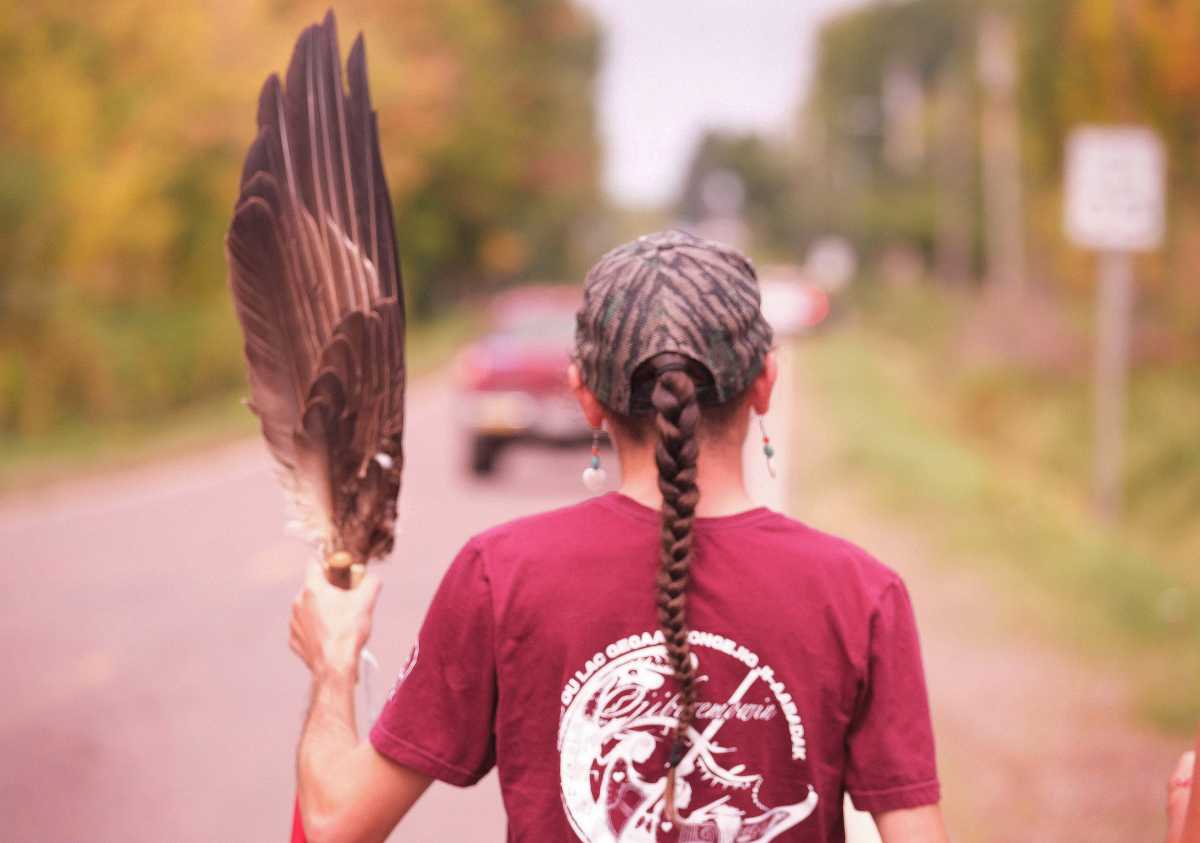
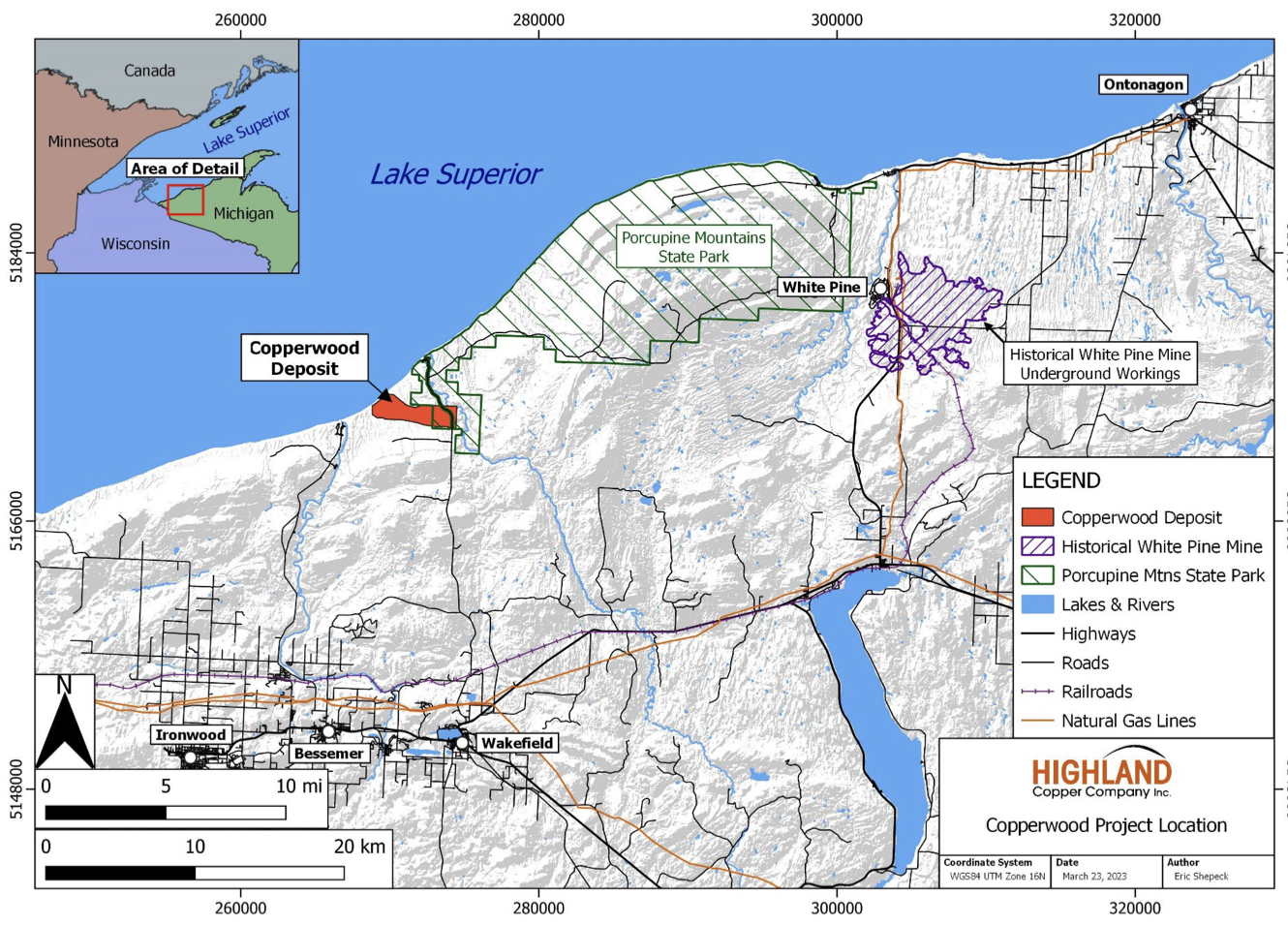
They were mostly silent as they briskly walked 31 miles from the city of Ironwood, Michigan, to the shores of Lake Superior at Porcupine Mountain State Park, near the proposed site of the Copperwood Mine Project.
SUPPORT INDIGENOUS JOURNALISM. CONTRIBUTE TODAY.
Crowds of families, tourists and local folks paused on that sunny Saturday in September, watching the group curiously as it passed. Was this a protest or a celebration, they wondered.
It was neither. It was ceremony, a walking prayer of gratitude and acknowledgement of the essential role clean water plays in life on the planet. Such a message would seem to offer a universal spiritual appeal. But deep in the Upper Peninsula’s mining country where generations of European immigrants have depended on digging copper and iron ore from the earth for more than a century, such a prayer had a whiff of blasphemy.
“This goes all the way back to the 19th century with fur trading, timber, iron and copper mining; if there’s any environmental fallout the folks who ran the operation aren’t around to pay for the cleanup,” said Tom Grotewohl, a resident of Wakefield Township and founder of Protect the Porkies, a nonprofit organization opposing the mines that draws its name from the Porcupine Mountains, known as the Porkies, in the Upper Peninsula.
“Mining is a false tradition,” Grotewohl told ICT. “A tradition is something that everyone can benefit from and share equally.”
The Copperwood Mine Project is emblematic of a global struggle to address climate change and support the clean energy industry without further damaging the environment and treading on Indigenous rights. The demand for energy transition minerals such as copper, lithium, cobalt and nickel disproportionately affects Indigenous peoples and lands.
Despite the opposition from environmental and tribal leaders, however, Michigan is supporting the mine project as part of the state’s commitment to address climate change by attaining economy-wide carbon neutrality.
Jobs and opposition
Copper is a key component in renewable energy systems, and worldwide demand for the metal in the industry is expected to increase 250 percent by 2050.
According to supporters and Highland Copper, the Canadian company that owns the mine, the project would create 380 jobs and provide over $15 million in revenues per year to a region with a long history of dependence on the extraction industry and some of the higher rates of unemployment in Michigan.
Democratic Michigan Gov. Gretchen Whitmer, an enthusiastic supporter of clean energy, has a history of opposing industrial threats to the health of the state’s great lakes, challenging Enbridge’s Line 5 pipeline and its plans to run the line under the Straits of Mackinac.
Whitmer has frequently aligned with the state’s tribes in opposing Line 5, which stretches from Wisconsin through the Upper Peninsula and under the Great Lakes before terminating in Sarnia, Ontario.
Under Whitmer’s leadership, the Michigan Department of Environment, Great Lakes and Energy announced the Michigan Healthy Climate Plan, committing the state to address climate change through economy-wide carbon neutrality no later than 2050. The plan includes a commitment to environmental justice as well as a just transition for disadvantaged communities that face job loss from closures of fossil fuel facilities and other large industrial operations.
Whitmer’s support of the Copperwood Mine was reflected in the May decision by the board of the Michigan Strategic Fund to give Highland Copper $50 million to pursue the mine project.
Longterm repercussions
A study by Earthworks, a nonprofit organization that works to prevent destruction from the extraction of oil, gas and minerals, concluded that copper sulfide mining contaminates water, sometimes permanently.
In a July 2024 study released by the Great Lakes Intertribal Fish and Wildlife Commission, researchers found that tailings or waste from the proposed mine could reach Lake Superior in less than 1.5 hours. Tailings would contain copper, arsenic, mercury, selenium and other contaminants that represent hazards to environmental and human safety.
The commission is an agency of 11 Ojibwe tribes in Michigan, Wisconsin and Minnesota. The mine would be located in the 1842 Ojibwe ceded territory.
Related stories:
—Ojibwe grandmother and water walker Josephine Mandamin honored for conservation
—Apache Stronghold carries petition to Supreme Court to stop Oak Flat copper mine
—Canada honors three Indigenous women with postage stamps
“We have serious concerns about pollutant escape to Lake Superior, particularly during closure,” John Coleman, researcher with the commission told Interlochen Public Radio. “We have concerns about the tailings basin, the long-term stability, and have asked [the Michigan Department of Environment, Great Lakes, and Energy] to include the Great Lakes Indian Fish and Wildlife Commission in review of the final design.”
In an emailed statement to ICT, representatives of Highland Copper wrote that the underground mine is designed to meet the demand for copper in the U.S. and Michigan without drawing water from Lake Superior.
“Highland has designed its Copperwood project with consideration for both the environment and local communities, demonstrating that protecting the environment and industry are not mutually incompatible,” according to the statement. “Acknowledging there will be some impact, Highland has designed key environmental mitigation projects including the creation of compensating wetlands and streams, in addition to preserving a 717-acre area of wetland in perpetuity. Importantly, the copper we expect to produce has an environmental benefit by supporting U.S. electrification and carbon reduction targets.”
The statement notes the project has received resolutions of support from all the regional counties, townships and municipalities in the Upper Peninsula.
“Highland is truly respectful of all stakeholders in the Upper Peninsula,” according to the statement. “We will continue to engage with all groups to educate about Copperwood’s pledge for respectful development and operations, in addition to the employment and economic opportunities for this historic mining district. As a fully permitted project, Copperwood will continue to meet or exceed its obligations under Michigan’s stringent mining regulation that ensures safe environmental practices and key protections for the Upper Peninsula’s water and natural beauty.”
But impacts of 100 years of copper mining are still evident in the nearby Keweenaw Peninsula. In 1968, a Superfund site was established in the area where waterways were used as dumping grounds for waste products generated by milling and smelting activities. Researchers found polychlorinated biphenyls, known as PCBs, as well as high levels of copper, arsenic and mercury in lakes, where fish were found with cancerous tumors.
Despite its checkered environmental history, however, mining in the Upper Peninsula is considered a noble tradition; its decline has represented significant job loss and generated animus between environmental advocates and workers.
“What’s happening with Copperwood is what happens with a lot of these projects; they get hijacked by the environmental community nationally,” Dave Prestin, a Republican state representative from Cedar River said in an interview with Radio Results Network.
Prestin said that most opposition to the mine comes from outside the region.
“Representatives are getting bombarded with ‘Stop the Mine’ because there’s been a Call to Action nationally,” he said.
Raising awareness
Grotewohl, with Protect the Porkies, said challenging long-held traditions about mining can be tricky, so members of the group turned to Native water walkers to help draw attention to potential dangers presented by the mine.
Grotewohl approached Edith Leoso, a water walker and citizen of the nearby Bad River tribe, to join the organization in opposing the mine. Leoso explained that the water walk ceremony is not held in opposition to anything.
“The water walk ceremony is conducted to bring awareness to people of the importance of clean water in everyone’s lives,” Leoso told ICT. She is a retired tribal historic preservation officer for the Bad River tribe.
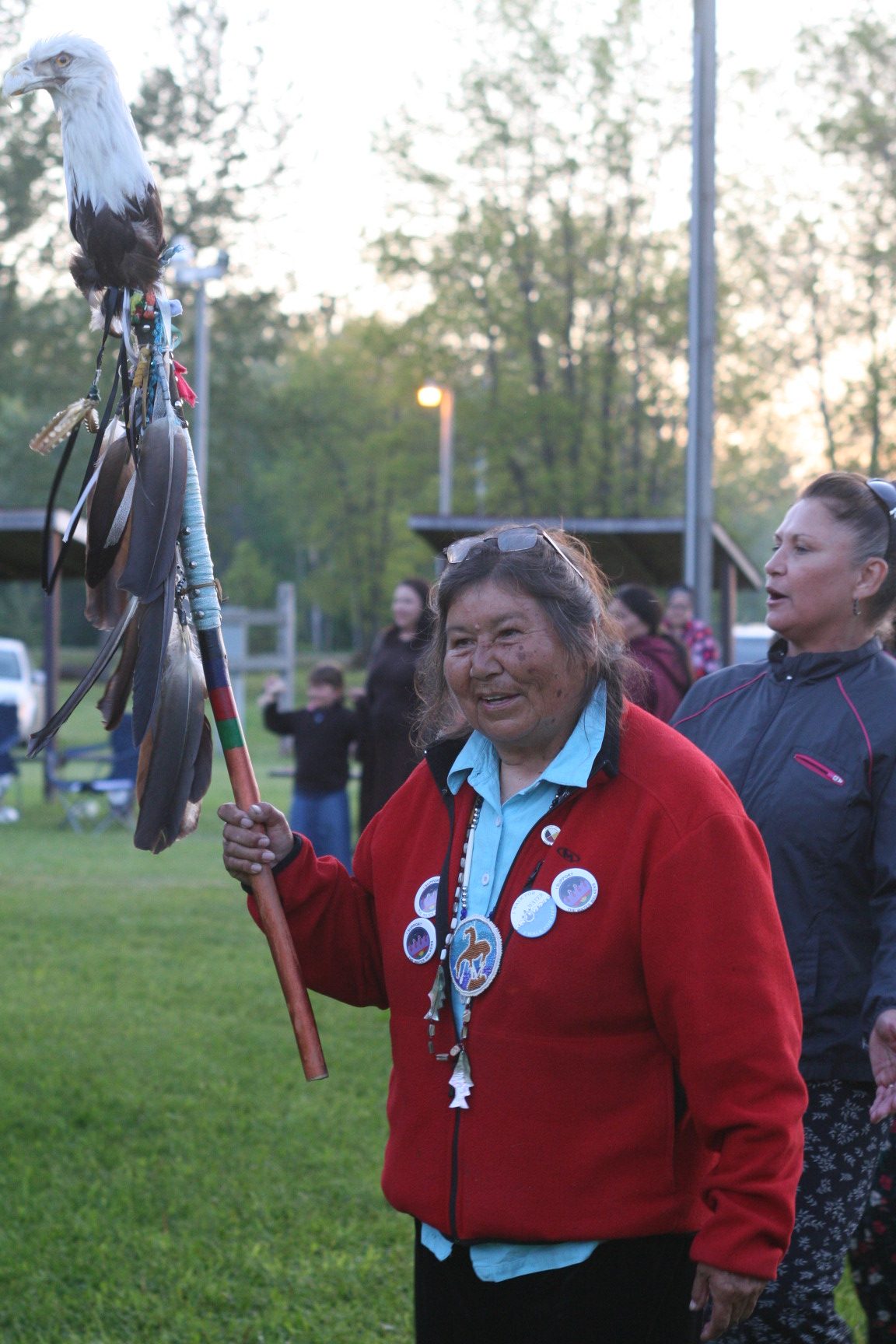
The water walk ceremony dates back to the early 21st century when activists such as Josephine Mandamin, Anishinabe from the Wikwemkoong Unceded Territory on Manitoulin Island in Ontario, Canada, began organizing walks.
“We want to raise the collective consciousness of people about the water,” Mandamin said in an interview in 2000 with ICT, then known as Indian Country Today.
Mandamin died in 2019, but the water walk ceremonies continue. She was recently honored by the Canada Post, which issued stamps with her likeness.
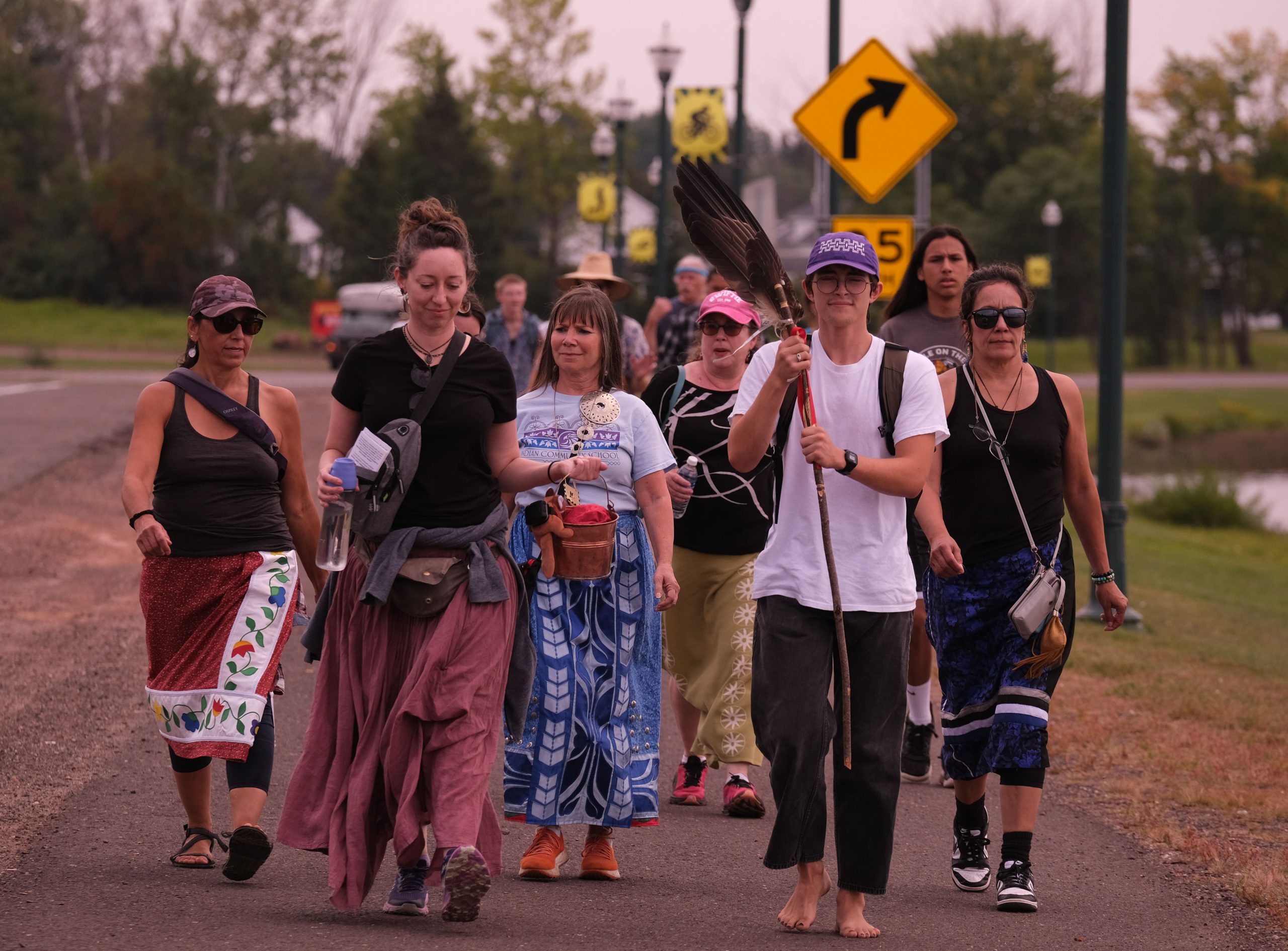
The day of the ceremony began early as Leoso dipped a copper bucket into the waters of the Montreal River in Ironwood near the Wisconsin/Michigan state line. Citizens from several tribes in the region joined her and allies.
The walk was led by a lone woman carrying the bucket of water and a man with an eagle staff.
The participants, who ranged throughout the day from four to about 50 people, either walked behind in support or took turns carrying the bucket and staff, handing them off relay-style while maintaining a seamless forward motion.
After all, Leoso said, “Water does not stop.“
The ceremony, like the movement of water, conveys a sense of urgency, Leoso said.
“Water has no boundaries and neither would the contamination from the mine,” she said.

Walking for the water represents fundamental values of love and respect for living things.
“We walk together in balance, just for the water,” she said. “We’re not out here to express hate to anybody.”
Grotewohl agreed. Activists often talk about the mine’s threat to the environment, outdoor recreation and the economy, he said, “but we leave out the much deeper aspect that water and the land are sacred, not just for Native peoples but for everyone.”
It was the first time Grotewohl and other members of Protect the Porkies participated in the ceremony.
“We wanted to make the case that resources like fresh water hold a collective value,” he said. “It was a new experience for me and others.”
Political costs of clean energy
Threading the needle between carbon neutrality and honoring the tenets of a just transition have been tricky, even for a pro-environment leader such as Whitmer.
In July, Michigan’s fiscal 2025 budget passed without the $50 million funding for the mine. Although members of the state’s House Appropriations Committee voted in support of the funding, the Senate Appropriations Committee failed to put the issue to a vote.
Environmentalists are claiming victory, while industry supporters claim state lawmakers could still support funding.
“The final step is a vote at the Michigan Senate Appropriations Committee where we continue to inform lawmakers of the environmentally sustainable design of the project, broad local community support, in addition to the positive economic impact to the Upper Peninsula,” Highland Copper chief executive Barry O’Shea said in an emailed statement to Michigan Advance.
“Copper is a critical resource for Michigan manufacturers as well as for the renewable energy transition, and we look forward to continuing progress on our project,” O’Shea said.
Hugh McDiarmid Jr., communications director for the Michigan Department of Environment, Great Lakes and Energy, responded via email to ICT’s questions about the impact of the mine on the local environment and the potential disconnect with Whitmer’s clean energy policies.
“[The department] is committed to its mission to protect Michigan’s environment and public health by managing air, water, land, and energy resources,” he wrote. “Studies reviewed by EGLE have validated that the materials extracted and produced at Highland Copper’s proposed Copperwood mine project are not characterized as hazardous.”
He continued, “Additionally, there are many requirements under the applicable rules and permit conditions that are designed to protect Lake Superior and other natural resources including implementation of a plan to reduce soil erosion and sedimentation into area surface water, and continuous monitoring of groundwater and surface water quality.”
Consultation with tribes has been taking place on the issue since 2011, he wrote.
Part of a bigger picture
Other tribes are facing similar issues.
According to a scientific study published in Nature Sustainability, more than 50 percent of the world’s energy transition minerals are located on or near the lands of Indigenous peoples.
The byproducts from mining those minerals hold high risks for water quality and land, and endanger activities such as farming, forestry and religious practices. Extractive companies are plowing ahead, nonetheless, with mining projects without consulting local Indigenous communities, according to Galina Angarova, executive director of the Securing Indigenous Peoples’ Rights in the Green Economy Coalition.
In Arizona, for instance, the Apache Stronghold organization has been opposing a copper mine in the Oak Flat area for years and has asked the Supreme Court to rule against the project based on its potential interference with traditional Apache worship.
The mine, proposed by Resolution Copper, would also have significant environmental impacts, creating a crater nearly two miles wide and 1,100 feet deep and using about 250 billion gallons of water over the life of the mine.
“We thought it was an Apache case. But no, it became a Native American case. It became a state case. It’s a country case. It’s a human being case,” Wendsler Nosie Sr., former tribal chairman of the San Carlos Apache Tribe and the leader of Apache Stronghold, told community members in downtown Gallup, New Mexico, in September 2024, as reported by Inside Climate News.
Indeed, the race to extract energy transition minerals underscores the challenge of moving toward a more environmentally sustainable energy future, according to Sarah Mittlefehldt, professor of earth, environmental and geographical sciences at Northern Michigan University.
“Our addiction to fossil fuels is affecting ecosystems and people around the world,” Mittlefehldt told ICT.
But breaking that addiction without transforming the injustices inherited from the fossil fuel economy is tricky.
“That’s the challenge in this moment of time,” she said.
Citizens opposed to the Copperwood Mine, both Native and non-Native, shared similar concerns beyond immediate economic returns.
Gero Hawley of Ontonagon told Interlochen Public Radio said she doesn’t believe the Copperwood mine is the right fix to the region’s economic struggles.
“We don’t live here to make our millions,” Hawley said. “We live here because of the pristine beauty. We live right on the shores of Lake Superior.”
Mittlehehldt agreed.
“This is about our relationship with water at a spiritual and cellular level,” she said. “All the solar panels in the world might not be worth that much if we don’t have clean water.”
A public comment period regarding the air quality permit for the Copperwood Mine is open until Nov. 13.

Our stories are worth telling. Our stories are worth sharing. Our stories are worth your support. Contribute today to help ICT carry out its critical mission. Sign up for ICT’s free newsletter.

