
Amelia Schafer
ICT + Rapid City Journal
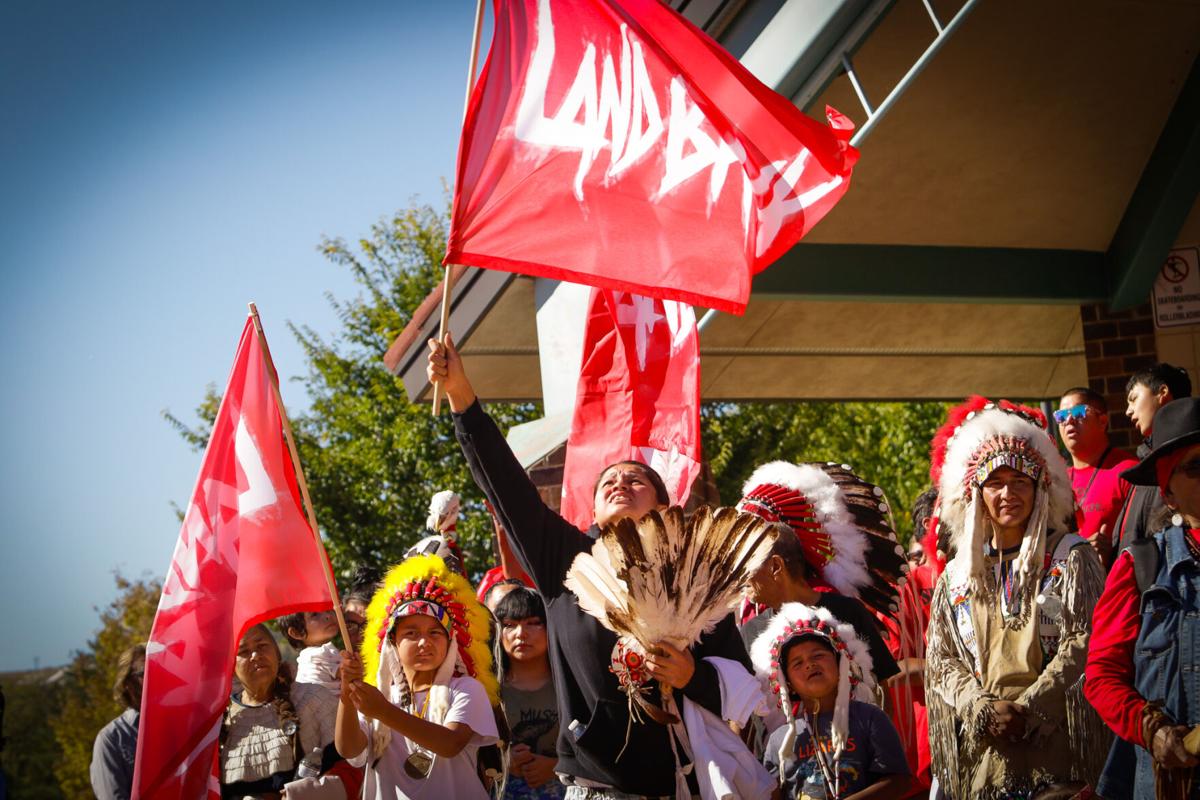
RAPID CITY, S.D. – Three tipis stood tall in downtown Mni Luzahan, the Lakota word for Rapid City, surrounded by community members gathering Monday for the NDN Collective’s first annual Indigenous People’s Day Celebration.
“Community events like this push against the active erasure of Indigenous peoples,” said Nick Tilsen, Oglala Lakota and NDN Collective CEO. “Events like these are an opportunity to remind the world that Indigenous people are still here.”
The gathering provided vendors, live music, a march and opportunities for community members to ask questions and learn about Indigenous culture. The live music boasted big name Indigenous artists such as Mato Wayuhi, the Oglala Lakota composer for Hulu’s hit series Reservation Dogs.
“It’s our opportunity to communicate with people and battle ignorance with education, call people in to support our struggle and support our cause,” Tilsen said.
In 1990, South Dakota was the first state to make the change from Columbus Day to Indigenous/Native Peoples Day. The change came from Governor Mickelson, who made the move to seek reconciliation between Native people and the government. Mickelson’s measure passed unanimously.
Sixteen states and the territory of American Samoa still celebrate Columbus Day.
“We’re celebrating all of the work that has gone into that (the change) but also celebrating being Indigenous and highlighting some of the work done by the community, not just the NDN Collective,” said Murray Lee, Sisseton Wahpeton and the NDN Collective director of community engagement.
Columbus Day is widely fading as a national holiday, being replaced with a day honoring Indigenous people, as Columbus himself did not discover America, Indigenous people lived here, and continue to live here, for tens of thousands of years.
“Indigenous Peoples Day is here, that’s something that won’t change,” Tilsen said. “We’re on the right side of history.”
After encountering the Taino people in the Bahamas, Columbus enslaved tribal citizens to bring back to Spain and sell into slavery. Many died on the way. Within 60 years, the Taino population was reduced to only a few hundred.
Indigenous Peoples Day is meant to celebrate the resilience and history of Native people who Columbus’ arrival disrupted. The effort to switch to Indigenous Peoples Day isn’t without pushback.
“I think that (pushback) is always going to be there, whether a week or a decade has passed. There’s always going to be people have an issue with that,” Lee said. “But I think that the focus needs to be on educating people, creating awareness and celebrating.”
Now, over 500 years later, Indigenous people across the country are celebrating a legacy of survival, and bringing attention to issues that continue to affect the community.
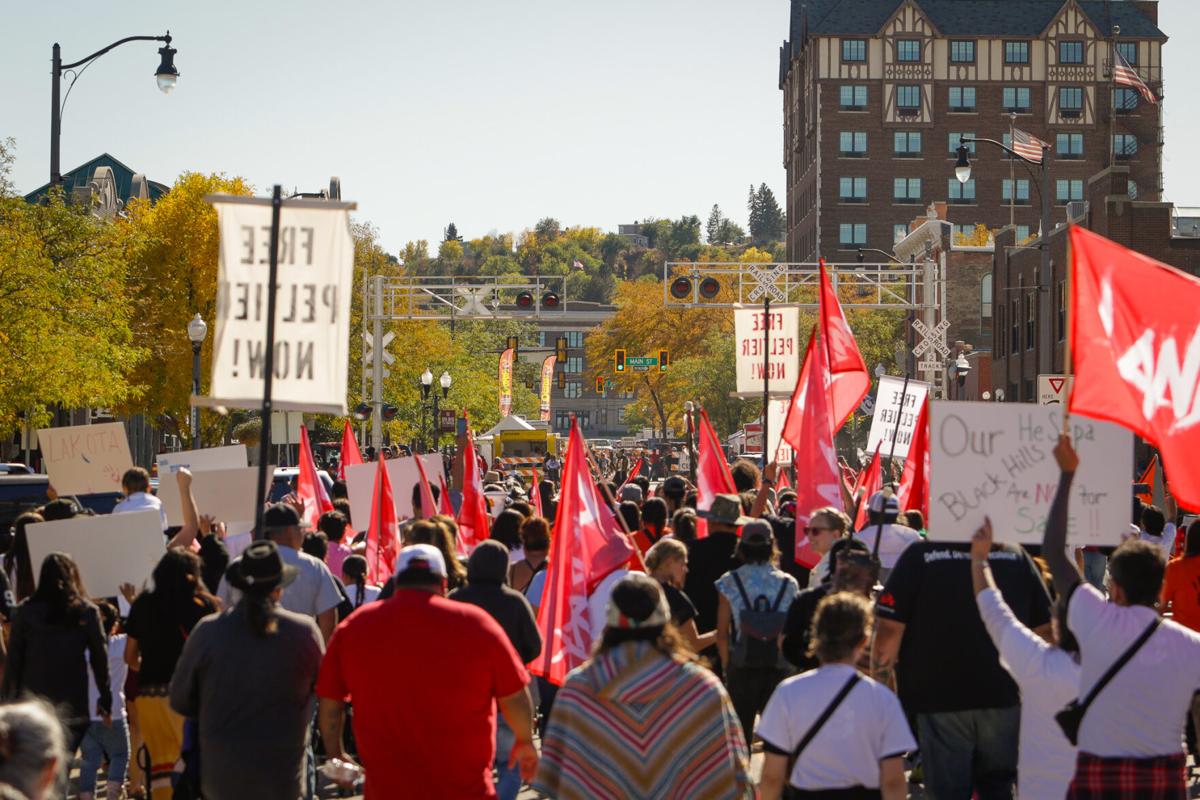
On Monday afternoon, community members marched from the Memorial Park Bandshell to Main Street Square, some walking to raise awareness for Missing and Murdered Indigenous People and boarding schools. Others marched just to be visible.
“At some point, there needs to be a reckoning with the history in this region and nationwide,” Lee said. “But it doesn’t have to be something that’s bad, it can be done through bringing people together, through a celebration.”
NDN Collective also provided discussions and learning opportunities, aimed at helping heal the community and bringing Indigenous and non-Indigenous people together.
“To all the allies out there wondering, ‘what can I do,’ don’t wait for Indigenous people to change Columbus Day. That’s work that our allies and accomplices can do,” Tilsen said. “Take responsibility for it.”

This story is co-published by the Rapid City Journal and ICT, a news partnership that covers Indigenous communities in the South Dakota area.
Our stories are worth telling. Our stories are worth sharing. Our stories are worth your support. Contribute $5 or $10 today to help ICT carry out its critical mission. Sign up for ICT’s free newsletter.

