

Join ICT and IndiJ Public Media’s 2024 End of Year Campaign in honor of Mark Trahant’s 50-year legacy in Indigenous journalism. Help us reach our goal of $75,000 by Dec. 31 to celebrate and amplify Indigenous voices. Donate here!
Jourdan Bennett-Begaye
ICT
WASHINGTON — Elizabeth Rule summed it up succinctly in her book, “Indigenous DC.”
“Nowhere in the world is the essence of the nation-to-nation, government-to-government relationship shared between sovereign tribal nations and the US federal government more readily apparent,” she wrote. “In this way, too, Washington, DC, exists as the political capital of Indian Country as a whole.”
This frame of thought and fact comes to mind at every White House Tribal Nations Summit.
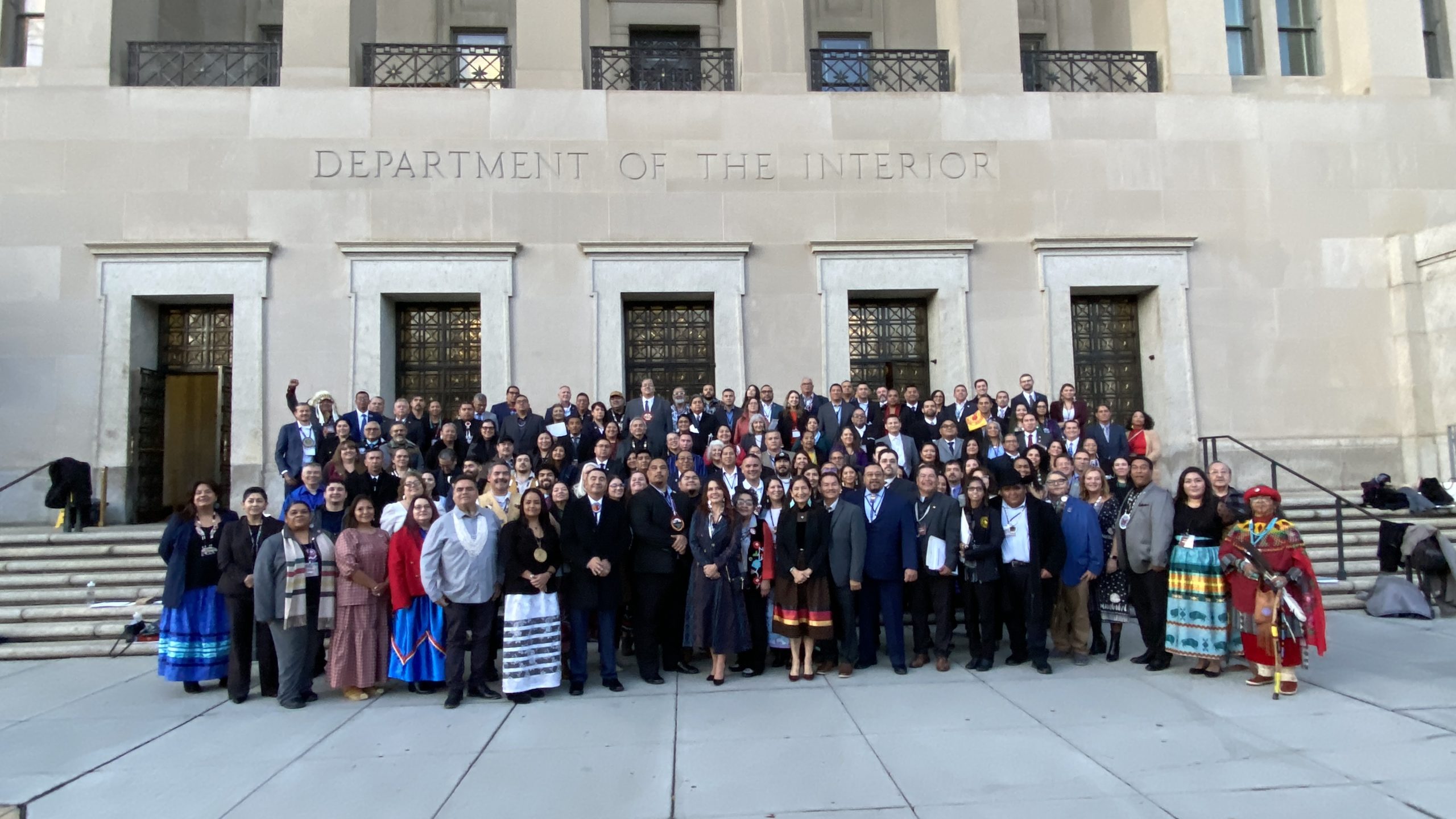
It’s a sight to see when you approach the U.S. Department of the Interior, the spot where the Bureau of Indian Affairs takeover happened in 1972 and where now the department is led by the first Native American in the president’s cabinet.
As many know, it’s the very department that set out to destroy Native people.
That’s a different story now.
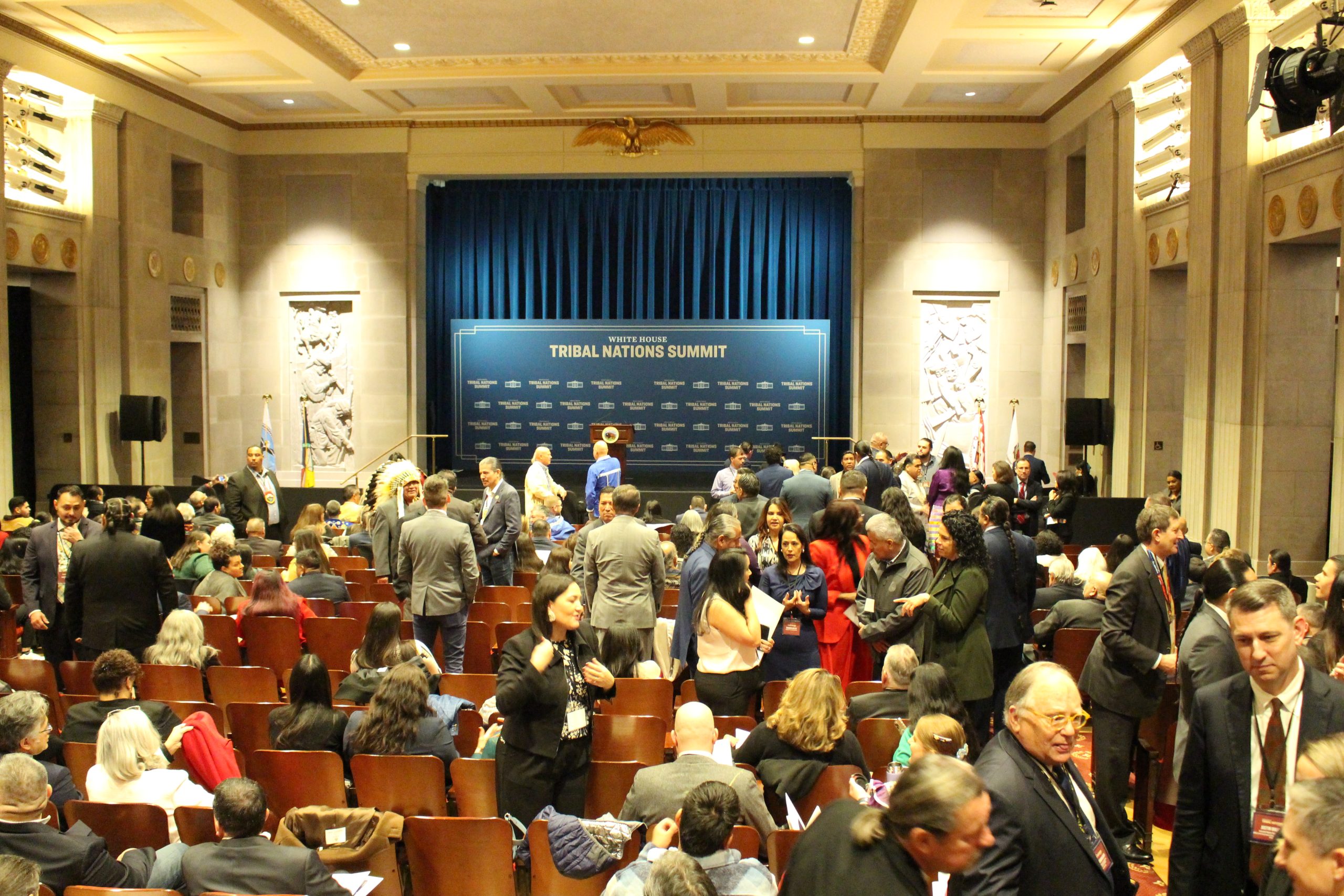
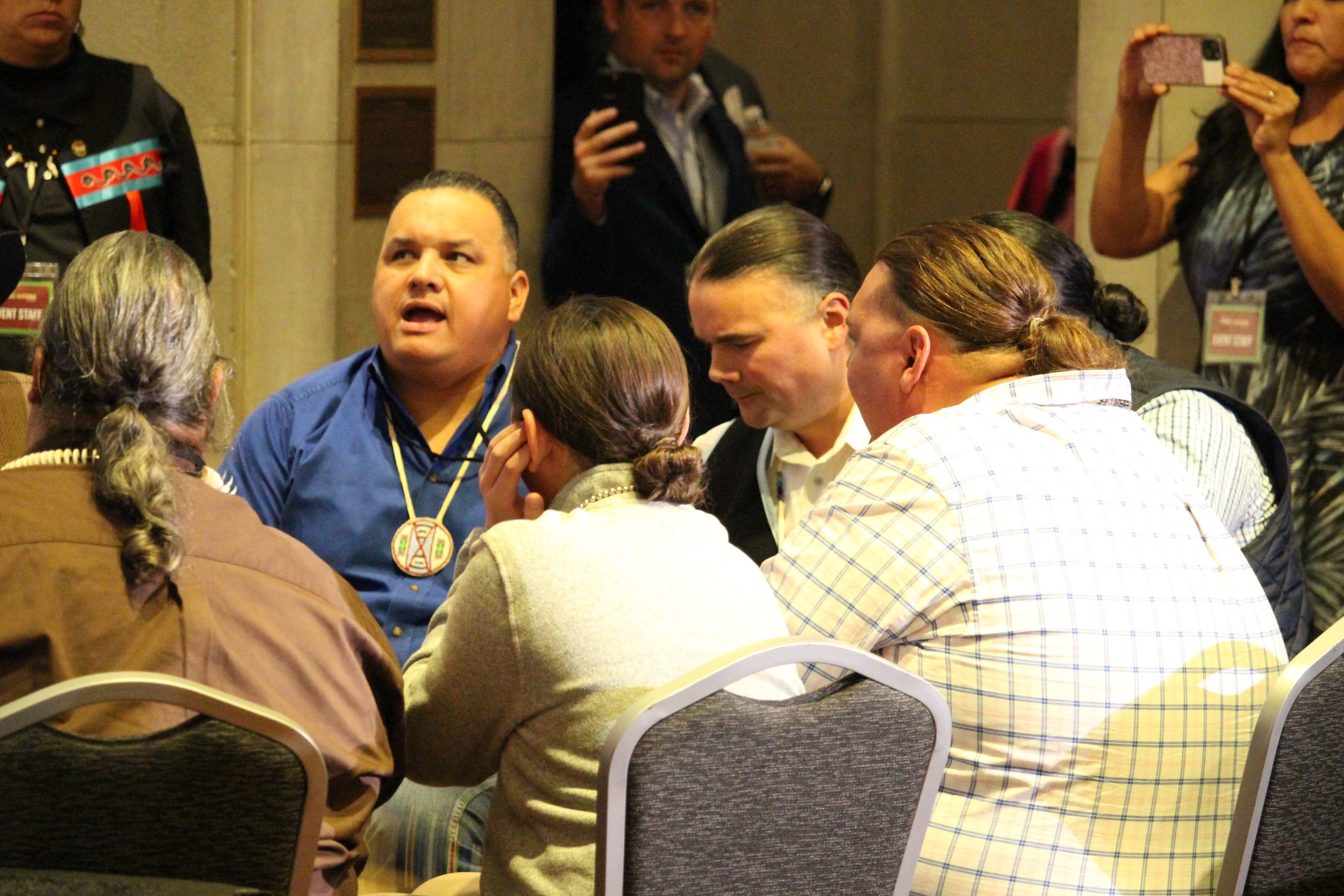
You’ll find Indigenous leaders (and security guards) flooding the lobby. Inside the Sidney R. Yates auditorium, more leaders and so many Native people are walking around as federal officials, advocates and press make sure everything is set in place for the day and catch up with one another.
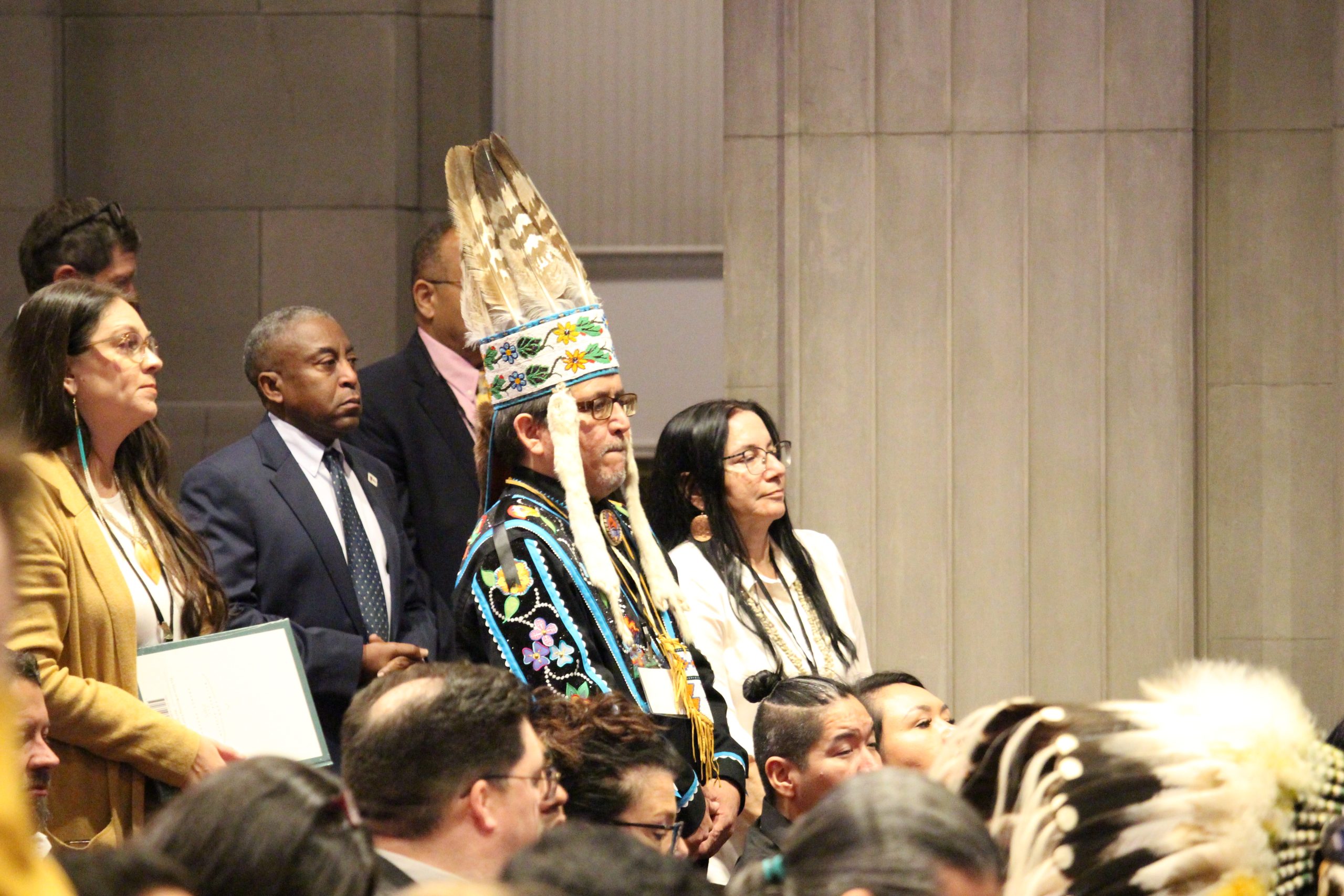
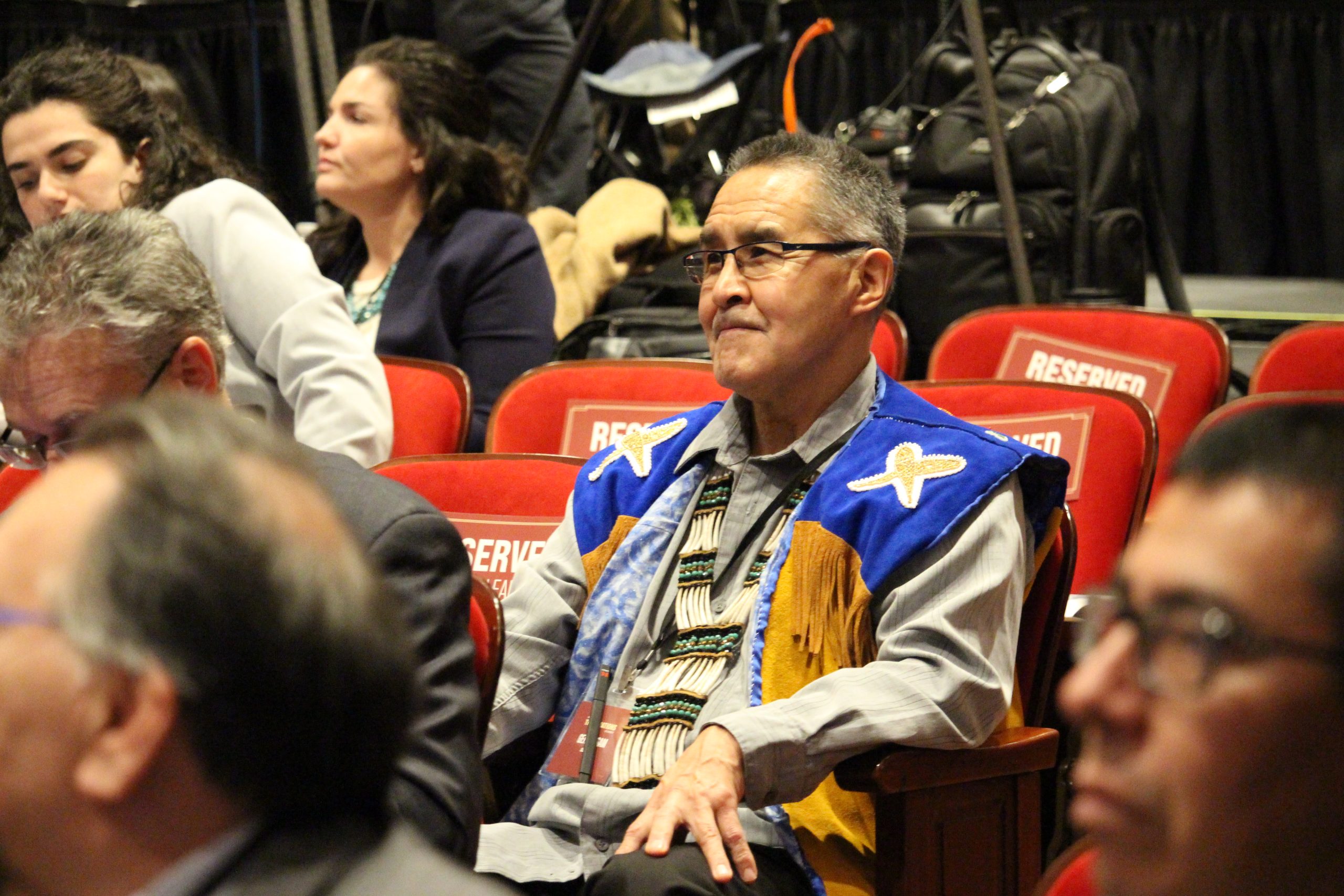
For the entire day — and only day of a summit that had stretched over two days the last two years — the mood took on a unifying, reflective, and appreciative tone.
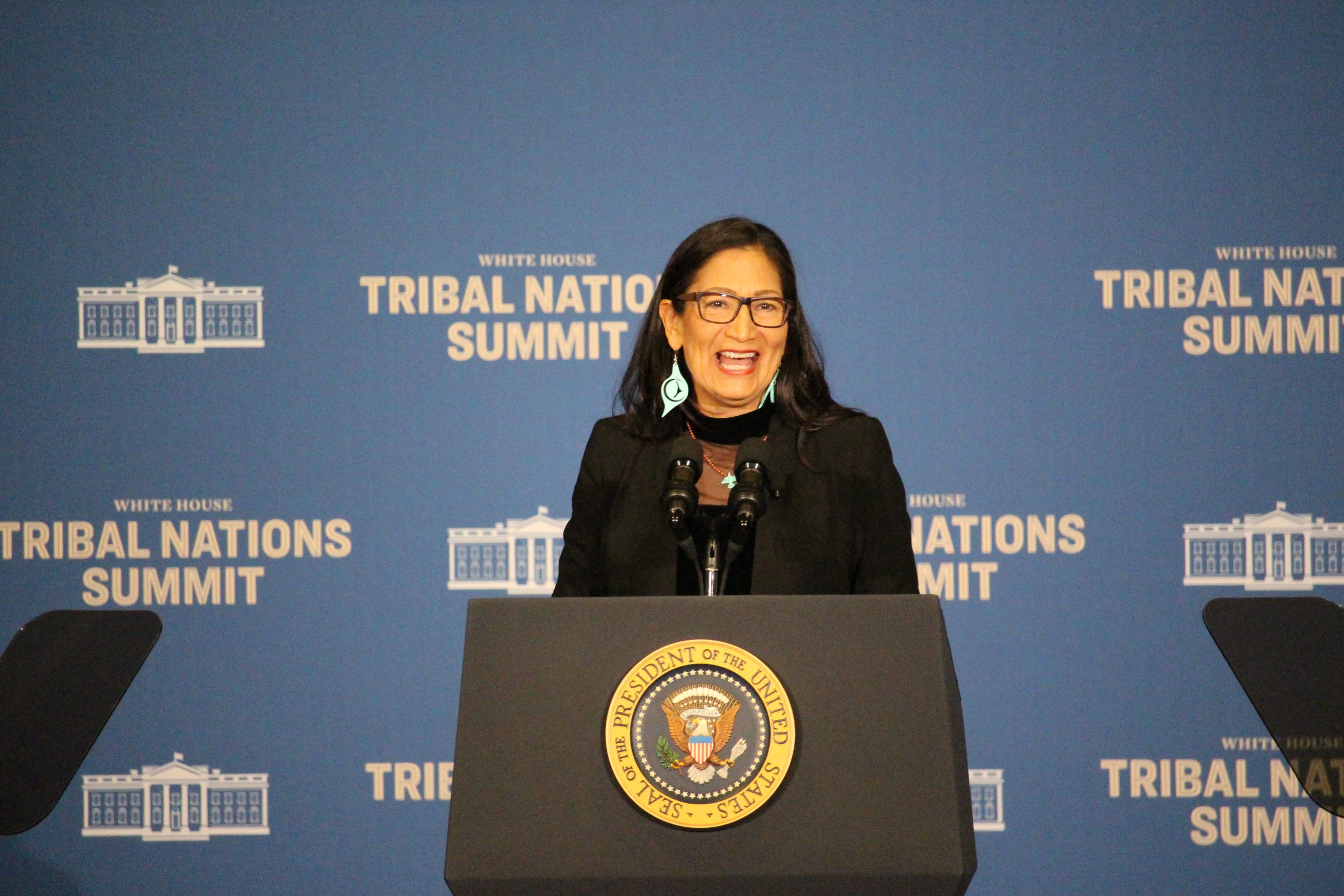
“Early on in my tenure as secretary, when this building was unfamiliar and the road ahead packed full, I knew one thing for sure, that while my role as secretary was new, my intentions for Indian Country were not,” said Interior Secretary Deb Haaland, Laguna Pueblo. “I knew that it was my job, our job, to achieve enduring progress for our people with the time we were given.”
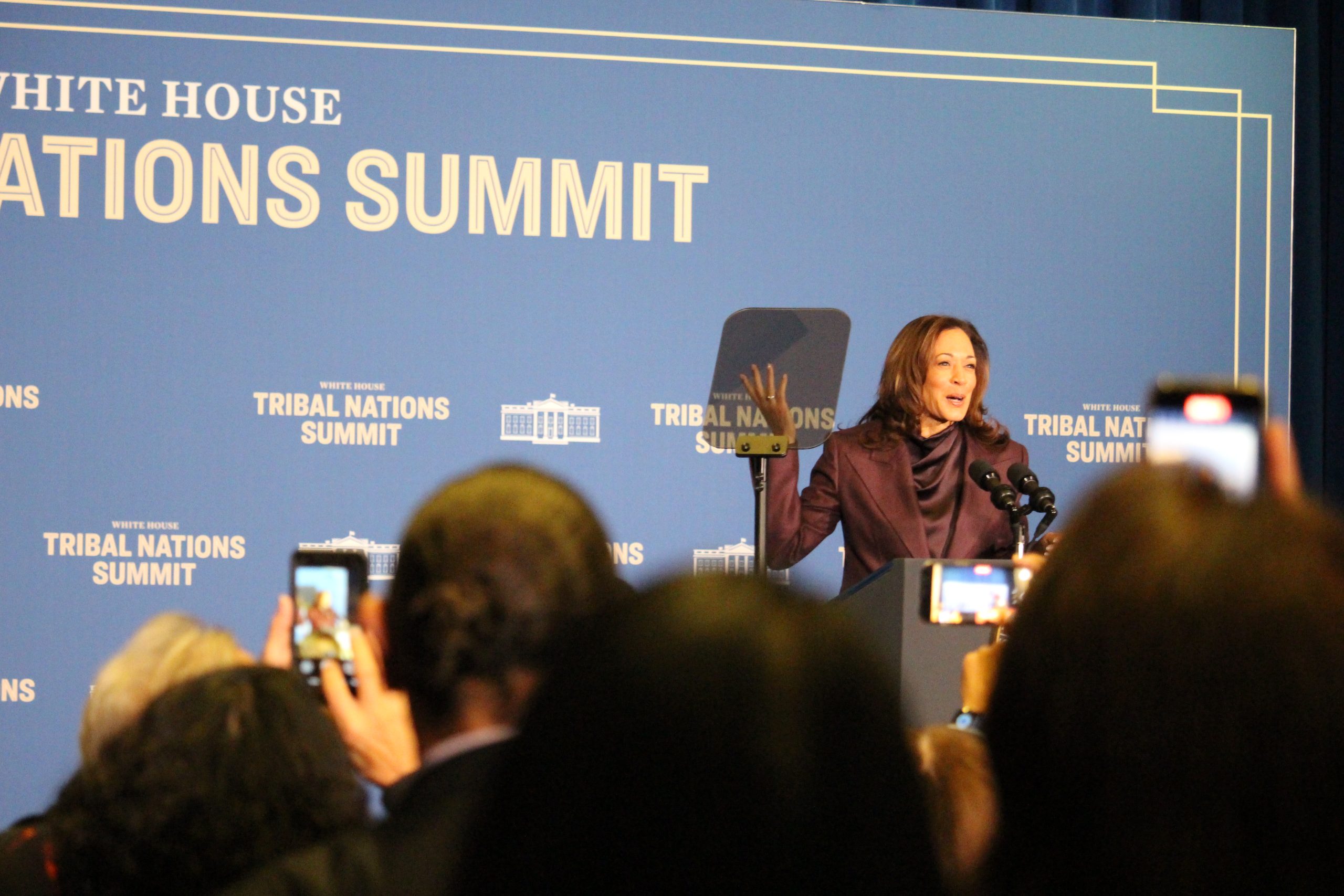
Really, everyone tried their best to instill hope for the future, from Vice President Kamala Harris to Haaland.
“This is my last year to address this audience as Secretary of the Interior, and I want you to know that I leave here inspired,” Haaland said in her opening remarks at the summit on Monday, Dec. 9.
“I leave empowered by all that we have accomplished together,” she said. “Everything that we accomplished was real and tangible. A transition was inevitable and even though some of the future seems uncertain at this point – one thing is certain: we’re not going anywhere!”
One tribal leader, Doreen Blaker, president of Keweenaw Bay Indian Community of the Lake Superior Band of Chippewa Indians in Michigan, described changing administrations as it’s always been like a swinging pendulum in Indian Country, using with her hands to imitate the pendulum itself, referring to the changing cultural, emotional, and policy shifts that come with each new administration or even within one administration itself.
Such is true.
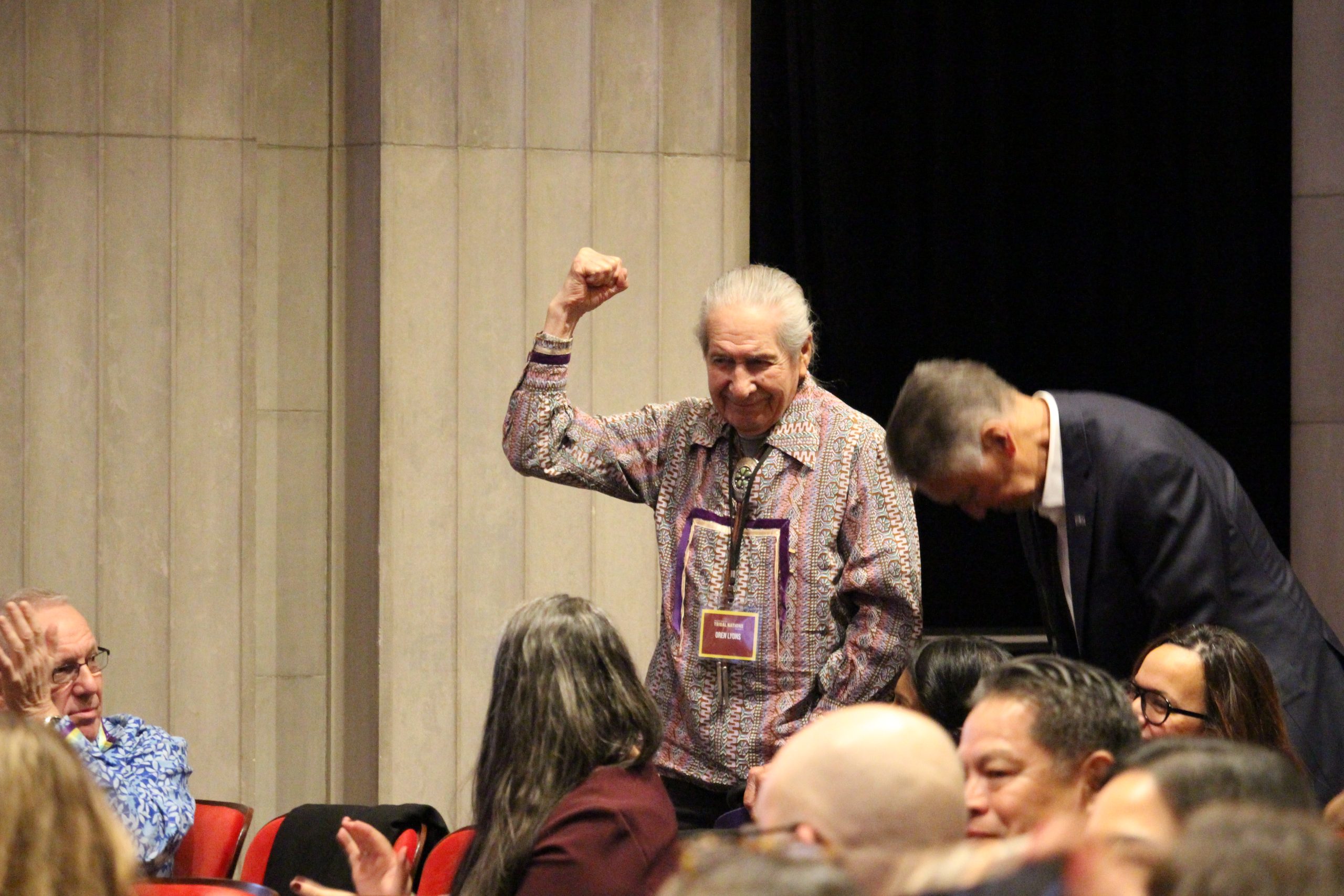
“We heard a couple of people say very forcefully that Joe Biden’s administration was as friendly to Indian Country as ever. And I heard chants of, ‘Thank you, Joe. Thank you, Joe,’ from the audience here,” she said.
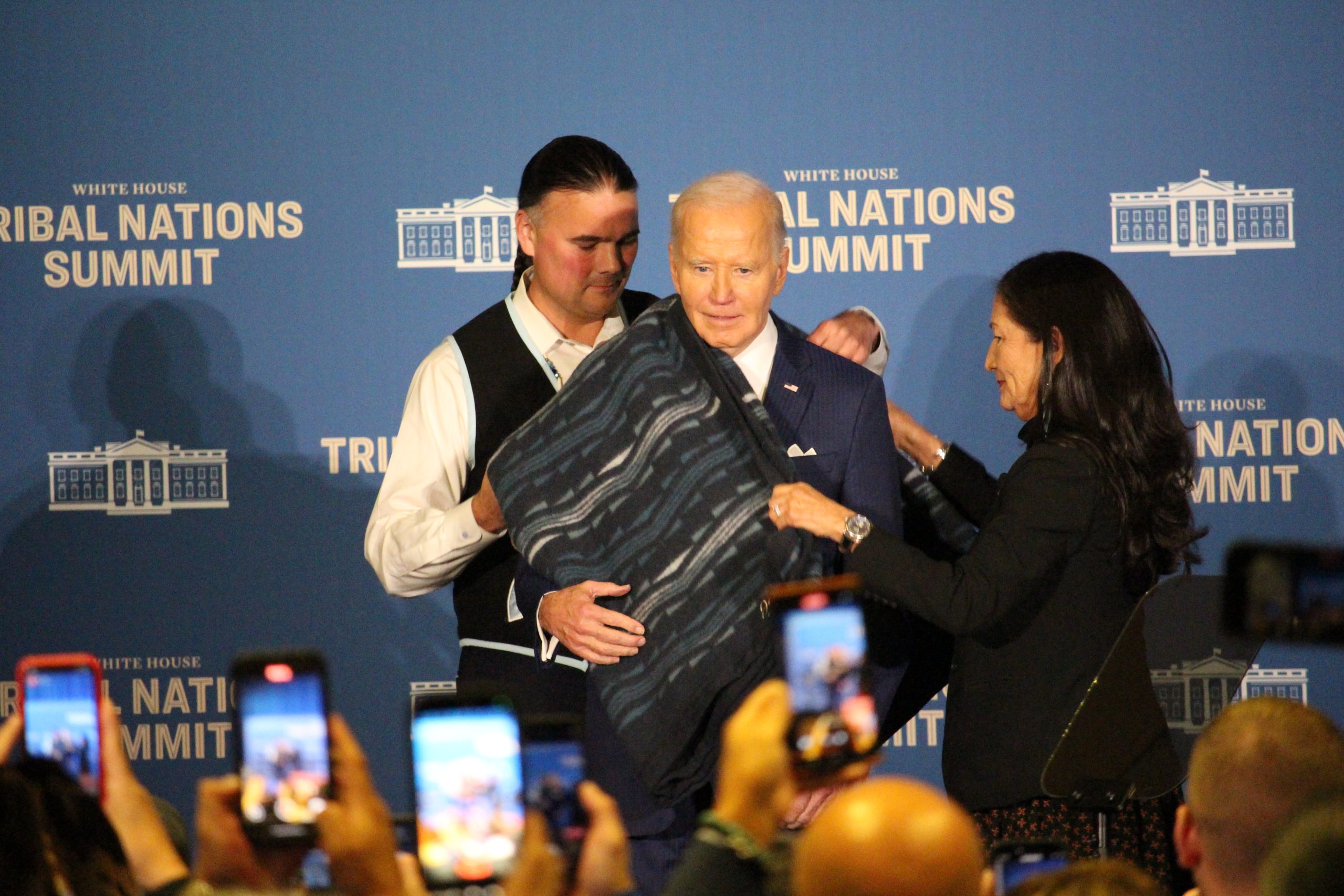
Before Biden gave his remarks to the crowd, Haaland and Assistant Secretary Bryan Newland, Bay Mills Indian Community, gave the president a blanket from Eighth Generation, a Native-owned business, for his big investment in Indian Country. Haaland said she had the blanket embroidered with the words, “Joe Biden, Champion for Indian Country, 2021-2024.”
While wrapped in the blanket, Biden joked that he could’ve used the blanket in the U.S. Capitol Christmas Tree Lightning Ceremony on Dec. 4. He said it was freezing.
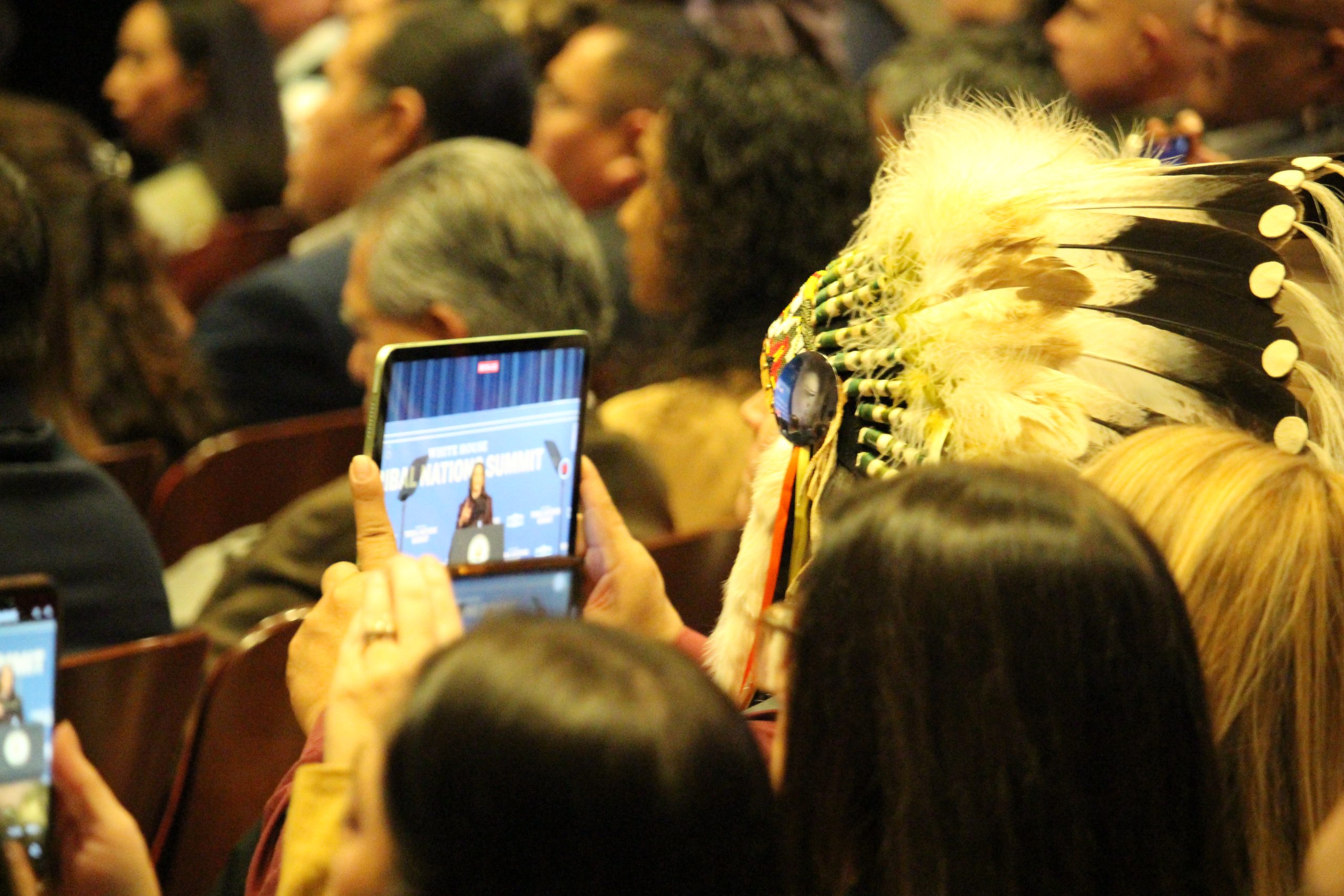
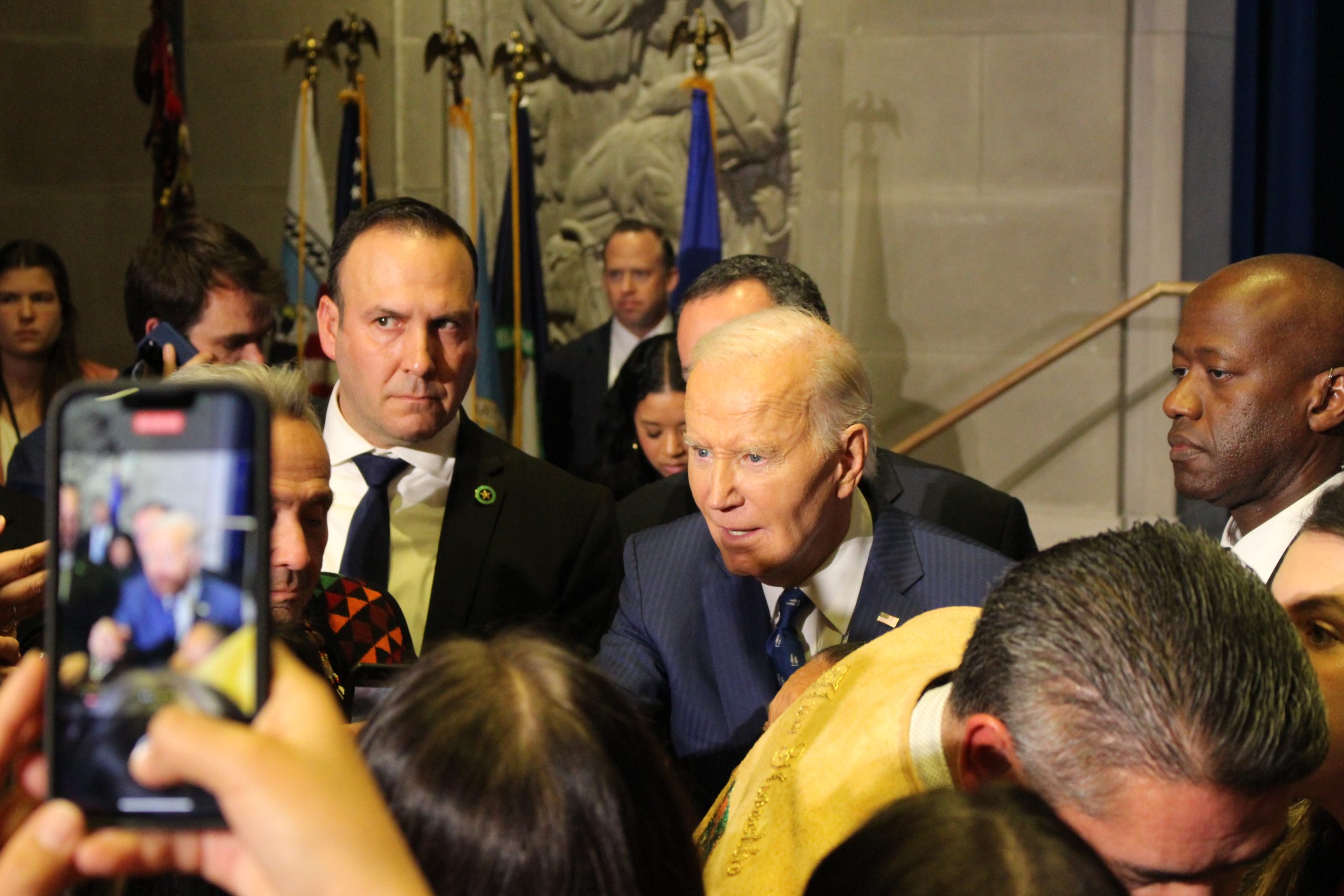
Tribal leaders and other attendees held up their phones for photos and livestreamed his remarks back to their communities.
“This is my final White House Tribal Nations Summit as your president,” Biden said to the room full of people and to the hundreds of viewers on YouTube. “It’s been an honor of a lifetime, ushering in a new era of tribal sovereignty and self-determination, a new era grounded in dignity and respect.”
To the surprise of the room and his security, President Biden didn’t leave right away as usual. He walked off stage to the barricade that separated him from the audience to shake hands, take photos, and talk with attendees for about 15 minutes.
(Related: Joe Biden’s tribal summit raises expectations_

While much of the mood in the auditorium was celebratory, not all tribal nations felt the same.
The Cow Creek Band of Umpqua Tribe of Indians in Oregon said in a press release with more than 30 tribal nations that the Biden administration betrayed tribal sovereignty. Oregon Sens. Jeff Merkley and Ron Wyden and U.S. Rep. Cliff Bentz, the California governor and senators, and 20 other congressional members also stand behind the Cow Creek Band.
“It is performative to celebrate an Administration’s contributions to Indian Country when the actions tell a very different story,” said Cow Creek Umpqua Tribal Chairman Carla Keene in a news release. “We have been dismissed and ignored about policy that will devastate our social, cultural, and economic livelihood. There is time to do the right thing and put a stop to the pending decisions that will irreversibly harm Tribes across the Pacific Northwest and West Coast, which is a backwards step in American History, not forward.”
The tribe has been urging Haaland and the Biden administration to reverse their decision to approve the state’s first off-reservation casino and many others on the West Coast.
This end of the pendulum also saw the Biden-Harris administration appoint more than 80 Native people in federal government roles. The most in any administration that ICT could calculate.
Other announcements that came from the summit included:
- The establishment of the Carlisle Federal Indian Boarding School National Monument in Carlisle, Pennsylvania
- 69 new co-stewardship agreements in 2024 alone. The department has entered into 400 co-stewardship agreements with tribes, Alaska Native corporations, and consortiums
- A partnership between the Interior Department, Library of Congress, and the Smithsonian’s National Museum of American History to “preserve these survivor stories and experiences and share them through far reaching resources, such as online and both traveling and long-term exhibitions,” Haaland said
- A 10-year language revitalization plan.
“While there were once hundreds of thriving Native languages in the U.S., over three quarters of the remaining 190 languages spoken today are now endangered. Studies indicate fewer than 20 languages will exist by 2050 if no action is taken,” according to a White House press release.
The 10-year Native language revitalization plan was published by the departments of Interior, Education, and Health and Human services and the White House Council on Native American Affairs.
“The plan lays out a long-term, all-of-government strategy that works with Tribal Nations, the Native Hawaiian Community, urban Native communities, Native language experts, schools, community organizations, and the philanthropic sector for the protection, preservation, reclamation and revitalization of Native languages,” read the White House press release.
The plan would expand access to immersion language environments, support community-led revitalization efforts, and “develop, grow and sustain Native language support networks,” according to the release.

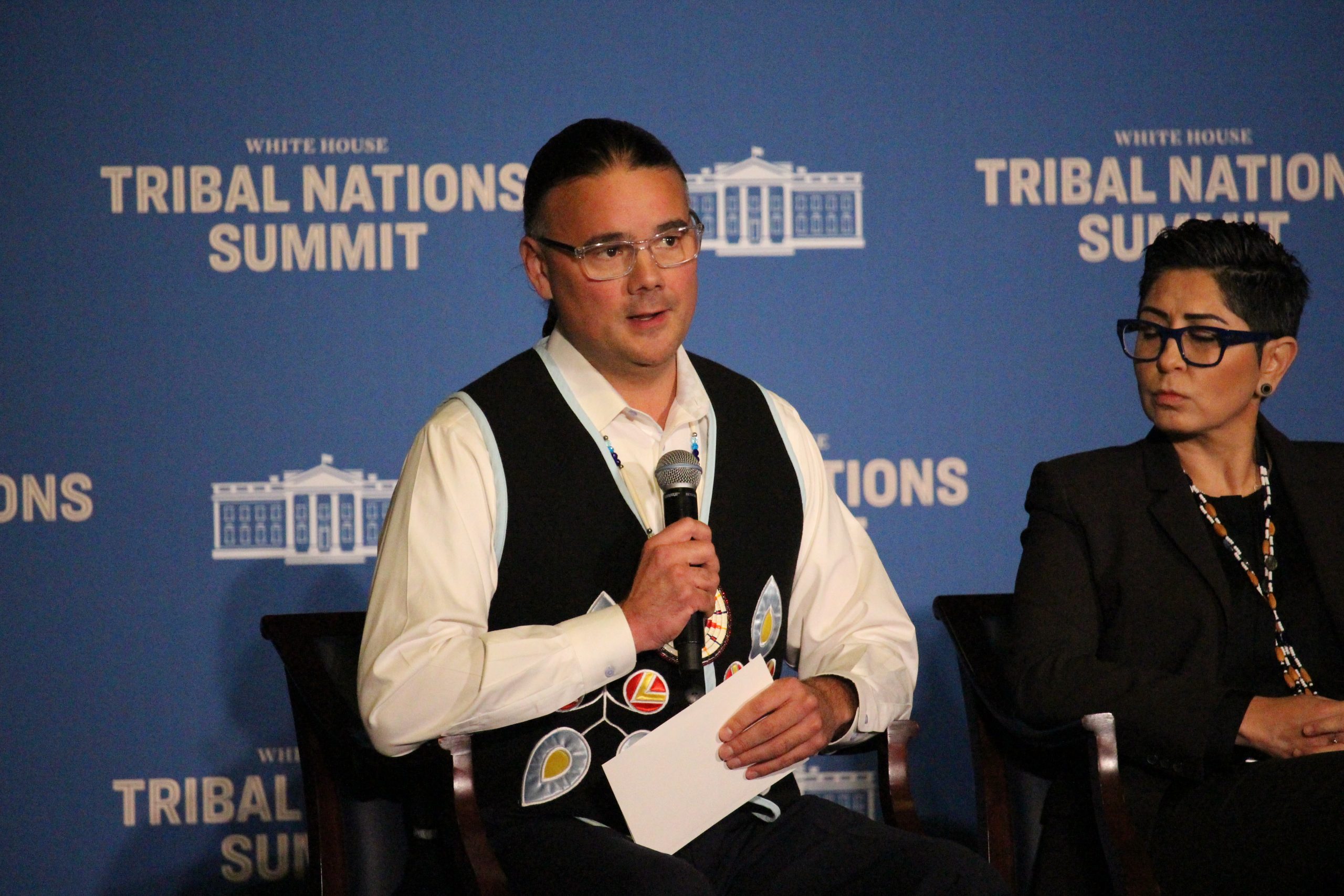
Navajo Nation President Buu Nygren said he was glad there’s a language revitalization plan out.
“Indigenous languages are continuing to be depleted, especially on Navajo. Even though there’s thousands of Navajo speakers, but they’re mainly elders over their 60s,” he said. “The younger generation, my generation, we’ve got to somehow come up with a way that we can save our language because the most spoken Native language, which is Navajo, in 50 years it could be gone.”
Besides the Biden-Harris administration efforts from the last four years and this year being highlighted at the summit, much of the conversation has been about continuing the work in the next administration.
“Transitions are disruptive, regardless of how we might feel about one leader or another. That’s true on tribal councils and it’s true in Washington,” Haaland said.
Deborah Parker, Tulalip and chief executive of the National Native American Boarding School Healing Coalition, said she hopes that incoming Donald Trump administration honors tribal sovereignty and looks to tribes for “some creative solutions” for future generations.
“Working together is something that’s critically important for us,” she said, “for all of us who reside here in the United States.”
ICT’s Stewart Huntington contributed to this report.

Like this story? Support our work with a $5 or $10 contribution today. Contribute to the nonprofit ICT. Sign up for ICT’s free newsletter.

