Greetings, relatives.
A lot of news out there. Thanks for stopping by Indian Country Today’s digital platform.
Each day we do our best to gather the latest news for you. Remember to scroll to the bottom to see what’s popping out to us on social media and what we’re reading.
Also, if you like our daily digest, sign up for The Weekly, our newsletter emailed to you on Thursdays. If you like what we do and want us to keep going, support and donate here.
Okay, here’s what you need to know today:
The offices of the Indigenous Environmental Network are located in the corner of a huge, old railroad building tucked away in an industrial corridor in Bemidji, Minnesota. A small sign with the letters, “IEN,” discreetly marks the red door to the office.
Tom Goldtooth, Dine and Dakota, chief operating officer and one of the founders of the Indigenous Environmental Network, is running late.
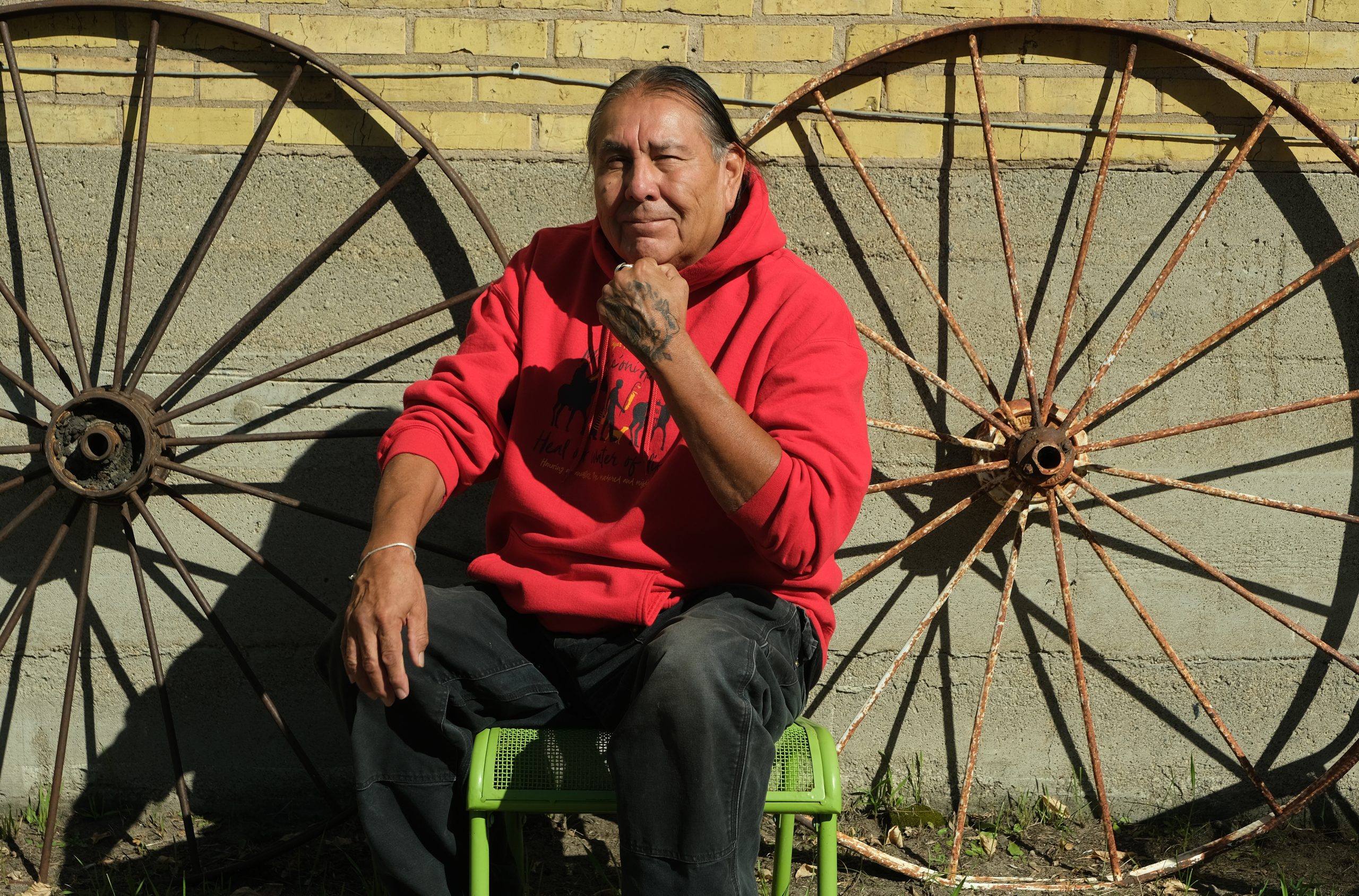
He pulls up in his truck with the near-constant dings of incoming alert messages on his mobile phone. Several people are waiting for him in the gravel parking lot as he unfolds his tall, lanky frame to a standing position. He and the network are managing several projects that demand his attention.
Unfazed, he attends to a few minor crises before sitting down for an interview in his crowded office. A steady stream of co-workers pass through the office, picking up supplies and asking questions, as his phone continues to emit a constant stream of alerts.
Nonplussed, he begins to tell the story of his organization, how the work he’s doing now got its start at an Indian bar in Phoenix, Arizona, and how he came to believe that people have lost their understanding of humanity’s duties and responsibilities to each other and the Earth. READ MORE. — Mary Annette Pember, Indian Country Today
—
SUPPORT INDIGENOUS JOURNALISM. CONTRIBUTE TODAY.
—
The United States remains divided on the politics of climate change.
The Senate recently blocked a spending bill that would have directed $555 billion for climate programs, dramatically shifting resources towards doing something. That measure was blocked, in part, by a Democrat from West Virginia who is protecting the coal industry (his family owns a company that profits from coal and he is the carbon industry’s favorite legislator, receiving more in campaign donations than any other member of Congress.)

And, at the same time, U.S. carbon-based emissions grew last year at a pace even faster than the economy itself, nearing pre-pandemic levels. What’s driving this growth is transportation and power generation. And one huge part of that equation is an increase in coal production and emissions.
The independent consulting group Rhodium Group published a preliminary look at 2020 emissions and the bottom line is that the United States (and much of the world) is moving away from the Paris Agreement climate target of reducing emissions by 52 percent below 2005 levels by 2030.
This is not good news, but it’s also the context for another story, one that remains almost hidden, about an initiative that has the potential to dramatically shift how companies are regulated by the United States. READ MORE. — Mark Trahant, Indian Country Today
Sam McCracken, Fort Peck Assiniboine and Sioux Tribes, was named Schwab Foundation Social Intrapreneur of the Year.
McCracken is the founder and general manager of Nike N7, a division of the company that focuses on Native designed shoes and apparel.
“This year’s Schwab Foundation Awardees demonstrate that through values-based approaches centring on inclusivity, collaboration, relationships of trust and long-term sustainability, we have proven ways of changing institutions and mindsets, and disrupting traditional ways of working that hold systemic barriers in place,” François Bonnici, director of the Schwab Foundation for Social Entrepreneurship, said in a news release.
The award was announced Tuesday at the World Economic Forum.
“McCracken’s work with Nike N7 identified him as a leader who drives the development of new initiatives that address societal challenges,” read an articleabout the award on the Nike website.
The Biden administration on Tuesday quietly launched its website for Americans to request free at-home COVID-19 tests, a day before the site was scheduled to officially go online.
The website, COVIDTests.gov, now includes a link for Americans to access an order form run by the U.S. Postal Service. People can order four at-home tests per residential address, to be delivered by the Postal Service. It marks the latest step by President Joe Biden to address criticism of low inventory and long lines for testing during a nationwide surge in COVID-19 cases due to the omicron variant.
White House press secretary Jen Psaki said the website was in “beta testing” and operating at a “limited capacity” ahead of its official launch. The website will officially launch mid-morning Wednesday, Psaki said. READ MORE.— The Associated Press
—
Sign up here to get ICT’s newsletter
—
The creators of the graphic novel “The Rez Detective” are explaining their journey. Plus, we’re breaking down the process of redistricting and how it’ll likely impact the Native vote.
Watch here:
Nee-gon-we-way-we-dun introduced himself. He said he was from the Three Fire Society, Gathering of the Sacred Pipes, a Sun Dancer, and the American Indian Movement.
“My spirit name is Nee-gon-we-way-we-dun,” he said. “The translation of that is Thunder Before the Storm.”
Nee-gon-we-way-we-dun said he was only 11-years-old when a Becker County judge gave him another name, “Incorrigible.”
Clyde Bellecourt died Tuesday at 85.
There is a story here. Or a story layered on another story. Make that stories. READ MORE. — Mark Trahant, Indian Country Today
—
FOLLOW ICT ON SOCIAL MEDIA: FACEBOOK, TWITTER, INSTAGRAM, TIKTOK.
—
From social media:
- ‘An extraordinary Navajo leader’:Peterson Zah, former Navajo president, received the Grand Canyon Trust Lifetime Achievement Award for his decades of leadership.
- Tribal chairman gives lawmakers history lesson: State and tribal governments have long had an uneasy relationship in South Dakota, and the annual State of the Tribes address.
- Vicious circle: Tribal broadband program hindered: Many tribes did not have the broadband access needed to apply for the funding that would let them improve broadband access.
- Illegal Amazon gold seeps into supply chains:Tarnished Gold: ‘People know where the gold comes from, but they don’t bother to go very far back into the supply chain because they know they will come into contact with all kinds of criminal activity.’
- Indigenous news outlets, nonprofits drive deeper coverage:Journalism-focused philanthropy quadrupled from 2009 to 2019 as traditional newspaper revenue shrank.
- One of the rarest eagles in the world has birdwatchers flocking to Maine.
- North Dakota Native American Hall of Honor seeks nominees.
- The Remapping of America—From an Indigenous Point of View.
We want your tips, but we also want your feedback. What should we be covering that we’re not? What are we getting wrong? Please let us know. icteditors@indiancountrytoday.com.