
Greetings, relatives.
A lot of news out there. Thanks for stopping by Indian Country Today’s digital platform.
Each day we do our best to gather the latest news for you.
Okay, here’s what you need to know today:
BEMIDJI, Minnesota — For some people, a talent or ability seems to be baked into their DNA; we call them natural-born. Nedahness Rose Greene, citizen of the Leech Band of Ojibwe, is such a one, a natural-born photographer or shooter.
Greene wasn’t aware of her talent, however, until about five years ago.
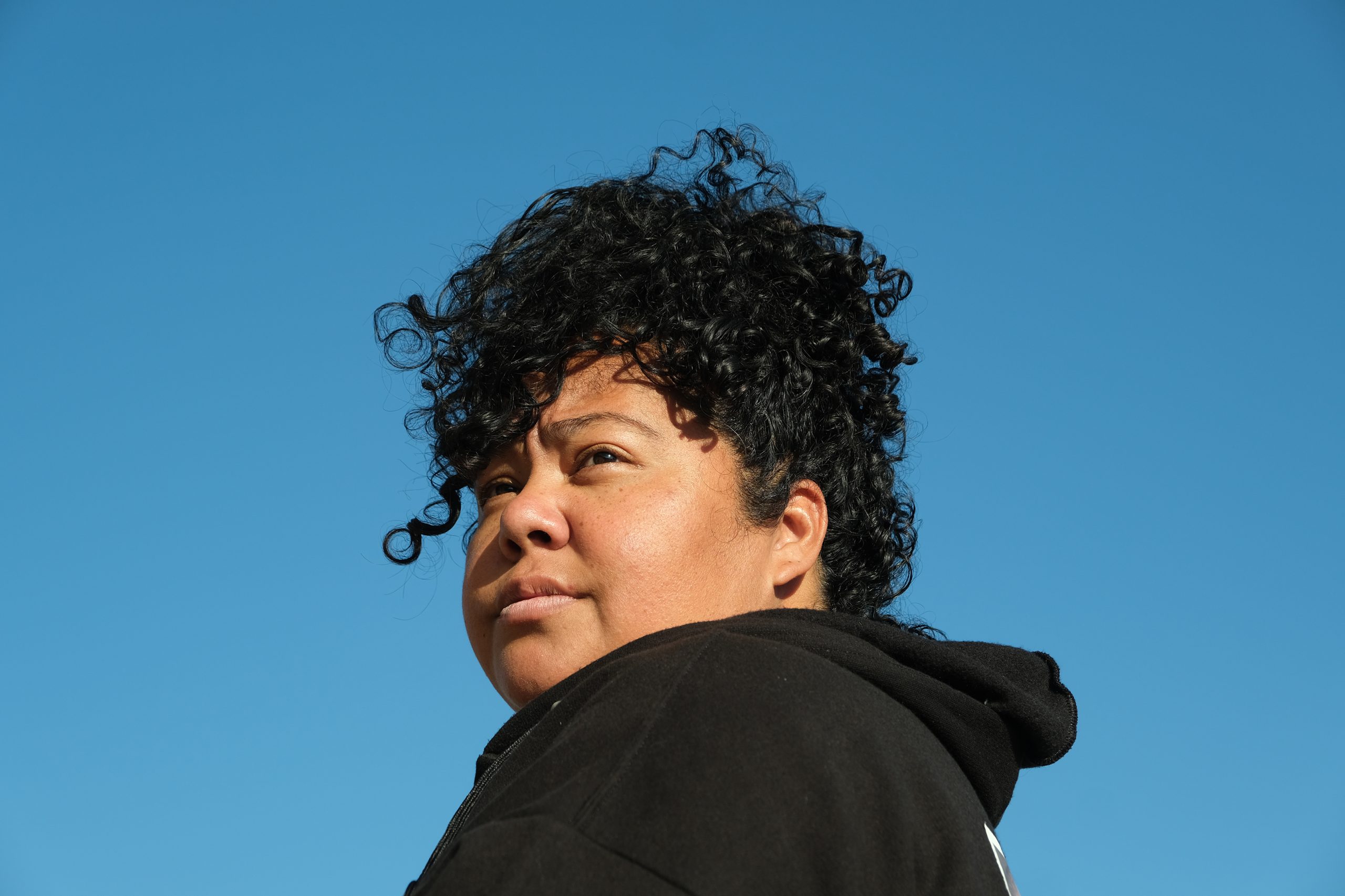
A single mother, she was living in North Dakota, watching her now-seven-year-old twins as well as her sister’s children. Beyond caring for the children, she had little to divert her interests. One day, she picked up her sister’s iPad and began taking photos of the children and the world around her. Casually, she posted some of the images online.
“Everybody asked, “Hey, who’s your photographer?’” Greene said.
Greene got excited. She began shooting more portraits, and was overwhelmed by the encouragement she received online. Her family bought her an inexpensive digital camera, and her interest grew. READ MORE. — Mary Annette Pember, Indian Country Today
—
SUPPORT INDIGENOUS JOURNALISM. CONTRIBUTE TODAY.
—
This week around the world: Indigenous women protest at COP26 about the violence against Indigenous women and girls, West Papua calls for international help, Indigenous agents fight deforestation using high tech, police commissioner opposes COVID plan for Indigenous communities and how Indigenous methods can reduce wildfire risk.
Coverage around the world on Indigenous issues for Nov. 8-14, 2021. READ MORE.— Deusdedit Ruhangariyo, special to Indian Country Today
The first White House summit on tribal nations since the Obama administration is taking place this year virtually with hopes of next year’s being in person.
Tribal leaders were invited to participate in the two-day virtual event to discuss how the federal government can invest in and continue to strengthen the nation-to-nation relationship and ensure progress in Indian Country.
- Day 1 takeaways from tribal nations summit
- Day 2 takeaways from tribal nations summit
- Joe Biden to protect Native site, boost safety
- US: Oil, gas leases on hold around Chaco park
- How the White House Tribal Nations Summit started
A federal judge retained jurisdiction Tuesday in a dispute over a Canadian oil pipeline that runs through a section of the Great Lakes, rejecting Michigan Gov. Gretchen Whitmer‘s contention that the case belongs in state court.
The clash over whether Enbridge Energy’s Line 5 should continue operating raises issues “under consideration at the highest levels of this country’s government” involving a U.S.-Canada treaty and federal pipeline safety regulation, U.S. District Judge Janet Neff ruled.
The matter “is properly in federal court,” she wrote in a 15-page opinion that drew praise from Enbridge. Whitmer’s office expressed disappointment and environmentalists ramped up pressure on President Joe Biden to intervene.
Line 5 moves 23 million gallons daily of crude oil and natural gas liquids between Superior, Wisconsin, and Sarnia, Ontario, passing through northern Wisconsin and Michigan’s Upper Peninsula. It’s part of a network transporting Canadian crude to refineries in both nations. READ MORE. — The Associated Press
—
Sign up here to get ICT’s newsletter
—
The UN Climate Summit wrapped up in Glasgow, Scotland last week. We’re joined by Lycia Maddocks who attended the event and tells us what the outcomes of the summit mean for Indigenous people. Plus, we’re talking redistricting and the latest happenings in Washington with Holly Cook Macarro.
A ski resort in Grand County, Colorado, has acknowledged it sits on the homelands of the Arapaho, Cheyenne and Ute people.
Professional skier Connor Ryan, Lakota descent, helped start the conversation at Winter Park Resort, according to 9News.
“Native Tribes didn’t give these lands up. They were taken from them. And, there’s no immediate way for Winter Park or skiers or boarders to automatically correct that and give everything back,” Ryan said.
Ryan is working with Winter Park to give more access to outdoor sports to Native people including a scholarship to children from the Ute tribe, according to the report.
Ryan was recently profiled in an issue of POWDER. Details here.
—
FOLLOW ICT ON SOCIAL MEDIA: FACEBOOK, TWITTER, INSTAGRAM, TIKTOK.
—
The United States Department of Agriculture announced new initiatives Monday marking its commitment toward Indian Country and tribal self-determination. The USDA announcement coincided with the kickoff of the virtual White House Tribal Nations Summit.
USDA Secretary Tom Vilsack announced the USDA Indigenous Food Sovereignty Initiative and a joint secretarial order, between the USDA and the Department of Interior, regarding tribal co-stewardship of federal lands and water. READ MORE. — Carina Dominguez, Indian Country Today
The United Nations Climate Change Conference, known as COP26, is deep into discussions on worldwide issues as the conference is set to come to a close on Friday, Nov. 12.
To find out how Indigenous issues are being handled, Indian Country Today checked in with the two Indigenous leaders attending the COP26 meeting in Glasgow, Scotland, and watched the digital discussions.
Graeme Reed, of Anishinaabe and European descent, is co-chair of the International Indigenous Peoples Forum on Climate Change and a member of the United Nations Facilitative Working Group of the Local Communities and Indigenous Peoples Platform.
Andrea Carmen, a citizen of the Yaqui Nation, is co-chair of the UN Facilitative Working Group and executive director of the International Treaty Council. READ MORE. — Mary Annette Pember, Indian Country Today
- Alaska without ANCSA? Look to Metlakatla:‘ANCSA is a fundamentally different system than a reservation’
- New Mexico education plan gets feedback on race, economics:Many letters express concern over resemblances between new standards that require students to learn about racial identity groups and so-called ‘critical race theory.’
- ICWA experts say state laws could protect Native families: ‘The Indian Child Welfare Act is one of the most important acts of external sovereignty a tribe can engage in.’
- Bridging cultural and political gaps through Indigenous first foods:City leaders in Oregon are partnering with nonprofits and tribes to promote first foods, which may hold clues to climate change resilience.
- Little Shell Tribe opens health clinic in Montana:The tribe that gained federal recognition in 2019 opened its medical facility this week.
- 23 Indigenous American Food Activists, Educators, and Other Figures to Know.
- Tribal college blanket contest winner announced.
- An Indigenous women’ssoftball team beats opponents, and machismo.
We want your tips, but we also want your feedback. What should we be covering that we’re not? What are we getting wrong? Please let us know. Email dwalker@indiancountrytoday.com.

