
Amelia Schafer
ICT
RAPID CITY, South Dakota – Exploratory graphite drilling less than a mile north of Pe’ Sla, a sacred site in the Black Hills, must pause following a federal judge’s ruling Monday evening.
“This is what we wanted, this is what we asked for,” said Wizipan Little Elk Garriott, president of NDN Collective and who is Sicangu Lakota, during a livestream following the ruling. “This is a huge victory, this is a big win for the people, for Unci Maka mother earth, for our continued fight for LandBack, for our continued fight to protect mother earth and to ensure a just world for all people.”
U.S. District Judge Camela C. Theeler ruled in favor of a temporary restraining order banning drilling by Pete Lien & Sons until the court hears the full case arguments. The ruling in favor of the nine Oceti Sakowin (Lakota, Dakota and Nakota) tribes over the U.S. Forest Service means all drilling must stop for now.
The forest service granted Pete Lien & Sons its initial permit to drill 18 boreholes on the property on Feb. 27.
The nine tribes — the Oglala, Cheyenne River, Standing Rock, Yankton, Sisseton Wahpeton, Santee, Spirit Lake, Crow Creek and Lower Brule Sioux Tribes — joined an ongoing lawsuit filed by in early April by three non-profit organizations — NDN Collective, Earthworks and the Black Hills Clean Water Alliance.
Pe’ Sla is a unique “bald spot” of natural prairie in the center of the Black Hills. The site is innately tied to Lakota people’s creation story and has been used for thousands of years as a site of prayer. A large portion of the northern most part of Pe’ Sla was purchased by several tribes and entered into trust land in 2016. While the drilling itself is not occurring directly on this trust land, it’s within a 2-mile buffer zone created around the tribal trust land by the U.S. Forest Service.
Additionally, the area is full of cultural artifacts and sites. A study of the Pe’ Sla area by the Rosebud Sioux Tribe and several other Oceti Sakowin nations identified 484 traditional cultural properties, five historic sites, three archeological sites, and four disturbed cultural sites within Pe’Sla, said Little Elk Garriott during his testimony at the hearing.
The area is rural and the few roads that would allow access to the drilling site cut directly through Pe’ Sla. Increased traffic could disrupt ceremony, affect the area’s buffalo herd and elevate fire risk, Little Elk Garriott testified.
The decision comes on day five of an Indigenous-led occupation at the drilling site. Following the start of the occupation on April 30, all drilling stopped at the site.
“It only happened because people were willing to stand up, because people were willing to be brave,” Little Elk Garriott said.
The ruling came after three hours of arguments between attorneys representing the tribes and non-profit organizations and U.S. forest service attorneys.
“We know that this is bigger than Pe’ Sla… we know this is happening all over the nation,” said Valeriah Big Eagle, Ihanktonwan Dakota and the director of HeSapa Initiatives for NDN Collective. “So this is a huge win for all of us.”
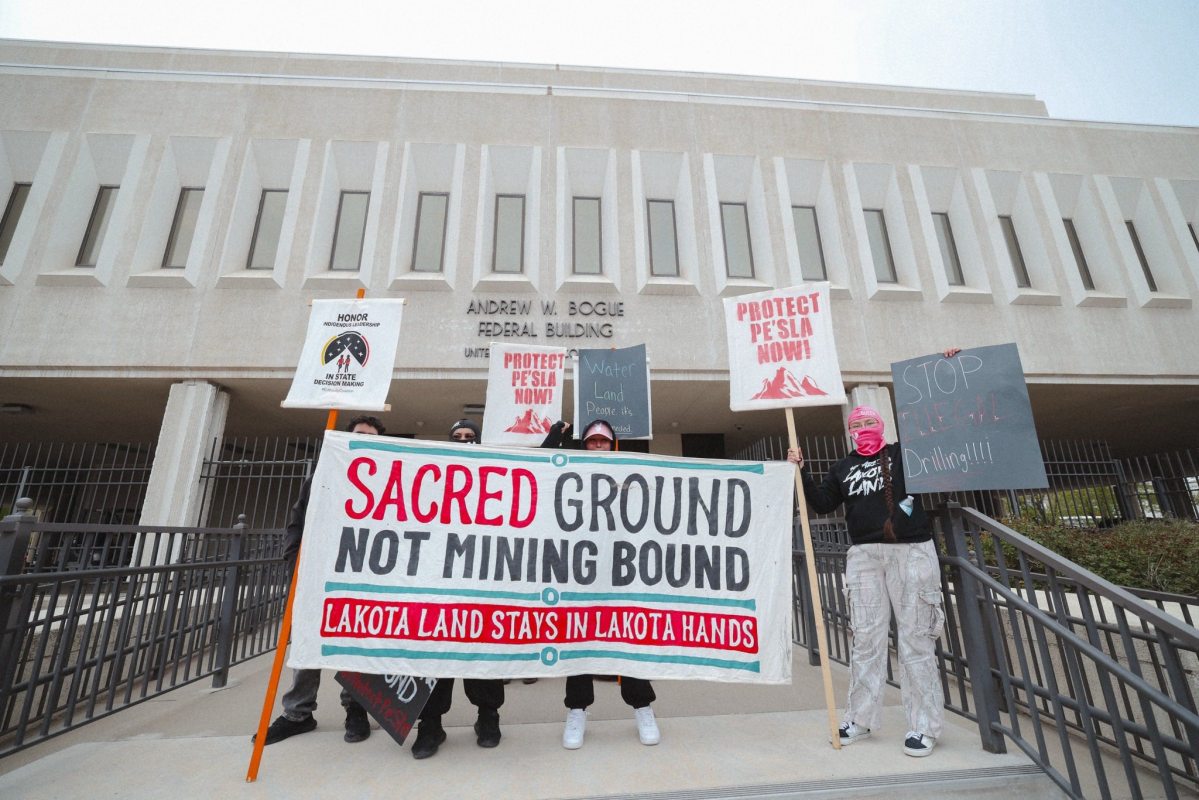
An evidentiary hearing in the case is scheduled for May 20 and 21 in Rapid City at the Andrew W. Bogue Federal Courthouse.
“The next step is to ensure with monitoring that there is no further drilling activity during this two week period, until we can get to that injunction hearing,” Little Elk Garriott said.
