
Miles Morrisseau
ICT
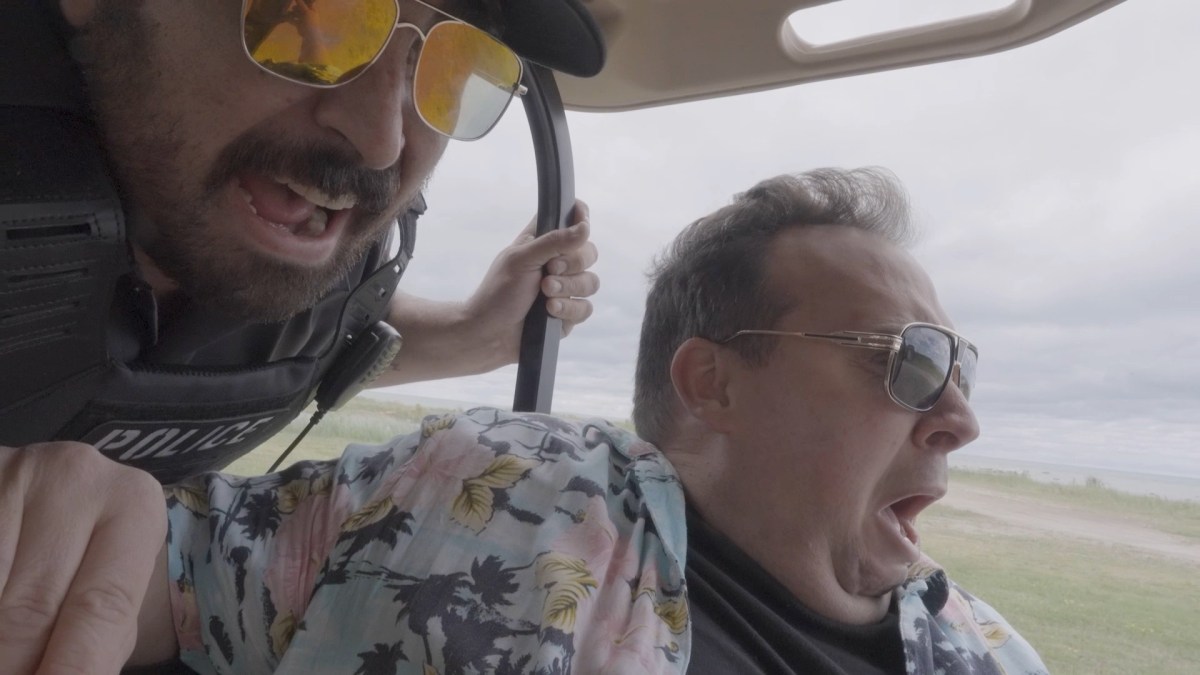
Looking for action when he returns to his community and finding love and laughter is the journey of the “Rez Cop,” a new series created and co-produced on First Nation by Leigh George.
The story reflects George’s own journey back home to his community of Chippewas of Kettle and Stony Point, where the series was filmed in south-central Canada.
“He is looking for adventure and action, you know, falling through the air, shooting two guns in slow motion,” George told ICT, referencing a common action movie trope. “But what he gets is a sleepy little town where there’s hardly any crime. And it’s all about him coming to terms with that and falling in love with his community again.”
The six-part comedy series features actor Sam Fisher as the lead character, a police officer named Sam “Fish” George who goes from the city to the Nimoosh Tribal Police Force. Fisher leads a cast that is mostly from the community and includes actors with theater and performance backgrounds and others with no experience.

George co-wrote and directed the series, and his team at Kettle Point Productions, including co-producer Christina Clark, filmed the series in the community. He gives full credit to the people and businesses on the First Nation for making it happen.
“We had a small, modest little portion granted to us graciously from the Ontario Arts Council,” George said. “If we weren’t on the community and if the community didn’t support us, we couldn’t have got this done.”
The series premiered in the community on August 22 and will begin a tour of other First Nations before hitting the festival circuit. The producers are now looking for broadcast partners.
‘A good laugh’
Just like the “Rez Cop” character, George did not grow up on the First Nation. He lived in London, Ontario, and only visited the reserve on weekends.
“They grew up in the city, they would come home on the weekends, but now they’re living there and they’re learning the quirks and the joys of being part of a community,” he said.
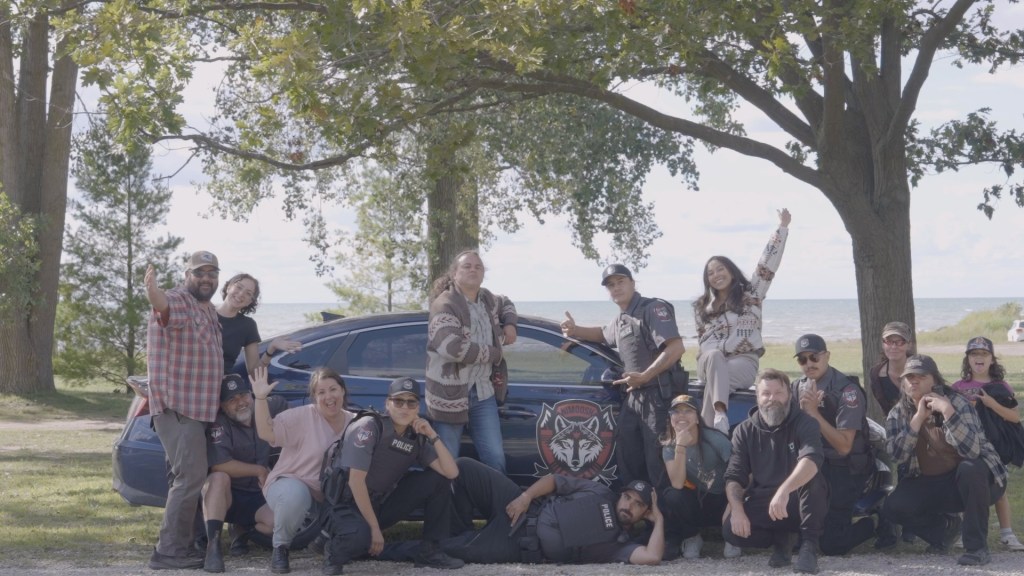
The goal from the beginning was to showcase the reality of Indigenous life, which includes the joy of laughter.
“There’s nothing more healing than having a good laugh,” George said. “Like the joy that it emits, the dopamine that surges through your body after a good laugh. Then it changes your reflection on the outside world. If you can smile and laugh and chuckle, things aren’t as scary out there.”
George doesn’t consider other stories as negative but rather “stories that have to be told,” but he wanted to focus on the sunnier side of rez life.
“We wanted to focus more on the joy and the hilarity of being in a First Nations community,” he said. “We didn’t want to talk about drug use or actual crime. We wanted to showcase who we are as just healing, laughing people.”
For years, Indigenous stories in popular media have been told from a non-Indigenous perspective or controlled by non-Indigenous gatekeepers.
“We grew up thinking that films had to be made in one way and there’s no other way,” he said. “You’ve got to find the gatekeeper, you’ve got to break through that gate. You have to ask and beg for that key, and then wait for permission to make your movie. We didn’t wait for permission.”
Getting to the top
George encourages anyone who wants to create to start recording with their phones and telling stories, then learn from their mistakes and keep going.
“We are creating our own voice in our own community for our own community,” he said. “And it’s so much fun to see people reacting on a daily basis, and just the excitement that one of ours has created this art project.”
George references another trope or stereotype that he has found be a false narrative — the idea that Indigenous people are like crabs in a bucket, that as soon as someone tries to get up and out, others pull them back down.
“We’re not crabs in the buckets,” he said. “We are, ‘Everyone’s gone underneath me and is kind of boosting me up,’ right? We’re going to make sure that you see the top.”
He wants the resilience of First Nations people to shine through.
“We’re First Nations people,” Georg said. “We are resilient, right? We’ve been through so much, but we still laugh. And we laugh harder and longer than anyone else that I’ve ever witnessed before. And that’s what that was basically what we were trying to go for.”

