
National Black History Month, US Feb. 1 – March 1
International Mother Languages Day Feb. 21
INTERNATIONAL DECADE OF
INDIGENOUS LANGUAGES 2022–2032
The United Nations General Assembly has declared the period between 2022 and 2032 as the International Decade of Indigenous Languages to draw attention to the critical status of many Indigenous languages across the world and encourage action for their preservation, revitalization and promotion. Here are some interesting links.
Mother Tongue Film Festival
Feb. 23-26. Free. In-person in Washington DC
A co-presentation of the Smithsonian Center for Folklife and Cultural Heritage, National Museum of American Indian and National Museum of Natural History. See below for program.
Native Language Resource Directory
The Native Language Resource Directory is produced by the Indigenous Language Institute. It is an online list of Language Programs, Organizations and Funding Sources that promote revitalization, stabilization and documentation of Indigenous languages.
Canada Indigenous Voices Book Awards
2022 Award for Indigenous Language
Mii maanda ezhi-gkendmaanh / This Is How I Know byBrittany Luby (Anishinaabe), with Joshua Mangeshig Pawis-Steckley (Anishinaabe, illustrator) and Alvin Ted Corbiere (Anishinaabe, translator) and Alan Corbiere (Anishinaabe, translator) “Every page is full of eye-catching action mixed with an undeniable nostalgia for a long ago visit with someone who was a dear relative.” (Jurors’ citation)
Also nominated in this category in 2022: Jodie Callaghan (Mi’gmaq), with Georgia Lesley (illustrator) and Joe Wilmot (Mi’gmaq, translator) for Ga’s / The Train and Sharon King (Potawatomi, Wasauksing First Nation) for Amik.
Archive of Native American Recorded History
ATALM | Association of Tribal Archives, Libraries, Museums
This portal is a work in progress. It is founded on materials held in the Doris Duke Native American Oral History Collections, and the current project is being managed by ATALM. Materials are collaboratively curated and reciprocally managed by the repositories holding the collections and the representative Native Communities. While catalog records are publicly available, recordings are under review by Community Curation Teams to ensure that cultural best practices are observed. This is an ongoing process. New materials will be added as they become available.
Doris Duke Indian Oral History Program, which from 1966 to 1972 paid for anthropologists, historians, and linguists at seven state universities to capture the stories and, in some cases, the fading languages, of Indigenous people across the United Staties. Fifty years later, the Doris Duke Charitable Foundation next provided a $1.6 million gift to digitize the materials stored at the universities. This time, tribes have far more control over access, which will be through a centralized digital content management system, Mukurtu, created specifically for Indigenous peoples specific information systems needs.
FILM FESTIVALS
Online, Hybrid
Big Sky Documentary Film Festival
Tickets. Online between Feb. 20 – March 1. In-person in Missoula: Feb 17-26.
Indigenous Feature Documentaries
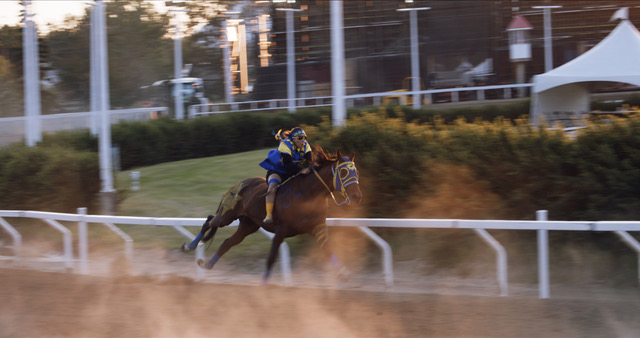
Aitamaako’tamisskapi Natosi: Before the Sun Canada Banchi Hanuse. An intimate and thrilling portrait of a young Siksika woman as she prepares for one of the most dangerous horse races in the world. Indian Relay rider Logan Red Crow vaults bareback from horse to horse; in this male-dominated sport, victory is an uphill battle.
Detached Russia. Vladimir Krivov. On the remote plains of Siberia, a Chukchi family struggles to maintain their Indigenous traditions, in the face of the contemporary challenges facing their community, including a changing political system and economic hardship.
Indigenous Short Films Many of these are screening in-person only
Shirampari: Legacies of the River Peru, Spain. Lucia Florez. An Asheninka boy must overcome his fears to start his journey as an adult.
Snqʷeyłmistn: the place where you do your best Canada. Ivan MacDonald The word given to the Salish people to call themselves is Sqelixʷ, which translates to “flesh and land.”
Jonathan Thunder: Good Mythology US. Sergio Mata’u Rapu (Rapanui). Follow Anishinaabe artist Jonathan Thunder as he dives deep into the inspirations behind his surrealist paintings and animations. A film selected by PBS’ American Masters as part of the national broadcast series “In the Making.”
NuWu Means the People US. Ben Alex Dupris (Colville Tribes, Minicoujou Lakota). A magical future for the NuWu, the first people of Nevada, through artists who are turning a cluster of dilapidated buildings in Las Vegas into a vibrant community hub.
Lakota US. Kyle Bell. Lakota Beatty walks us through her personal journey of spiritual healing and wellness by staying connected to her identity and using the sport of basketball. In-person only.
Learning I’m Home US Victoria Cheyenne. Following student leader Maleeya Knows His Gun the film examines generational educational trauma through the eyes of student leaders.
Sagebrush Gold US. Marcus Widger. A lithium mine being built in Nevada’s remote sagebrush desert promises us a greener future, but local ranchers, environmentalists, and Indigenous tribes share a different side to the story.
Mamapara Peru. Alberto Flores Vilca. In the highlands a son lives with his mother, who recounts for him during the rainy season–when the heavens cry–passages of her life.
Native Ball: Legacy of a Trailblazer US. Jonathan Cipiti, Megan Harrington. Annually, nearly 5,000 high-school girls basketball players earn a full-ride Division I scholarship. In 1992, only one was Native American: the Blackfeet Nation’s Malia Kipp.
Colorado Environmental Film Festival
Tickets. Online: Feb. 27-March 5. In-person in Golden, CO: Feb. 23-26.
Indigenous Documentary Shorts Trailers for the films are on the website.
A Common Thread Canada. Rosalee Yagihara
Imilirijut Canada. Vincent L’Hérault, Tim Anaviapik Soucie. In English, Inuktitut
Mālama i ke Kai (take care of the ocean) US. Genisis Stice, Mekia Kekona Eaton, Bonshia Kajimwe
Saging the World US. Rose Ramirez, Deborah Small, David Bryant
Voices of the Grand Canyon US. Deidre Peaches
FILM FESTIVALS
In-Person in New York City, Washington DC,
San Diego, Berlin
BAM/Brooklyn Academy of Music
True to Life Series | Fox Maxy Program
Sat, Feb. 18. 5 pm. Tickets. In-person in Brooklyn, NY
Works by California-based artist Fox Maxy (Ipai Kumeyaay and Payómkawichum) navigate a deluge of images and reflect on time, memory, identity, environments, and opposition.
Maat (2020) What does it mean to come from somewhere?
San Diego (2020) Multiple perspectives and experiences are pieced together as a response to colonialism and quarantine. How can we keep our communities safe?
F1ghting Looks Different 2 Me Now (2022) This new short reflects on moving home by way of video games, pop music, and an evocatively named red paint.
MoMA/Museum of Modern Art
Doc Fortnight
“i nā ki‘i ma mua, nā ki‘i ma hope”
Sun Feb. 26. 4 pm. In-person at MoMA, New York City. Online for MoMA members.
The grassroots film initiative kekahi wahi in Hawaiʻi presents two programs from their open-ended screening series,”i nā ki‘i ma mua, nā ki‘i ma hope,” which features moving image works from Oceania and Asia-Pacific. This guest-curated double bill strings together videos by an intergenerational group of filmmakers who offer glimpses into ongoing archipelagic realities. Followed by a conversation with the filmmakers.
Mother Tongue Film Festival
Feb 23-26. Free. Advanced registration recommended. In-person in Washington DC
Thurs, Feb. 23. Opening Night. At the Hirshhorn Museum
Daughter of a Lost Bird Documentary feature. US. Brook A woman unfolds the layers and uncovers her Native background and family. Preceded by New York, just another city Documentary short. Brazil/US. A young Guarani Mbya filmmaker responds to museums
Fri, Feb. 24 Films from Sakha. At National Museum of Natural History
3:30 pm. Sakha Media School Short Films Three youth-directed shorts from the Smithsonian-supported Sakha Media School in the Sakha Republic, Russia. Followed by a pre-taped presentation from one of the filmmakers and a conversation with Mary Linn, curator of Language and Cultural Vitality, Daria Boltokova, professor, and Kathryn Yegorov-Crate, researcher.
7 pm. Cursed Land: FateNarrative feature. Sakha Republic. Stepan Burnashev. In Sakha with English subtitles. When her mother goes missing, Alyona returns home from Moscow to Yakutsk and persuades her stepfather to take her to an isolated village where her mother is supposed to now be. But upon their arrival, the dark land begins to unravel its secrets. Preceded by Storm Narrative short. Siberia and Gnawer of Rocks. Animation. Canada.
Sat Feb. 25. Healing Ways All at National Museum of Natural History
12 pm. Evan’s Drum Documentary short. Canada. Ossie Michelin. In English, French, Inuktitut. Who We Are Documentary short. US | Alaska. Alexis Anoruk Sallee. In English, Inupiat. Nalujuk Night Documentary short. Canada. Jennie Williams. In English, Inuktitut. Definition of Resilience, Episode 2 Documentary short. US. Alexis Anoruk Sallee (Inupiaq),Tomás Karamelo Amaya (Yaqui, Zuni & Tarahumara). In English, Ojibwe.Prayers in a Song Music video. US. Tall Paul. In English, Ojibwe. Ho’omau Dramatic short. US | Hawai’i. Kenji Doughty. In Ōlelo Hawaiian.
1:30 pm. Witch Music video. Canada, Ukraine. Adrian Villagomez. In Ukrainia. Angakusajaujuq: The Shaman’s Apprentice Animation. Zacharias Kunuk. In Inuktitut. Prairie Flowers Documentary short. Mexico. Mariana Xochiquétzal Rivera García. In Amuzgo (Ñomndaa). Long Line of Ladies Documentary short. US. Shaandiin Tome (Navajo), Rayka Zehtabchi. In English, Karuk
3 pm. Faya Dayi Feature documentary. US, Ethiopia, Qatar. Jessica Beshir. A spiritual journey into the highlands of the Harar region of eastern Ethiopia, immersed in the rituals of khat, which Sufi Muslims chewed for religious meditations and is now Ethiopia’s most lucrative cash crop.
6:30 pm. Whetū Mārama – Bright Star Feature documentary. Aotearoa/New Zealand. Toby Mills, Aileen O’Sullivan. The story of Sir Hekenukumai Ngaiwi Puhipi and his work regaining Māori’s intricate knowledge of the stars to map their movements around the Pacific. Preceded by Dodge the Bullet Music video. Papua New Guinea. Nigel Muganaua. In Tok Pisin, English and Like a Might Wave: A Manuakea Film Documentary short. Mikey Inouye. In English, Hawaiian
Sun Feb. 26. 2 pm At the National Museum of the American Indian
Night Raiders Narrative feature. Canada, Aotearoa/New Zealand. Danis Goulet. In Cree, English. The year is 2043. A military occupation controls disenfranchised cities in a dystopian, post-war North America. Children are considered property of the regime, which trains them to fight. A desperate Cree woman joins an underground band of vigilantes to infiltrate a state children’s academy and get her daughter back.
Sun Feb. 26 6:30 pm. At the Hirshhorn Museum
Dreams/Vaychiletik Documentary feature. Mexico. Juan Javier Pérez. In Tzotzil, Spanish. Through his dreams, José received a gift from the gods—a gift that brings consequences. Now that he is at a mature age in life, he would like to rest, but he is not allowed. Preceded by Məca (Mink) Animation. Canada. Ritchie Norman Hemphill (Gwa’sala’Nakwaxda’xw), Ryan Haché. In Bak̓wa̱mk̓ala, English.
UC San Diego
Indigenous Film Festival Initiative
Feb 18. In-person at UC San Diego. Register online.
This initiative to start a film festival, launched by the Latin American Studies Program at UC San Diego, presents its first program.
3 pm Mexico | Amuzgo y P’urhepecha
Cherán Feature documentary. Victor Arroyo. The 2011 P’urhepecha uprising in Cherán battled against illegal logging, narco-cartels, and various forms of extraction. Cherán is the first autonomous Indigenous community with a system of governance built on P’urhepecha traditions, officially recognized by the state authorities. Preceded by Flores de la llanura (Prairie Flowers) Documentary short. Mariana Xochiquétzal Rivera García.
6:30 pm Chile | Mapuche y Aymara
Albertina y los muertos Narrative feature. Cesar Borie. Albertina is the matriarch of San Miguel (Arica, Chile), a town built on indigenous tombs. She is charged with the responsibility of mediating between the community and Ño, an effigy revered during Carnival week that embodies the creative and destructive forces of the earth. But when Albertina dies, how will the community carry on this tradition? Preceded by Meli Ayelen Lonconao Vargas.
Berlinale | Berlin International Film Festival
Feb 16 – 26. Tickets. In-person in Berlin
Sweet As Narrative feature. Australia. Job Clerc (Nyul Nyul/Yawuru). During a short but intense photo excursion through her Aboriginal homeland, fifteen-year-old Murra has life-changing experiences. She discovers her love for photography and the importance of telling her own story in a world that is constantly changing.
Short films
O Estranho (The Intrusion) Narrative. Brazil. Flora Dias, Juruna Mallon. The name of Brazil’s biggest airport, Guarulhos, references the fact that it was built on Indigenous territory. In a blend of realistic and stylized scenes, the film follows a member of the ground staff as she seeks her roots beneath the runway.
Marungka Ualatjunu (Dipped in Black) Documentary. Australia. Matthew Thorne, Derik Lynch. The film follows Yankunytjatjara man Derik Lynch’s road trip back to Country for spiritual healing, as memories from his childhood return.
Tartupaluk (Prototype) VR. Canada, Denmark. Laakkuluk Williamson Bathory. experience Tartupaluk, the world’s tiniest, most northern (imaginary) republic, populated by Inuit lovers. Listen to the vivacious President and be enthralled by a decolonised Inuit utopia.
TALKING ABOUT
inDigital IV: The Americas | Indigenous Peoples’ Engagement with Digital and Electronic Media
Feb. 23–24. In-person at the NYU-DC Campus, 1307 L St. NW, Washington, DC
After a three-year hiatus due to the global pandemic, InDigital IV: The Americas, is excited to meet once again in person to explore, discuss, and engage with Indigenous media produced from across North and South America. In the morning presentations reflecting on the state of Indigenous media open the meetings, followed by discussion. In the afternoon of Day 1 and all of Day 2, presentations from throughout the Americas provide a wonderful map of the state of the field. As in all their meetings, the two days will end with a plenary wrap-up in which all attendees share their responses to the entire event.
The presentations over the two-day meetings are from a wide range of professionals in Indigenous film–scholars, festival directors, archivists, filmmakers. Three central talks are being presented by Mapuche scholar and filmmaker Francisco Huichaqueo, Elizabeth Rule of Indigenous DC, and Faye Ginsburg, scholar and director of NYU’s Center for Media, Culture and History.
The 8 panel sessions discuss
- regional media throughout the Americas
- poetics and politics in Indigenous film in Canada, Brazil, Colombia and Argentina
- the place of film archives in cultural memory
- collaborations and a Kayapo-US project in A’ukre in Brazil
- Indigenous women filmmakers in the Amazon
- media in Indigenous languages such as Quechua, and more.
On Thursday afternoon two roundtables focus on media creation. “Media Challenges in Your Community” discussed by filmmakers Kalutata (Daniel),Kuikuro Brkywipoi Kayapó, Jonathan Sims (Acoma Pueblo), Jonathan Ray (Laguna Pueblo), Angelo Baca (Diné/Hopi). “New Media Platforms” discussed via specific examples from Kuna, North American urban landscapes, and “forgotten histories.” All the presentations have interpretation to allow access for English, Spanish and Portuguese speakers, with additional interpretation for Indigenous language speakers as needed.
For more information contact Amalia Córdova, Supervisory Curator at the Smithsonian Center for Folklife and Cultural Heritage cordovaa@si.edu and Richard Pace professor/affiliated faculty at Middle Tennessee State University and Vanderbilt’s Center for Latin American Studies richard.pace@mtsu.edu
New York University
CLACS/Center for Latin American Studies
“A Conversation with Ambassador Leonor Zalabata”
Tues, Feb 21 6-8 pm. Free and open to the public with RSVP. In-person at New York University
Ambassador Leonor Zalabata, a leader from the Arhuaco Nation (Sierra Nevada de Santa Marta) and human rights defender, is the new Colombian Ambassador before the United Nations. In this event, Please note, the conversation will take place in Spanish. RSVP here.
SPECIAL MUSEUM EVENT
Bard Graduate Center
“Shaped by the Loom: Weaving Worlds in the American Southwest”
Feb 17–July 9. Tickets. Free for people with college or museum ID, people with disabilities and caregivers, and BGC members.In-person in New York City and Online
“Shaped by the Loom” is a gallery and online experience that presents never-before-seen textiles created by Diné makers. Historic blankets, garments, and rugs from the American Museum of Natural History are situated alongside contemporary works by Diné weavers and visual artists, such as Barbara Teller Ornelas and Lynda Teller Pete. “Shaped by the Loom” highlights seasonal cycles that guide the harvesting of dye plants, the cosmologies that inform a weaver’s work, and the songs, stories, and prayers that are woven into every piece. Additional programs in music and film will be offered in April and May.
Fri, Feb 17. 9:30 am – 12:45 pm EST. Livestream and in-person at BGC
“Ecologies of Making: Knowledge and Process in Navajo Weaving”
A research symposium in conjunction with the exhibition. Tickets. In-person at Bard Graduate Center and livestreamed (registration is not required to view. The link will appear on the website the morning of the symposium.)
Presenters:
- Hadley Jensen, exhibition curator
- Peter Whiteley, curator, American Museum of Natural History)
- Lynda Teller Pete (Diné) textile artist
- Barbara Teller Ornelas (Diné) textile artist
- Wade Campbell (Diné) historical archeologist, Boston University
- Larissa Nez (Diné) scholar, University of California, Berkeley
- Rapheal Begay (Diné) photographer
Followed by a roundtable discussion, including the presenters with Darby Raymond-Overstreet (Diné) digital artist and printmaker and Tyrrell Tapaha (Diné) fiber artist and weaver).
Wed. Feb 22, 6 pm. In-person at BGC
“Weaving Stories, in Textiles and Television”
An intergenerational conversation with a family of Navajo weavers
The thumping sounds of the weaving comb keep time as two masters at the loom recount a matrilineal history of artmaking. Lynda Teller Pete and Barbara Teller Ornelas—both fifth-generation weavers—will share stories, histories, and ways of seeing the artist in the art. They are joined by Barbara’s daughter Sierra Teller Ornelas—a sixth-generation weaver turned celebrated comedy writer, creator of the critically-acclaimed Rutherford Falls.
Wed. March 1, 6 pm. In-person at BGC
“Dyeing with Plants”
Explore the world of natural dyes with Diné ethnobotanist Arnold Clifford. In this lecture, Clifford reveals the diverse and abundant plant life of the Navajo Nation—including some plants named after him!—with a focus on the plants that give Navajo textiles their brilliant and distinctive colors.
Sat. March 4. In-person at BGC Gallery
2-4 pm “Studio Visit: Making Dyes from Plants” A demonstration by Arnold Clifford
4 pm Curator Tour (sold out)
AWARDS AND HONORS
Berlinale Doc + Fiction Toolbox
2023 Native Fellows
Berlinale’s EFM/European Film Market place provides professional opportunities for filmmakers. The 2023 Indigenous participants are being sponsored by imagineNATIVE, International Sami Film Institute, Indigenous Media Initiatives, Nia Tero, Pacific Islanders in Communications and Winda Film Festival.
- Heather Giugni – US | Hawai’i
- Tristin Greyeyes Canada
- Trisha Morton-Thomas Australia
- Elisa Pirir Sápmi, Arctic Europe
- Colleen Thurston US | Oklahoma
Americans for the Arts
2023 Johnson Fellowship for Artists Transforming Communities
G. Peter Jemison (Seneca) has been named by Americans for the Arts as the 2023 Johnson Fellow for Artists Transforming Communities, receiving a $70,000 award. Jemison resides in his home territory of rural western New York, between the small town of Victor and the Cattaraugus Reservation. As a culture bearer, speaker, educator, curator, writer, and arts leader, his visionary efforts over decades have helped lay the groundwork to bring Indigenous perspectives into curation and cultural equity concerns. He has been a leading voice in successfully advocating for Native rights around issues of repatriation of sacred objects, cultural patrimony, and the human remains of the Haudenosaunee. His contributions in these areas coincided significantly with his long tenure as the site manager of the historic 17th-century Ganondagan State Historic Site in his New York homeland.


