
Brian Bull
Underscore Native News
The largest Dungeness crab ever caught in Oregon was rumored to be from a stretch of coastal land south of Yachats back around the 1930s, according to historian and tribal council member Robert Kentta. Like many members of the Confederated Tribes of Siletz Indians (CTSI), Kentta hopes the notoriety for a record-breaking crab is as much fame and attention as the Rocky Shores get as the tribe prepares to become stewards of the land once again.
“This was part of our ancestral territories, and it was also part of the coast reservation,” CTSI Natural Resources Director Angela Sondenaa told Underscore Native News. “There was 100 miles of the central Oregon coast that was included in that reservation through treaty. And those promises were broken, and the land went into private ownership.”

“Our reservation land got shrunk illegally,” Kentta told Underscore Native News. He explained that in the mid-1800s the whole Yaquina Bay country “got taken out,” clear down to the Alsea River when the U.S. Senate ratified the Rogue River treaty and President Franklin Pierce proclaimed it law, with no agreement from the tribe nor compensation for their loss. “And then in 1875 another 700,000 acres were taken out of the reservation, which includes this parcel.”
That nearly seven-acre parcel is on its way to being returned to the Siletz, with the help of several nonprofits.
“This property in the Yachats area is so important in terms of its ecology, coastal conservation values. We knew it had to be safe. We knew it had to be protected and we knew it had to go to the tribes.”
Joanne Kittel, View the Future founder
“It’s a magnificent piece of property,” said Joanne Kittel, founder of View the Future, a nonprofit community land trust. She said Rocky Shores has been on her organization’s radar for 17 years. “This property in the Yachats area is so important in terms of its ecology, coastal conservation values. We knew it had to be safe. We knew it had to be protected and we knew it had to go to the tribes.”
Kittel said with support from the McKenzie River Trust and the Nature Conservancy, the land was appraised and purchased for $120,000. View the Future managed to kick in $55,000 of that.
“Our role in the project was really helping with the transaction pieces and the real estate work, and that’s a role that we’ve been trying to fill with tribes, especially on the coast,” said Eli Tome, the McKenzie River Trust’s conservation director. He said their expertise lies with real estate transactions and negotiating with landowners to reach a purchase price, then raising funds to buy the property.

Partners say this effort was driven by growing concerns that Rocky Shores might be developed for real estate purposes, which would threaten the land’s delicate ecosystem and the Siletz people’s historic ties to it. Tome said supporting tribes and Native people in regaining access to and reclaiming ancestral lands can be part of advancing Land Back.
“We wanted to use flexible funding for this so that there’s not any encumbrance or restriction on the title,” explained Tome, “so that the tribe really can make the decisions for how they want to manage this land in perpetuity without having any kind of oversight by a government agency over the property.”
Joe Moll, the McKenzie River Trust ’s executive director, said there’s been more collaboration between the land trust community and tribal nations that have helped facilitate the Land Back movement. “And that’s really, really satisfying. It’s just good work. It’s joyful work and we’ll continue with it.”
“As a citizen of the Confederated Tribes of Siletz Indians, I am happy to see this land returned to our people.”
Alfred “Buddy” Lane IV, Confederated Tribes of Siletz Indians council member
Moll and Tome told Underscore Native News that the property transaction between the landowner and the CTSI is still ongoing but could be finalized by week’s end.
“As a citizen of the Confederated Tribes of Siletz Indians, I am happy to see this land returned to our people,” council member Alfred “Buddy” Lane IV said in a statement, adding that the land was part of the original Siletz Coast Reservation in 1855. “Siletz elders confined at the Alsea Subagency in the mid-1800s under harsh conditions recall sustaining themselves on mussels from these same rocks.”

Lane said that the Siletz people’s ties to the land are deep and go back further than collective human memory. “I am excited for our people to reestablish our connection to this place, interacting with the land, plants, ocean and other beings we share these lands with.”
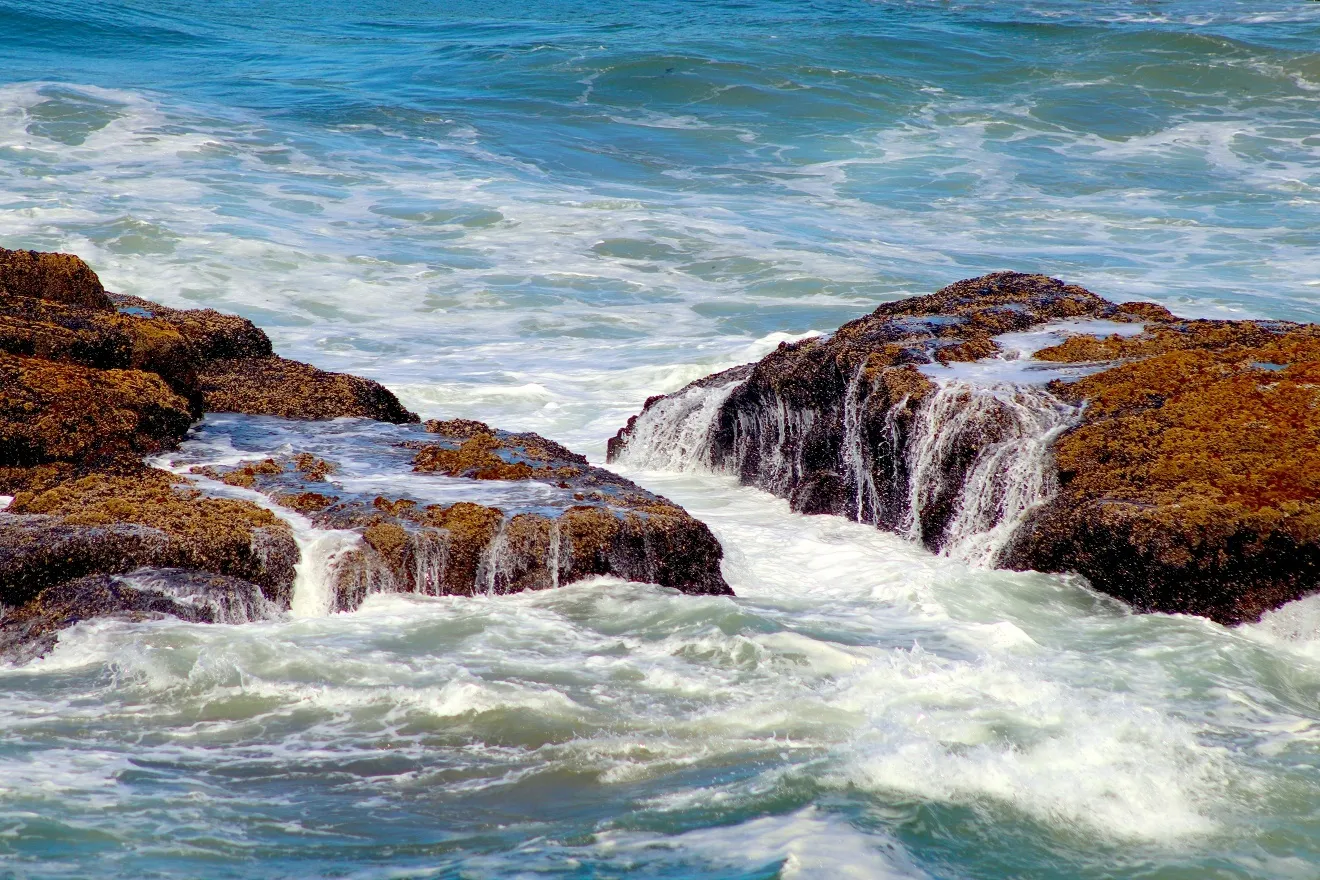
Various partners say Rocky Shores is a space that has been largely unscathed by human presence and traffic. The most development it has ever had was a shed, with its craggy expanse densely covered in foliage making it difficult for some to travel.
Kentta said Rocky Shores is both pristine and precarious. “I wouldn’t take young kids there because it’s a dangerous cliff-like landform.” He added that there’s a concrete slab that once held a metal swing and pulley for a crab pot that a fisherman used to catch the legendary giant crab in a narrow chasm nearly a century ago.
“These rocky coastlines are biodiversity hotspots that can also provide rich gathering opportunities for our tribal members,” said Sondenaa. She said the coalition of partners behind this historic Land Back transaction “is a testament to what can be done when broad interests align in the name of conservation.”

Sondenaa added that she’s looking forward to the Siletz people being returned to their ancestral roles as stewards of this parcel.
“There is a freshwater stream that runs through it. It’s rich in ferns and mosses and mushrooms,” she said, noting that it also grades into the marine environment, “going through abundant salal and other coastal species. And then again down onto those rocky coastal areas that are so critically important to us, our efforts to restore kelp and sea otters to our territory.”
Sondenaa said that the property wouldn’t be open to the general public, but only through special invitation by the CTSI for organized events.
It’s not the first cooperative land restoration effort done between land trusts and tribes in Oregon. In November 2024, the CTSI and McKenzie River Trust announced a 27-acre section of Cape Foulweather had been reacquired by the Siletz, after they purchased it from the trust with a $2 million grant from the National Oceanic and Atmospheric Administration. And this spring, the Coos, Lower Umpqua and Siuslaw Indians teamed up with the trust and several other groups to open up a restored dairy farm near Florence to brackish seawater from the Pacific Ocean after more than a century. Named “haich ikt‘at‘uu” (Siuslawan for “Heart of the River”), the estuary is expected to see the return of wildlife and plants not seen in generations.
This article first appeared on Underscore Native News and is republished here under a Creative Commons Attribution-NoDerivatives 4.0 International License.
