
Joaqlin Estus
ICT
ANCHORAGE — Fifteen southeast Alaska tribes hope to use ancient ties to Canadian areas to get greater say in mining permits on rivers originating in the country. A new Canadian law and a 2021 Canadian Supreme Court decision also bolster their stance.
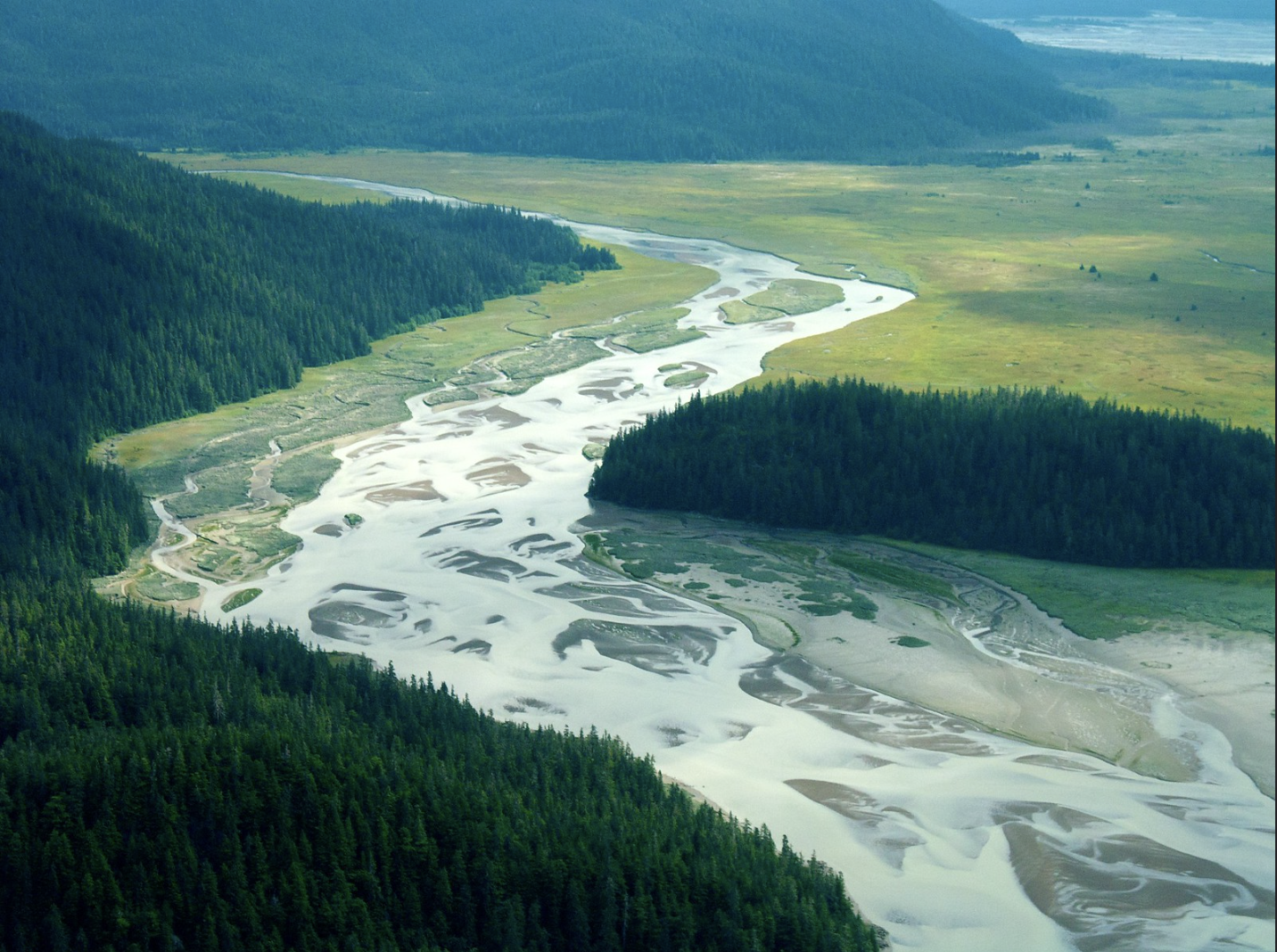
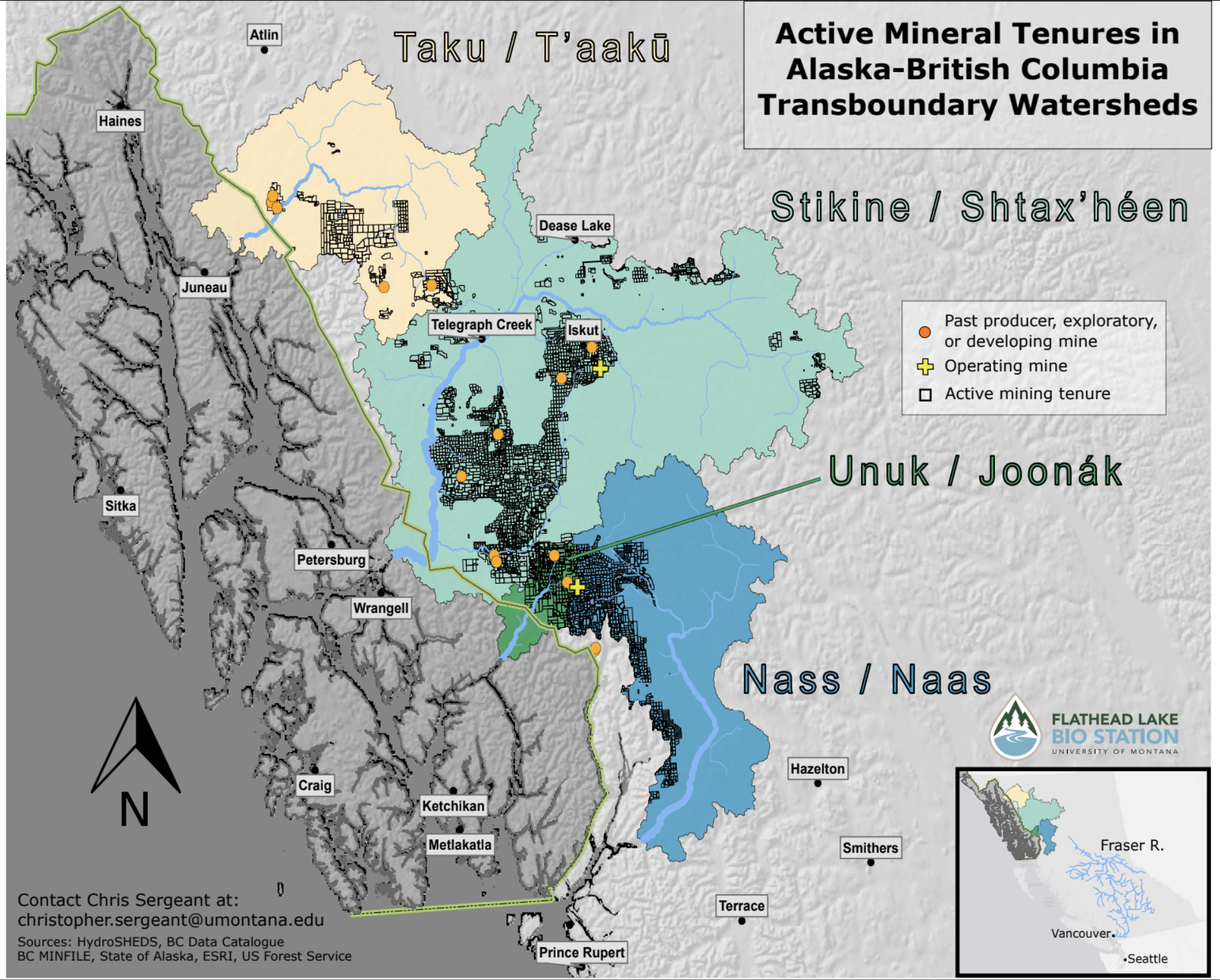
Six legislators recently expressed their support for the tribes in a letter to the premier of British Columbia. The bipartisan group said they’re concerned about mining on three river systems that start in Canada and flow into southeast Alaska: the Taku, near Juneau; the Stikine, near Wrangell; and the Unuk, near Ketchikan.
Legislators (listed below) said the watersheds are central to the southeast Alaska fishing and tourism industries, and “they are also foundational influences on the Indigenous traditions that continue to thrive in the region. It is essential that these waters remain healthy and productive for generations to come.”
They went on to say the U.S. and Canadian governments, and Indigenous people on both sides of the border, “have a responsibility and opportunity to better manage these shared watersheds in a constructive and cooperative manner.”
“We hope the B.C. government shares our conviction that this can only be accomplished with the Alaska tribes of the Southeast Indigenous Transboundary Commission as meaningful participants,” the letter continued.
The legislators who signed the letter are: Reps. Sara Hannan, D-Juneau; Dan Ortiz, I-Ketchikan; Andi Story, D-Juneau; Louise Stutes,R-Kodiak; Rebecca Himschoot, I-Sitka and Sen. Jesse Kiehl, D-Juneau.
For its part, the 15-member tribal commission said failing to prevent harm to the rivers “constitutes a violation of the rights of the sovereign tribal governments, their culture and means of subsistence.”
Commission Vice President Rob Sanderson, Jr., Haida, said the nonprofit organization was formed in 2014 in response to the “rapid” development of mines in British Columbia. Sanderson is also 2nd vice president of the Central Council of Tlingit and Haida Indian Tribes of Alaska.
”The goal was to focus resources on defending the rivers and salmon that feed the forest and form the basics of our culture that has existed here in Southeast Alaska for time immemorial.”
The tribes say British Columbia mines are “likely to release pollution that would harm the health and viability of salmon that spawn and rear in the watersheds.”
“The Canadian mines have a history of up and just leaving polluted mines unchecked for years,” Sanderson said. He points to the Mount Polley mine disaster in south central British Columbia. A tailings dam failed there in 2014, releasing 6 billion gallons of mining wastewater into waterways.
“The Red Chris mine (on the Stikine River) is the same setup, owned by the same company,” Sanderson said. “…It threatens the way of life, not just for the tribes, but the entirety of Southeast Alaska.”
The Southeast Indigenous Transboundary Commission is made up of 15 southeast Alaska federally recognized tribes: Central Council Tlingit and Haida Indian Tribes of Alaska, Yakutat Tlingit Tribe, Organized Village of Saxman, Ketchikan Indian Community, Douglas Indian Association, Sitka Tribe of Alaska, Chilkat Indian Village, Petersburg Indian Association, Organized Village of Kake, Wrangell Cooperative Association, Organized Village of Kasaan, Metlakatla Indian Community, Hydaburg Cooperative Association, and Craig Tribal Association.
The tribes have a new law, ancient history, and perhaps a court ruling to bolster their position.
See related:
— Horrific toxic spill in B.C. called another Exxon Valdez
— Immediate Review of B.C. Mining Safety Demanded by Alaska Native Leaders – ICT News
— Sinixt eager to celebrate First Nation recognition – ICT News
A new law
In 2021, British Columbia passed a law requiring implementation of the United Nations Declaration on the Rights of Indigenous People. The declaration provides that member states must consult and cooperate with Indigenous people on actions that may affect them and obtain their free, prior and informed consent.
To carry out the declaration Canada “must recognize Southeast Alaska tribes and their interests in territories that pre-date the border between the U.S. and Canada,” said commission Executive Director Guy Archibald.
“Canada’s response is that they do recognize that under their new laws we do have the right to exercise consultation and free prior and informed consent. They’ve told us exactly what type of evidence that we need to present to them (to make our case). And they’ve stated that the strength of our consent will be based on the strength of evidence that we present,” he said.
Archibald said consultation and consent exist along a spectrum of no rights to full rights under section 35 of the Canadian Constitution. “(Full rights) that’s what we’re shooting for,” Archibald said.
Commission President Esther Reese, Tlingit, said the commission is building a record of the tribes’ connections to the watersheds. She is also president of the federally recognized Wrangell Cooperative Association. “Canada’s offering a pathway for the Southeast Tribes to have the ability to be recognized. And SEITC is one of the first US-based tribes to test these new laws.”
Ancient ties
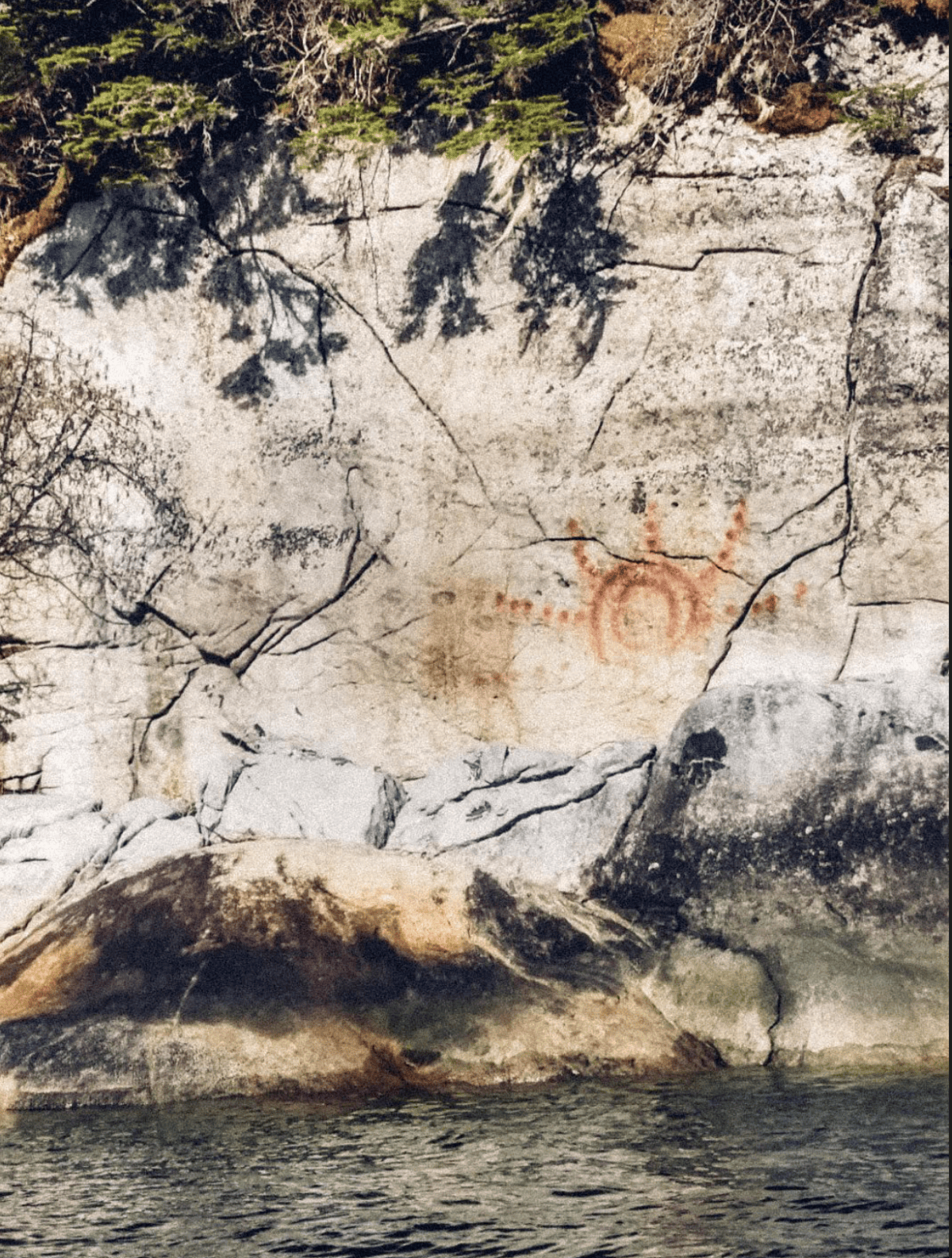
The commission is documenting the transboundary cultures of the Tlingit, Haida and Tsimpshian, who live on both sides of the border.
SEITC “commissioned a study by the Alaska Heritage Institute that shows the complete watershed, all of the way to the headwaters. And that area is recognized to be the property of theTlingit Teiḵweidí clan, and it includes the land being permitted for the Eskay Creek (which empties into the Unuk River) project,” Reese said.
“So in light of all of those agreements that were ratified and passed by Canada, we would like for the tribes who could potentially be impacted by the Eskay Creek Mine to have their voice,” she said.
Reese said the goal is to uphold the sovereign rights of each tribe so each can negotiate an agreement with the British Columbia government or with the mining companies.
“What that would look like would be up to each individual tribe, because obviously tribes are sovereign governments. And then each tribe will have the opportunity, if we receive these rights, to negotiate a government-to-government agreement based on their own decision-making process,” Reese said.
“I will say that the border between Alaska and Canada is a colonial border,” Reese said. “It was never recognized, obviously, by our people. We cared for the rivers and the ocean, and would like to continue doing that. And this colonial construct of this border is making it difficult for our tribes to be able to steward the lands properly,” she said.
Court ruling
Finally, a 2021 ruling by the Supreme Court of Canada confirmed the aboriginal right of a U.S. resident and citizen to hunt in British Columbia. Southeast Alaska tribes say the ruling affirmed that aboriginal people who live outside Canada can assert rights protected by section 35(1) of the Canadian Constitution Act, 1982.

Our stories are worth telling. Our stories are worth sharing. Our stories are worth your support. Contribute $5 or $10 today to help ICT carry out its critical mission. Sign up for ICT’s free newsletter.
