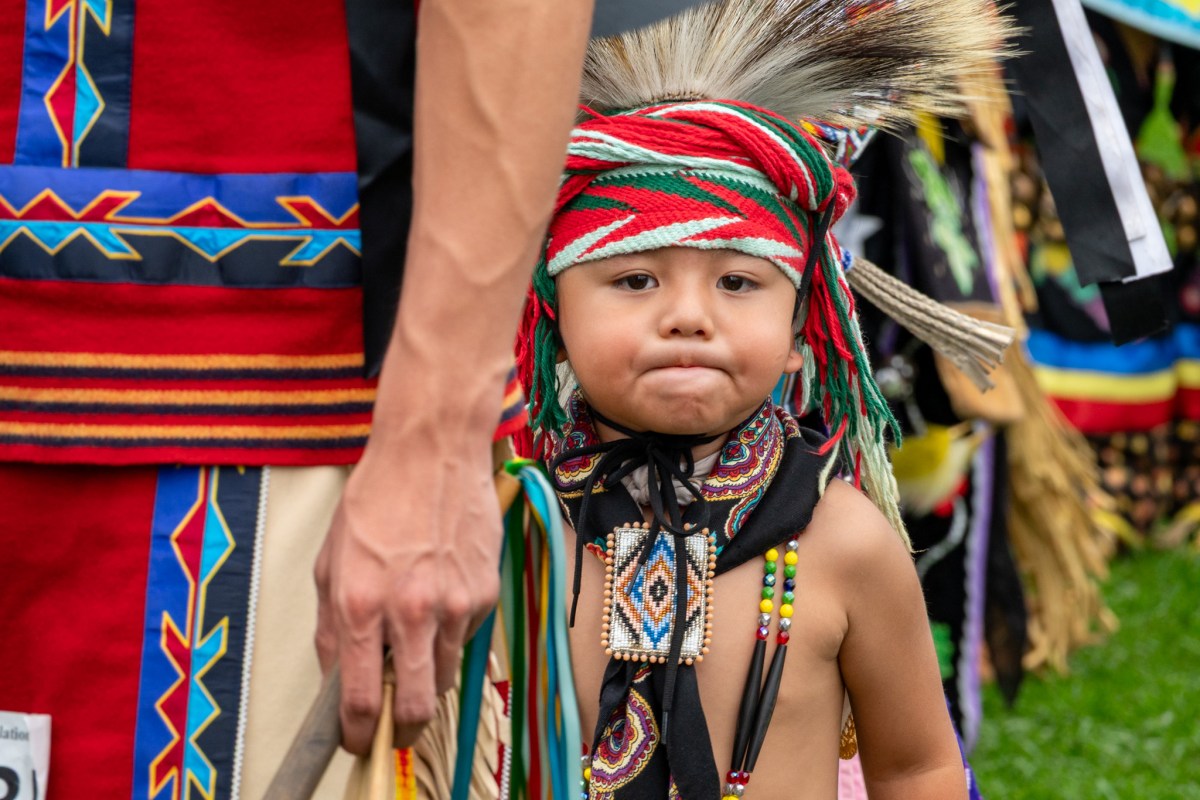
Amelia Schafer
ICT
SHAKOPEE, Minn. – Standing proudly in brand-new handmade woodland regalia, Menominee teenager Niigani Bineshi Buckholtz proudly shows off his hand-stitched applique aprons.
“Dana helped me make them,” Buckholtz said, referring to his mentor from Indigenous non-profit Woodland Heart.
Headed towards the arena at one of Indian Country’s largest annual powwows, the Shakopee Mdewakanton Sioux Community Wacipi, Buckholtz seemed unfazed by the massive crowd and more than 1,300 registered dancers.
The 13-year-old is instead excited to go watch one of his friends compete.
Buckholtz and several other Menominee youth have spent the past several months with Woodland Heart, an organization dedicated to uplifting Menominee youth and connecting them with their culture since December 2024. Right now, the group focuses on serving boys ages 11-14.

Based in Neopit, Wisconsin, on the Menominee Reservation, Woodland Heart has spent the past several weeks shuttling 12 teenagers to different powwows across the midwest.
But their work goes further than powwows.
They provide youth and their families with tools and knowledge needed to create traditional woodland regalia and the teachings behind it.
“I wanted to do something that made me happy,” said Adrian Silas, Menominee and a 14-year-old group participant, when asked why he began dancing. “I love the storytelling we have [while dancing]… in woodland you can tell your story. I’m Menominee and that’s our original style of dance. I feel the spirit of my ancestors, almost [when I dance].”
Originally created as a dance group, Woodland Heart evolved into something much larger, a group dedicated to connecting kids with their heritage and culture all to help foster a sense of belonging and community, said Woodland Heart Co-Founder and Executive Director Dana Warrington.
“I think dance is what brings us all back together,” Warrington said.
Woodland Heart, in partnership with the Menominee school district and Menominee Tribe of Indians, works with male youth ages 12-14 who are otherwise disengaged from school clubs or sports or would traditionally be identified as “at-risk,” Warrington said.
Initially, they planned to work with older high school-aged youth, but realized the demographic would age out of the program rapidly and feared creating a “revolving door,” Warrington said. Instead, the program is geared towards middle schoolers.
“Youth development is my passion,” said Heather DiCosimo, Lac Courte Oreilles Ojibwe and the Woodland Heart co-founder. “This gives them the opportunity to not only have youth development but also the cultural aspect of it. Not just workshops or a program here and there, we’re actually living day to day the culture and the things that we’re learning.”
By building a positive support system and community for youth, Warrington said organizers have already begun to notice a difference in kid’s confidence levels.
“Everytime they come up [to me] and say, ‘Auntie I made a new belt,’ or ‘Auntie I made a new shirt,’ that’s the part I love the most,” DiCosimo said. “Because I feel like when you have a sense of belonging and you have your culture, that is helping these boys guide their path.”
When working with youth ages 6-18, consistency is key to relationship building, DiCosimo said.
Youth-catered organizations too frequently dip in and out of communities without staying on the ground and making a consistent effort to show up for youth, she said.
“They’re young adults, and they need people who understand them but at the same time have an expectation of them and a consistency,” DiCosimo said. “I feel like those are the ages where our kids really need the most support. It’s all so new to them and you’re really developing how they’re going to walk with all the adults eventually.”
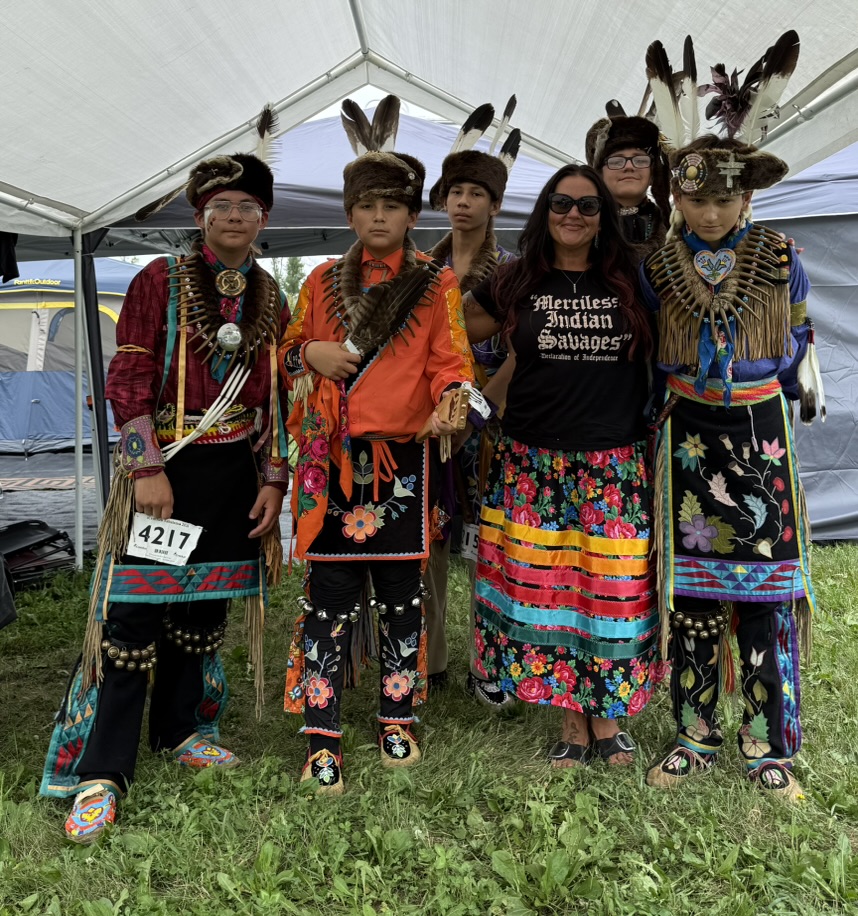
Menominee culture is key to programming, organizers said, it’s the root of programming and lessons.
“[These are] kids who didn’t grow up this way or didn’t have this in their lives,” Pyawasit said. “To be able to create this bridge for them to find this way of life, that means a lot.”
All youth involved learn how to dance men’s woodland traditional, a category defined by traditional woodland regalia and storytelling through dance movements.
“Nothing against where the powwow world has gone, but it’s a step further and further away from our tribal dances and almost the pure form of our dance,” Warrington said. “I think Woodland Heart was created to shed light on that. We’re not trying to step away from this world, but we believe identity comes from doing your own dances and knowing who you are.”
The powwow circuit is no stranger to evolving or changing categories and styles.
Warrington said he remembers 25 years ago when men’s chicken was an extremely prevalent style across Indian Country, followed by a larger insurgence of men’s fancy style.
Recently, woodland mens and womens traditional styles and regalia have seen a resurgence in the arena with centuries old styles returning.
Warrington said he himself felt inspired to switch to men’s woodland style following the COVID-19 pandemic, something that grounded him during that time.
“I danced northern traditional for years, but woodland was always the first style we danced when we were kids,” Warrington said. “I moved home at the beginning of the pandemic. And I think it was the first time for me, at least in about 20 years, that life actually slowed down. You had a chance to get a breath and realize and think through your life… So I think I reconnected. I reconnected the home. I reconnected to our dances. I reconnected to our land.”
Knowing who you are and where you come from is key to building a solid sense of self and identity, DiCosimo said.
“When you know who you are and when you have that sense of identity, that is really a steering force on decisions,” DiCosimo said. “You may have this path where you can easily go this way or that way. I feel like with a sense of identity and that cultural and spiritual feeling inside of us, it helps guide us to make those better decisions.”
Buckholtz agreed, and said that woodland style has helped him feel more connected to his culture. Buckholtz said he switched to woodland style for the first time in June with support from his brother and Warrington.
“I started dancing [grass] when I was about five, quit when I was about seven, and picked it back up at the start of the summer,” Buckholtz said. “It’s kind of like our ceremonial big drums, it’s almost the same type of style that I dance there.”
Aside from learning to create regalia and how to dance woodland style, participants are also taught how to drum and sing.
“When they first came into the program a lot of these boys didn’t know each other, and now they’re like brothers,” said Kino Pyawasit, Menominee and Woodland Heart’s cultural events coordinator. “You could see that bond creating between them throughout the summer.”
The group hit the ground running in June, gathering 12 boys for the pilot program.
Within weeks the boys had their regalia, their moves and were on the road to powwow.
Buckholtz said the van rides to powwows have been the highlight of his summer.
“We have so much fun on the way here,” Buckholtz said. “[I’ve made] a bunch of cool memories.”
From June to August, Woodland Heart brought kids up to the Lac du Flambeau Woodland Bowl every Tuesday and aims to travel to weekend powwows twice a month. Shakopee was the group’s second to last powwow this summer.
“I felt pretty good [about my contest], but it’s not about the competition, it’s about how you feel, and I feel really good about that,” Silas said. “Dana has felt like a second father figure, and even Kino too because he’s been teaching us how to sing. And Dana’s been teaching us how to be a better man.”
Silas said his entire outfit, from his leggings to his belt and shirt, were made thanks to Warrington’s guidance.
“My first [outfit] was just a pair of my old fancy aprons and a shirt,” Silas said. “I feel like I’ve gone a long way.”
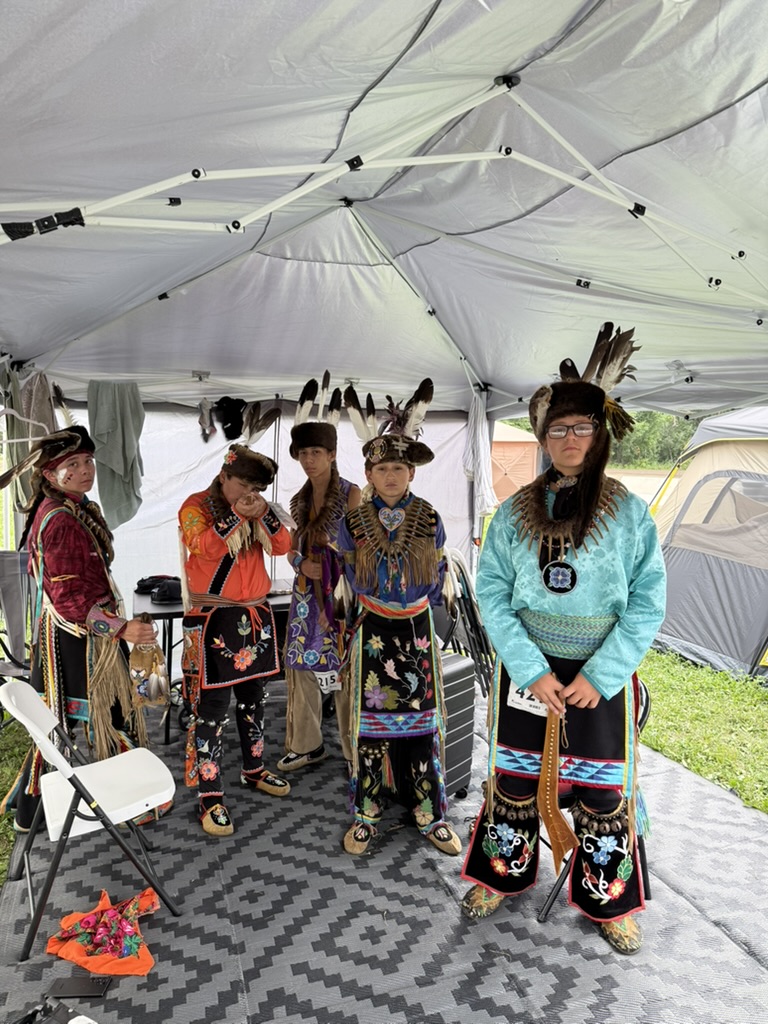
The key to meeting youth where they’re at is to understand the different struggles they face.
“To think we understand the world a teenager lives in is to set ourselves up for failure,” Warrington said. “I think we started to realize that their world is so different from ours.”
By meeting with community members and youth, Warrington said the group identified that one of the main issues facing Menominee youth today is a lack of a sense of belonging or purpose.
By getting kids dancing and interested in learning traditional arts, the group creates a pathway forward.
“We realize we are influencing the next generation of men within our community so it’s so much more than a dance program,” Warrington said.
Oftentimes gaining the supplies and knowledge needed to create regalia and start dancing is inaccessible to families, Warrington said.
“I think we just expect for some crazy reason, we just expect that everybody knows [the teachings behind dancing],” Warrington said. “I think [it’s about] just trying to educate in a really gentle way.”
People of all ages want to learn to dance, want to learn the teachings and how to create cultural items, Warrington said, leading the group to brainstorm how to find a happy medium.
“I think what we’re eventually going to turn into in our community is a resource,” Warrington said. “I see us as a resource and a way to serve our community as a whole. It’s really [about] filling the gaps within our community.”
Woodland Heart offers an elder-in-residence position within the organization to provide space for an elder to connect with youth and pass on teachings and traditions.
Moving forward, Woodland Heart wants to find a way to develop a curriculum based on what they’ve learned and help apply it to different communities nationwide.
“To be able to create an opportunity for kids back home to participate and be a part of something like this is special,” said Pyawasit. “With this just being our pilot program… with the boys we had an expectation of [how things] would go but they’ve just exceeded that. From here on there’s a lot of places it can go.”