
This story was originally published by National Fisherman magazine, and is reprinted here with permission.
Paul Molyneaux
©National Fisherman
According to Henry Bear – past general manager of the Maliseet Nation’s commercial fishing fleet on Grand Manan Island, and past Maliseet Tribal Representative to the Maine House of Representatives – Canada’s Department of Fisheries and Oceans took unwarranted action against Maine-based Passamaquoddy and Maliseet fishermen.
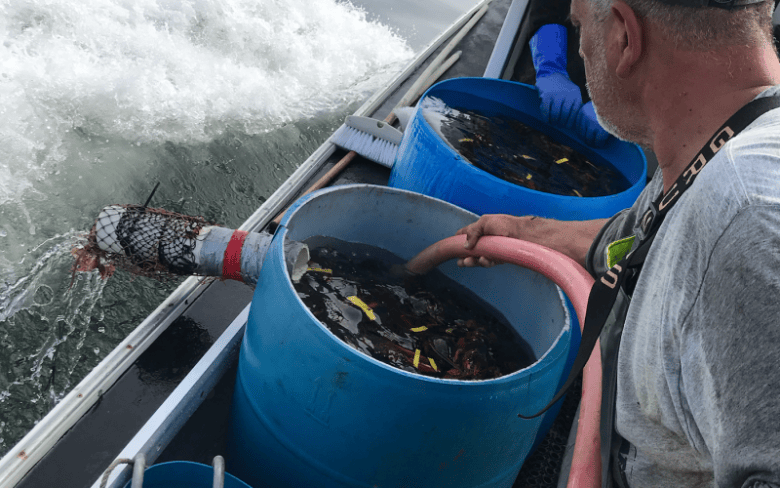
The Native fishermen were lobstering in Canadian waters of the Saint Croix River and Passamaquoddy Bay, which form part of the border between New Brunswick, Canada and Maine in the U.S., when the DFO reportedly confiscated some of their traps.
“It is illegal for them to take action in our unceded territorial waters,” said Bear. “My boat isn’t in the water. I was out with Erik Francis as an observer in case there were any more incidents. The DFO was confiscating gear and one of their boats made contact with one of ours.”
Related story:
—Treat rights at center of fishing dispute in Canada
The U.S. Coast Guard ordered one of the tribal boats into nearby Eastport, Maine, Bear noted.
“Supposedly it was for a safety inspection because of the contact,” Bear said. “But that was it, so they let our boys go back to the tribal anchorage.”
Bear is encouraging the fishermen who had their gear taken and those who experienced confrontations with the DFO to bring charges against Canada’s fisheries regulators.
“This is a violation of the Treaty of 1760, the Marshall Decision, and more recently the Canadian Supreme Court’s Desautel decision. And it’s a violation of the Geneva Convention’s rules against genocide. You cannot deprive people from their food source.”
The DFO acknowledges that the Desaultel decision recognizes the rights of cross-border Indigenous people to hunt and fish in Canada even if they live in the U.S., but contend that those fishermen must abide by Canadian regulations.
“In the April 2021 decision of the Supreme Court of Canada in R. v. Desautel, the court found that the expression ‘aboriginal peoples of Canada’ under s. 35(1) of the Constitution Act, 1982 may include Aboriginal groups that are outside of Canada,” said DFO spokesperson Robin Jahn. “The court held that individuals who are not residents or citizens of Canada can assert constitutionally protected rights under s. 35(1) in Canada.”
According to Jahn, Fisheries and Oceans Canada is committed to a renewed relationship with Indigenous peoples based on recognizing rights, respect, collaboration, and partnership, and recognizes the importance of fisheries to many Indigenous communities.
But Jahn noted, “As a limited biological resource, conservation and sustainability underpin our management of the fisheries. Our approach to enforcing the Fisheries Act is based on conservation, transparent and predictable management, and reconciliation with Indigenous peoples. All fishing activity is subject to compliance verification by DFO’s fishery officers, who conduct inspections across all fisheries regulated by the Department.”
Bear believes the Canadian authorities went too far.
“The DFO’s actions are aggressive, and represent outrageous trespasses within aboriginal title-owned, unceded, Passamaquoddy Bay. They literally, ‘cross the line,’” Bear said.
“The Government of Canada is incurring significant and inescapable legal liabilities, because that Government has no sovereignty or any criminal or civil jurisdiction within Passamaquoddy waters or over Treaty and Section 35(1) Canadian Constitution Act-protected Passamaquoddy Peoples who are not Canadian citizens and who are not situated in or residents of Canada.”

Paul Molyneaux is the boats and gear editor for National Fisherman magazine, the only publication dedicated to covering the entire commercial fishing industry.

