Amelia Schafer
ICT
RAPID CITY, South Dakota – For many tribes, access to food is a treaty right, meaning the potential loss of funding for the Supplemental Nutrition Assistance Program on Nov. 1 is yet another violation of trust and treaty obligations during the second-longest government shutdown in history.
But Indigenous advocates in cities across the country are taking steps to ensure there are ways for affected families to be fed, whether it’s through mutual aid meal trains or education on foraging.
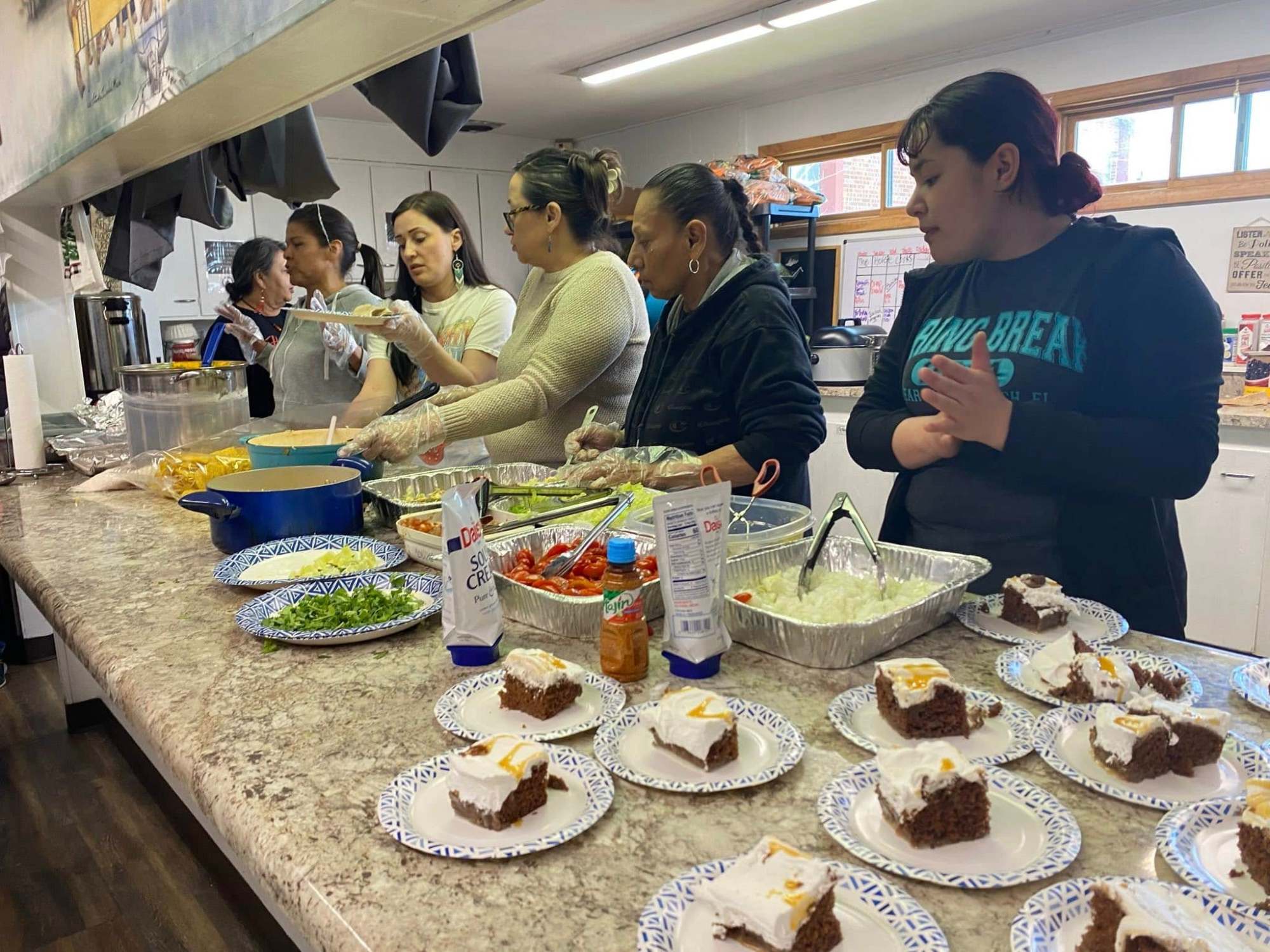
In Rapid City, S.D., right outside of the Black Hills, Lakota activist and community leader Natalie Stites Means and the COUP Council, an Indigenous-led nonprofit, are bringing back COVID-19-era meal programs to help feed at-risk families.
Through the COUP council, a Rapid City-based nonprofit dedicated to empowering Native people in Rapid City, Stites Means and others are organizing a planning session on Oct. 29. Stites Means said the planning session will be an opportunity to identify not just community needs, but what people can bring to the table.
Even if SNAP funding doesn’t lapse on Nov. 1, organizers still plan to reignite their 2020-era mutual aid meal-train program.
“We need a plan,” Stites Means said. “(Food) is always under attack.”
That means bringing back the Wotakuye Mutual Aid Society, a program that delivered food to over 3,000 people in 2020.
“It is a real crisis on the ground, on the front line,” Stites Means said. “This is a manufactured crisis. … We have a lot of hunger in this community.”
Wotakuye, which means kinship in the Lakota language, is a mutual aid program – which is a voluntary sharing of resources and services within a community to meet collective needs.

What this looked like in 2020 was a network of volunteers and donors. Maybe someone needed food, but had a working car. In this situation, they’d be provided food while also helping to deliver food to other community members, Stites Means said. Or maybe someone doesn’t know how to cook, but they do have access to produce that they can provide.
“I’m hoping some pressure will be elevated,” Stites Means said. “I’m worried about hunger and what hunger drives.”
Over 75,000 South Dakota residents use SNAP, according to USDA data from August, and that number has been steadily increasing since March. It’s unclear how many of those individuals are American Indian and Alaska Native.
State data indicates that 19,168 people living in reservation counties in South Dakota use SNAP, according to state data, while only 7,295 people in South Dakota used the Food Distribution Program on Indian Reservations, also known as commodities, as of May.
This isn’t exclusive to South Dakota. SNAP is, across the board, more popular with American Indian and Alaska Native families than the Food Distribution Program. Over one million American Indian and Alaska Native people use SNAP, opposed to only 58,119 people using the Food Distribution Program.
And for Native people in cities like Rapid City, the Food Distribution Program isn’t an option. Only reservations and some border towns in South Dakota can use the program. And in Pennington County, where Rapid City is located, roughly 9,990 people, including American Indian and Alaska Native people, use SNAP.
On Oct. 25, federal employees missed their first full paycheck during the ongoing government shutdown. Earlier this month, many received a partial paycheck for time worked prior to the shutdown on Oct. 1.
A significant number of Native people work for the federal government – roughly 30,600 people, or 1.5 percent of the federal workforce, according to 2023 data from the Office of Personnel Management Diversity Equity Inclusion and Accessibility Report.
It’s also uncertain if members of the military will continue to be paid, another factor affecting many Native families as roughly 19 percent of all Native American people have served in the Armed Forces – in comparison to an average of 14 percent of all other ethnicities.
All of this combines into an increased need for mutual aid programs and food assistance, Stites Means said.
Others are working to educate communities on the food that surrounds us and can be accessed through foraging.

Luke Black Elk, Cheyenne River Lakota, grew up on food from the Food Distribution Program. When he was younger, commodities were full of unhealthy and carbohydrate-dense foods, leading his mom to teach him how to forage on the Cheyenne River Reservation in northwestern South Dakota, about two-and-a-half hours north of Rapid City.
“I was probably two or three when I discovered that wild onions grew behind the house that we were living in,” Black Elk said. “I asked my mom what they were, and it was actually something that she had eaten when she was a child too, so she knew what they were.”
While the USDA has taken major steps toward including healthier foods in commodity deliveries, things weren’t always that way. In the 1980s and ’90s, one of the staples was the golden brick of American cheese, a highly processed food, despite the fact that many American Indian and Alaska Native people are lactose intolerant.
“It was very substandard,” Black Elk said. “The canned meat was horrible. The canned potatoes were horrible. There were not a lot of good options there. And it was so sodium and sugar rich that it was really unhealthy for people.”

Over time, Black Elk and his mother would supplement their diets by foraging for traditional foods like thíŋpsiŋla, or prairie turnips, and choke cherries.
“Because we were food insecure, we did a lot of having to make our own food,” Black Elk said.
Now decades later, Black Elk has taken that knowledge and used it to educate others, traveling across the Midwest with his family to host foraging classes. Class participants come back with plants and knowledge of how to use them for medicines or food.
“I think it's very important that people learn how to provide for themselves, you know, especially Indigenous people,” Black Elk said. “Our tribal nations are sovereign nations, but in the eyes of the government, we are dependent-sovereign nations, and that dependency is really all about food and resources, right? We've been placed in these very harsh spaces that don't provide a lot and so, so we're unable to really be sovereign in that we're not feeding and we're not housing and clothing ourselves.”
A lot of people are scared right now, Black Elk said, but Indigenous people have already faced having their lives flipped upside down time and time again. Traditional food systems were changed almost overnight, and foraging became less and less common.
“It's important for us to get back to those things, especially because we spent countless millennia here in this environment, co-evolving with the plants and animals around us,” Black Elk said. “It's actually better for Indigenous people to, say, eat salmon or bison or or wild plants from their area, because our bodies know how to take that nutrients up, whereas when we're when we're subsisting on things like glutinous flour made from wheat or highly modified sweet corn, these highly processed sugars, those things aren't right for for Indigenous bodies.”
Right now heading toward winter, a lot of plants have already gone dormant, but that doesn’t mean there aren’t still foraging possibilities, Black Elk said.
The Black Hills, for example, where Black Elk’s ancestors lived, is rich with acorns, mustard greens and other edible plants. Golden rod, a large yellow flowering prairie plant, is still producing. A golden rod plant’s leaves can be used in dishes and tastes a lot like cilantro, Black Elk said. Additionally, right now is prime mushroom-hunting season.
“There’s a lot available, even if it seems like the world is kind of shutting down right now and getting ready for winter,” Black Elk said. “But there’s still a lot out there.”

Overall, working with your community and giving back in whatever way you can is one way to weather the potential storm, Stites Means said, whether that’s foraging, canning or donating fresh foods.
“It’s about building relationships,” she said. “We have lots of interest from people wanting to help.”
Wotakuye Mutual Aid will be meeting at 5:30 p.m. Mountain Standard Time on Oct. 29 to identify needs and create a plan. The meeting will be held at the COUP Council office in Rapid City and is open to all.