

Richard Arlin Walker
Special to ICT
Douglas “Chief” Stankewitz, a Monache man from Big Sandy Rancheria who has lived on San Quentin’s Death Row for 44 years, will get a resentencing hearing Jan. 20 that his legal team hopes will result in his freedom.
Alexandra Cock, a member of Stankewitz’s legal team, said they hope to present mitigating information that was not presented during his 1978 trial and 1982 retrial – information they say would have warranted a lesser sentence than death or life in prison without parole.
Read more:
—Monache man on Death Row maintains his innocence
—Remembering a life: ‘She was a nice girl’
—‘It’s the next step toward freedom’
—Life Inside: California’s longest-serving Death Row prisoner
Fresno County Superior Court Judge Arlan Harrell scheduled the resentencing hearing and gave the state until Oct. 29 to respond to Stankewitz’s petition for an evidentiary hearing. If there are disputes on the facts presented in the petition, then Harrell must order an evidentiary hearing with witnesses to determine the correct facts.
That will open the hearing up to challenges by the defense on evidence presented in the prior cases that they say are questionable.
“That’s when we would say that the gun [presented as evidence by police] was not the murder weapon and he didn’t do this at all,” Cock said.
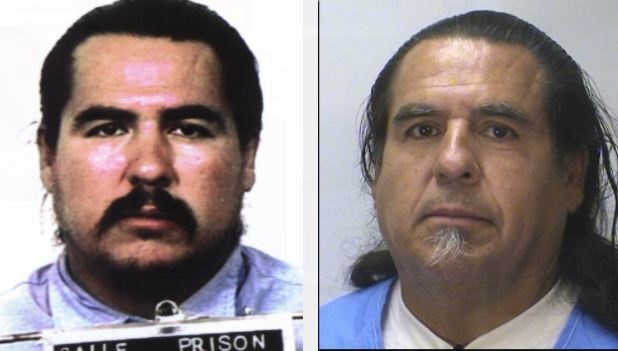
The mitigation evidence could result in Stankewitz being resentenced to the time he has already served in prison, which would allow him to immediately be released, Cock said. His legal team is also seeking full exoneration.
The hearing is scheduled in the same courthouse where Stankewitz was tried and convicted more than four decades ago. The hearing was set by Harrell after a review by California’s 5th District Court of Appeal.
Stankewitz, now 64, was 20 when he was convicted of fatally shooting 21-year-old Theresa Kay Graybeal in a vacant lot in Fresno, a city in California’s Central Valley located midway between Los Angeles and Sacramento. Stankewitz and three other Native American friends had followed Graybeal to her car in a Modesto shopping center parking lot, pushed her in and drove her vehicle 91 miles south to Fresno, where they met up with another friend and planned a drug buy, according to court records.
SUPPORT INDIGENOUS JOURNALISM. CONTRIBUTE TODAY.
One of the co-defendants, Billy Brown, was granted immunity in exchange for testifying against Stankewitz. Marlin Lewis, Teena Topping and Christina Menchaca were tried and convicted on lesser charges. Like Stankewitz, Brown, Lewis and Topping were Native people from Fresno County.
Stankewitz was initially sentenced to death, but the case was overturned on appeal. He was convicted a second time and also sentenced to death. In 2019, his sentence was reduced to life without parole, but without a hearing.
The latest ruling will now give him the hearing he didn’t receive at the time.
Challenging the evidence
The testimony against Stankewitz has unraveled in the ensuing years.
Brown, a minor at the time of the carjacking and murder, recanted his testimony in a sworn statement in 1993, saying investigators threatened him during questioning with being charged as an accessory if he didn’t testify against Stankewitz. The youth did not have a parent or lawyer present during questioning, according to court documents.
And in 2000, Lewis told Laura Wass, Central California director of the American Indian Movement in Fresno, that he shot Graybeal. Wass recounted her conversation with Lewis in 2020 during an interview with an investigator assisting Stankewitz’s legal team and signed a sworn statement.
Menchaca and Topping told investigators they were in the car when the shooting occurred and that they didn’t see who fired the shot, according to court records.
Stankewitz’s legal team say other evidence proves his innocence.
The bullet’s trajectory indicates that Stankewitz — the tallest of the five defendants at 6-feet-1 — was too tall to have fired the shot that killed Graybeal, who was 5 feet 2 1/2 inches.
“I continue to believe that the trajectory of the fatal shot demonstrates that the victim, Ms. Graybeal, was not shot by Mr. Stankewitz but instead by a shorter person,” wrote expert witness Roger Clark, a certified police procedures consultant and retired Los Angeles County sheriff’s detective. The other defendants were 5-foot-6, 5-foot-3, and 5-foot-1, according to court documents.

In addition, Clark wrote that evidence was carelessly handled and not verified according to procedure. For example, a police report stated that the serial number on the alleged murder weapon had been removed.
“When I inspected the physical evidence on March 21, 2019, including the alleged murder weapon, the serial number on the gun was clearly visible,” Clark wrote. That gun, he wrote, appeared to have been in police custody prior to Graybeal’s murder.
Stankewitz denies he killed Graybeal and said he thinks he was low-hanging fruit for investigators and the prosecutor.
“I was the target because I’m Indian and because of my family and my family name,” Stankewitz told ICT in an earlier interview. “My family was known for violence, was known for trouble, was known to start trouble and to be at the wrong place at the wrong time. But police knew I didn’t do it. They just wanted any Stankewitz.”
Statements made by investigators and the prosecutor show there was a prejudiced view of Stankewitz from the start.
“We were familiar with the violent tendencies of the family as a norm,” Garry Snow told an investigator assisting Stankewitz’s legal team in 2020; Snow was a Fresno Police homicide detective at the time of the Graybeal murder who retired in 2008.
Thomas D. Lean III, a lead detective in the Graybeal murder investigation, said of the Stankewitz family: “They had a reputation in the community.”
James A. Ardaiz, who had prosecuted other Stankewitz family members by 1978 when Douglas Stankewitz became a suspect in the Graybeal murder, said, “It was predictable that he would be, you know, he would be a person that was disposed to violence in order to solve whatever thing he was confronted with. I have no question in my mind.”
Stankewitz doesn’t deny his past. His mother was an alcoholic and abusive, and his father and siblings spent time in prison. Stankewitz alternated between foster homes, a state hospital and juvenile hall. When he was 15, he was the driver of a car fleeing the scene of an alleged robbery and assault; a passenger in the car was killed in a shootout between Stankewitz’s brother and a pursuing police officer.
But Stankewitz denies he killed Graybeal. “I’m not guilty,” he has told ICT. “I am innocent and I was framed, and the physical evidence proves that.”
Stankewitz said he wants Graybeal’s family to know he regrets their loved one’s death. According to co-defendants’ testimony, Stankewitz had assured Graybeal that they just needed a ride to Fresno and that she would not be harmed. The young woman eased up, they said, conversing with them and even sharing her cigarettes.
“If I could talk to them today, I would tell them I feel bad that they lost their daughter, their wife, whoever she was to them,” Stankewitz told ICT on Nov. 16, 2021. “She was only 22 years old. That was a devastating loss to everybody. I hold her in my prayers every morning, her and her family. I wish it hadn’t happened, but I didn’t do it.”
Post-release plans
Should Stankewitz be released, he would begin life anew in a world that is bigger, faster and more technologically driven. California’s population has doubled since he went to prison. Electric cars, cell phones and laptop computers didn’t exist then.
Stankewitz would stay in the home of a legal team member, Cock said, as they help him transition to life on the outside. He would sleep in a bed for the first time in 44 years; he currently sleeps on blankets, declining to use prison-issued mattresses because he said they are contaminated with bodily fluids.
His walks would no longer be confined to a prison yard, his showers no longer taken under the watchful eye of an armed guard.
He’d look for a job, he said, most likely in construction. And he looks forward to a good home-style meal.
“I’ve thought about it many times,” he told ICT. “If I got out today and I had, like, a $100, I’d go to some country place and I’d [order] a delicious breakfast: eggs and sausage and pancakes, some toast and fried potatoes, and a big glass of cold milk. If it’s dinner, I’d have some fresh salmon, some venison, some buffalo soup, some frybread and tortillas, some corn, some asparagus with sea salt on it, and some real butter to put on my tortillas. Real butter, not prison butter.”
Graybeal’s husband, David, who later remarried, told ICT in an earlier interview that Stankewitz deserves to spend the rest of his life in prison.
“It doesn’t matter who pulled the trigger,” he said. “They were all guilty of kidnapping and murdering Theresa. She was a beautiful young woman who had her whole life ahead of her. They didn’t need to kill her.”
TIMELINE
1978: Douglas “Chief” Stankewitz, then 20, is convicted of the murder of Theresa Kay Graybeal and is sentenced to die in the gas chamber at San Quentin Prison.
1982: Stankewitz’s sentence is overturned because of doubts he had been competent to assist in his own defense. He remains in San Quentin pending retrial.
1983: Stankewitz is again found guilty and sentenced to death.
1989: Stankewitz’s retrial attorney, Hugh Goodwin, acknowledges in the first of two sworn written statements that he failed to introduce Stankewitz’s mental health history, including psychiatric and psychological evaluations, that might have spared him the death penalty.
1993: Billy Brown recants his testimony as a minor that Stankewitz killed Graybeal, saying it was coerced.
2000: Marlin Lewis tells Laura Wass, a regional director of the American Indian Movement, that he, not Stankewitz, shot Graybeal. She recounts her conversation with Lewis in 2020 during an interview with an investigator assisting Stankewitz’s legal team, and signs a sworn statement.
2012: Based partly on Goodwin’s sworn written statements, the penalty phase of Stankewitz’s sentence is reversed.
2018: Several prison guards and prison chaplains write letters of support for Stankewitz, describing him as courteous, helpful and respectful to prison staff and other inmates. “When Chief is released, he will be a positive contributing member of society,” retired San Quentin Chaplain Earl A. Smith Sr. writes. Prison Rabbi Paul Schleffar writes that Stankewitz “demonstrates maturity, a commitment to personal growth and if released to a life outside prison, will be a positive force in his family, community and hopefully the workforce moving forward.”
2019: Roger Clark, a certified police procedures consultant and retired Los Angeles County sheriff’s detective, examines the evidence and determines that it was carelessly handled and not verified according to procedure.
2019: Stankewitz’s death sentence is reduced, without a hearing, to life without parole. Stankewitz chooses to stay in his cell on Death Row, saying it’s safer there than among the general population.
2021: Stankewitz petitions for an resentencing hearing, contending he was entitled to one when his death sentence was reduced. Had the court heard mitigating evidence at that hearing, he might have received a sentence of life with possibility of parole, Cock said. With time served, he would have been immediately eligible for release.
June 28, 2022: California’s 5th District Court of Appeal rules that Stankewitz is entitled to a hearing. The appellate court vacates Stankewitz’s sentence of life without possibility of parole – he is still convicted of murder – but he remains in San Quentin pending resentencing.
Sept. 29, 2022: Fresno County Superior Court Judge Arlan Harrell schedules a resentencing hearing for Jan. 20, 2023. Stankewitz’s legal team will present evidence, including an updated probation officer’s report, that they believe will warrant a lesser sentence and immediate eligibility for parole.

Our stories are worth telling. Our stories are worth sharing. Our stories are worth your support. Contribute $5 or $10 today to help ICT (formerly Indian Country Today) carry out its critical mission. Sign up for ICT’s free newsletter.
