WARNING: This story contains disturbing details about boarding schools. If you are feeling triggered, here is a resource list from the National Native American Boarding School Healing Coalition.
Charles Fox
Special to ICT
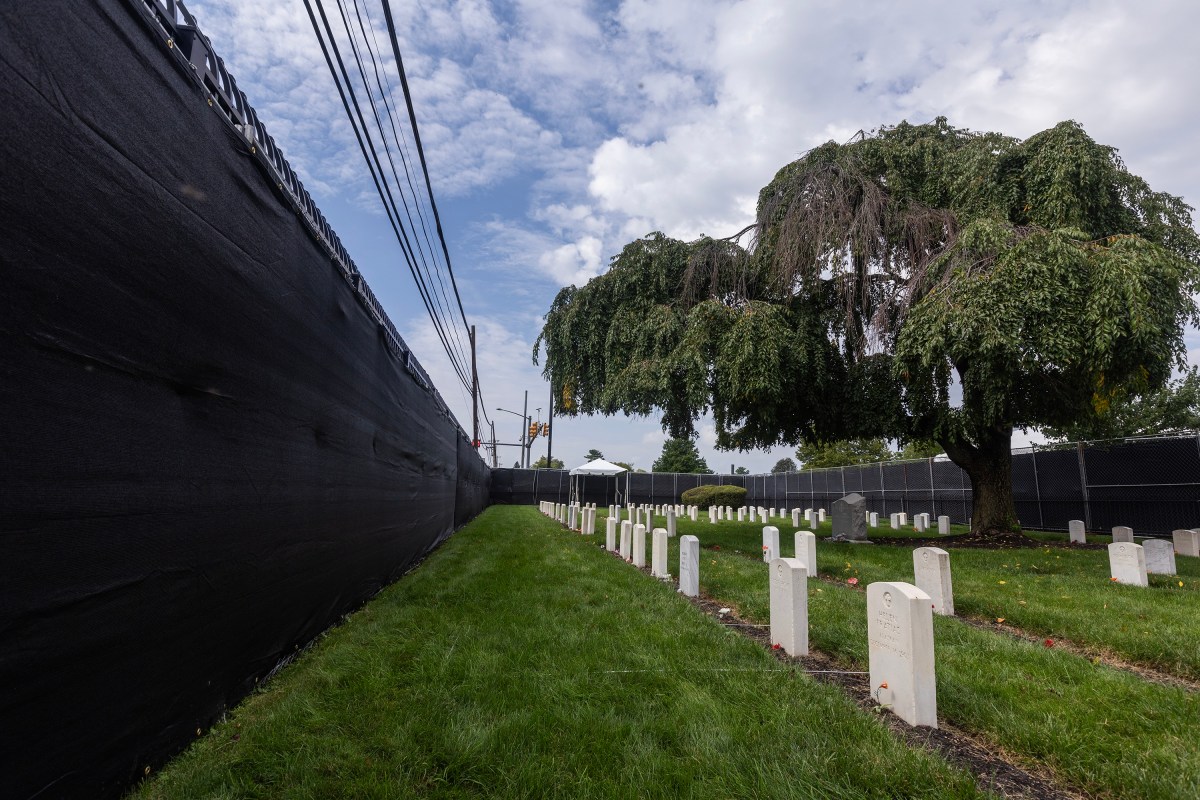
CARLISLE, Pennsylvania — The Carlisle Barracks Post Cemetery is once again solemnly shrouded with black privacy fencing as families and tribal leaders gather to reunite with ancestors who died while attending the Carlisle Indian Industrial School.
Disinterments are set to begin Tuesday, Sept. 1, of the first of 12 students who will be returned to their homelands over the next six weeks as part of the Office of Army Cemetery’s annual repatriation of remains of children who died at the school.
Among the first to go home will be three students from the Fort Peck Assiniboine and Sioux Tribes, who arrived at Carlisle together on April 15, 1890. They all died of tuberculosis over the the next few years.
Descendents and tribal leaders gathered at Carlisle on Monday, Aug. 31, to help them begin their journey home. A celebration is planned for their arrival in Montana.
“The community becomes the family,” Dyan Youpee, the tribe’s cultural preservation director, told the Fort Peck Journal, referring to a phrase that is at the heart of the planned celebration welcoming the children home.
Youpee told ICT the event is designed to “shed positive, healing light on the repatriation efforts, journey and reburial.”

The repatriation experience can be a wrenching emotional journey for descendants and tribal leaders, as they retrace the footsteps of ancestors who never have made it back to their families, paired with the triumph of finally bringing them home.
For the Office of Army Cemeteries, which oversees the Carlisle cemetery along with other Army facilities, this will be the ninth round of disinterments, with forensic archaeological and anthropological experts from the U.S. Army Corps of Engineers.
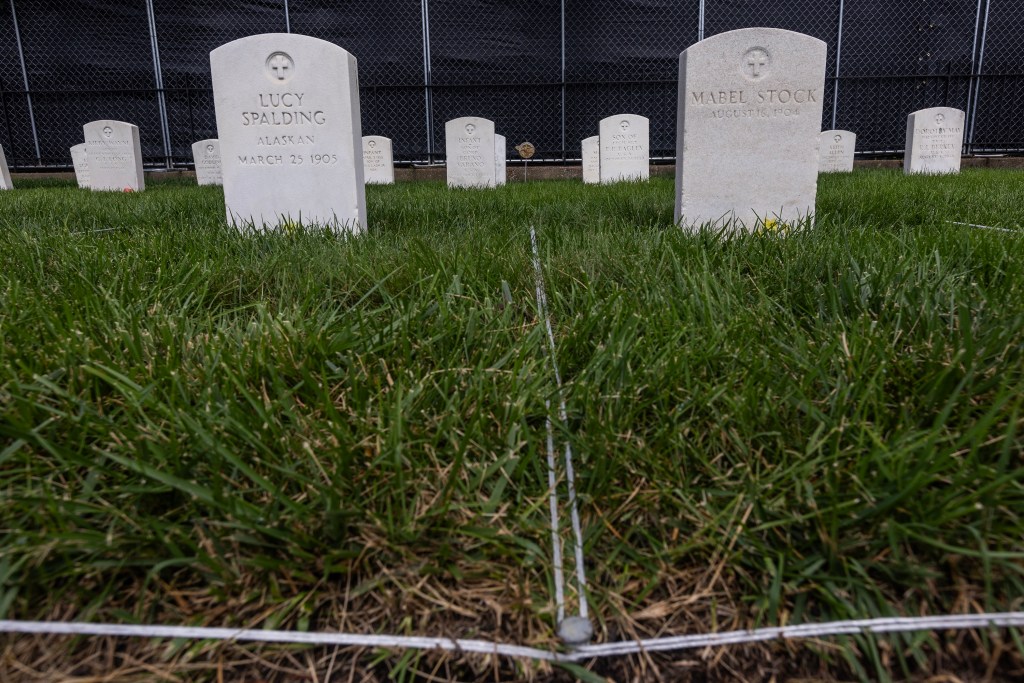
Since the repatriations began in 2017, the remains of 58 students have been returned home, leaving numerous gaps among the headstones in the cemetery. Of the 138 graves that remain, the burial sites of 22 children are designated as unknown, with the identities lost to human error when the cemetery moved in 1927.
“The Office of Army Cemeteries team is inspired by the strength and courage from the Native American and Alaska Native Tribes as they make this journey to bring their children home,” Renea Yates, director of the Office of Army Cemeteries, stated in a press release.
“Navigating the disinterment and return process requires the highest level of professional care and compassion and we are committed to providing the expert assistance needed to return their loved ones to their families and communities,” Yates said.
The Army reimburses families for their travel to participate in the disinterment process, the transfer ceremony that follows, and the cost of transport and reburial of the children. After the transfer of custody, families and tribes are free to rebury these children to a location of their choice.
Government assimilation
The students, who ranged in age from 11 to 18, also include four Alaska Native students, and a student each from the Comanche Nation, Absentee Shawnee Tribe, Shoshone Paiute Tribes, Grand Traverse Band of Ottawa and Chippewa Indians and the Keweenaw Bay Indian Community.
Most of them died from tuberculosis, although the cause of death was not listed for several of the students in school records.
The barracks housed the Carlisle school from 1879-1918, where nearly 8,000 students from more than 140 tribes attended as part of a government assimilation program that separated them from their families, language and culture. It was the first federally funded, off-reservation Indian boarding school in the U.S., and it served as a model for boarding schools across the U.S. and Canada.
The research of the Alaska Native Heritage Center, known as ANHC, has been instrumental in bringing home the four Alaska Native students scheduled for disinterment.
“When we do research aimed at bringing home our children, we hope to bring healing to our communities affected by the era of assimilation and its continuing effects,” Benjamin Jacuk, director of Indigenous Research and Healing at ANHC, recently told ICT. “Our work is to bring home the children above all else… Because at the end of the day these children are worth that hard work and that trust.”
The Carlisle Barracks Post Cemetery has been closed to visitors since Aug. 14, and access to the cemetery, enclosed in privacy fencing, will be restricted to federal staff along with tribal members and their families until the completion of the scheduled disinterments, tentatively set for Oct. 12.
Homecoming preparations
At Fort Peck in eastern Montana, organizers are optimistic the event will bring out a large welcoming crowd.
On July 31, Youpee and others did a non-stop 89-mile Awareness Walk from one end of the reservation to the other to make sure everyone was aware of the upcoming event. Organizers have encouraged people to arrive wearing orange shirts to acknowledge boarding school survivors or traditional regalia, and to create an escort of horseback riders and a caravan of cars to welcome the children home as they reach the reservation border.
More than 135 years after the children left their homelands, the homecoming is an attempt to show love and recognition to the three students.
Organizers want to ensure they are not forgotten or reduced to names on school records, in hopes the community comes together to make sure that no child comes home alone.
COMING HOME
The remains of 12 students who died at the Carlisle Indian Industrial School are set to be disinterred starting Sept. 1 through Oct. 12. The students include four Alaska Natives, three from the Fort Peck Assiniboine and Sioux Tribes, and students from five other tribes across the U.S.
Alaska Natives
*Mabel Booth arrived on Oct. 24, 1903, at age 11, and died Aug. 14, 1904, of tuberculosis. Her last name is listed as Stock on the gravestone and Stack in the Carlisle records, but Booth is believed to be her correct last name.
*Edward Angalook, who is listed as Angelook on his gravestone, arrived Nov. 23, 1903, at age 18, and died Sept. 24, 1905 of tuberculosis.
*Lucy Spaulding arrived Oct. 24, 1903, at age 14, and died March 25, 1905, of tuberculosis. She is listed as Spalding on her gravestone.
*Tummassak arrived on Nov. 14, 1897, at age 12, and died on April 8, 1900, of tuberculosis. She is listed as Tomicock on her gravestone and also as Tomiclock in Carlisle archives.
Fort Peck Assiniboine and Sioux Tribe
*Peter Howe arrived at the school on April 15, 1890, at age 16, and died six years later on June 5, 1896, of tuberculosis.
*Richard Morgan arrived April 15, 1890, at age 17, and died March 25, 1891, of tuberculosis.
*Christine Redstone arrived April 15, 1890, at age 15, and died July 19, 1899, of tuberculosis.
Comanche Nation
*Frances Bones arrived on Nov. 8, 1894, at age 14, and died on May 7, 1895. Her cause of death was not listed in Carlisle records.
Absentee Shawnee Tribe
*Fannie Gibson arrived on Dec. 24, 1899, at age 17, and died on Dec. 6, 1900, of tuberculosis.
Shoshone Paiute Tribes
*Della Atkins arrived on Dec. 13, 1900, at age 17, and died 12 days later on Dec. 25, 1900. Her death was attributed to a brain tumor.
Grand Traverse Band of Ottawa and Chippewa Indians
*Susie King arrived at the school on Oct. 25, 1890, at age 16, and died Oct. 21, 1891. Her cause of death was not listed.
Keweenaw Bay Indian Community
*Margaret Davis arrived at the school on Sept. 15, 1889, at age 14, and died Dec. 21, 1892, of tuberculosis.
*Updated: This story has been updated to clarify that Dyan Youpee is the cultural preservation director for the Fort Peck Assiniboine and Sioux Tribes, and that 138 gravesites remain at the Carlisle Barracks Post Cemetery of former students at the Carlisle Indian Industrial School. Of those, 22 graves are marked as “unknown.”