
ICT is working to shape the future of journalism and stay connected with readers like you. A crucial part of that effort is understanding our audience. Share your perspective in a brief survey for a chance to win prizes.
Deusdedit Ruhangariyo
Special to ICT
Around the world: Murder and mining threaten the Indigenous people of the Colombian Amazon, Canada’s Supreme Court upholds constitutionality of Indigenous child welfare law, and Indigenous designers from First Nations set to headline Melbourne Fashion Festival
NICARAGUA: Dangers in the Colombian Amazon
In June 2023, near the Colombian-Brazilian border, Custodio Yucuna Tanimuca, a Yucuna leader and health promoter from Curare Los Ingleses Reserve, aided stranded soldiers across Córdoba stream. Skilled in river navigation, he demonstrated expertise ingrained in Amazon Indigenous communities like his own, Mongabay reported February 5.
What Tanimuca unknowingly assisted was the army’s 26th forest brigade, pursuing an 800-kilogram shipment of pressed marijuana. The cargo, bound for Brazil, reflects the region’s growing marijuana trade, often surpassing cocaine in value.
Tragically, Tanimuca’s aid cost him his life. Two days later, the illegal armed group protecting the marijuana shipment, one of many controlling the Caquetá River’s illicit trade routes, brutally murdered him. Local sources, seeking anonymity, reveal the group’s suppression of any attempt to report or move Tanimuca’s body, highlighting the silence enforced by criminal dominance in this part of the Colombian Amazon.
“Those defending the territory are immediately threatened. They have to be still or quiet because otherwise they will lose their life,” says Carlos Alberto Gaitán, coordinator of territory, the environment and climate change of the National Organization of Indigenous Peoples of the Colombian Amazon (OPIAC), when referring to the security situation for leaders in Amazon territories.
A month before Tanimuca’s murder, the Ombudsperson’s Office warned of heightened risks in the region, particularly for communities along the Vaupés and Amazonas border, specifically between Taraira and La Pedrera municipalities. Two dissident FARC groups, the Carolina Ramírez First Front and the Armando Ríos First Front, were cited as significant threats. These groups, in collaboration with criminal entities in Brazil, engage in drug trafficking and the illicit trade of mined products, including gold and rare minerals essential for various technological applications.
Indigenous reserves in the Colombian Amazon have long suffered in silence amidst escalating violence. To comprehend the depth of this crisis, a collaborative effort between Mongabay Latam, Baudó Agencia Pública, entreojos.co, La Silla Vacía, and the journalist network La Liga Contra el Silencio delved into five reserves. Their investigation, paired with geospatial analysis covering 230 territories within the Colombian Amazon biome, revealed alarming statistics. In 2022 alone, 218 Amazon reserves lost over 19,181 hectares (47,397 acres) of tree cover. Furthermore, 88 reserves were found to harbor illegal coca crops, while pollution from illicit gold mining contaminated eight rivers, affecting 10 reserves.
The findings of this comprehensive analysis, combined with data from seven state institutions and civil society, pinpointed five reserves besieged by illegal activities: Yurayaco, El Hacha, La Yuquera, Villa Catalina and Curare Los Ingleses.
The Indigenous communities of Bajo Caquetá are ensnared in confinement, a plight shared by others across the Amazon. Illegal groups navigate rivers, traverse forests, and relentlessly breach the barriers that ancestral territories have long erected to safeguard the forest, its resources, culture, and the lives of its inhabitants.
CANADA: Child welfare law upheld
In a landmark decision, Canada’s Supreme Court unanimously upheld the Trudeau government’s Indigenous child welfare law, rejecting Quebec’s appeal. The ruling solidifies Indigenous peoples’ authority over child and family services, CBC News reported February 9.
“The act as a whole is constitutionally valid,” the court concluded. “Developed in cooperation with Indigenous peoples, the act represents a significant step forward on the path to reconciliation.”
In 2019, Bill C-92, known as the Act Respecting First Nations, Métis and Inuit Children Youth and Families, was enacted into law. The legislation solidifies Indigenous nations’ authority over child and family services and establishes national minimum care standards.
Opposition to the law arose from the Quebec government, which contested it on jurisdictional grounds. Quebec argued Ottawa had exceeded its legislative mandate, encroached upon provincial jurisdiction, and effectively elevated Indigenous peoples to a third tier of government.
However, the Supreme Court ruled in favor of the federal Liberal government. It determined the government had acted within its jurisdiction and had not created a new level of governance. Instead, the legislation acknowledges rights already safeguarded by the Aboriginal rights section of Canada’s Constitution.
“The act does not alter Canada’s constitutional architecture,” the court wrote, according to CBC News.
Additionally, the court recognized the law as a component of Parliament’s efforts to fulfill the United Nations Declaration on the Rights of Indigenous Peoples.
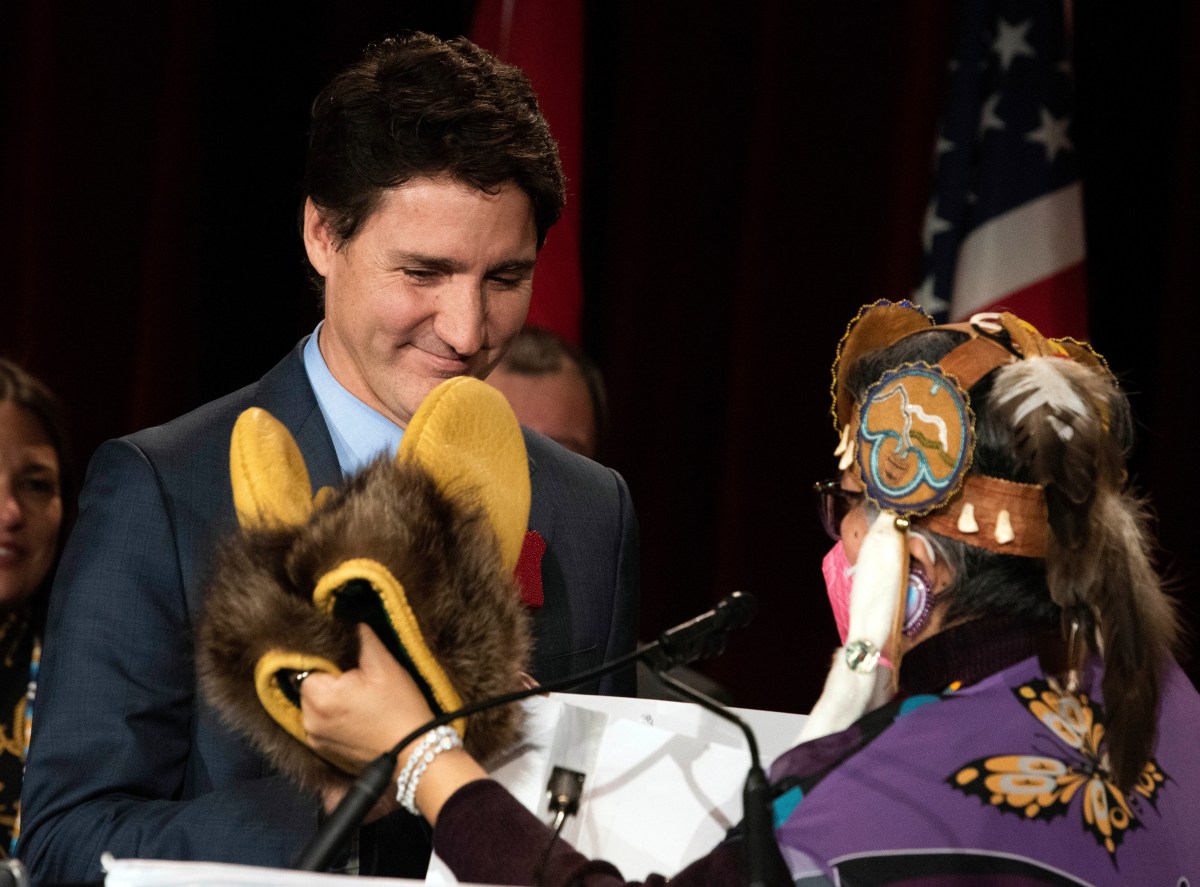
Leaders of Quebec First Nations hailed the ruling as historic and monumental, marking a significant stride forward. During a press briefing held at a hotel in Ottawa, they emphasized the importance of the decision, surrounded by a semicircle of predominantly Atikamekw youth.
“This decision really belongs to them,” said Ghislain Picard, chief of the Assembly of First Nations Quebec-Labrador.
AUSTRALIA: Festival to feature Indigenous designers
Australia’s premier consumer fashion event, the PayPal Melbourne Fashion Festival, returns in 2024, the National Indigenous Times reported February 6.
In its 28th year, the festival aims to shine a spotlight on Australia’s leading Indigenous designers and creative talents.
With over 100 distinctive events lined up, the festival’s 15-day program (February 24-March 9) will highlight the vibrant and diverse First Nations fashion community of Victoria and Australia.
Caroline “Ralph” Ralphsmith, CEO of the Melbourne Fashion Festival, emphasized the program will solidify the event’s status as Australia’s primary consumer-focused fashion extravaganza.
“This year we are further cementing PayPal Melbourne Fashion Festival as Australia’s only true consumer major event in Fashion – a true fashion destination – where fashion lovers, industry insiders and voyeurs all gather to celebrate and support the extraordinary rich tapestry that is the Melbourne and Victorian fashion industry,” she said.
Featuring a plethora of premium and independent runways spotlighting First Nations designers, attendees can anticipate a diverse representation of Indigenous talent throughout the week’s schedule.
Kicking off the festivities March 3, the Global Indigenous Runway-Ancestral Bloodlines will showcase the distinctive styles of several designers, reflecting their ancestral heritage.
On March 7, the Tribe x Fujitsu First Nations Rising Designer Runway will celebrate emerging First Nations fashion talents curated by festival collaborator Mob in Fashion. Later that evening, the Urban Oasis Runway x Fujitsu will feature renegade and First Nations streetwear designers, translating global conversations into unique fashion statements for everyday wear.
From February 23 to March 10, the Layers of Black exhibition will spotlight the creative outcomes of the Koorie Heritage Trust’s Blak Design program. This program, a national first, aims to recognize and reclaim space for First Peoples’ design within the broader Australian design landscape. Presented by the Koorie Heritage Trust in collaboration with the National Gallery of Victoria and RMIT University, with support from the Ian Potter Foundation, Blak Design fosters cultural innovation within Victoria’s design sector and nurtures sustainable, collaborative First Peoples design practices.
My final thoughts
My final thoughts are in Canada where the Supreme Court in a landmark decision unanimously supported the Trudeau government’s Indigenous child welfare law, rejecting Quebec’s appeal. This ruling solidifies Indigenous peoples’ authority over child and family services.
I commend the unwavering support shown for the Indigenous child welfare law.
This resounding endorsement, coupled with the rejection of Quebec’s appeal, signifies a monumental step forward in recognizing and upholding Indigenous peoples’ authority over child and family services.
I celebrate this ruling as a significant victory for Indigenous rights and encourage the continuation of such decisions that prioritize and empower Indigenous communities across Canada and beyond.

Our stories are worth telling. Our stories are worth sharing. Our stories are worth your support. Contribute $5 or $10 today to help ICT carry out its critical mission. Sign up for ICT’s free newsletter.
