
Deusdedit Ruhangariyo
Special to ICT
Around the world: China’s travel restrictions on Uyghurs persist despite eased ban, silent guardians of Shea restore Uganda’s traditional parklands, the NFL commissioned Indigenous artist Lucinda Hinojos for Super Bowl art, and two Indigenous food businesses gain expert help for global exports.
CHINA: Uyghurs’ travel restricted
Human Rights Watch reports that while China has eased its ban on Uyghurs traveling abroad, it imposes severe restrictions that violate their internationally protected rights, Radio Free Asia reported on Feb. 4.
“These restrictions are another example of Beijing’s repression of the 12-million-strong Uyghur population in the northwestern region of Xinjiang, although authorities appear to want to project a sense of normalcy to the rest of the world,” the report said.
Uyghurs who apply to visit family abroad must disclose the purpose of their trip and provide an invitation from their relative, along with personal details such as their address, work status, and other relevant documents, according to those who have recently left Xinjiang or met with relatives from the region.
Authorities further restrict travel by allowing only one family member to leave at a time, using other relatives as leverage to ensure their return, several Uyghurs told Human Rights Watch.
Applicants may also be required to secure a “guarantor,” often another official, and failure to comply could put their family members at risk of punishment.
Once abroad, Uyghur travelers are prohibited from engaging with activists or speaking critically about the Chinese government. They must also return within a specified time frame, which can range from a few days to several months.
For business trips, Uyghurs are permitted to visit only certain countries, such as Kazakhstan, while travel to “sensitive” nations with large Muslim populations, like Turkey, remains banned.
“The modest thaw in China’s travel restrictions has allowed some Uyghurs to briefly reunite with loved ones abroad after having no news for years, but the Chinese government’s travel restrictions are still used to oppress Uyghurs in Xinjiang and in the diaspora,” said Yalkun Uluyol, a China researcher at Human Rights Watch, in the report.
“The Chinese government continues to deny Uyghurs their right to leave the country, restrict their speech and associations when abroad, and punish them for having foreign ties,” he added.
For nearly a decade, Chinese authorities have carried out a harsh crackdown on Uyghurs and other Turkic groups in Xinjiang, detaining an estimated 1.8 million people in concentration camps under the pretext of combating terrorism and religious extremism.
The government began confiscating Uyghurs’ passports in 2016 during a “strike hard” campaign and has imprisoned some individuals for simply contacting people abroad.
UGANDA: Restoration of traditional parklands
In northern Uganda’s Pader district, farmers are striving to protect agricultural landscapes that have sustained their communities for generations. These shea parklands, where well-tended trees thrive alongside food crops, reflect centuries of traditional farming wisdom now at risk of disappearing, Mongabay reported on Feb. 7.
Unlike natural forests, shea parklands in northern Uganda’s Pader district are agricultural landscapes shaped by generations of farmers. Research submitted to the Global Shea Alliance highlights how communities historically balanced crop production with ecological diversity by selectively preserving trees during field clearing and encouraging regeneration on fallow land. The shea tree (Vitellaria paradoxa) remains central to this system.
“The shea nut tree and its products have been very significant in our traditional culture from time immemorial,” says Gillian Josephine P’Ochen in Lapaya village. “In our parklands, we have more than 50 other tree species that are also very significant in the ecosystem. I prefer to call this a paradise in the woods and a pharmaceutical arena.” She points to an African cherry (Prunus africana), whose bark has long been used to treat fevers while its leaves enrich the soil.
Farmers carefully integrate trees and crops, ensuring sustainable yields. “We continue to plant beans, maize, soya beans and other crops beneath the shea trees,” says Sam Okello, also from Lapaya. “The soil here remains fertile because of the trees. You cannot compare this area with places where trees have been destroyed.” Studies confirm that traditional parkland management fosters fungal networks that enhance soil fertility, while proper tree spacing optimizes light and moisture retention.
However, expanding agriculture, charcoal production, and shorter fallow periods threaten these systems. Research by Jean-Marc Boffa for the Center for International Forestry Research identifies mechanized farming and uncontrolled tree cutting as major pressures. The IUCN Red List now classifies shea trees as vulnerable, with over half the population lost in recent generations.
To counter these threats, Uganda’s state-funded Ngetta Zonal Agricultural Research and Development Institute has provided over 20,000 seedlings in Otuke district while promoting traditional management practices. “Through careful grafting, we’ve reduced the time to first fruit to 10 years,” says Laban Turyagenda, director of research at the institute.
Beyond economic value, shea parklands support biodiversity. A 2022 Scientific African study found bats, birds and insects rely on shea for food and play vital roles in pollination and seed dispersal. “Rodents, birds, humans, and bats disperse the seeds,” says P’Ochen, highlighting the parkland’s ecological complexity. Such relationships also rejuvenate soils, encouraging more farmers to preserve young shea trees.
Shea parklands provide climate resilience, as their microclimates protect crops and soil during extreme weather events. However, cultural shifts and complex land tenure issues continue to challenge traditional management. “Our indigenous tree species’ leaves fall and rejuvenate the soil,” says P’Ochen. “The new fast-growing exotic species people plant instead just destroy our soils.”
As Uganda seeks sustainable solutions, these traditional systems offer valuable lessons in balancing human needs with ecosystem health. The Global Shea Alliance report emphasizes that restoration efforts should build on indigenous practices rather than attempt to impose new, domesticated production systems. The revival of shea parklands is key to both food security and environmental sustainability.
AUSTRALIA: Indigenous business owners get expert help
Two Indigenous food and beverage businesses are among 15 companies receiving a month of expert guidance to expand their products internationally, the National Indigenous Times reported on Feb. 8.
Dhuwa Coffee (Aromas) and Kakadu Organics were selected for the Brisbane Economic Development Agency’s Future Food Global Accelerator initiative this month. This four-week program, now in its eighth year, offers bespoke support to businesses to overcome challenges and connect with industry leaders, accelerating their success in global markets.
Participants gain direct access to industry experts, tailored mentoring, and tools to scale and pursue international expansion. Kakadu Organics owner and Murrumburr woman Kylie-Lee Bradford emphasized the importance of relationship-building for export success. She hopes her native food and eco-friendly wellness products will soon be high-demand exports.
“It’s crucial to do thorough research on the country you want to enter. It’s not a quick process, especially in markets like Asia, which are heavily focused on relationship building,” Bradford explained to the Indigenous Business Review. “It took six or seven months of building a relationship with the owner of Ryan’s Grocery in Singapore before they placed their first order.”
Austrade Investment and Trade Commissioner Melanie Harris advised First Nations businesses interested in exporting to research and seek support before starting their journey. “Everyone’s export journey is different,” she said. “Some will export immediately, while others may focus on the domestic market first.” The Go Global Toolkit is available online for additional guidance.
Brisbane Economic Development Agency’s recent State of The City report revealed Brisbane’s advanced manufacturing sector is growing five times faster than the national average. The city’s proximity to the Asia-Pacific region, with $90 trillion in GDP and 47 percent of global trade, provides a competitive advantage for local manufacturers.
Since 2018, more than 400 businesses, including Hilton Foods, JBS Food Australia, and New Farm Confectionery, have participated in the Future Food program. Brisbane Lord Mayor Adrian Schrinner praised the diversity of the 2025 cohort, highlighting the city’s creativity and entrepreneurial spirit. “We’re proud to support local businesses as they expand internationally,” he said.
CANADA: Indigenous artist’s work commissioned for Super Bowl
An Indigenous artist from Nipissing First Nation, located in northeastern Ontario, is bringing his culture to a global audience through a partnership with the National Football League, CBC News reported on Feb. 8.
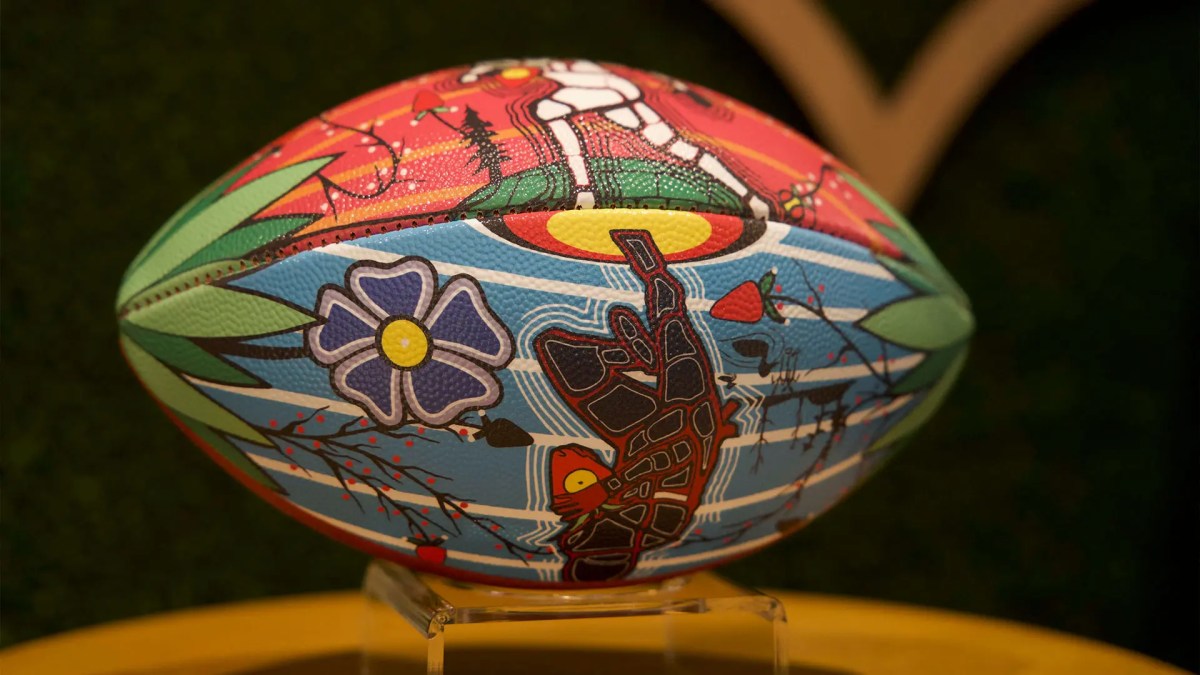
The NFL commissioned Quentin Commanda to decorate a football with artwork that reflects the culture of the Anishinabek people.
“They gave me complete creative control, which is really rare these days,” Commanda said. “For this project, they just let me do what I wanted to. And they accepted the first design sketch that I submitted.”
Known for painting large murals, Commanda found it refreshing to work on a smaller canvas. “Very easy, that’s for sure,” he said. “I wasn’t having to like, you know, deal with the elements outside or working alongside a 10-storey building.”
For his design, Commanda aimed to illustrate the balance between the physical and spiritual worlds. It features a strawberry, known in his culture as the heart berry. “Football is considered the heart sport of America,” he said.
The NFL produced 50 footballs featuring his design, which will be donated to various Indigenous communities. While Commanda doesn’t expect his football to be used during Sunday’s Super Bowl between the Kansas City Chiefs and Philadelphia Eagles, he believes it will be showcased in the lead-up to the game.
My final thoughts
My final thoughts are in China where China’s continued repression of Uyghurs through severe travel restrictions is a blatant violation of fundamental human rights. Despite loosening its outright ban, Beijing’s policies remain oppressive, using family members as hostages, forcing travelers into silence, and punishing those with foreign ties. These restrictions are not about security but about control, reinforcing the systematic persecution of Uyghurs both within and beyond Xinjiang.
This policy is a clear violation of international human rights laws, particularly the right to freedom of movement. By requiring extensive documentation, limiting destinations, and demanding a “guarantor,” China obstructs the ability of Uyghurs to maintain family connections and cultural ties. Furthermore, restricting their speech abroad ensures that the world does not hear firsthand accounts of the ongoing abuses in Xinjiang.
The use of travel as a tool for repression further isolates Uyghurs, worsening their already dire situation. For years, millions have been subjected to arbitrary detention, forced assimilation, and constant surveillance. The continued restrictions send a chilling message that Uyghurs are not free, even beyond China’s borders, and that any dissent will be met with severe consequences.
The international community must take a stronger stance against these abuses, applying diplomatic and economic pressure to demand real policy changes. Human rights organizations and foreign governments should push for independent monitoring of Uyghur travel rights and hold China accountable for its violations.
Uyghurs deserve the freedom to reunite with their families, speak openly, and live without fear, fundamental rights that must not be denied.

Our stories are worth telling. Our stories are worth sharing. Our stories are worth your support. Contribute $5 or $10 today to help ICT carry out its critical mission. Sign up for ICT’s free newsletter!
