
Deusdedit Ruhangariyo
Special to ICT
Around the world: Indigenous health gets an $8.2 billion boost in western Canada, two Māori women are sworn in as judges in New Zealand, and Birriliburu rangers unite for skink conservation in Australia
CANADA: New funding to fix ‘disparities’ in health system
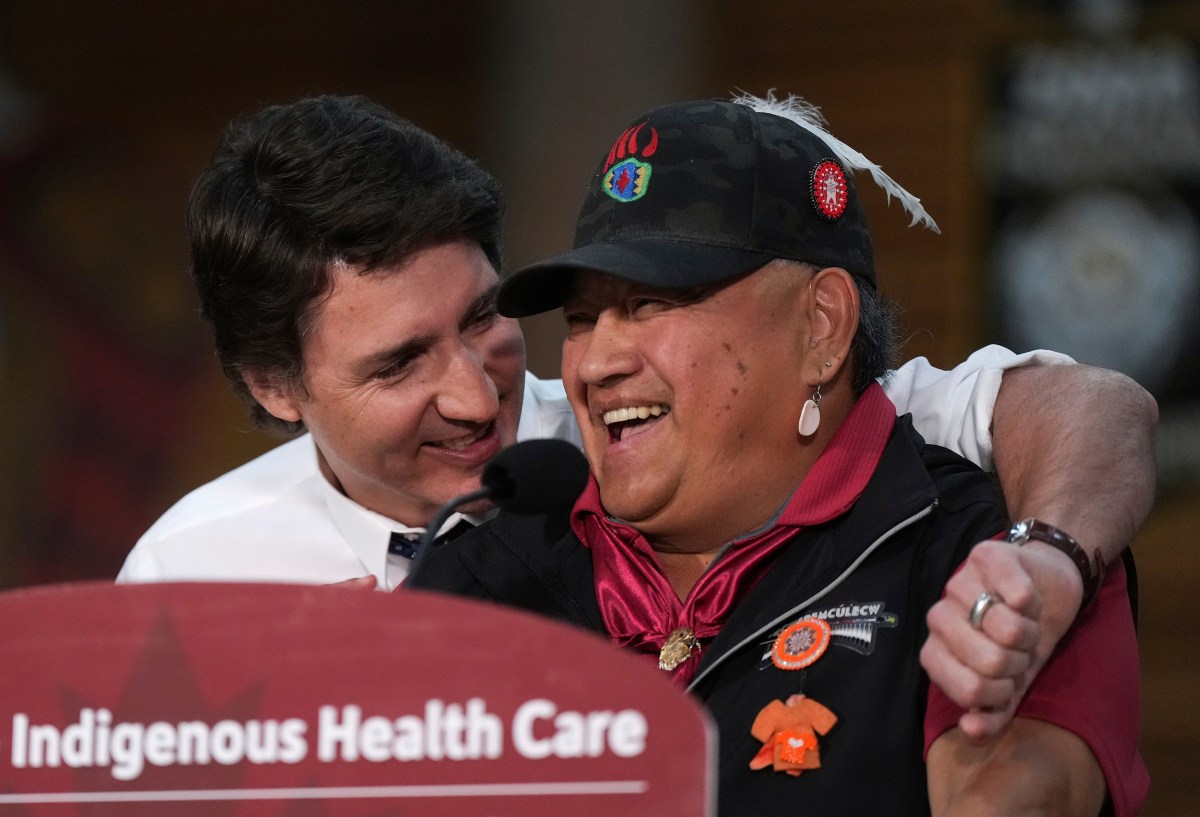
The First Nations Health Authority in British Columbia will receive $8.2 billion over the next 10 years to help 200 communities fix inequities in the health system, APTN News reported on April 14.
SUPPORT INDIGENOUS JOURNALISM. CONTRIBUTE TODAY.
Prime Minister Justin Trudeau, who announced the funding at the Squamish Nation in West Vancouver, said the move would give Indigenous communities a larger voice in their health care system.
“Today’s announcement is an important step toward ensuring that decisions that impact the health of First Nations can be made by First Nations,” Trudeau said, according to APTN News
“We’re committed to working in partnership with Indigenous communities to deliver the best results for people’s health, build a more resilient health care system.”
Colleen Erickson, chair of the First Nation Health Authority board, expressed gratitude for the funding and said it will help address disparities in the system that contribute to gaps in health outcomes for Indigenous people.
The First Nations Health Authority, which took over health care for First Nations in British Columbia in 2013, has already helped transform the way health care is delivered, official said.
It is the first of its kind in Canada, with five other similar health initiatives underway in Nova Scotia, Quebec, Ontario, and Manitoba, where there are two.
NEW ZEALAND: Two Māori women sworn in as judges
Two Māori women in New Zealand were ceremonially sworn in as judges at their marae, the sacred and communal meeting grounds that serve as the heart of Māori communities, Te Ao Maori News reported on April 16.
Judge Sheena Tepania, who is Ngāti Kahu ki Whangaroa, Ngāti Rua, Ngāti Kuri, Te Aupouri, Te Rarawa and Ngāpuhi, was appointed as a judge of the environment court and district court in February.
Her appointment ceremony took place Saturday, April 15, at Waihapa Marae meeting ground located near Kāeo in Te Tai Tokerau in the North Island. Prior to her appointment, she worked as a barrister and an independent hearings commissioner dealing with resource management and development contributions.
She also worked as an independent commissioner for the Tūhua trust board overseeing resource consent applications.
Judge Ngaroma Tahana, who is Ngāti Pikiao, Ngāti Mākino and Tapuika, was also sworn in Saturday as a district court judge at a Māori meeting ground located on the shores of Lake Rotoiti near Rotorua in the North Island of New Zealand.
She is the sister of High Court Justice Kiri Tahana. The sisters are among four sets of Māori judicial siblings in New Zealand.
Marae are places where cultural, social, and religious activities take place, such as meetings, ceremonies, and events. They often feature a wharenui, or meeting house, which serves as a venue for gatherings and as a symbol of the tribe’s identity and heritage, Te Ao Māori News reported.
AUSTRALIA: Birriliburu rangers work to preserve the skink
A group of acclaimed Birriliburu rangers has joined efforts to fight for preservation of the tjakura, a burrowing lizard known as the great desert skink that is endemic to western Australia, National Indigenous Times reported on April 15.
The rangers, who are known for their exceptional tracking skills, braved extremely hot weather and heavy rains in the coastal town of Carnarvon, or Katjarra, to locate 26 active burrows of the tjakura, which is also known as tjalapa, warrana or mulyamiji.
The group — which included experienced elders and family members who have lived on the lands — conducted scientific research and gathered data for an Indigenous-led National Recovery Plan for the lizard, a threatened species that is considered “vulnerable” to extinction.
The rangers also educated schoolchildren in the region on the importance of preserving the tjakura for future generations, National Indigenous Times reported.
“We want to try and protect them because we want to take the school kids out to see their house,” elder Lena Long told National Indigenous Times. “We showed them (the tjakura burrows) with a camera how it is, it’s all rough and ready. Very clean, them skinks…when they go to the toilet they keep well away from their home.”
Stella Shipway, a ranger for Healthy Country, said the group found more than anticipated.
“Over the past couple years, we’ve been doing more and more surveys,” Shipway said. “We’ve found them now in three different spots out at Katjarra which is really exciting.”
My final thoughts
My final thoughts are in British Columbia, Canada, where the government announced $8.2 billion in funding to fix health disparities affecting the First Nations in 200 communities. The funding will help address disparities in health care by improving access to culturally appropriate and community-based health services.
I hope this investment will be put to its original purpose. I challenge Indigenous leaders the world over to come out strongly and demand accountability for any monies put toward uplifting Indigenous peoples. Their plight has taken too long.
Global Indigenous is a weekly news roundup published every Wednesday by ICT (formerly Indian Country Today) with some of the key stories about Indigenous peoples around the world.

Our stories are worth telling. Our stories are worth sharing. Our stories are worth your support. Contribute $5 or $10 today to help ICT carry out its critical mission. Sign up for ICT’s free newsletter.

