
Deusdedit Ruhangariyo
Special to ICT
Around the world: Inuit pride events draw crowds in Canada, Ethiopia’s vast conservation area unites Indigenous communities, an Aboriginal men’s group fosters cultural safety through yarning, and a tourism project in Indonesia draws complaints from the UN
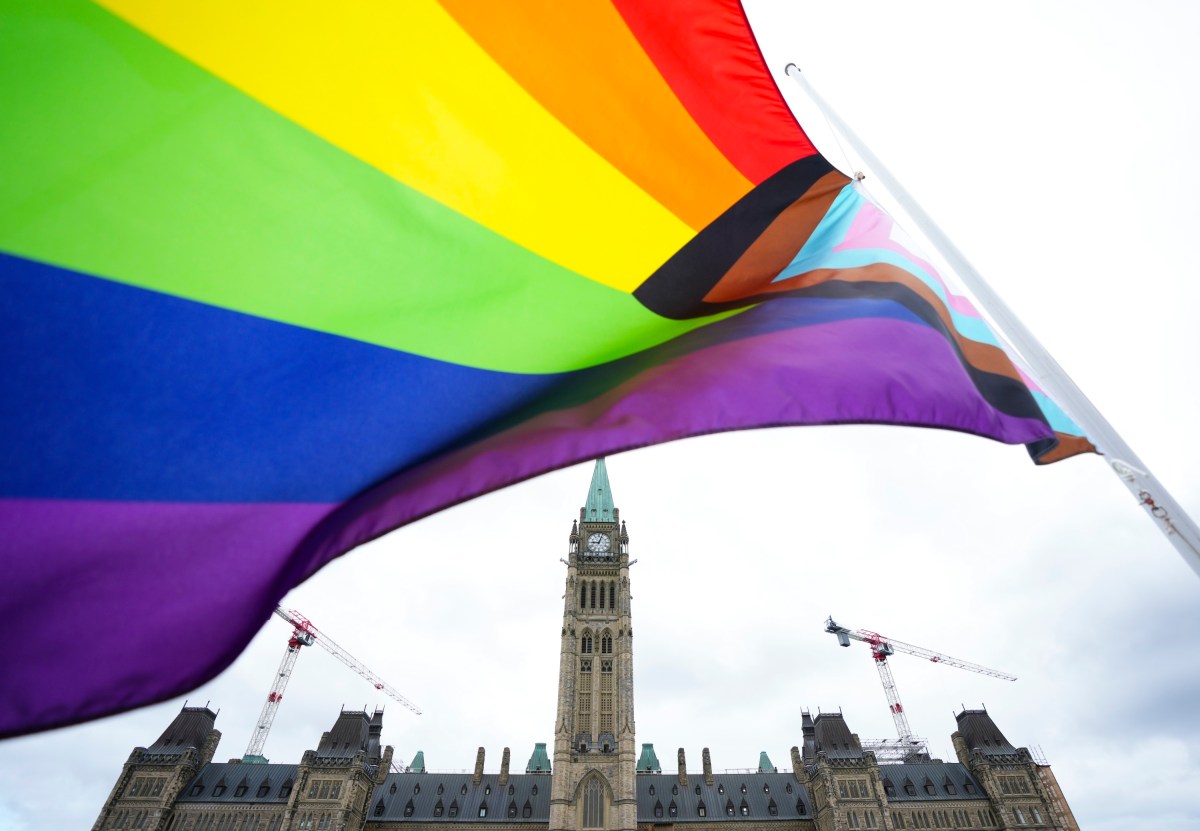
CANADA: Pride parade spotlights changes in attitudes
Inuit pride has evolved into an annual custom, with Inuit communities such as Rankin Inlet, and Kuujjuaq in northern Quebec holding their pride parades in early June, APTN News reported on June 15.
SUPPORT INDIGENOUS JOURNALISM. CONTRIBUTE TODAY.
It’s been a new tradition since 2021.
“The first year was very homemade…There were a lot more people than we expected to show up which was great,” said Tobi Nashak, a two-spirit Inuk living in Kuujjuaq and one of the volunteers for the Kuujjuaq Pride celebrations, according to APTN News.
“Going into year two and now year three, we got a lot more organization support —especially this year,” Nashak said
Niivi Snowball, a two-spirit youth and Kuujjuaq Pride volunteer, said the organization’s objective is to foster a sense of representation and safety for the LGBTQ community.
The parade, arranged by Positive Space Nunavut, drew more than 100 people, who braved the windy weather either on foot or in vehicles.
“I think all over the world people are becoming more accepting just trying to learn about each other,” Snowball said, according to APTN News. “Because of that, it’s coming here into Nunavik communities, into Inuit communities and it’s a lot more accepting.”
Tommy Sequaluk, a 31-year-old gay resident of Kuujjuaq, said he has seen a noticeable shift in attitudes in the last 10 years. Although some instances of homophobia still persist, he said the number allies far surpasses them.
“It’s been amazing,” Sequaluk said, according to APTN News. “It both helped me understand some internalized things I had with my gender, but it also helped me as a mixed Native connect me with my culture.”
ETHIOPIA: Conservation area unites Indigenous communities
Indigenous communities in southwestern Ethiopia’s Lower Omo River Valley have assumed ownership and management of the Tama Community Conservation Area, Mongabay reported on June 13.
The establishment of the conservation area in a woody savanna came after the regional government of the Southern Nations, Nationalities, and Peoples’ Region in Ethiopia passed legislation earlier this year to ensure the preservation of Tama’s ecological and cultural heritage.
The region has faced significant environmental and social impacts from construction of the Gilgel Gibe III Dam and the introduction of sugar cane plantations, leading to the loss of traditional livelihoods and starvation, according to a report by the Oakland Institute.
The conservation area covers about 486,000 acres and serves as a crucial corridor between two national parks in Ethiopia, providing a habitat for a diverse range of wildlife that includesSomali giraffes, African bush elephants, lions, De Brazza’s monkeys, Lelwel hartebeests and the endemic black-winged lovebird.
Residents of the area include the Mursi, Bodi, Northern Kwegu, and Ari communities, who predominantly engage in agriculture and pastoralism. They have inhabited the region for centuries, although some people arrived after being displaced by the dam.
The management of the newly established conservation area will be entrusted to a community council consisting of representatives from the Indigenous communities. To ensure the preservation of the area’s biodiversity and cultural heritage, several activities have been restricted within the Tama Community Conservation Area, including illegal hunting of animals, deforestation, and unauthorized farming and grazing, all of which require approval from the community council.
AUSTRALIA: Yarning circles help share culture
An Aboriginal men’s group in southwestern Victoria in Australia is helping First Nations men regain touch with their culture through so-called yarning circles that feature shared stories, National Indigenous Times reported on June 17.
Levi Geebung, a social and emotional wellbeing caseworker at Gunditjmara Aboriginal Cooperative, has personally witnessed the transformative effects of connecting with culture on one’s sense of identity.
“For most of my early childhood into my teenage years, I was completely disconnected from my culture,” he said, according to National Indigenous Times. “I wasn’t aware of who I was and where I was from, but after connecting with my late father, he passed down his knowledge of traditional woodworking and art.
“And once I’d found that, it was like I had found a bit of myself that was missing. Culture provides us with connection and identity.”
Geebung, collaborates with the Gunditjmara Men’s Group to provide a culturally safe environment for Aboriginal and Torres Strait Islander men to engage in yarning.
In Victoria, the suicide rates among Aboriginal and Torres Strait Islander communities are three times higher than in the non-Indigenous population, with 80 percent of those who died by suicide having a history of mental health issues such as depression, anxiety and mood disorders.
Geebung, who is Bidjara and Gunditjmara, said the Gunditjmara Men’s Group provides a safe haven for Aboriginal and Torres Strait Islander men to engage in yarning.
“It’s just about men coming around and yarning to other men in a safe space, in a place where there’s no judgment,” he said, according to National Indigenous Times. “Some of these men that we have in our groups, that’s all they want to do is just catch up with other men who are hanging out.”
INDONESIA: Tourism project draws human rights complaints
United Nations experts have raised concerns for the third time in two years about human rights violations on Indonesia’s Lombok Island, which includes a $3 billion tourism project in the coastal region of Mandalika, Mongabay reported on June 12.
Despite repeated calls for action, reports of violations continue to pour in, prompting U.N. human rights experts to express their concerns for the third time in February 2023 to the Indonesian government and other stakeholders, Mongabay reported.
The tourism project is situated in southern Lombok, an island adjacent to the renowned tourism destination of Bali. Its objective is to transform Mandalika into a “New Bali” through the construction of parks, resorts, hotels, and the Mandalika International Circuit racetrack.
In a letter dated Feb. 14, however, U.N. human rights experts raised numerous violations despite repeated appeals for the government, project funders such as the Asian Infrastructure Investment Bank, and the state-owned developer, Indonesia Tourism Development Corporation, to address the concerns.
“[T]he ITDC has ignored our previous recommendations to provide remedies for those affected by the sporting event,” the U.N. experts wrote in the letter, according to Mongabay.com.
The recent letter came after similar letters issued in 2021 and 2022 – a record for a megaproject funded by a multilateral development bank, according to the Coalition for Monitoring Indonesia’s Infrastructure Development, a collective of Indonesian and international nongovernmental organizations.
The violations cited by the U.N. experts included homelessness resulting from the involuntary resettlement of Indigenous Sasak residents within the project area. Those communities should have been permanently resettled within 12 months, but about 100 people from more than 35 households are still living in temporary shelters near the racetrack construction site.
The villagers, who had voiced opposition to the terms of the involuntary resettlement, faced severe restrictions on their movements during high-profile events such as the MotoGP and World Superbike races.
My final thoughts
My final thoughts are in Indonesia, where despite the initial concerns raised by the United Nations in the last two years, human rights violations surrounding a prominent tourism development on Lombok Island continue to persist. The development, a $3 billion tourism project, is located in the coastal Mandalika region of southern Lombok.
The project aims to transform Mandalika into a “New Bali” by constructing parks, resorts, hotels, and the Mandalika International Circuit racetrack.
One of the key concerns raised by the U.N. experts is the involuntary resettlement of Indigenous Sasak residents within the project area, resulting in a high degree of homelessness.
This is unacceptable to say the least. You cannot invade a people’s ancestral lands and make them homeless in the name of development. What happened to government planning? To start a project like that, there must be a feasibility study to establish the consequences and preempt such human rights abuses.
But nothing like that seems to have been done. It is crucial to address the root causes of the violations, ensure transparency and accountability, and provide appropriate remedies and redress to the affected Indigenous communities. It is essential to prioritize the well-being and rights of the Indigenous communities throughout the entire process.

Our stories are worth telling. Our stories are worth sharing. Our stories are worth your support. Contribute $5 or $10 today to help ICT carry out its critical mission. Sign up for ICT’s free newsletter.
