
Deusdedit Ruhangariyo
Special to ICT
Around the world: Brazil’s Indigenous affairs agency is reclaimed under the new president, a program in Ontario teaches about nature and language, and an Inuit tale from Greenland makes the big screen in Australia
BRAZIL: Indigenous affairs agency reclaims mission
The Indigenous affairs agency in Brazil has a new name and a revived mission under new President Luiz Inácio Lula da Silva, despite an insurrection attempt at the seat of government by far-right opponents, Mongabay.com reported on Jan. 9.
The agency, Funai, changed its name from the National Indian Foundation to the National Foundation of Indigenous Peoples per a request from Indigenous leaders that was approved by Lula on Jan. 2, his first day in office, Mongabay.com reported.
SUPPORT INDIGENOUS JOURNALISM. CONTRIBUTE TODAY.
The act also marked the start of a “new era” for the institution, whose employees had suffered attacks and threats along with other Indigenous peoples under former president Jair Bolsonaro, who lost his bid for re-election in October to Lula.
“We spent four years with a feeling of being suffocated, of [Funai] being occupied by people with no legitimacy to work with Indigenous issues,” said Fernando Fedola, the head of Indigenistas Associados, an Indigenist association of Funai officials.
“They took over Funai to work from inside Funai against Indigenous rights,” Fedola said, according to Mongabay.com. “It is almost like a catharsis. Like in soccer, celebrating the goal. It’s an exorcism.”
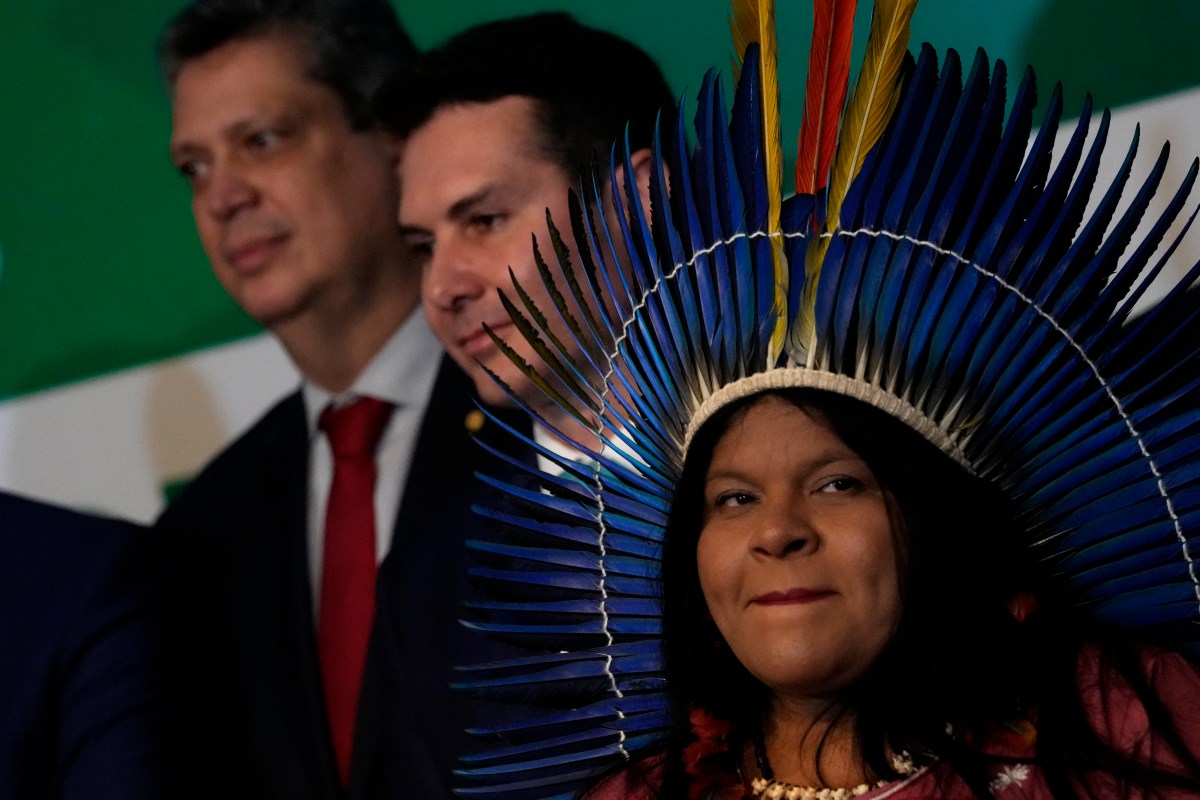
The act reunified about 300 people in the capitol, Brasília, on the morning of Jan. 2, day after the inauguration of Lula. The crowd also cheered the new minister of Indigenous peoples, longtime activist Sonia Guajajara, and Funai’s new president, Joenia Wapichana.
Just a few days later, however, on Jan. 8, Bolsonaro supporters stormed the Supreme Federal Court, the National Congress of Brazil and the presidential palace in Brasilia in an attempt to overturn the election.
CANADA: Love of birds and language merge in Ontario
An Indigenous language program in Kingston, Ontario, is teaching Indigenous youth about birds and other wildlife while also teaching them their Anishinaabemowin language, APTN reported on Jan. 9.
Mandy Wilson, coordinator at the Kingston Indigenous Languages Nest, offers programs for Indigenous youth in the community.
“When you’re learning the language in that environment you get to feel the language and kind of like, see that impact and you get to observe all the way to our ancestors and you know the way that they describe things, which is just really nice,” she said, according to APTN
A recent class taught young people to sing a song about birds called Gijigijigaaneshiinh while blending suet balls together with honey, peanut butter, nuts and popcorn.They also threaded together an assortment of fruit garlands to hang in trees for the birds.
“We’re doing this in a way to kind of give back to the birds that spend their entire year,” Wilson said, adding, “The squash is really, really good for the deer. The birds will love the popcorn. The birds will also eat some apples. It gives them some extra sugar as well and then we also try to include things like starch because birds and animals need a lot of starch throughout the winter.”
GREENLAND: Inuit tale makes big screen in Australia
Anders Walter’s film, “Ivalu,” the story of a young Inuit girl in Greenland who was deeply affected by the disappearance of her sister, will reach the big screens in Australia later this month at Flickerfest, National Indigenous Times reported on Jan. 10.
The film, which is already drawing buzz as an Oscar contender in the U.S., will be shown on Sunday, Jan. 22, during the Best of International Shorts, and on Saturday, Jan. 28, at the European Union Shorts Showcase.
The 16-minute film, recorded entirely in the Greenlandic language, is based on the novel by Danish writer Morten Durr that puts a spotlight on the abuse some children face in their own homes, National Indigenous Times reported.
The film was produced by Rebecca Pruzan and Kim Magnusson. It is the first film for Pruzan, is an independent producer who was formerly commissioning editor of children’s programming at the Danish Broadcasting Corporation.
“I am truly happy for this great recognition of ‘Ivalu,’” Pruzan said, according to National Indigenous Times. “‘Ivalu’ is a super strong and poetic film that sheds light on a very important and sensitive subject. Abuse is the children’s problem but the adults’ responsibility to do something about it.”
Oscar nominations are set to be released on Jan. 24.
My final thoughts
I would like to congratulate the Indigenous Peoples of Brazil for reclaiming their agency and to thank President Lula for being president to all Brazilians and most especially recognizing Indigenous rights. That is a double win for the Indigenous rights movement.
Global Indigenous is a weekly news roundup published every Wednesday by ICT (formerly Indian Country Today) with some of the key stories about Indigenous peoples around the world.

Our stories are worth telling. Our stories are worth sharing. Our stories are worth your support. Contribute $5 or $10 today to help ICT carry out its critical mission. Sign up for ICT’s free newsletter.

