Deusdedit Ruhangariyo
Special to ICT
Around the world: International support builds for anti-mining activists in El Salvador, a new law raises the age for children to face criminal charges in Australia’s Northern Territory, an online pharmacy launches free home delivery for underserved communities in New Zealand, and a Uyghur woman is detained for criticizing her son’s sentence
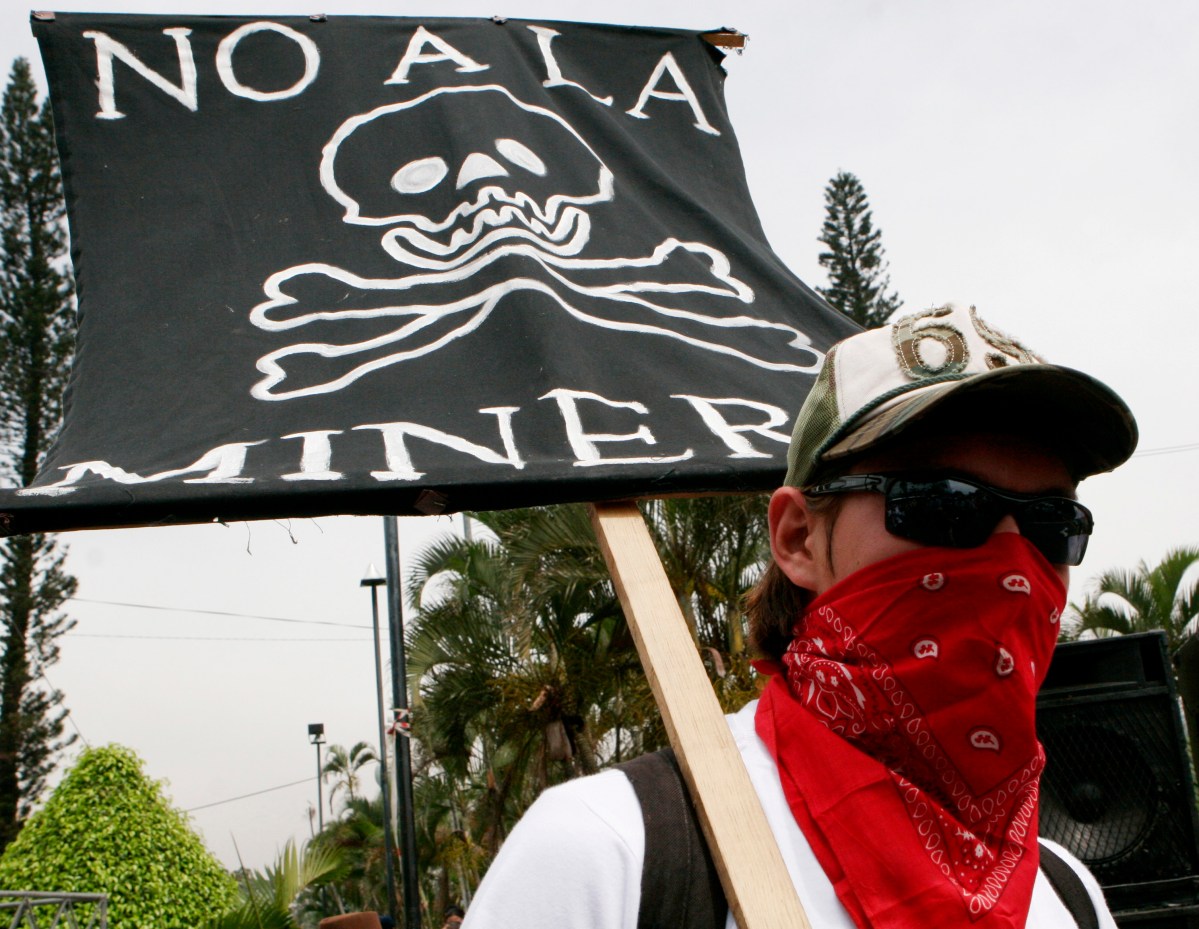
EL SALVADOR: Anti-mining activists draw international support
Five environmental activists battling water pollution and mining in El Salvador are facing charges believed to be politically motivated, sparking global condemnation amid controversial court proceedings. Mongabay reported on Aug. 2.
SUPPORT INDIGENOUS JOURNALISM. CONTRIBUTE TODAY.
The January arrests of activists linked to a 1989 kidnapping and murder during El Salvador’s civil war have raised concerns over insufficient evidence, prompting demands for release and scrutiny of the government’s efforts at reviving the mining sector.
Seventeen members of the U.S. Congress are among the growing international opposition to the arrests.
“We are concerned these arrests are politically motivated and intended to silence the overwhelming opposition to mining in the country,” the 17 Congressional members wrote in a letter earlier this month, according to Mongabay. “We also have concerns that these men have been denied their basic right to due process.”
Dubbed “water defenders,” the five men spearheaded the successful 2017 campaign to prohibit metals mining, safeguarding El Salvador’s vital clean water source, the Lempa River Basin. The nationwide ban became a groundbreaking environmental policy achievement, Mongabay reported.
President Nayib Bukele’s government appears, however, to be reconsidering its stance on mining. The government established an agency to oversee energy and mining and engaged in an intergovernmental forum promoting mining sector “best practices.”
The mining area, previously licensed to companies prior to the ban, was acquired last year by Agricola San José, raising environmentalists’ concerns about intentions for the area.
The five defenders — Miguel Ángel Gámez, Alejandro Laínez García, Pedro Antonio Rivas Laínez, Antonio Pacheco and Saúl Agustín Rivas Ortega — were members of the FMLN resistance group, which fought against the government during the civil war. They say they’re protected under the National Reconciliation Law of 1992, which pardons FMLN members for any political crimes committed during that period.
“We denounce the continued detention of the five leaders from Santa Marta as a wanton attempt to intimidate the water defenders of El Salvador,” said Jan Morrill, tailings campaign manager at Earthworks, an anti-mining organization, according to Mongabay. “This brazen action exposes the Salvadoran government’s desire to overturn the country’s historic mining ban, a ban supported by the overwhelming majority of Salvadorans.”
AUSTRALIA: New law raises criminal age for children
A coalition of Aboriginal justice and human rights organizations are calling on the government in Australia’s Northern Territory to work with Aboriginal communities in ensuring services for children under new laws that raise the age of criminal responsibility to 12 years, National Indigenous Times reported on Aug. 2.
Under existing law, children as young as 10 could be held criminally responsible. Those 10 and 11 will no longer face arrest, criminal charges or imprisonment, and their records will be expunged under the new law that goes into effect on Tuesday, Aug. 8.
The coalition, however, is pushing to have the age of responsibility to a minimum of 14 years, in alignment with international standards, National Indigenous Times reported. The coalition includes the North Australian Aboriginal Justice Agency, Jesuit Social Services, the Human Rights Law Centre, Northern Territory Council of Social Service, Northern Territory Legal Aid Commission, Change The Record, and Danila Dilba Health Service.
The new law prevents the arrest, criminal charges, or imprisonment of 10 and 11-year-old children. Additionally, those under 12 with previous criminal records will have their records expunged, providing them a clean slate.
Nick Espie, the principal legal officer at the North Australian Aboriginal Justice Agency, said most Aboriginal children who go through the criminal justice system at a young age are grappling with unmet health, disability, and trauma needs.
“The vast majority are kids also in the child protection system as victims/survivors of harm,” Espie told National Indigenous Times. “These kids need culturally responsive services and support in their communities that can help them heal, recover, and meet their full potential.”
He continued, “Changes to laws to raise the age must be complemented by a service response led by Aboriginal people and organizations. These kids deserve better, not simply made to navigate complex systems that fail them.”
Stephanie Kelly, chief executive of NTCOSS, said the change marks progress toward reaching the 2019 United Nations Committee on the Rights of the Child’s recommendations, which urged all countries to raise the minimum age of criminal responsibility to at least 14 years.
“It is about intervening earlier to wrap children and families up in supports that disrupt any future contact with the justice system,” Kelly said. “It will be important to ensure that the right services are available to the children and families concerned if the new legislation is to lead to improved outcomes for children at risk and ultimately, better solutions for children, young people, families and communities.”
NEW ZEALAND: Online pharmacy launches free home delivery
Patients throughout New Zealand with chronic medical conditions will now receive free online delivery of funded medicines to their homes, benefiting thousands of Māori, Pasifika, rural, and chronically ill patients, Te Ao Māori News reported on Aug. 2.
Zoom Pharmacy’s new initiative – aimed at eliminating indirect costs and barriers for vulnerable populations – marks the first time a New Zealand pharmacy has offered such comprehensive services, Te Ao Māori News reported.
Pharmacist Din Redzepagic emphasizes that despite being fully funded, obtaining medicines may lead to indirect expenses for patients, posing obstacles for some of society’s most vulnerable individuals.
“Our research shows around 30 percent of prescriptions are not filled, and we know that indirect costs are a significant impediment for the hundreds of thousands of patients with non-acute medical conditions who need to take prescription medicine daily,” said pharmacist Din Redzepagic, according to Te Ao Māori News.
“Every time a patient needs to take time off work, put petrol in their car and drive to a pharmacy to pick up a script it represents an indirect cost to access medicine. Any additional cost or difficulty in getting into a community pharmacy can impact long-term health outcomes for Kiwis.”
The delivery is becoming available with the removal of prescription fees and co-payments by the government, officials said.
“In the past, this level of service would only have been available to high-use patients with four or more prescription medicines,” Redzepagic said. “However the government’s removal of prescription fees has changed the economics of our model and we can now expand this to include those on even just one funded medicine.”
CHINA: Uyghur woman detained for criticizing son’s sentence
An Uyghur woman detained in Xinjiang, China, was arrested in July for criticizing her son’s sentence for traveling illegally to Turkey in 2013, a relative and local police official have confirmed, Radio Free Asia reported on July 31.
The woman, Rahile Jalalidin, was arrested July 22 by state security police in Urumqi’s Tengritagh district, according to the Norway-based Uyghur Hjelp, also known as the Uyghuryar Foundation, which keeps a record of Uyghurs arrested in Xinjiang.
Jalalidin lived at the Expatriate Hotel Complex in Urumqi and became distressed that her son, Zulyar Yasin, a student at Fujian Agricultural and Forestry University in Fuzhou, China, had been arrested in May and received a 15-year prison sentence for the travels 10 years earlier.
Jalalidin’s detention is yet another example of authorities imprisoning Uyghurs for alleged extremist behavior or actions considered threats to national security, Radio Free Asia reported.
Such actions include past trips abroad, foreign contacts, religious involvement, or disruptive conduct.
Upon learning of her son’s sentence, Jalalidin experienced severe mental distress and made repeated complaints to relevant legal and administrative authorities, according to Uyghur Hjelp.
A relative living abroad, who was informed about Jalalidin’s detention, shared this information with Radio Free Asia but requested anonymity to avoid putting Jalalidin in further trouble with the authorities.
A state security police official in Urumqi confirmed Jalalidin’s detention but couldn’t provide additional details regarding her sentence.
When Radio Free Asia inquired about Jalalidin’s health, the officer abruptly ended the call, saying, “If you want to obtain any information you will need to visit the police station here. I can’t tell you anything over the phone.”
My final thoughts
My final thoughts are in El Salvador, where four environmental activists are facing politically motivated charges for fighting against water pollution and mining in their community.
The arrests have sparked widespread global condemnation, with concerns raised about the fairness and impartiality of the legal system.
I would like to assure the activists that the global community is behind them. The stakeholders in the defense and protection of the environment are with them throughout this process.
I am therefore urging all stakeholders, especially environmental activists in El Salvador, to seek support from local and international human rights organizations, collaborate with fellow activists, and engage with the media to raise awareness about this cause.
The fight for a cleaner environment and a just society is worth every effort. With all stakeholders staying true to the mission, we can overcome these challenges and make a positive impact in El Salvador and beyond.

Our stories are worth telling. Our stories are worth sharing. Our stories are worth your support. Contribute $5 or $10 today to help ICT carry out its critical mission. Sign up for ICT’s free newsletter.