
Mark Wagner
Special to ICT
The Cay-Uma-Wa tournament is sold out again.
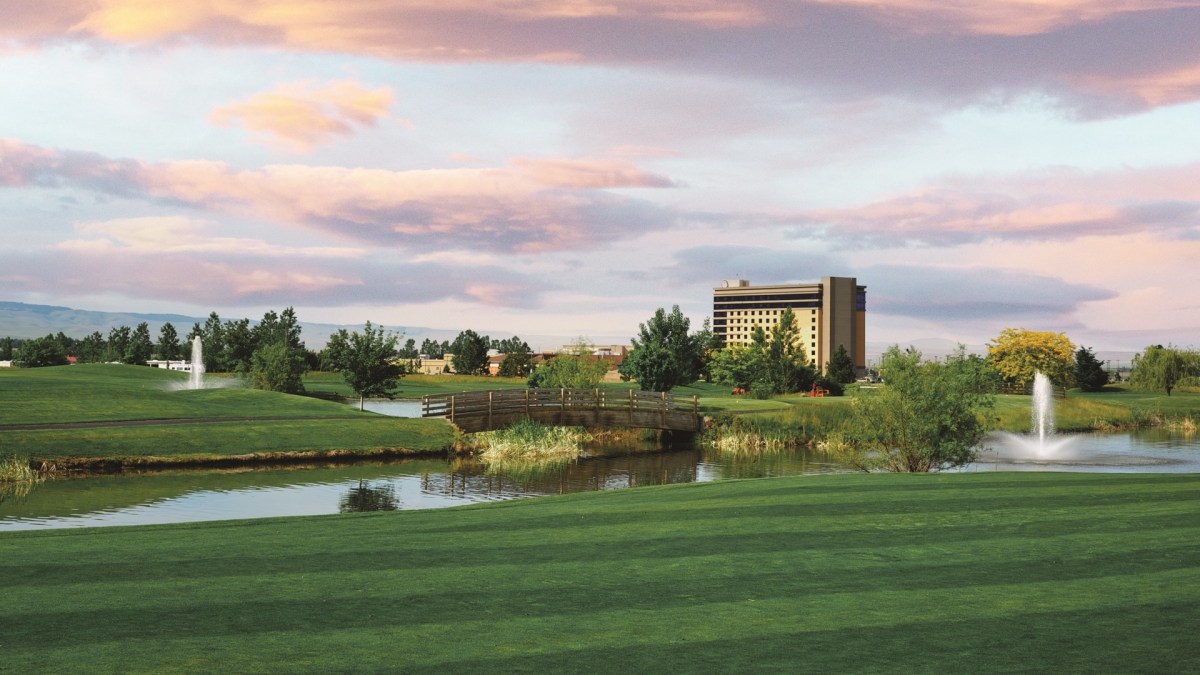
More than 160 Native golfers from the U.S. and Canada will gather Sept. 25-27 at the Wildhorse Resort & Casino for the annual Cay-Uma-Wa Golf Tournament hosted by the Confederated Tribes of the Umatilla Indian Reservation in Pendleton, Oregon.
The Cay-Uma-Wa features flights for elite golfers, but also for senior and “super senior” golfers, and six flights for Native women.
The field is already full for the tournament, a signature event that is part of the ongoing development of Wildhorse Resort & Casino, which recently hosted the Wildhorse Ladies Golf Tournament, an Epson Tour that is a qualifying event for the Ladies Professional Golf Association.
“The benefits of golf are not just competing,” said Gary George, chief executive officer of the Wildhorse Resorts and founder of the tournament, named for the Cayuse, Umatilla and Walla Walla tribes that make up the federation.
“We keep it fun,” he told ICT.
The tribes’ Wildhorse and Birch Creek golf courses remain the centerpiece of the Confederated Tribes’ resurgence, which is not a surprise to Dr. Katherine Spilde, a professor and endowed chair of the Sycuan Institute on Tribal Gaming at San Diego State University.
“Golf is part of the larger tribal gaming ecosystem,” Spilde said. “As tribes continue to diversify their business offerings, SDSU expands our workforce development to match their innovations. It is a unique and exciting partnership that continues to evolve and attract fantastic students.”
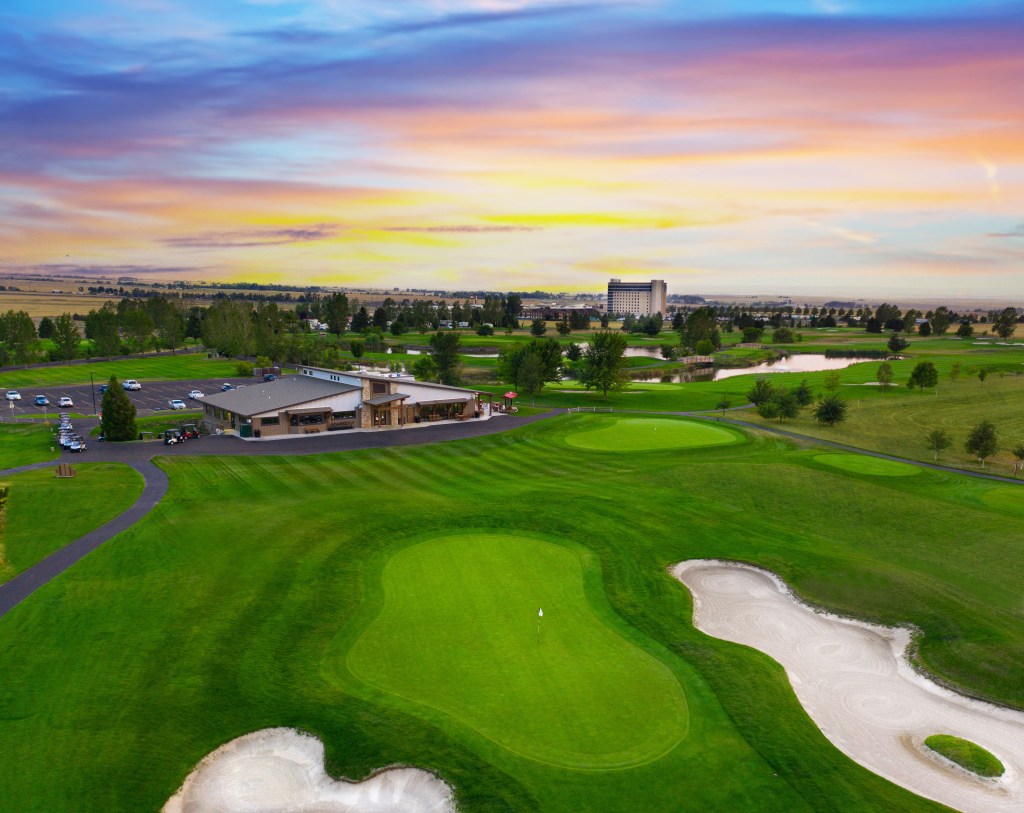
Wildhorse Resorts now includes 12 economic entities, including a casino that opened in 1995, a 10-story hotel, seven restaurants, a truck stop, the two golf courses and a cultural center. The tribes will open a second, 10-story hotel in 2027.
Diversifying
George and his family, including his wife, Kelly, have been at the center of the CTUIR during years that brought major changes, not just at the federation. All are enrolled members of the Confederated Tribes, known as CTUIR.
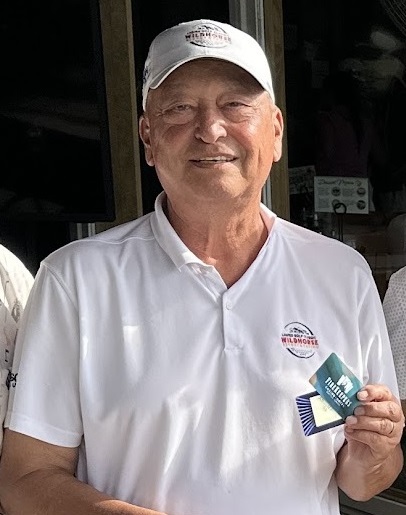
George served as executive director of the tribal council from 1990 to 1998, when he became chief executive officer of the Wildhorse Resort.
It was a period during which tribes increasingly diversified their economic bases, according to a report by the Harvard Kennedy School Project on Indigenous Governance and Development, known previously as the Harvard Project on American Indian Economic Development.
The project examined tribal economics from 1990 to 2020, and found that, while gaming remains “a vital component of many tribal economies, it is clear that some tribes have effectively used the revenue and economic momentum generated by gaming to invest in and expand into other sectors.”
The Confederated Tribes deliberated for four years before adopting gaming in 1992. Before that, George noted, unemployment on the 175,000-acre reservation ran at 40 percent or more.
“We were cautious about gaming,” George told ICT. “If you’ve ever been to Eastern Oregon, there is wheat and corn and peas. Agriculture is the main economic pursuit. Gaming changed that for the tribe.”
George said the tribes had broad discussions in 1992 and 1993 about how to approach development. Pendleton has a population of about 17,000 people, and Umatilla County has about 65,000.
“We needed to do something different to support gaming,” he said. “Fortunately, we’re located along Interstate 84, and we’re three hours from the metropolitan areas of Portland, Oregon; Spokane, Washington; and Boise, Idaho.”
Affordability has been key to the success.
“We continue to build a destination resort that families can afford,” George said. “We’ve added a 24-lane bowling alley, a five-screen cineplex, a Child Entertainment Center, arcade, a food court with three food venues and a family-friendly hotel with an indoor swimming pool. Make no mistake, gaming is still the big revenue producer, but these other amenities bring people to Wildhorse.”
In 1998, the year after the Wildhorse golf course opened, the tribes opened the Tamástlikt Cultural Institute. Tamástlikt is most nearly translated as “always being there.”
The institute serves as a museum, cultural center and educational institution, with galleries organized around three themes: “We Were, which addresses the pre-contact world and the 1855 Treaty Council of Walla Walla; “We Are,” the continuing life of the Cayuse,Umatilla, and Walla Walla peoples; and “We Will Be,” the tribes’ future, aspirations and determination to maintain their identity.
In 2019, the Confederated Tribes expanded the golf operations by purchasing the nearby Birch Creek golf course, which was built in 1902.
“It was the old private Pendleton Country Club,” George said. “CTUIR purchased 248.5 acres of land and property, four certificated water rights (two subsurface and two surface water rights), [and] rights to Birch Creek, which runs through the property and is important to CTUIR’s fish and wildlife restoration efforts.”
Not just in Oregon
Spilde, the professor at San Diego State University, said golf has long played a role in tribal development.
“In the early days of gaming,” Spilde said, “there was always a golf tournament to raise money for the organization and encourage networking. Over the years, those properties that hosted events in the 1990s were purchased by the tribal governments themselves. Of course, buying the local golf course is also a means to reacquire a portion of their lost homeland.”
San Diego County has 18 federally recognized tribes within its boundaries – more tribes than any other county in the United States. And SDSU’s School of Hospitality and Tourism features a four-year degree in tribal casino operations management. The program also allows students to study recreation and tourism management.
The program partners with the Sycuan Band of the Kumeyaay Nation, which operates the Singing Hills Golf Club in San Diego County.
“Chairman Cody Martinez has shared with our students the ways that Singing Hills Golf Resort supported their decision to pursue ownership of the [Major League Soccer] team, the San Diego Football Club,” Spilde said. “In fact, the team’s Right to Dream Academy is located on a section of the Singing Hills property, linking these innovations even more directly.”
The innovations can be seen through a wider, historical lens, as well. Jonathan B. Taylor, a research fellow with Harvard Kennedy School’s Indigenous project, noted that the recent report found that gaming and self-governance have led to revenues necessary for renewed control over resources.
“Golf deserves more attention,” Taylor told ICT.
The George family
Golf is where the George family has thrived.
Kelly George works for the tribe as the land acquisitions coordinator, but also plays a significant role with the Cay-Uma-Wa Tournament. The couple’s two children, Dillon and Megan, are both what they call scratch golfers, shooting near par. Megan completed her collegiate golf and will eventually step into similar roles as her parents. Dillon, who won the men’s division of the 2021 Native American Open at the Santa Ana Pueblo, caddies on the LPGA and Epson tours.

Epson Tour events can bring in $800,000-$1 million in local tourism impact, with more than a quarter-million dollars flowing to the host facility. The Wildhorse Ladies Golf Classic has been played at Wildhorse since 2022, and is an official qualifying event for the LPGA.
Gabby Barker, a professional golfer and a member of the Shoshone-Paiute Tribes who won her first tournament this year, was one of 141 women who played in this year’s tournament.
Megha Ganne won the tournament with 19 under par. Her caddy? Dillon George.
As far as the upcoming Cay-Uma-Wa tournament, Gary George notes, “I’ll be playing in the tournament, while Kelly reconciles entry fees and side bet entry, and then prepares the side bet daily payouts, payment of golf course invoices, determine number of individuals in each flight and flight payouts. It’s safe to say we’ll be part of the action every day of the tournament — no breaks.”
Golf as ecosystem
The Cay-Uma-Wa tournament also supports other Native programs, in part by maintaining an annual calendar of the 20-plus Native golf tournaments held across the Pacific Northwest.
The help has surfaced at the Native Golfers Association, or NGA, which holds the NGA Championship tournament in August at the Swinomish Golf Club in Washington, according to James Bobb, who runs the NGA. The NGA Championship is in its eighth year, also hosted by Swinomish, and brings in Native golfers from around the country.
“I’ve played the Cay-Uma-Wa since 2004,” Bobb told ICT. “It’s an awesome tournament. Gary and Kelly are awesome people. They have helped out – pro bono – for all eight years with our NGA tournament.”
He notes that Kelly George’s expertise as a banker assists with fees and payouts with the NGA Championship.
“She has a system down,” Bobb said. “She takes the fees and side bets and has the system down. You hand her the money and she has it down to a T. It’s a huge help for us.”
Jay Garcia, president of Santa Ana Golf, which is hosting its 6th Native American Open this year Oct. 16-18 at Santa Ana Pueblo, said he, too, has relied on the George family for assistance.
“At the beginning I asked them for a few operational tips, since he had been doing a Native American tournament for a lot longer than our event,“ Garcia told ICT. “We already had the [Professional Golfers’ Association] staff expertise to conduct events, but I wanted a broad view of what to expect.”
Looking ahead
The game of golf has a long history in Indian Country. From Oscar Smith Bunn, a Shinnecock who played in the 1896 and 1899 U.S. Opens, to Orville Moody, Choctaw, who won the 1969 U.S. Open, to the PGA’s recent Payne Stewart Award recipient Notah Begay lll, Native cultures have thrived in what has mistakenly been called “an elite, White man’s sport.”
Today, for more than 70 tribes, golf is a centerpiece of tribal gaming, for hospitality and economic diversification. This in turn has led to a generation of young Native athletes gaining greater access to the game and competitive opportunities.
Gary George notes that the upcoming Wildhorse tournament can also be a family event.
“When we first put up the practice area at Wildhorse, you would see grandparents up there with kids, three and four generations of families on the range, laughing and having fun,” he said.
The upcoming Cay-Uma-Wa tournament offers a range of activities.
“We do a lot of games and have payouts for winners,” he said, “but also do payouts for deuces and long drives and sidebets. That sort of thing.”
He adds, almost as an aside, “At this time, there are a lot of good things happening here.”

