
ICT is working to shape the future of journalism and stay connected with readers like you. A crucial part of that effort is understanding our audience. Share your perspective in a brief survey for a chance to win prizes.
Felix Clary
ICT + Tulsa World
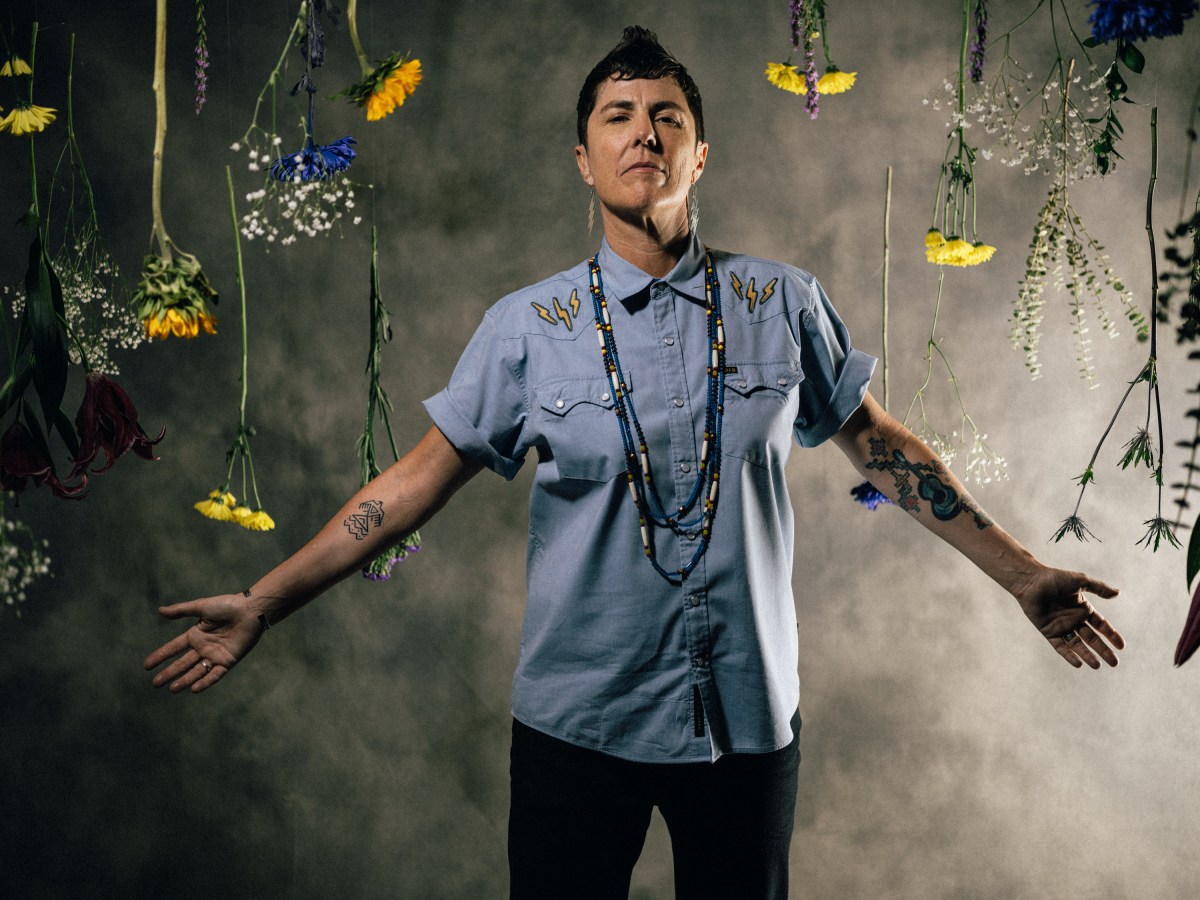
Osage singer/songwriter Marx Cassity released their new album 2Sacred on November 5 as a response to a 2020 statistic showing that 33 percent of Native queer youth attempt suicide.
Cassity goes by the name Marca as a therapist specializing in trauma, but added the letter “x” in their stage name Marx to represent the gender diversity of their own Two-Spirit identity.
Cassity received the NDN Collective Radical Imagination Grant and support from the Osage Nation Foundation to produce their fourth album that contains 10 songs.
In 2021, Cassity read statistics that showed Native queer youth have the highest risk for suicide.
“I have lived experience as a Two-Spirit youth in the 80s who was also suicidal and self-destructive. I was told that I was an abomination because of the colonization I was surrounded by, and I was ostracized from my community, so I was flirting with whether or not I wanted to be alive or not at the age of 19,” they said.
They survived a trying time of homophobia in their community during the 1980s, when they decided to put their music education on pause and go into nursing at the University of Oklahoma to try to make a difference in their community during the AIDS crisis. They were also a first-responder at the Oklahoma City bombing of 1995.
“Singing has also been a way of my own healing. One of the first songs I wrote was about the Oklahoma City bombing. It was my way of working through my own trauma,” they said.
They wrote to NDN Collective in 2021 saying they wanted to make a statement in an album that is a response to the alarming youth suicide statistic. NDN Collective in 2021 was supportive of their idea, as well as their tribe, through the Osage Nation Foundation.
Cassity is both Osage and Kaw and enrolled in the Osage Nation. Their great-great grandfather was a tribal council member during the reign of terror, as depicted in the movie “Killers of the Flower Moon.”
They grew up on their great-grandmother’s land in rural Ponca, Oklahoma as she was an original allottee of the Osage Nation. Their grandfather was an Osage congressman.
Cassity’s album is called 2Sacred, and their music video for the song “How Long” is focused on the Native queer youth suicide issue, as well as their experience growing up and coming out in Oklahoma. The song is piano- and synth-driven, with vocals influenced by Cassity’s love of Eurythmics in the 1980s.
The video was filmed at the historic Old Church Concert Hall in Portland, Oregon, as well as the Osage reservation, featuring images of various Two-Spirit people from Oklahoma, as well as from the Montana Two-Spirit Gathering.
Ivan Landau and other strong ally filmmakers supported production of the video.
Silas Hoffer (Yakima/Grand Ronde), Mr. Montana Two-Spirit 2020, was cast as the main protagonist.
Kumari Suraj, a dancer known from HBO’s “Legendary,” is featured dancing in the style of Waack in the video.
Cassity talked about their inspiration for the song “How Long” in a Tulsa World interview Jan. 2.
“I was outside in a thunderstorm one night in OKC in the 80s, and I was in a really bad place emotionally. Lightning struck a building next to me and I was knocked down into the yard. I looked up into the lightning filled sky and I believed that Wakontah (The Osage word for god) came to me through the lightning, and I heard a voice say ‘stop killing yourself, you’re here for a reason.’”
During a COVID-19 lockdown in Portland, they got a piano and wrote a melody for their lyrics, “Rise up child, you’re here for a reason,” as a message from Wakontah to other Two-Spirit youth who are suffering.
The lyrics read, “Watch out for the deer as you go home. It’s fight, flight, fight, flight, freeze or fawn. How much longer can I go on? My grandmother’s road is all I’ve ever known.”
This is Cassity singing about their younger self living on the reservation in rural Oklahoma.
“When people say goodbye around there, they say look out for the deer.”
They are comparing Two-Spirit youth to deer in the headlights.
“It’s about the innocence of the kid and this hate speech coming through, eclipsing that life source energy, and then asking how long? How long will that kid live? How long do we have to put up with this colonization? How long do we have to live in this vitriol that we’re still in in Oklahoma and around the country?”
The second half of the song uses imagery of lights of the city and city clubs, showing the journey from lights of stars and lightning on the reservation, to the lights of the city they go to to find freedom.
The lyrics continue, “I miss my mother. I miss my home. Red earth hill in the thunderstorms. And the heart beat drum, heart beat drum.”
Cassity draws a comparison between the dancing in gay clubs in the 1980s and the meaningful dancing of tribes.
“We were dancing in the clubs to stay alive one more night,” they said, “which is so much a part of our tradition as Natives, dance and music and drums.”
They also reference Pat Benatar’s “Love is a Battlefield” in the song, referencing the lateral violence in their community.
“We are traumatized people, so sometimes we even lash out at each other. So this song is calling out for people to be kinder to each other.”
They describe the energy of the song as lightning and thunder, waking up Two-Spirit youth to self-love.
Their first three albums were released while they lived in Colorado and California, while continuing to work as a nurse.
Their love for talking to people inspired them to go back to school for psychotherapy, landing an internship at the Native American Health Center in San Francisco, which provides counseling services to people from more than 50 tribes.
Cassity also trained as a licensed therapist with the Multidisciplinary Association of Psychedelic Studies. They are currently working on one of the first research studies for psychedelic treatments for gender diverse people with treatment resistant PTSD, at the Oregon Health & Science University.
“Now we’re in this renaissance in the psychedelic world, and there’s already a lot of great research that has been conducted for many years, but mostly with white cis het participants and researchers. So I’ll be one of the first Native, queer people in a study for queer clinicians, and we’re hoping for Two-Spirit people as well,” they said.
The FDA and DEA have approved their study in Portland. Now in the Tulsa area, they have immersed themself in the Native queer art world.
Last October, Cassity attended Tulsa’s first 2SFest with other well-known Indigequeer performers.
Cassiy looks forward to several upcoming events. On January 17 in New Orleans, they will provide an opening speech and song performance at the 50th Creating Change Conference.
On February 11 they will perform with Two-Spirit artist Roger Kuhn at the San Francisco GLBT Historical Society museum, as part of the events for the 13th annual BAAITS Pow Wow weekend in San Francisco.
Cassity also will be performing April 12th at the Fordson Hotel in an event hosted by Native Realities and ATCG Media: “A Night With Mistress Red” by Peshawn Bread.

Our stories are worth telling. Our stories are worth sharing. Our stories are worth your support. Contribute $5 or $10 today to help ICT carry out its critical mission. Sign up for ICT’s free newsletter.
