
Amelia Schafer
ICT
MILWAUKEE, Wisc. – Indigenous people were promised access to housing, jobs and other resources in exchange for moving to large metropolitan areas as part of the Urban Indian Relocation Act of 1956.
Seventy years later, one Native-led group in Chicago is working to finally fulfill some of those commitments.
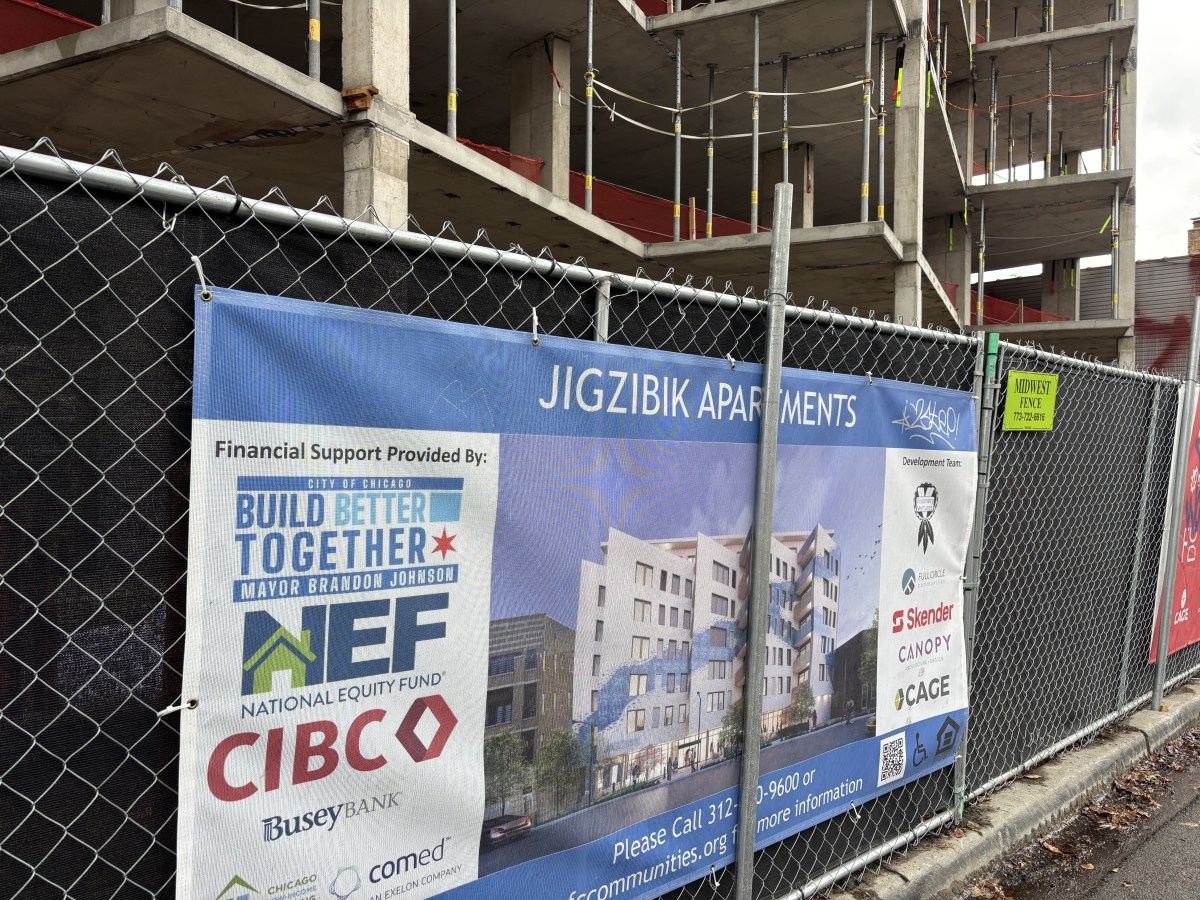
This fall, construction should conclude on a 45-unit affordable housing project at 2909 W. Irving Park, aimed at addressing one of the city’s Indigenous population’s largest concerns: housing.
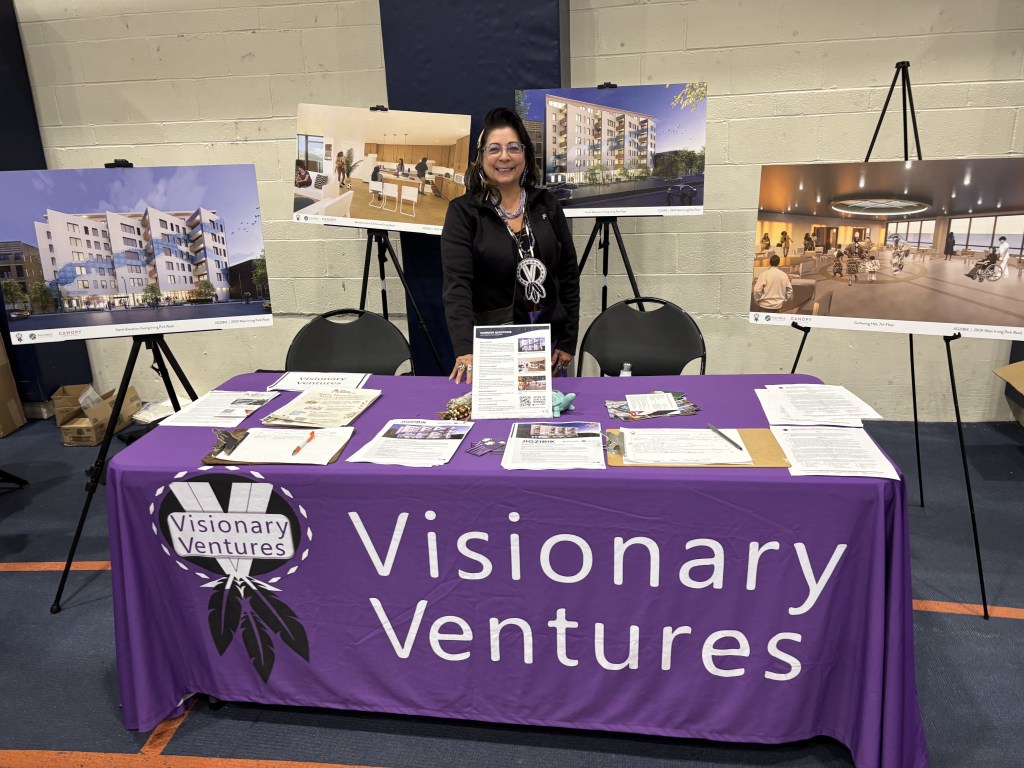
“We wanted to bring additional resources into a community that’s been severely underserved in Chicago,” said Pamela Silas, board chair of Visionary Ventures, the non-profit behind the building’s construction. “There’s a long history of activism here.”
Chicago has seen the highest rent increases among the nation’s top metro areas recently, experiencing a 3.1 percent annual rent increase as of June 2026 according to the Illinois policy institute. For years now, Native Americans in Chicago have struggled to find affordable housing, with half of all Indigenous renters qualifying as “rent burdened,” a term referring to households spending more than 30 percent of their income on rent.
“This serves that missing middle where families are struggling with rent burden, and we’re hoping this property will allow some stability for those families that are also providing leadership and preservation for culture for our community,” said Silas, who is Menominee and Oneida. “Things are getting tougher in Chicago for renters and particularly low income renters. …There’s been a lot of pressure on renters in the city of Chicago over the past few years.”
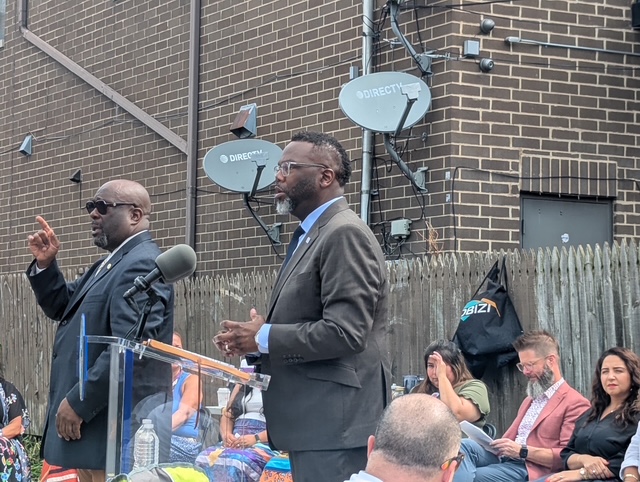
The City of Chicago contributed significantly to the building’s construction, including $6 million in funding from Mayor Brandon Johnson’s Housing and Economic Development Bond, $950,000 in permanent supportive housing funds and $2.5 million in low-income housing tax credits, according to the City of Chicago.
“Promises were made over 50 years ago to provide housing, and the city came through for us,” Silas said.
Because of its use of city tax credits, the building is open to all eligible Chicagoans, not just American Indian and Alaska Native residents. To make sure the Native community is still served, organizers have spent four years networking in the community to identify interested people.
“We are affirmatively marketing to one of the most underserved communities in Chicago,” said Shelly Tucciarelli, executive director of Visionary Ventures.
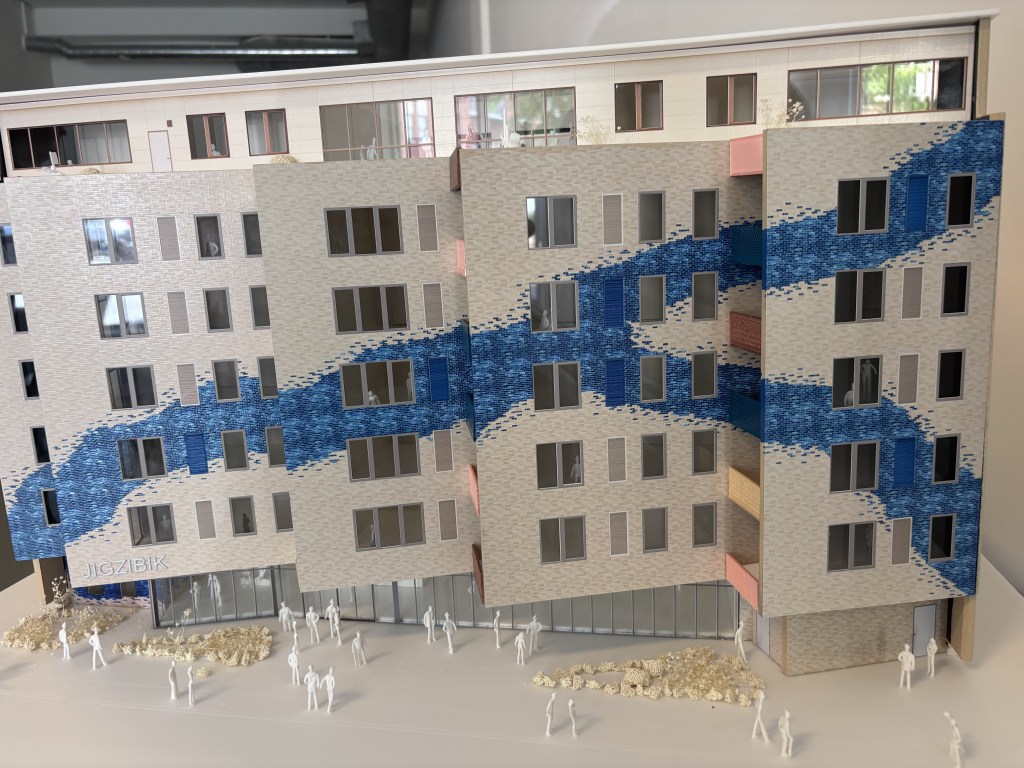
The building, called Jigzibik: At the River’s Edge, is just the first step in Visionary Venture’s multilayered plan to increase urban Indigenous housing accessibility, organizers said. Two more housing projects are already under way, one in Chicago’s Rogers Park neighborhood and the other in West Allis, Wisconsin.
Units in Jigzibik are meant for Chicagoans earning at or below 60 percent of the Area Medium Income which is $35,580 per year for an individual or $50,760 per year for a family of four. The building offers a mix of three bedroom, two bedroom, one bedroom and studio apartments.
Visionary Ventures was formed to address the Indigenous community’s housing crisis, said Tucciarelli, who is Oneida and spent 20 years working for the Illinois Housing Development Authority.
Visionary Ventures collaborated with Full Circle, a midwestern non-profit affordable housing development organization, to bring Jigzibik to life.
“They [Silas and Tucciarelli] knew exactly what the community needed based on all of their personal and professional experience and all of the conversations that they are constantly having,” said Full Circle Chief Executive Officer Lindsey Haines. “We saw our role in that process to bring their idea to life.”
From there, Chicago-based architecture firm Canopy developed what would become Jigzibik, Haines said.
“We talked about housing not being transactional, but being a community built within the community,” Silas said. “We talked about spiritual needs and some of the design elements. We talked about how we saw (in) the long term that this brings visibility to a community that’s been very invisible in Chicago.”
Housing access was what actually drew the community together 70 years ago, Silas said. As a result of the Urban Relocation Act, a large number of Native American people moved into Chicago’s northern neighborhoods, settling in areas like Uptown. Living conditions were harsh.
Apartments that Indigenous people were able to live in were poorly maintained. In 1970, Menominee mother Carol Warrington was evicted from her home in Chicago’s Wrigleyville neighborhood, prompting the community to launch an occupation of the Chicago Cubs Stadium.
Decades later, rent increases are forcing Native people out of their communities once again, Silas said.
“The level of rent burden, the level of failures in applying for mortgage loans, there was some really abysmal data in there,” Silas said. “We saw that in our community there was a diaspora happening where they were being scattered all over, including surrounding suburbs because of the affordability issue. So it was tearing at the heart of the fabric of our community.”
But organizers know 45 units won’t solve the problem entirely, Silas said, but it’s why the project doesn’t end at Jigzibik.
Jigzibik will offer a gathering hall, fitness room, elder and youth programming, space for regalia making, and more. It will also offer a mix-use office space featuring American Indian employment resource, California Indian Manpower Consortium .
“We’re going to have a really good starting point there,” Haines said.
Additionally, Full Circle has reached out to local Native organizations in and around Chicago to build programming opportunities such as health checks and diabetes management services.
“We have a really large gathering hall space on the seventh floor with just beautiful views,” Haines said. “You can see the river, you can see downtown, and it opens onto a roof deck that we intentionally designed with Native plants, as well as space for people to garden. So it’s really going to be a unique feature to this building that we purposely designed with the feedback of the community in mind.”
The next two housing projects in development include an 80-unit structure in Chicago’s Rogers Park neighborhood and the organization’s first Wisconsin-based project, a 55-unit structure created out of an old elementary school.
Visionary Ventures received tax credits in June from the State of Wisconsin to create the West Allis housing project, which will be two miles away from Southeastern Oneida Tribal Services, the Oneida Nation of Wisconsin’s Milwaukee-area branch office. The Oneida Nation has provided substantial contributions to the project, Silas said.
The group has also received support from the Prairie Band of Potawatomi Nation, that recently reacquired several acres of its ancestral homeland outside of Chicago.
Silas said Visionary Ventures is planning to reach out to other tribes in the Chicago area as well as tribes whose ancestral homelands overlap with present-day Chicago.
“Yeah, those ripple effects are what we know is possible when housing is built with a community in mind,” Silas said. “It’s not transactional housing. We’re not just paying rent to go into a building and go into your apartment, shut the door … It’s a beautiful thing.”

