
Nika Bartoo-Smith
Underscore Native News + ICT
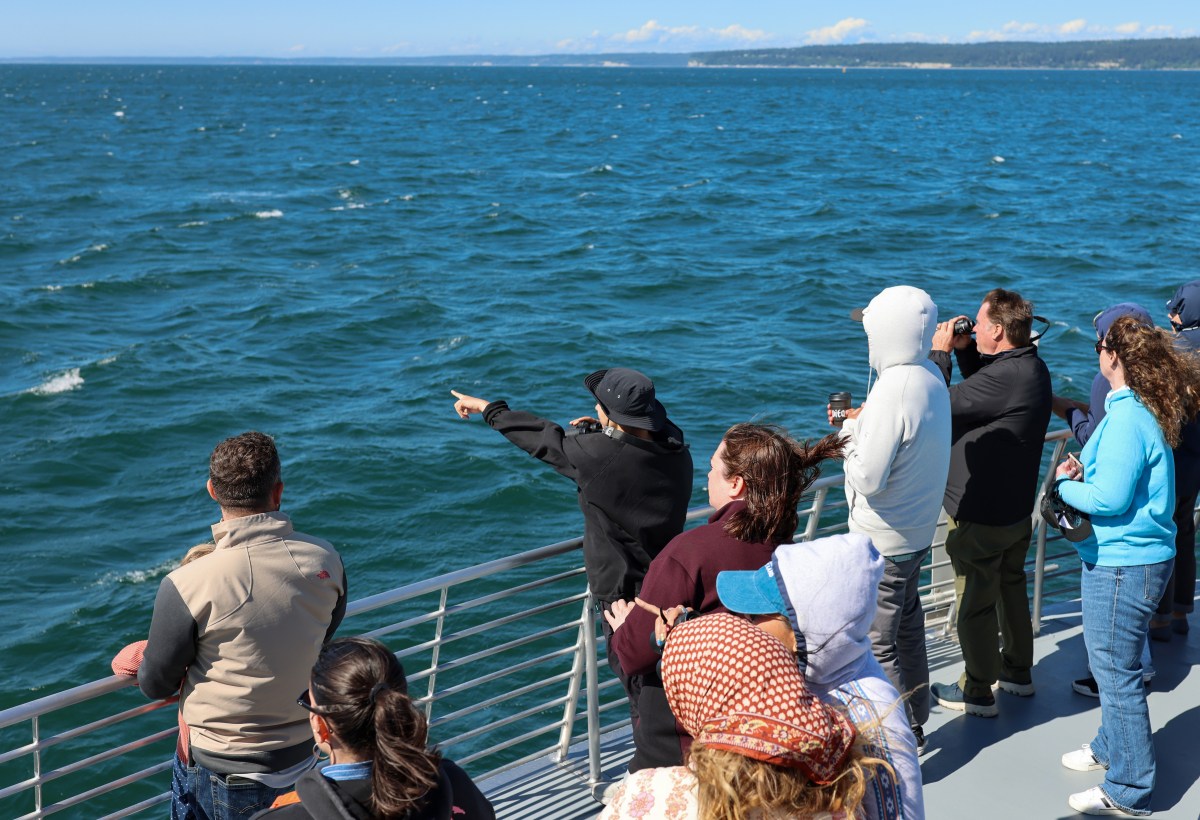
SEATTLE — Walking through Waterfront Park in downtown Seattle, along the shoreline of Elliot Bay in the Puget Sound, Pier 69 has long been home to the iconic whale watching tours aboard the FRS Clipper. Starting on June 16, every Tuesday through July 21 of this summer now offers an extra special tour grounded in Indigenous knowledge and storytelling.
“Some people are really excited about seeing a whale and are also gaining a perspective from our point of view and the naturalist point of view,” said Valerie Segrest, citizen of the Muckleshoot Indian Nation, and chief executive officer of Taproot Travel Co. “This idea of harmonizing wisdom is important, and then when we speak directly to it and you experience it, it can change your heart, it can change your way of thinking, and that’s really what we hope to get out of this is.”
Taproot Travel Co. is a Native-led organization launched in May that was created to connect people to Indigenous homelands through immersive cultural experiences. The organization began in part from conversations about “First Stories of the Salish Sea.”
The company hopes the tours can help bring non-Indigenous tourists a better understanding of the current and past Indigenous history of the area.
For Segrest and her team at Taproot Travel Co., this felt particularly important when thinking about the uptick in tourists during the 2026 FIFA World Cup, as Seattle is one of 16 host cities this summer.
And, this summer marks the 250th anniversary of the United States of America.
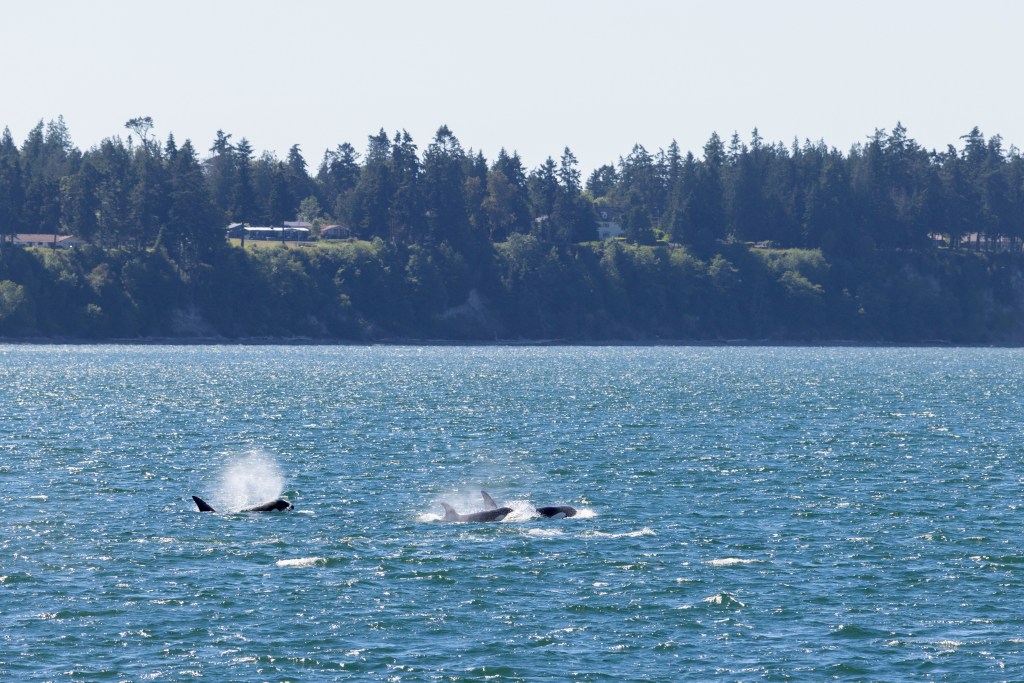
Passengers on the inaugural “First Stories of the Salish Sea” Indigenous-led whale watching tour aboard the Emerald Clipper saw a pod of orcas in Elliot Bay on June 16, 2026. (Nika Bartoo-Smith, Underscore Native News / ICT) 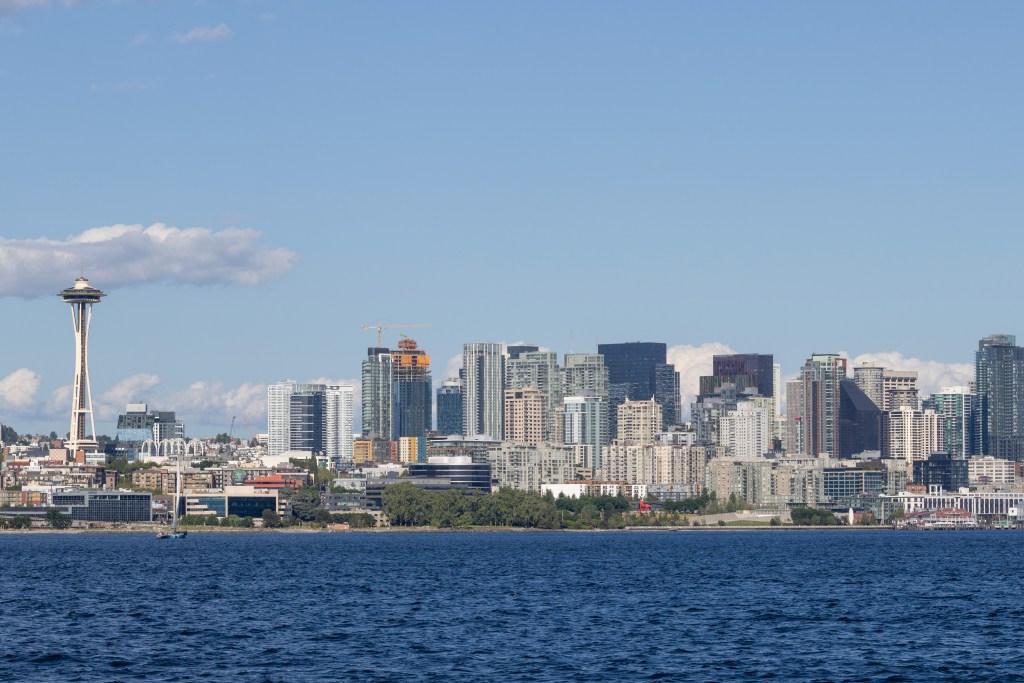
A view of Seattle from Elliot Bay aboard the Emerald Clipper during the inaugural “First Stories of the Salish Sea” Indigenous-led whale watching tour on June 16, 2026. (Nika Bartoo-Smith, Underscore Native News / ICT) 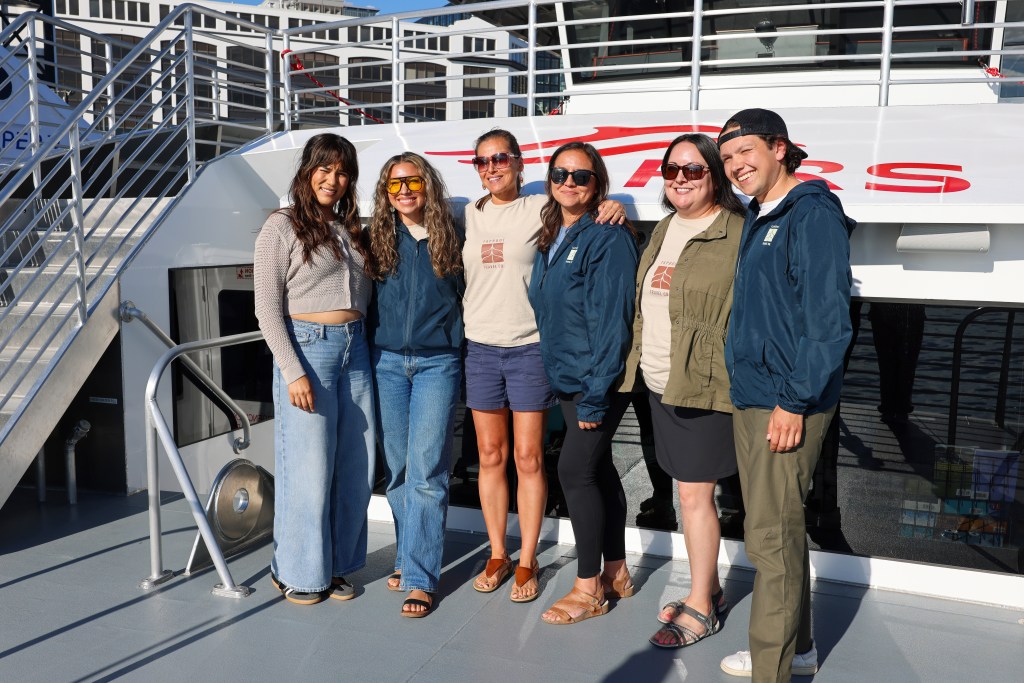
From left to right: Gabi Pineda (Comanche), Savannah Romero (Eastern Shoshone), Elizabeth Campbell (Spokane), Valerie Segrest (Muckleshoot), Nora Frank-Buckner (Nez Perce) and Owen Oliver (Quinault & Isleta Pueblo) pose for a photo after the inaugural “First Stories of the Salish Sea Tour” on June 16, 2026. (Nika Bartoo-Smith, Underscore Native News / ICT) 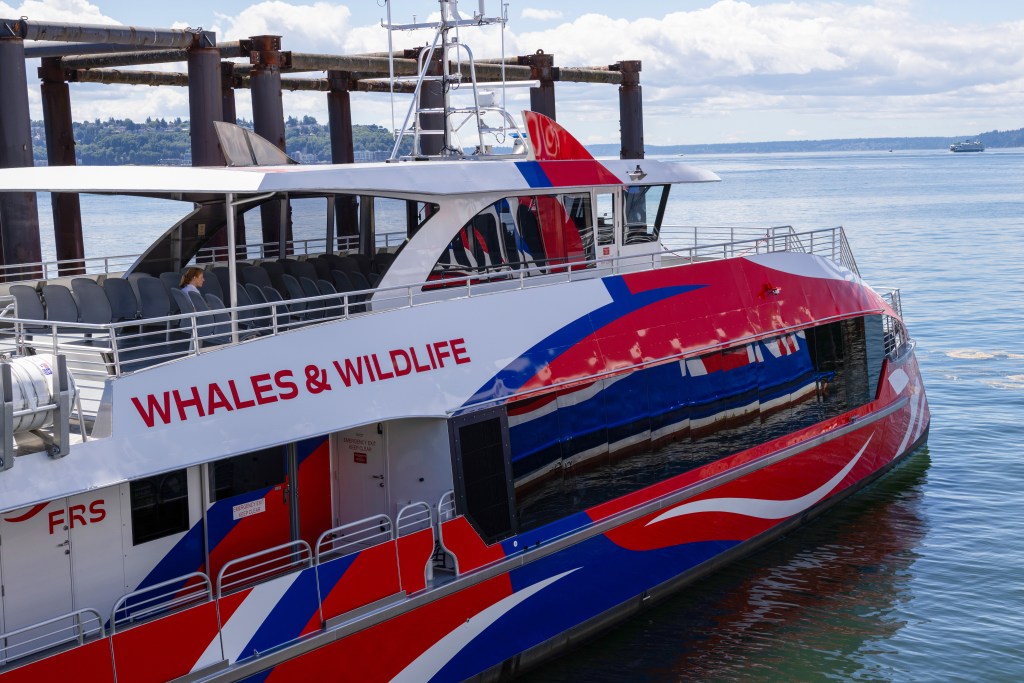
The FRS Clipper’s new Emerald Clipper Catamaran before a whale watching tour on June 16, 2026. (Nika Bartoo-Smith, Underscore Native News / ICT)
“This tour in particular is very timely,” Segrest said. “The Clipper is doing the good work of really trying to engage meaningfully in collaboration with the Indigenous communities in the course that they represent, and they have been such amazing partners that we felt really encouraged to help curate an experience that doesn’t only help us share who we are with the world and all these visitors that are here, but to help bring visibility to our history during a very meaningful anniversary for our country. The 250th is a big deal, and we feel that our history has always been told by somebody else, and to be told through our perspective during this time is meaningful and part of our healing journey.”
‘First Stories of the Salish Sea’ Tour
The “First Stories of the Salish Sea” tour aboard the FRS Clipper’s new Emerald Clipper catamaran, was created by Taproot Travel Co. and the FRS Clipper.
Along with this six-tour experience, Taproot Travel Co. also has multiple Seattle-based itineraries and a Native Business directory. Though Seattle-centric as of right now, the organization does have plans to grow its reach.

“A lot of the work we do is elevating their understanding of our history, bringing them up-to-date, because we know that US history does not do that work, and so we’re trapped in the 19th century peoples’ paradigms of us,” Segrest said, describing what she hopes to do with the tours that are being curated at Taproot Travel Co.
A chance to share traditional knowledge, providing some education around Indigenous history and culture, Taproot Travel Co. also ensured that the “First Stories of the Salish Sea” tour would be a place to support Indigenous vendors with food and beverages available from vendors such as Fireweed Baking Co., Theos Longhouse Strong Coffee and Talking Cedar Brewery & Distillery.
Segrest first connected with the FRS Clipper during the Native Grown and Gathered Food Expo that she helped produce in October 2025 in Seattle when a group went on a tour of Elliot Bay.
A few months later, this led to a conversation about authentic Indigenous representation along Alaskan Way in Seattle, the main pedestrian walkway that stretches along Elliot Bay.
‘It reminds me of a story’
As the FRS clipper cruised through the waters of the Salish Sea during the inaugural tour for “First Stories of the Salish Sea,” the sun beaming off the water and highlighting the white tips of the waves, passengers listened as Owen Oliver, Quinault Indian Nation and Isleta Pueblo, shared stories of both past and present.

Oliver talked about treaty rights and ongoing tribal fishing throughout Elliot Bay as he pointed out important sites along the shores, such as historic village sites at Alki Beach and Discovery Park, a site of Indigenous activism. He shared stories about land, animal relatives and Coast Salish people. He also spoke words in Lushootseed, a central Coast Salish language.
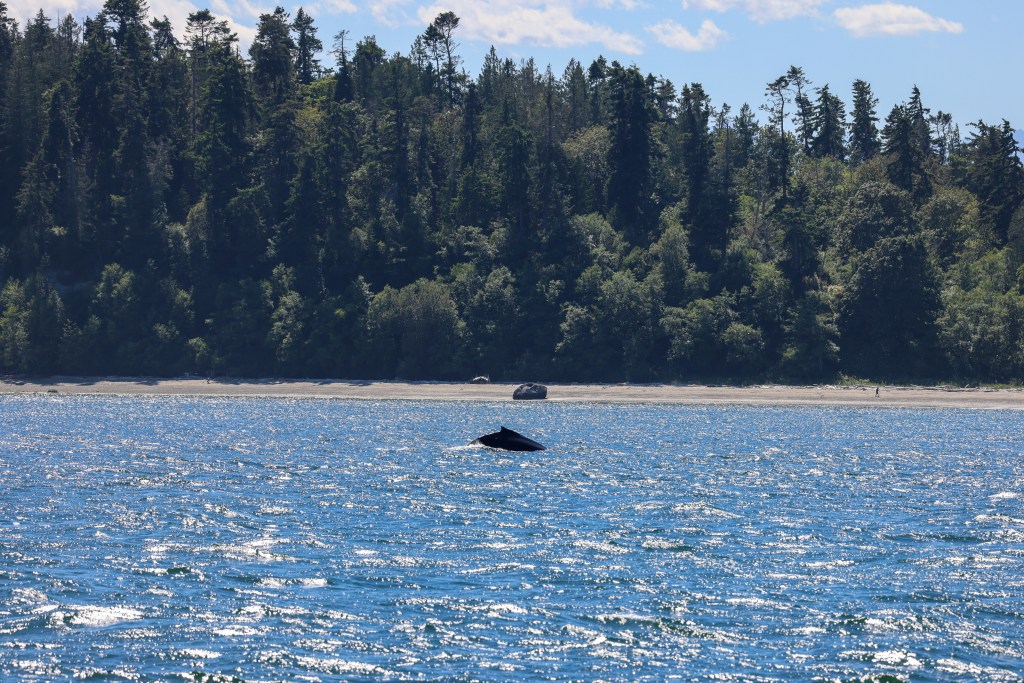
As the Emerald Clipper made its way past Alki Beach, passengers were able to watch a pod of orcas swimming together and surfacing in and out of the water as the boat slowed down.
“It reminds me of a story,” Oliver said, as tour guests looked into the waves to try and spot the orcas.
Oliver shared a story from the Tulalip and Snohomish people about how orcas helped to clear the seals as they were eating up all the salmon.
Then he shared another story from an Intertribal Canoe Journey a few years ago when a picture went around Facebook, showing an orca popping its head up between two canoes as they got ready for the journey.
“Many elders say that the orcas continue to hear our songs,” Oliver said. “I like to think that as we share our songs out to the Salish Sea, that they remember those songs of our ancestors.”
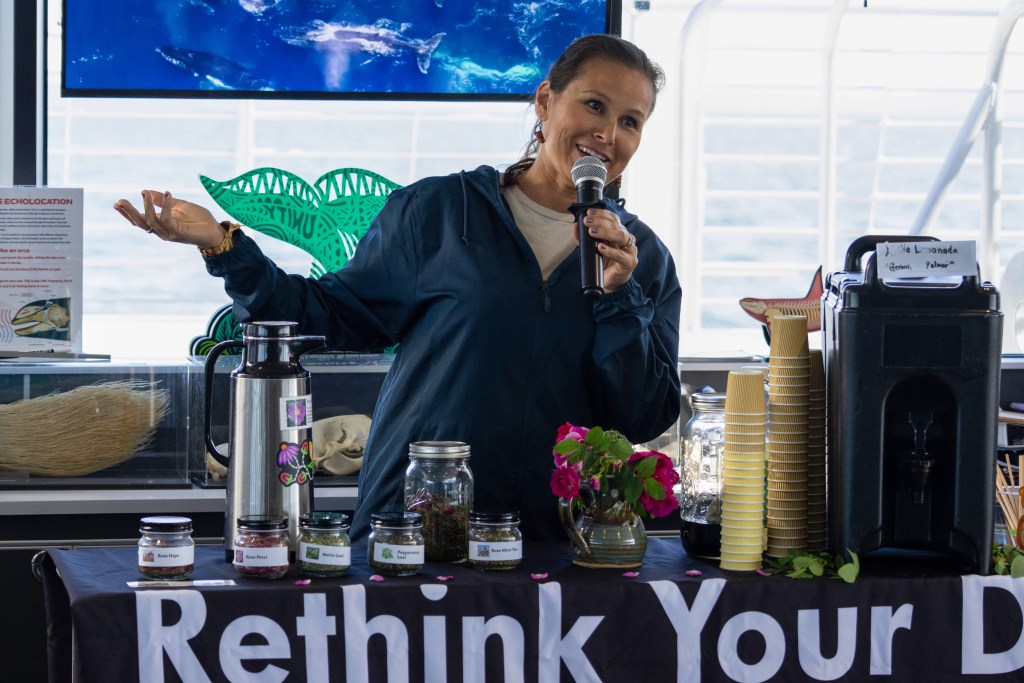
As Oliver shared stories grounded in place, Elizabeth Campbell, a citizen of the Spokane Tribe, offered a tea tasting to passengers aboard the Emerald Clipper. Campbell runs Cedar Circle Farm, an organic farm in Squaxin Island territory. An herbalist and Native plants educator, she also works for Taproot Travel Co.
Passengers were invited to try nettle tea, nettle lemonade and rose hip mint tea as Campbell talked about many of the medicinal properties offered by the plants.
“Tea is one of the most ancient forms of medicine,” Campbell told Underscore Native News + ICT. “Today I’m going to talk about just a few of the herbs that grow all around us. Literally a store outside our door.”
Campbell and Segrest also talked about the diminishing kelp highway, a rich coastal migration route that connects Seattle to Japan.

Bullwhip kelp is essential for the ecosystem, providing for sea creatures and helping to diminish the impacts of climate change, according to Campbell. It is also rich in nutrients and an important first food for many Coast Salish tribes.
After nearly four hours cruising through Elliot Bay and learning about local Indigenous history and culture and hearing stories grounded in place that centered first foods and animal relatives, passengers leaving the Emerald Clipper following the “First Stories of the Salish Sea Tour” walked away with a whole new perspective of the bay.
“As we head back, just think about this beautiful landscape and the viewpoints that we’ve shared today, and just understand how important it is to share these stories and to continue to protect these lands and uplift our animal relatives as well, like the orcas and the humpbacks we saw today,” Oliver said.
This story is co-published by Underscore Native News and ICT, a news partnership that covers Indigenous communities in the Pacific Northwest.

