Dalton Walker
ICT
PHOENIX — Artist Lucinda Hinojos could be the beginning of a Super Bowl Indigenous lens.
The Phoenix-based creative is the National Football League’s marquee artist of Super Bowl LVI in Glendale, Arizona. Her work, including a massive painted mural, is part of the Super Bowl décor around Phoenix.
She is the first Chicana, Native artist to work with the NFL on Super Bowl theme art. Hinojos is Pascua Yaqui, Chiricahua Apache, White Mountain Apache, and Akimel O’Odham.
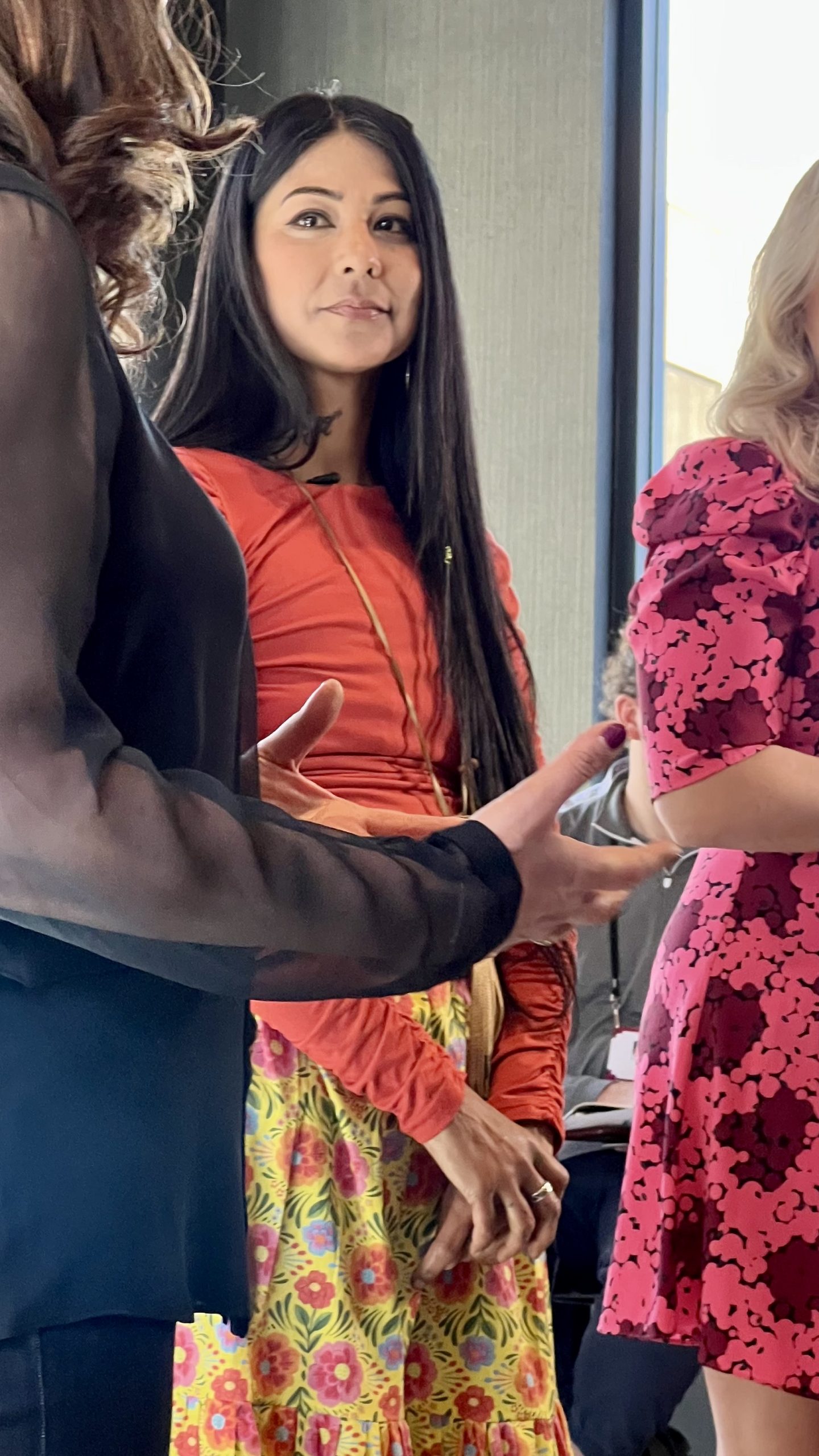
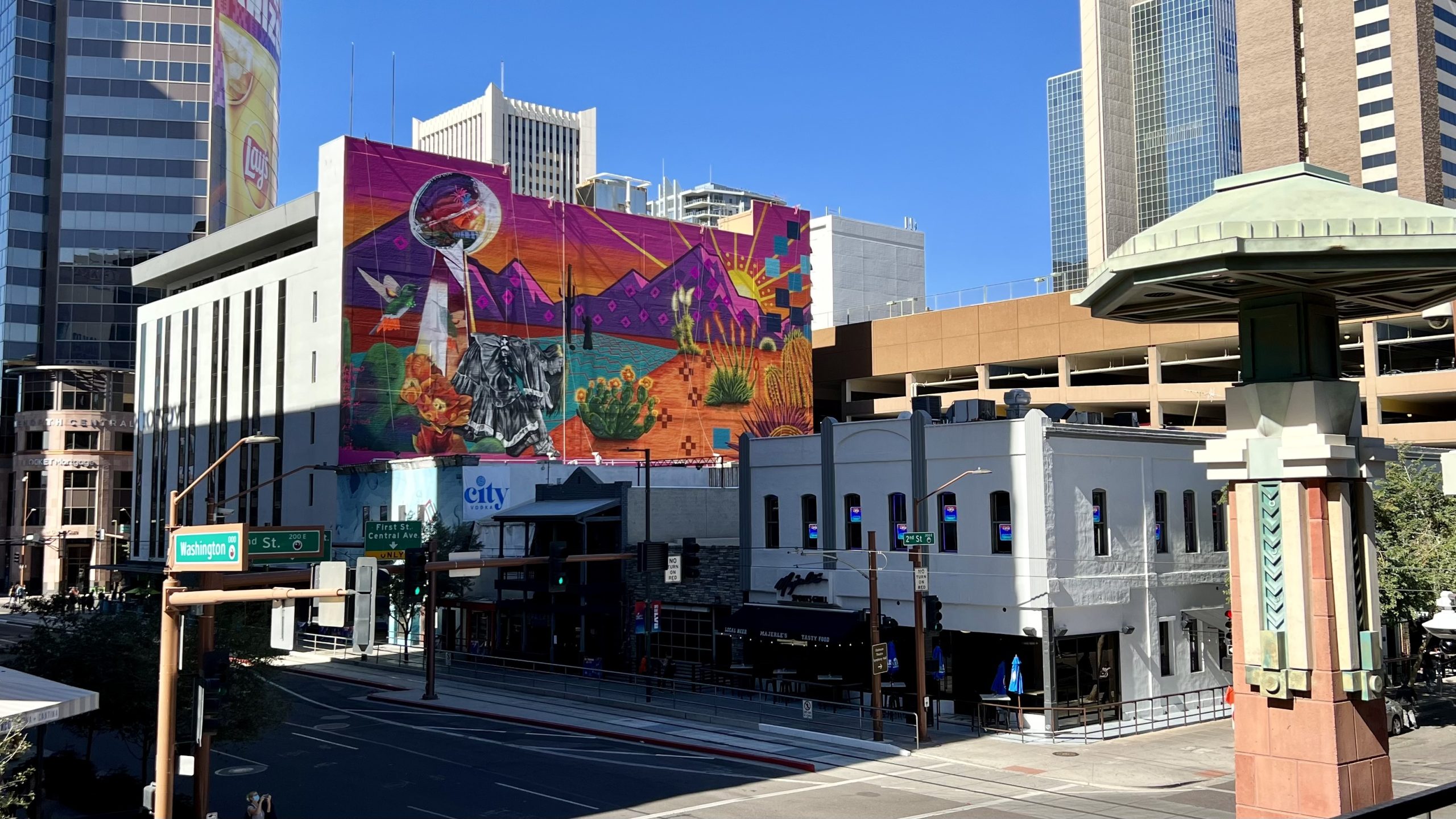
Hinojos and her team of artists were in the spotlight Tuesday in downtown Phoenix near the mural located at the northwest corner of Washington and Second streets.
The director of NFL Events was impressed by the mural and said it was “like nothing I’ve ever seen before.” Daphne Wood said event planning for the Super Bowl starts four years in advance. She said future Super Bowls will have more Indigenous partners.
“Yes, we are definitely always looking for opportunities to partner with the community to make it authentic to hear from the perspectives of the people of that land,” Wood said. “I don’t think this is the end of that partnership that makes things really special and unique.”
Usually, Super Bowl locations are announced a few years in advance. So far, the public knows of the next two locations. Next year’s Super Bowl is scheduled for Allegiant Stadium in Las Vegas and the 2025 big game is headed back to New Orleans and the Caesars Superdome.
Related:
— Indigenized Super Bowl
— Super Bowl: Native players work for ‘something bigger’
— Indigenous artist strikes NFL deal
— Native artists shine under Super Bowl opening lights
— Indigenous artist featured at Super Bowl for first time
Blessing of mural
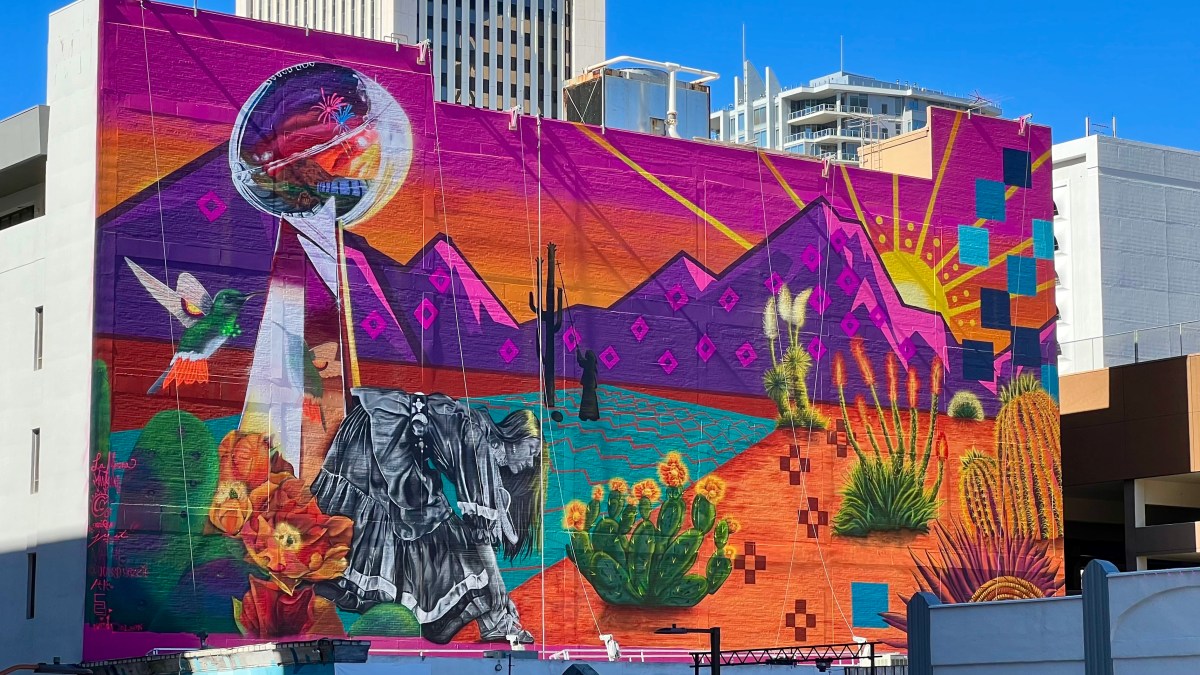
It took a team of around a half dozen artists to complete the downtown mural that included hours of work each day over the last few weeks. It’s the largest NFL painted mural to date at 9,500 square feet on the side of Monarch Theater, and its vibrant colors make it easy to spot.
A traditional blessing took place Tuesday morning.
The mural is a collaboration with the local Cahokia and is a “symbol of Indigenous collaboration and emphasizes the importance of community placekeeping and unity.” It shows the NFL’s championship trophy outside on an Indigenized football field along with an Apache woman blessing the field, a Diné rug pattern, a hummingbird, baskets, mountains, coyote footprints, the sun and cacti.
The mountains feature 22 diamonds representing the federally recognized tribes in Arizona. The Apache woman was painted in black and white “to honor the stories of our history and the cultivating of this land for time immemorial,” according to a description.
“I love that we represented the Akimel O’Odham land that we are on,” Hinojos said. “The basket, the coyote footprints, the O’odham woman picking fruit from our grandmother saguaro (cactus), that means a lot to me because I want that representation, I want people to know when they come to Phoenix, come to Super Bowl, to be mindful, and know and learn where they are at, what land they are on.”
Other members of the mural collaboration include Carrie “CC” Curley, San Carlos Apache, Anitra “Yukue” Molina, Yaqui, Eunique Yazzie, Diné, Jesse Yazzie, Diné, Giovannie Dixon, and Missy Mahan, Euchee, Mvskoke and Tohono O’odham. Randy Barton, Diné, helped with the artwork, and Hinojos’ 20-year-old son Nathaniel Deleon also helped the team.
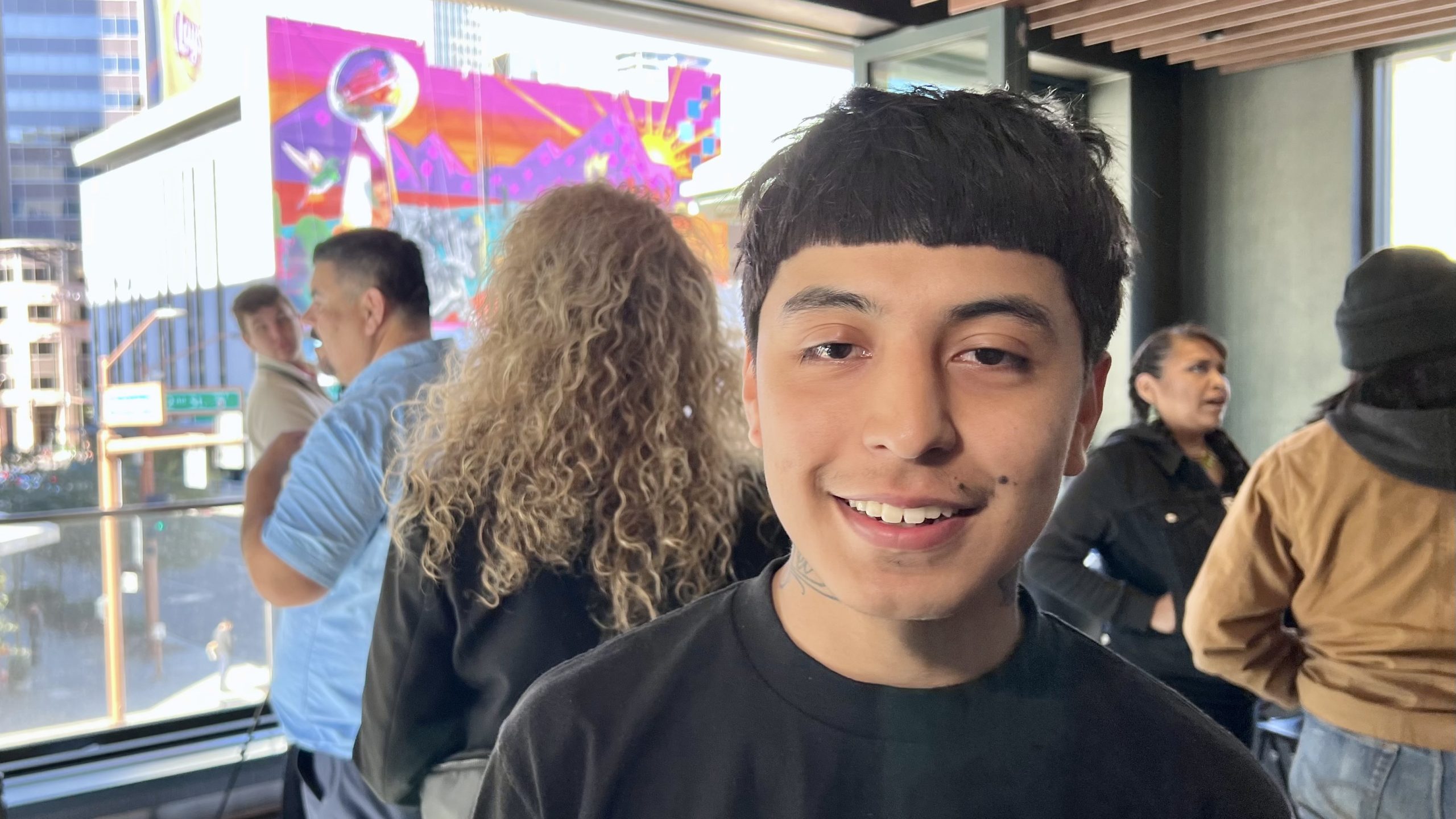
Deleon said he was proud of his mom and to be part of the team. When he first learned of his mom’s opportunity, he couldn’t believe it.
“At first, I thought it was fake, and I didn’t really think it was that huge,” he said. “It really didn’t hit me until she actually did it. It’s crazy to me.”
SUPPORT INDIGENOUS JOURNALISM. CONTRIBUTE TODAY.
In January, football fans were first introduced to Hinojos when the NFL announced that her design will be featured on Super Bowl game tickets and other displays. A short film about Hinojos and her work was released by the NFL Network around that time.
“Anything is possible,” Hinojos said, “because I grew up seeing blonde hair, blue eyes on walls and on TV. Now, we are here in this space, paving the way for the future generation, and I want them to know that they too can do this too.”

Our stories are worth telling. Our stories are worth sharing. Our stories are worth your support. Contribute $5 or $10 today to help ICT carry out its critical mission. Sign up for ICT’s free newsletter.