

JoVonne Wagner
ICT
Blackfeet activist, banker, mother and trailblazer Elouise Cobell, who died in 2011, led a nearly 13-year-long fight for fairness and accountability from the federal government after it was discovered withholding funds from 300,000 account holders who had their monies held in trust by the Bureau of Indian Affairs.
Her efforts were responsible for almost $3.5 billion in repayments across Indian Country, the largest U.S settlement that nation has seen. Some funds from the settlement was reserved for the Cobell Scholarship, an organization created to help provide fundings for American Indian students seeking financial support in higher education.
Under the Obama administration, she was posthumously awarded the Presidential Medal of Freedom and more recently, the National Women’s Hall of Fame has named the Indigenous pioneer in the 2023 and is set to induct her posthumously next year.
In 2015, her home state of Montana, former governor Steve Bullock authorized the proclamation that declared Nov. 5, as Elouise Cobell day.
Eight years after her day was solidified, former lawmakers, lawyers that helped Cobell in the initial lawsuit and her son, shared with ICT how her legacy paved the way for Indigenous leadership and government accountability at the national level.
“Elouise is a heroine to many, many people and me included,” said Denise Juneau, Mandan Hidatsa and Blackfeet, who is the former Montana Superintendent for Public Instruction.
“What I like about her is that she always made time for mentorship and advice giving, despite how busy she was with her community work and this lawsuit that she was carrying against the federal government,” she said.
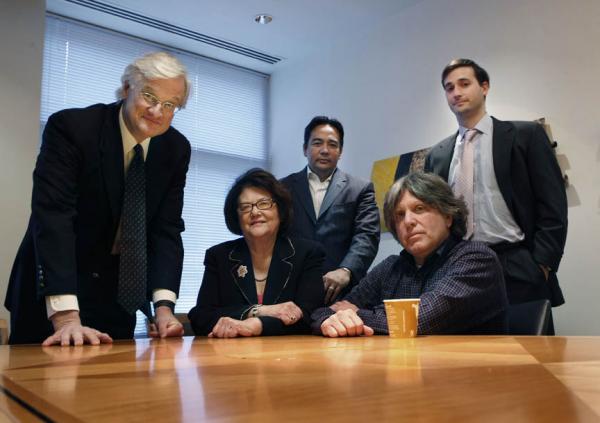
Juneau reminisced back on her and Cobell’s last conversation, sharing how she thought Juneau shared that Cobell efforts have been woven into the fabrics of the nation, saying that her story is a part of American history.
“There was a strong sense of a Native woman persevering and being strong and to never give up. And that’s sort of the message I got out of that last visit with her,” said Juneau.
Lea Whitford, Blackfeet, along with Juneau, recalled a moment during Cobell’s funeral where she was left with a heavy question.
“What can we do as Native women to make sure we are always involved?” Whitford asked Juneau.
That’s when Juneau recommended Whitford run for public office, something that Whitford had to think about, but quickly decided and went on to run and be elected into a state senator position, representing a district from the Blackfeet Nation.
Whitford introduced a bill that would establish Elouise Cobell Day and recollected the challenges that the bill faced during the 2015 state legislature.
On Nov. 5, 2015, Gov. Bullock signed the proclamation, ensuring that Montana honored Cobell and her legacy after the legislature failed to pass it through the capitol.
“She is a strong Blackfeet woman and I hope we can continue to tell her story to future generations,” said Whitford.
The persistence and determination reflected in the state legislature was in essence who Cobell was that helped drive her to address and fight for the rights of the communities she represented.
“I think she’s very deserving of being admitted into that Hall of Fame posthumously,”said John Echohawk, Pawnee, the executive director of the Native American Rights Fund and lawyer who helped represent Cobell in the lawsuit.
“It’s really a recognition that’s well deserved because, again, she led to the resolution of one of the major issues across Indian Country, and that’s the enforcement of the federal government’s trust responsibility. She got it done,” he told ICT.
Echohawk explained how impactful Cobell’s settlement was, sharing that the general public didn’t really understand the government’s responsibility to Native trust money and lands and believes it important for not only Indian Country but for the nation to remember her work.
“She had seen how they had mismanaged the trust funds of her Blackfeet Tribe, and then all of the individual money account holders who have allotments up there … she was just determined to finally get the federal government to do what it was supposed to do as trustee and where she really persisted and ultimately prevailed,” said Echohawk.
Turk Cobell, son of Elouise Cobell, remembers his mother’s legacy coming up on her birthday and shared his reaction to her posthumous induction into the National Women’s Hall of Fame.
“I was able to do some research on [National Women’s Hall of Fame} and the more I researched, the more I understood what a big deal and tremendous honor this was for my mother to be inducted with these group of women who, who essentially have changed the direction of this country over, over, um, over decades of this organization being involved,” he said.
Turk hopes this national recognition will continue to educate and inspire all generations that they too have the ability to make a difference in their communities, and nation.
“I hope that in the minds of older and younger Native Americans across this country, they can see that ordinary people can do extraordinary things throughout their lives and change the lives of others, whether it be through an act of kindness or literally through an act of Congress, it is possible and I hope that that legacy of hers lives on,” he shared.

Our stories are worth telling. Our stories are worth sharing. Our stories are worth your support. Contribute $5 or $10 today to help ICT carry out its critical mission. Sign up for ICT’s free newsletter.
