Greetings, relatives. (can be in traditional language, make intro your own)
A lot of news out there. Thanks for stopping by ICT’s digital platform.
Each day we do our best to gather the latest news for you. Remember to scroll to the bottom to see what’s popping out to us on social media and what we’re reading.
Also, if you like our daily digest, sign up for The Weekly, our newsletter emailed to you on Thursdays. If you like what we do and want us to keep going, support and donate here.
Okay, here’s what you need to know today:
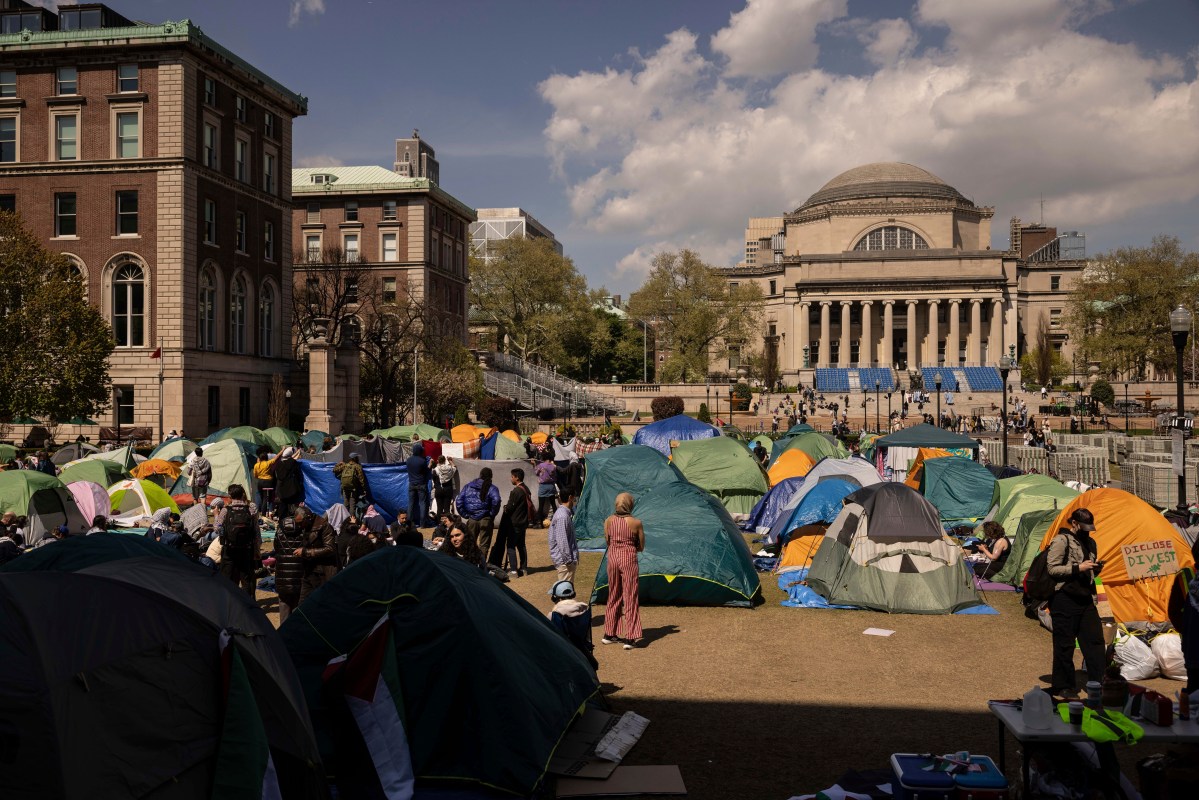
A wave of highly charged student protests sweeping college campuses around the nation this week include Indigenous students protesting the war between Hamas and Israel and Israel’s killing of Palestinians.
Kianna Pete, Diné and a Columbia University graduate student from New Mexico, said she and other Native American peers stand in solidarity with Palestinians.
She has taken part in a protest encampment at Columbia – which ignited the fast-spreading student movement – in New York City since last week when 100 students were arrested. Student protesters’ ranks have swollen nationally with reportedly mostly peaceful protests.
“All of those things that we’ve experienced as Indigenous peoples here on Turtle Island, the same thing is happening in Palestine and has been happening in Palestine for the past 75 years,” Pete said. “But through this movement, I’ve begun to learn a lot more about it and to offer support.”
Pete, who’s studying politics and education, sees parallels between American colonization and what she considers to be inhumane acts of war by Israel against everyday Palestinians.
“Similar to settler-colonial projects we’ve experienced here in the United States as Indigenous peoples – that being the justification of land grabs and that is done through stealing Indigenous land and displacing them, (we are) being super highly surveillanced,” Pete said.
She said police are using drones to monitor the student encampment.
Like students across the country, Columbia’s student protesters are demanding that their administration stop doing business with companies linked to Israel and are also calling on the U.S. government to stop providing military aid to Israel. READ MORE. — Renata Birkenbuel, ICT
ART: Pottery from tradition
A traditional potter and a flint knapper, Tony Soares, Metis/Portuguese, has been reviving the millennia-old art of Mojave Desert Indigenous pottery. Working out of caves and classrooms, he teaches how to dig the clay, dirt and water out of the desert floor to create the right mixture for pots.
“I am a potter specializing in California and Arizona paddle and anvil type pottery,” Soares told ICT at a recent booth demonstration for the Cahuilla Agua Caliente tribe. “I have also been flint-knapping for more than 40 years. I have artwork in the Springs Preserve Museum in Las Vegas, Nevada, the Pechanga Casino in Temecula, California, and many small museums around the Southwest. I was recently a flint-knapping stunt double for Jason Momoa and Wes Studi in ‘Road to Paloma.’”
AWARDS: Artists and designers honored
The Guggenheim Fellows for 2024 have been announced by the John Simon Guggenheim Memorial Foundation. This year’s winners include several Indigenous artists selected via a rigorous peer review process from nearly 3,000 initial candidates.
The winners include Lewis de Soto, Spanish and Cahuilla, who creates sculptures using tricked-out autos; Nicholas Galanin, Sitka, creator of “Never Forget,” the huge Indian Land sign in Palm Springs; and Dyani White Hawk, Sicangu Lakota, whose exquisite quillwork has been shown in museums.
The Museum of Indian Arts and Culture in Santa Fe has also announced a recipient of the 2024 Living Treasure and Legacy Awards, which honor Native American artists who have made outstanding artistic contributions to the field of Indigenous arts and culture. READ MORE. — Sandra Hale Schulman, ICT
SUPPORT INDIGENOUS JOURNALISM. CONTRIBUTE TODAY.
PARMELEE, S.D. — Weldon Poor Bear received a powerful gift on Father’s Day 35 years ago: the birth of identical twin sons.
He fondly recalls raising them in the traditions of their Lakota heritage, with sweat lodges, ceremonial pipes and sun dances. There were baseball games and cross-country meets — and his son Adam’s ambition to become a police officer.
But memories are all that remain of Poor Bear’s biological children.
Near midnight on March 14, 2018, Poor Bear stood outside his house on the Rosebud Indian Reservation and watched, then listened, as Adam was shot and killed by a tribal police officer.
Adam was unarmed, according to official records in the case.
It was a profoundly personal loss for Poor Bear, who had already lost Adam’s twin, Arthur, to suicide a decade before.
But Adam’s killing is also part of an alarming and rarely discussed trend that has made Native Americans more likely than any other racial group to die in encounters with law enforcement.
Despite witnessing some parts of Adam’s fatal encounter — including seeing him run from police and hearing the gunshot that ended his life — Poor Bear remains largely in the dark about why and how his son was killed that night.
While accurate counts and solid information are difficult to come by, one thing is clear: Poor Bear is far from alone in mourning a Native American loved one killed by police — and searching in vain for answers.
A Lee Enterprises Public Service Journalism Team investigation examined deaths of Native Americans in encounters with law enforcement over the past 10 years, with a focus on the on- and off-reservation communities of South Dakota, where such fatal encounters are particularly common. READ MORE. — Public Service Journalism Team
Sign up here to get ICT’s newsletter
Tribes and environmentalists want a U.S. appeals court to weigh in on their request to halt construction along part of a $10 billion transmission line that will carry wind-generated electricity from New Mexico to customers as far away as California.
The disputed stretch of the SunZia Transmission line is in southern Arizona’s San Pedro Valley. The tribes and others argue that the U.S. Interior Department and Bureau of Land Management failed to recognize the cultural significance of the area before approving the route of the massive project in 2015.
SunZia is among the projects that supporters say will bolster President Joe Biden’s agenda for cutting greenhouse gas emissions. The planned 550-mile conduit would carry more than 3,500 megawatts of wind power to 3 million people.
A U.S. district judge rejected earlier efforts to stall the work while the merits of the case play out in court, but the tribes and other plaintiffs opted Wednesday to ask the 9th U.S. Circuit Court of Appeals to intervene.
The Tohono O’odham Nation has vowed to pursue all legal avenues for protecting land that it considers sacred. Tribal Chairman Verlon Jose said in a recent statement that he wants to hold the federal government accountable for violating historic preservation laws that are designed specifically to protect such lands.
He called it too important of an issue, saying: “The United States’ renewable energy policy that includes destroying sacred and undeveloped landscapes is fundamentally wrong and must stop.”
The Tohono O’odham — along with the San Carlos Apache Tribe, the Center for Biological Diversity and Archeology Southwest — sued in January, seeking a preliminary injunction to stop the clearing of roads and pads so more work could be done to identify culturally significant sites within a 50-mile stretch of the valley. READ MORE. — Associated Press
- Oklahoma governor says tribes owe state $5 million
- Tackling the opioid epidemic
- Joe Biden nominates Native woman to federal bench
- Lakota youth project purchases 40 acres in Black Hills for healing, camping and cultural connection
- Mass graves in Gaza show victims’ hands were tied, says UN rights office
- With eyes on US college campuses, students stress: ‘Gaza is why we’re here’

We want your tips, but we also want your feedback. What should we be covering that we’re not? What are we getting wrong? Please let us know. dalton@ictnews.org.