
Greetings, relatives.
A lot of news out there. Thanks for stopping by ICT’s digital platform.
Each day we do our best to gather the latest news for you. Remember to scroll to the bottom to see what’s popping out to us on social media and what we’re reading.
Also, if you like our daily digest, sign up for The Weekly, our newsletter emailed to you on Thursdays. If you like what we do and want us to keep going, support and donate here.
Okay, here’s what you need to know today:
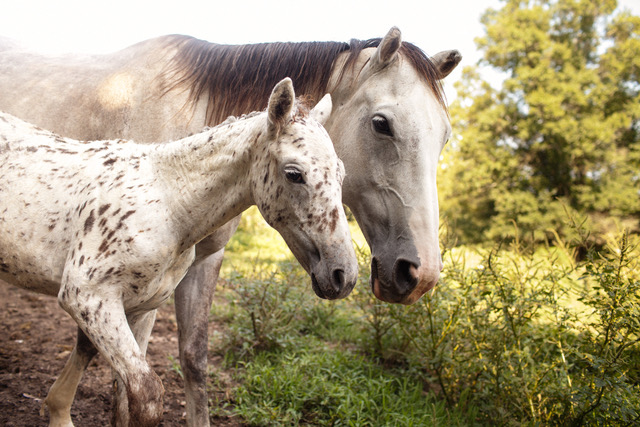
A recent scientific publication co-authored by both traditional Indigenous scientists and Western scientists confirms Indigenous narratives about the horse.
These findings disprove the accepted and dominant narrative that northern Native Nations acquired horses only after the Pueblo Revolt of 1680.
For centuries, the dominant narrative has been that Spanish colonists reintroduced the horse to Native People after the species died out in the Americas during the Ice Age. This theory is not consistent with a multitude of Indigenous creation stories on how the horse came to be, nor does it explain complex horse cultures Native Nations had early on. READ MORE. — Lyla June, Special to ICT
SUPPORT INDIGENOUS JOURNALISM. CONTRIBUTE TODAY.
Fifteen southeast Alaska tribes hope to use ancient ties to Canadian areas to get greater say in mining permits on rivers originating in the country. A new Canadian law and a 2021 Canadian Supreme Court decision also bolster their stance.
Six legislators recently expressed their support for the tribes in a letter to the premier of British Columbia. The bipartisan group said they’re concerned about mining on three river systems that start in Canada and flow into southeast Alaska: the Taku, near Juneau; the Stikine, near Wrangell; and the Unuk, near Ketchikan.
Legislators (listed below) said the watersheds are central to the southeast Alaska fishing and tourism industries, and “they are also foundational influences on the Indigenous traditions that continue to thrive in the region. It is essential that these waters remain healthy and productive for generations to come.” READ MORE. — Joaqlin Estus, ICT
In Virginia, a newly renamed Army base is the first in the continental U.S. to bear the name of a Native soldier.
Last week, the Naming Commission changed Fort Pickett to Fort Barfoot, in honor of the late Choctaw Col. Van Barfoot.
The decision is part of an effort to rename military assets that bear the name of Confederate leaders. Barfoot is remembered as a war hero and a World War II Medal of Honor recipient.
He first began his 34-year military career by enlisting in the Army in 1940. Barfoot briefly trained at the base when it was Camp Pickett before heading to the war in Europe.
His children attended the renaming ceremony, as well as representatives from Virginia-based tribes and the Choctaw nation — which is where his grandmother was a citizen. — ‘ICT Newscast with Aliyah Chavez’
A Nevada judge postponed on Monday the trial for a former “Dances With Wolves” actor indicted in state court on charges that he sexually abused Indigenous women and girls for a decade in the Las Vegas area.
Clark County District Judge Carli Kierny said the trial in the case of Nathan Chasing Horse will begin May 1 in Las Vegas to give prosecutors and Chasing Horse’s public defenders more time to iron out pending motions in the case. His trial had previously been scheduled for April 17.
A Clark County grand jury indicted Chasing Horse, 46, in late February on 19 counts that include charges of sexual assault of a child younger than 16, kidnapping, lewdness and child abuse. Chasing Horse, who is widely known for his portrayal of Smiles a Lot in Kevin Costner’s 1990 Oscar-winning film, has pleaded not guilty and invoked his right to a trial within 60 days of his indictment. READ MORE. — Associated Press
Sign up here to get ICT’s newsletter
On the Tuesday edition of the ICT Newscast, we continue our RES 2023 coverage with an entrepreneur who talks economic opportunities for tribal nations in the cannabis industry. Lyla June talks spoken word and protecting sacred sites. An Indigenous rights advocate is working to root out the causes behind the mental health epidemic in Native communities.
Watch:
A great amount of information is available on the interesting and significant lives of Dr. Charles A. Eastman, Ohiyesa, and his wife, Elaine Goodale Eastman. Charles was a famous author, dynamic lecturer, and active Indian reformer, while Elaine was also a noted author and reformer.
However, John Eastman, an older brother of Charles, has not been adequately recognized for his accomplishments and efforts to help Native people for more than four decades. READ MORE. — Raymond Wilson, Special to ICT
A sunset spectacle featuring two mitten-shaped rock formations played out this week at Monument Valley on the Navajo Nation along the Arizona and Utah border.
Twice a year, in late March and mid-September, spectators, photographers and videographers get a visual treat. As the sun sinks, the West Mitten Butte’s shadow crawls across the desert valley floor before climbing up the side of the East Mitten Butte.
The spectacle draws people from around the world to Monument Valley Tribal Park, which already is popular with tourists.
It is a frequent filming location, including a number of Westerns by the late American film director John Ford, as well as the 1994 Oscar-winning film “Forrest Gump.” — Associated Press
FOLLOW ICT ON SOCIAL MEDIA: FACEBOOK, TWITTER, INSTAGRAM, TIKTOK.
- ‘Hockey Night in Cree’ scores big in Canada: Television program promotes Cree language along with Canada’s national pastime.
- Another legal challenge to Indian gaming: Maverick Gaming LLC v United States is using similar arguments as the Brackeen case — and the same law firm.
- ‘Killers of the Flower Moon’ release date set: Many from the Osage community in Oklahoma worked as actors, background actors, or on the set and production.
- Canadian security forces arrest Wet’suwet’en protesters: ‘This harassment and intimidation is exactly the kind of violence designed to drive us from our homelands.’
- Alaska Native Scouts honored 67 years after rescue: Sixteen Alaska Native men are being honored for rescuing the crew of a Navy plane shot down over the Bering Strait by Soviet fighter jets.
- $50 Billion in Opioid Settlement Cash Is on the Way. We’re Tracking How It’s Spent.
- Interior Department Seeks Input on Modernizing Indian Arts and Crafts Act Regulations.
- Woman’s body found in Brady Landfill: police.
We want your tips, but we also want your feedback. What should we be covering that we’re not? What are we getting wrong? Please let us know. dalton@ictnews.org.

