Greetings, relatives.
A lot of news out there. Thanks for stopping by ICT’s digital platform.
Each day we do our best to gather the latest news for you. Remember to scroll to the bottom to see what’s popping out to us on social media and what we’re reading.
Also, if you like our daily digest, sign up for The Weekly, our newsletter emailed to you on Thursdays. If you like what we do and want us to keep going, support and donate here.
Okay, here’s what you need to know today:
Access to clean, drinking water and running water in Indigenous nations has always been an issue, but it wasn’t until the COVID-19 pandemic that it moved to the forefront of the American consciousness. Congress and the White House were moved to act. Millions of dollars for water infrastructure were poured into Indigenous nations through the American Rescue Plan, Bipartisan Infrastructure bill and the Inflation Reduction Act.
“The good news is there’s funding for new projects, but historically there has not been funding or support for ongoing operations and maintenance. Over time, that can be pretty detrimental to health and safety when it comes to water for different tribes and we want to dig into that a little bit,” said U.S. Sen. Alex Padilla, D-California, to ICT.
This week starts the first hearing for an unofficial water week on the hill. Padilla is chair of the subcommittee on Fisheries, Water and Wildlife under the Senate Committee on Environment and Public Works.
There are 109 federally recognized Indigenous nations in what is now known as California. As chair, it was important for him to bring Indigenous voices on water issues to the forefront. On Wednesday, he will hold a hearing, Drinking Water Infrastructure and Tribal Communities, where tribal officials and experts will testify before the subcommittee.
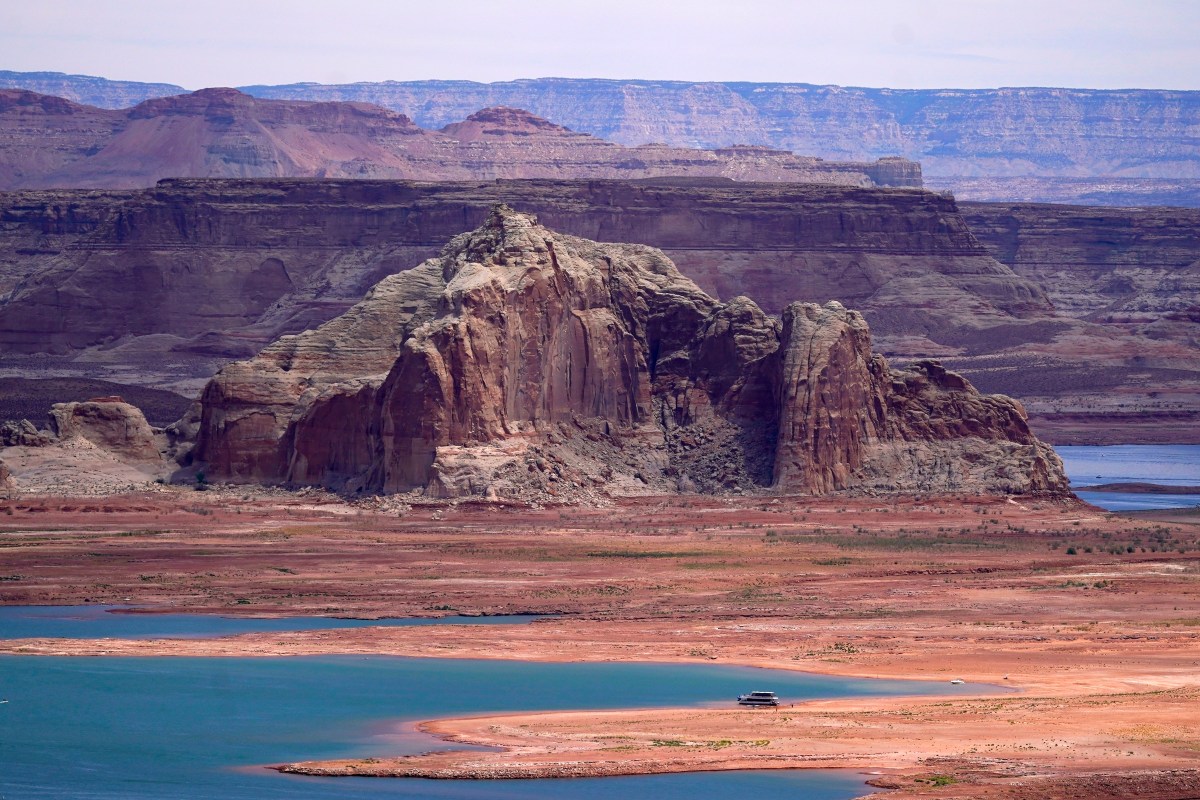
The issues around water are vast, interconnected and often exasperated by the drought in the West. READ MORE — Pauly Denetclaw, ICT
SUPPORT INDIGENOUS JOURNALISM. CONTRIBUTE TODAY.
Sign up here to get ICT’s newsletter
Nicole Horseherder, co-founder, Tó Nizhóní Ání, or Sacred Water Speaks, and Colette Pichon Battle, co-founder of Taproot Earth and former executive director of the Gulf Coast Center for Law & Policy, were named Wednesday as winners of the 28th Heinz Awards for the Environment. Each will receive an unrestricted cash award of $250,000.
Horseherder is an energy justice leader working to protect the water, air and landscapes of the Navajo Nation and position the region to transition to and produce renewable energy. She is co-founder and executive director of the nonprofit Tó Nizhóní Ání, which works to protect the aquifers, streams and land of Black Mesa, Arizona, from the impact of decades of coal extraction.
“It was quite a surprise,” she told the ICT Newscast with Aliyah Chavez on Thursday. “We fought hard to get mining, the mining company and the associated coal plant off of Navajo water. It was very intense and it was an effort that took a number of years to finally achieve. And we did it.”
She said the industrialization of Navajo water is particularly challenging because of the high desert climate, producing roughly 8 inches of rainfall per year.
“We don’t have rivers and streams up here on Black Mesa. We rely completely on the groundwater and the rainwater. So when mining comes in and taps into the groundwater and starts using excessive amounts and we lose our springs and our seeps, the people naturally will rise up and defend the water source,” she said. READ MORE— Mark Trahant, ICT
WARNING: This story contains disturbing details about residential and boarding schools. If you are feeling triggered, here is a resource list for trauma responses from the National Native American Boarding School Healing Coalition in the U.S. In Canada, the National Indian Residential School Crisis Hotline can be reached at 1-866-925-4419.
Edward Spott will not make it home to his Puyallup family just yet.
The 16-year-old Spott, who died on April 18, 1896, about 18 months after arriving at the Carlisle Indian Industrial School in Pennsylvania, was set to be returned home this month to his tribe and family in Washington state.
But the remains disinterred from what had been identified as Spott’s grave turned out to be that of an unidentified young woman 16-22 years of age, according to the federal Office of Army Cemeteries, which has been handling the latest disinterments from Carlisle.
The woman’s remains were re-buried in a ceremony on Saturday, Sept. 15, with assistance from the Puyallup family, and work is now underway to identify her, officials said.
“The Army is truly saddened we were unable to return Eddie to his family this year,” said Karen Durham-Aguilera, executive director of the Office of Army Cemeteries and Arlington National Cemetery.
ICT reached out to the Puyallup tribe but has not yet received comment about the misidentification.
It’s not the first time officials have discovered that graves at Carlisle were misidentified. The remains of former student Wade Ayres were set to be repatriated to the Catawba Indian Nation of South Carolina last year but officials discovered the remains in the grave were those of an unidentified young woman. READ MORE — Dianna Hunt and Stewart Huntington, ICT
WASHINGTON — A bill to preserve the site of the Wounded Knee massacre — one of the deadliest massacres in U.S. history — cleared the U.S. House of Representatives on Wednesday.
The Wounded Knee Massacre Memorial and Sacred Site Act, introduced by Republican U.S. Rep. Dusty Johnson of South Dakota in May, passed the House by voice vote. The Senate is considering companion legislation.
More than 200 Native Americans — including children and elderly people — were killed at Wounded Knee in 1890. The bloodshed marked a seminal moment in the frontier battles the U.S. Army waged against tribes.
The Oglala Sioux and Cheyenne River Sioux Tribes joined together last year to purchase about 40 acres around the Wounded Knee National Historic Landmark in South Dakota to ensure the area was preserved as a sacred site. Leaders of both tribes testified in support of the House bill, which would put federal protections on the land on the Pine Ridge Indian Reservation.
Oglala Sioux Tribe President Frank Star Comes Out did not immediately return a phone message seeking comment on the bill’s passage. In a previous statement, he said: “We must remember the sacrifices our ancestors have suffered for us. What happened at Wounded Knee is a reminder that we as a Oyate (people) have succumbed incredible odds to survive, so we must honor our ancestors by preserving the land for future generations to come.” READ MORE — Associated Press
- GLOBAL INDIGENOUS: Book ban targets ethnic Mongolians: Coverage around the world on Indigenous issues for the week ending Sept. 17, 2023
- Memoir tackles author’s Oklahoma childhood: Indigenous writer Eddie Chuculate’s latest book shares his perspective from Oklahoma childhood
- Ground blessing marks Pine Ridge’s first stand-alone museum: The Maȟpíya Lúta Heritage Center will house, art, language and other elements of Lakota culture
- Proposed atomic experiment set off Alaska land claims movement: Edward Teller: If your mountain is not in the right place, drop us a card
- These Indigenous-led Northern Lights experiences in Canada offer incredible aurora viewing and a deeper cultural connection
- Nisqually Tribe plans to turn traditional homeland into resort, retail development in Lacey
- Kiowa Tribe works to form coalition of Native nations to create own broadband provider

We want your tips, but we also want your feedback. What should we be covering that we’re not? What are we getting wrong? Please let us know. dalton@ictnews.org.