
You can help elevate meaningful stories from Indigenous nations when you support ICT during Arizona Gives Day! ICT is headquartered in Arizona, and covers the Indigenous world across North America. Help us reach our goal to raise $10,000 for reliable, compelling, Indigenous-led journalism in Arizona and beyond.
Kalle Benallie
ICT
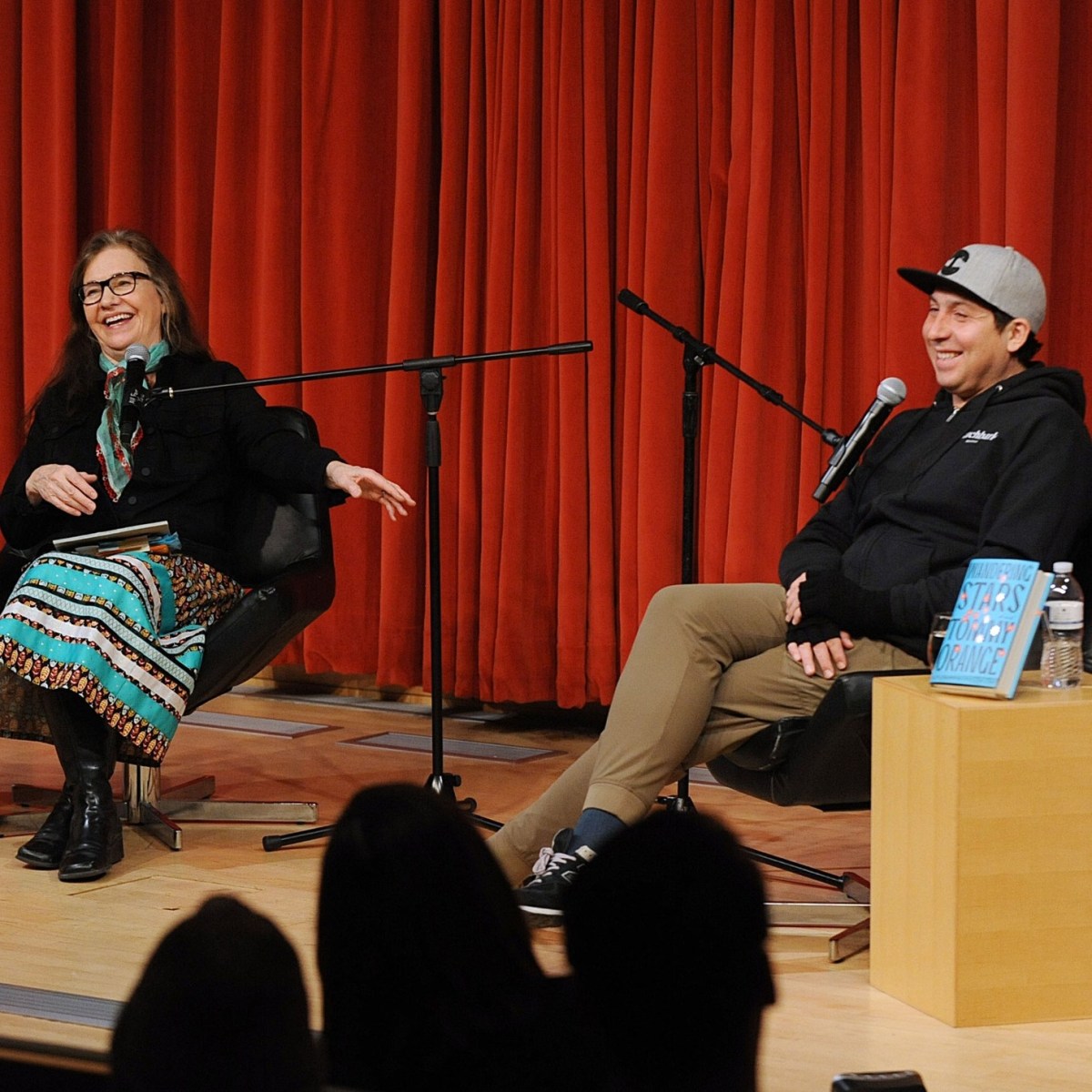
Tommy Orange released his second novel “Wandering Stars” on Feb. 27. ICT spoke with the author to discuss the story’s themes of a family and a friend who experience the effects of institutional violence, rooted in the histories of Indigenous people.
The book follows his critically acclaimed debut novel “There There” that was a 2019 Pulitzer Prize finalist in fiction.
Orange, Cheyenne and Arapaho Tribes of Oklahoma, describes how calling boarding schools “schools” sterilizes what actually happened. There was an active effort to erase Indigenous children’s identities and they were punished if there was resistance, he said.
“I think as Native people, when someone says boarding schools it means something completely different than sending your kid off to the east coast and having them live in a fancy dorm in order to get into a college,” he said.
Fort Marion in Florida, located at Matanzas Bay in St. Augustine, Florida, is one the central locations in “Wandering Stars.” It was used as a prison multiple times imprisoning over 230 Seminoles from November to December 1837. There, Capt. Richard Henry Pratt eradicated the prisoners to dress in army uniforms, cut their hair, gave them ledger books to draw and taught them to read and write. It was the beginning of using education to culturally assimilate Indigenous people.
Orange features Pratt as a character in “Wandering Stars.”
“Art can kind of trick you about thinking about the truth without saying that it’s doing that. That’s part why I like art of all different kinds. There’s this spell that art does on you where you’re in the piece, if you’re reading, watching a movie. It draws you into it and then you experience something and you can be moved, feel as if you experience truth,” he said.
Related:
— Celebrating Welch legacy and the future of Native lit
— Tommy Orange hints about upcoming sequel to ‘There There’
A common recurrence in Orange’s work is how addiction and recovery are written as if they are characters. Orange said people often look at alcoholism as something Native people are innately weak for rather than ask how alcoholism is a symptom of something larger.
“It’s easy to blame the symptom as a moral failing because that means you don’t have to look at the reason why people might be suffering. It’s important not to look away from the reasons why it exists,” he said.
He said there will be healing when you inform others and the country about the extent of oppression Native people endured.
And similarly to ignoring the symptoms of alcoholism, repeating how Native people need to be and are resilient is tiring. It’s a word that Orange felt fatigued from hearing after working almost a decade at the Native American Health Center in Oakland, California.
“Resilience gets sort of put on Native people to make them feel like you’re strong but you’re not ever looking at what are they being resilient from? Like if they got knocked down and they’re getting up or continually knocked down, what is knocking them down? We don’t want to look at that,” Orange said.
Orange also works with the Association on American Indian Affairs on its council of advisors, as allies and ambassadors for Native country. They primarily raise the profile of the association’s work, assist in planning fundraising events and network with individuals who can assist programmatically and financially.
It was actor Shaun Taylor-Corbett, Blackfeet, who voice acted in “There There” and “Wandering Stars,” that connected Orange to the association.
“I actually don’t get a lot of offers. It’s not true that I get a lot of offers,” Orange said.
The path to becoming a writer
Orange said writing is put into this dichotomy of you’re either you’re inspired or you have writer’s block. Or you have a story to tell or you don’t.
However, if there is a kid on the reservation who wants to become a writer, it’s as clear as wanting to refine your basketball skills by practicing daily or diligently playing a musical instrument. He said he knows it well because he used to be an athlete and musician.
“A lot of times writing gets put into this category. Not only do we teach it horribly in schools — the essay and the over emphasis on formula for the essay, the de-emphasis on voice, the natural ability we all have to tell stories and to speak from our own place,” he said.
Orange said writing should also be looked at as something you can practice at and become disciplined in. He advises to look at it in a lens of what would be the equivalent of doing 1,000 free throws per week.
He said he started writing in 2005 and for the next nine years read and wrote until he got into the MFA at the Institute of American Indian Arts.
“If you love somebody’s book you can write out their sentences as practice. You can experiment, there’s a lot of writing exercises available online more than there’s ever been before. You can use writing exercises to practice,” Orange said.

ICT’s Stewart Huntington contributed to this article.
Our stories are worth telling. Our stories are worth sharing. Our stories are worth your support. Contribute $5 or $10 today to help ICT carry out its critical mission. Sign up for ICT’s free newsletter.

