
Kevin Abourezk
ICT
LAWRENCE, Kansas – Sitting before a green screen in a broadcast recording studio, Aurora Roseburr read from a prompter as another student wearing headphones pointed a camera at her. Several other students sat behind a glass panel adjusting sound volumes and chatting about camera angles.
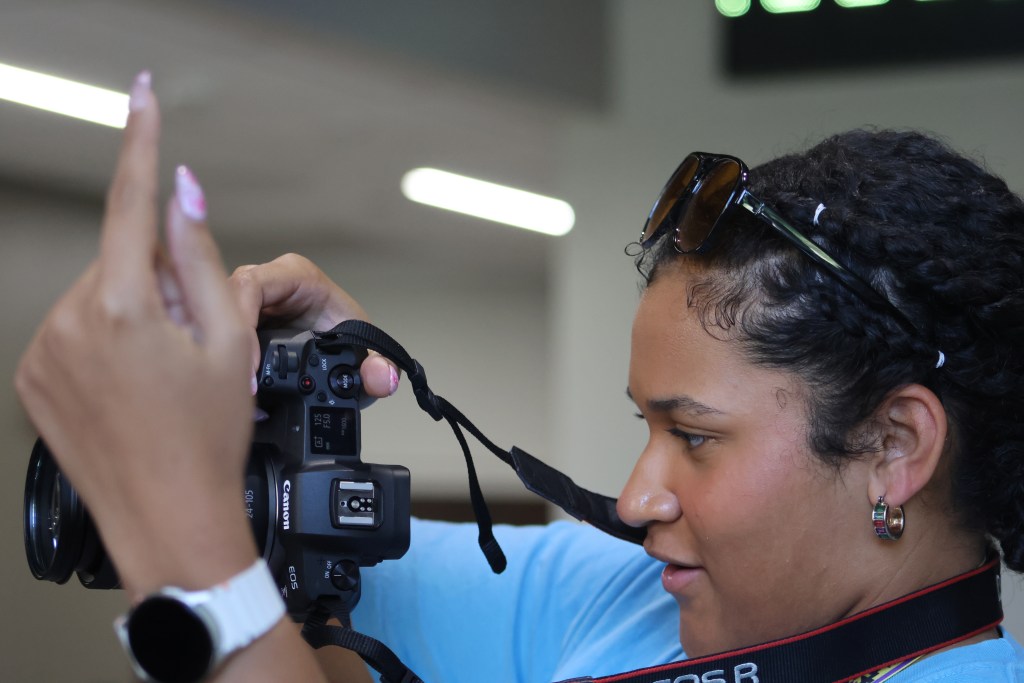
Roseburr, Choctaw Nation of Oklahoma, was participating in the University of Kansas’ Native Storytelling Workshop, a program held July 6-10 that brought Native high school students together to learn from Native media professionals about journalism tools and best practices. She said journalism allows her to look at the world from a different lens – specifically a camera lens.
“When you’re at this workshop specifically and you’re trying to find different things, you get to take that step back and look at things from a different eye,” she said.
It was the 17-year-old’s third time participating in the five-year-old workshop and organizers celebrated their largest class of students and instructors ever. Twenty-two students from as far away as Portland, Oregon, and Alaska learned from eight Indigenous radio, television and digital news journalists, as well as the workshop’s co-directors, KU journalism professors Melissa Greene-Blye and Rebekka Schlichting.
Greene-Blye, Miami Tribe of Oklahoma, said students learned from instructors about creating podcasts, shooting photos, producing broadcast segments, creating social media posts, and writing.
“If we can get them young to think about the skills, maybe they’ll think about it as a major and then maybe it’ll transition into a career space for them,” she said. “Telling our stories is our right, and how those stories are told matters. There are correct ways, therefore incorrect ways of doing that, and unfortunately, for too long it’s been done badly outside of our communities.”
She said students make connections with other students and instructors – and those connections often persist long after the workshop. Her daughter, a graduate of the workshop, maintains friendships with several students she met there in 2023 and 2024.
“I hope that they then realize there are adults out there that they can reach out to and ask questions, and if nothing else, they are getting a core set of skills. They’re comfortable approaching somebody and asking a question,” Greene-Blye said.

Sunnie R. Clahchischiligi, Diné and Indigenous affairs editor at High Country News, serves as president of the Indigenous Journalists Association Board of Directors. She attended and spoke at this year’s workshop.
The workshop takes a hand-on approach so students learn journalism skills by practicing those skills. They also learn how to keep up with the often fast pace of professional storytelling, Clahchischiligi said. And despite the pace, she said, many of the workshop’s instructors were surprised at how adept the students were in telling stories, and she attributed that in part to their experience with social media in their personal lives.
“They know what they’re doing,” she said. “It’s just kind of giving them the guard rails … showing them how to use it in a journalistic format or approach.”
She said instructors sought to teach students that they’re already storytellers and that they can use those skills – if they choose – to relate Indigenous stories from their communities to a broader audience.
“No one can tell that story better than the people who are from that community and familiar with it,” Clahchischiligi said. “It’s just a way of kind of continuing on and ensuring that those stories are preserved, that they exist and that they’re coming from within the communities themselves.”
For Schlichting, Iowa Tribe of Kansas and Nebraska, returning to her alma mater – KU – and being able to teach Native students both as an assistant professor and now as the co-director of the Native student journalism workshop fulfills many of her career and personal goals. She said it especially makes her happy to see students having fun.
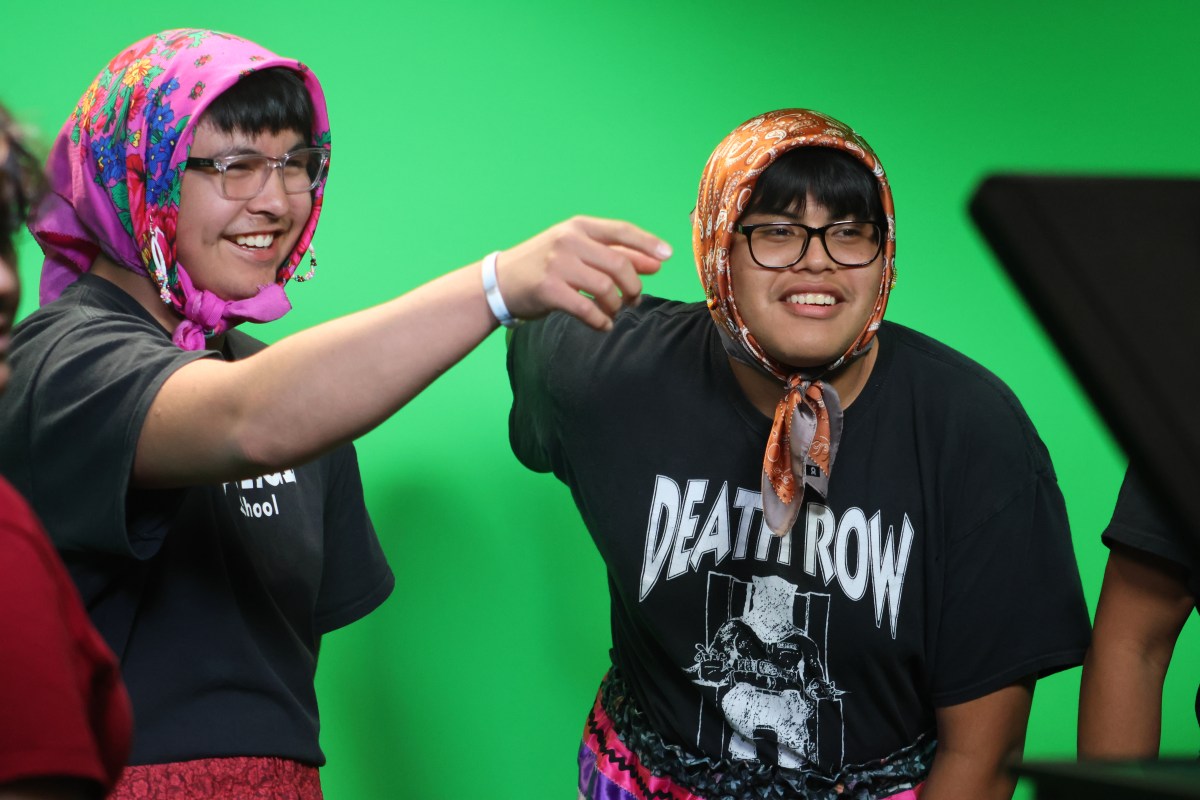
“Another huge joy of mine is just hearing the kids laugh and joke around and say hilarious things,” she said. “One of the kids … was taking a photo of another student and said, ‘Now look at me and smile like creator’s choosing you for a round dance.’”
She said she hopes to be able to recruit more students in the coming years. The workshop actually can afford to accommodate as many as 40 students but struggles each year to attract that many students.
“We need more students,” Schlichting said. “We need more storytellers in our communities.”
Jill-Marie Gavin, Confederated Tribes of the Umatilla Indian Reservation, served as a social media consultant at the workshop. As the public information specialist for the Columbia River Inter-Tribal Fish Commission, Gavin knows how important training future Native journalists is to reclaiming Indigenous stories and uplifting Indigenous voices.
“We are born to tell our stories,” she said. “We tell our stories through weaving, through beading, through singing, through prayer, and this is just another medium that I hope that they’ll be able to take advantage of and use to express themselves but also to be able to bring some awareness to some of the things that we go through as Indigenous people that maybe are not as pleasant and are hard times, but also call attention to the wonderful things about who we are as a culture.”
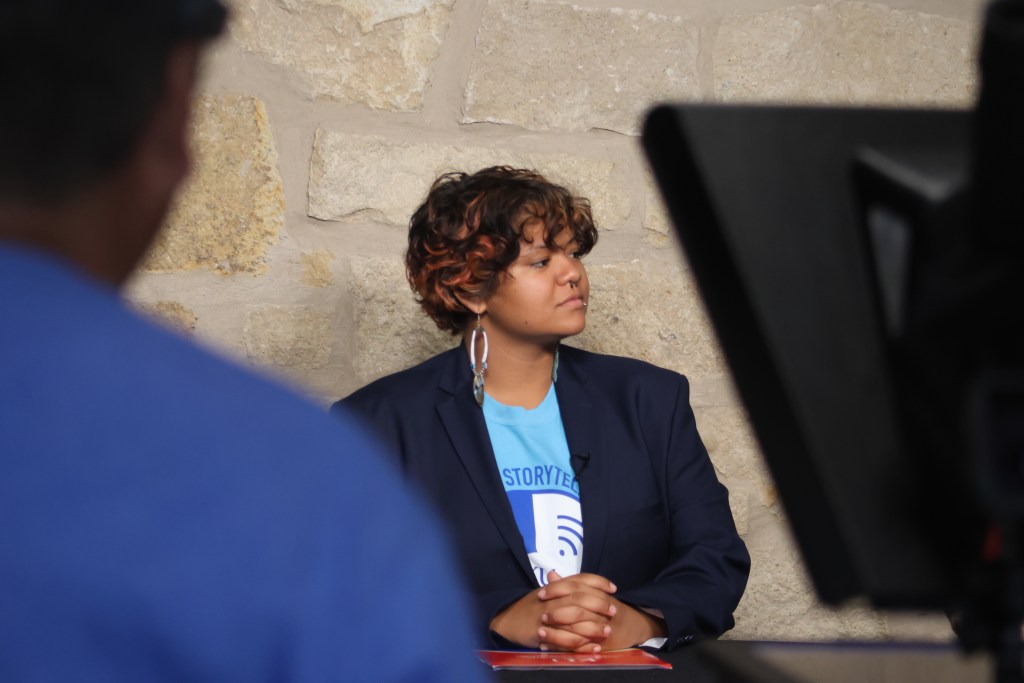
Gavin’s daughter, Penelope Gavin-Harvey, took part in this year’s workshop. The 17-year-old Confederated Tribes of the Umatilla Indian Reservation woman said she returned to the workshop for a second year to learn more about journalism and connect to more students and instructors.
“Patience is the biggest thing that I’ve learned since being here,” she said. “I learned that even though sometimes things can be difficult and you don’t necessarily get along with everybody, patience and understanding and compassion is key.”
This year, she spent most of her time learning about news broadcasting and even filmed a satirical commercial for “Bepsi” for a broadcast segment. Gavin-Harvey said she is considering becoming a professional photographer and storyteller – like her mother.
“The workshop is a beautiful space,” she said. “It is very open and very kind, and it can teach you a lot about yourself and others and who you want to be when you grow up and the roads you can take, and it’s especially important for a young Native person to be able to understand who they are.”

