Joaqlin Estus
ICT
ANCHORAGE, AK – U.S. Secretary of Transportation Pete Buttigieg says he will long remember his first trip to Alaska, which began with a meeting on Aug. 14 with tribal leaders in Kotzebue, just north of the Arctic Circle.
Buttigieg said the trip there and the following tour of the coastal town demonstrated some of the things that make Alaska unique, “the physical proportions of Alaska, the fact that it took two hours of flying just to get there from Anchorage. The unique conditions and elements that affect everyday life, the ways of life that people have been practicing here for centuries or for millennia. And the fact that a one-size-fits-all federal policy doesn’t compute in a place like Alaska, especially for Native communities.”
In Kotzebue, Buttigieg met with local and regional leaders and state officials to describe the $108 billion available under the Bipartisan Infrastructure Law and to discuss transportation issues. He then joined community members for a potluck, where he accepted an invitation to dance with Inupiaq dancers.
“It was just a wonderful, hospitable experience with the people there,” Buttigieg said.
Buttigieg said the trip highlighted to him the importance of the transportation department’s support for Indian Country.
“We recognize as part of the government-to-government relationship, the responsibility and the opportunity that we have, especially in this moment with historic infrastructure funding, meeting Indian Country at many places where there is historic infrastructure need. We are here not just to offer help, but to listen and try to best understand how to be good partners.”
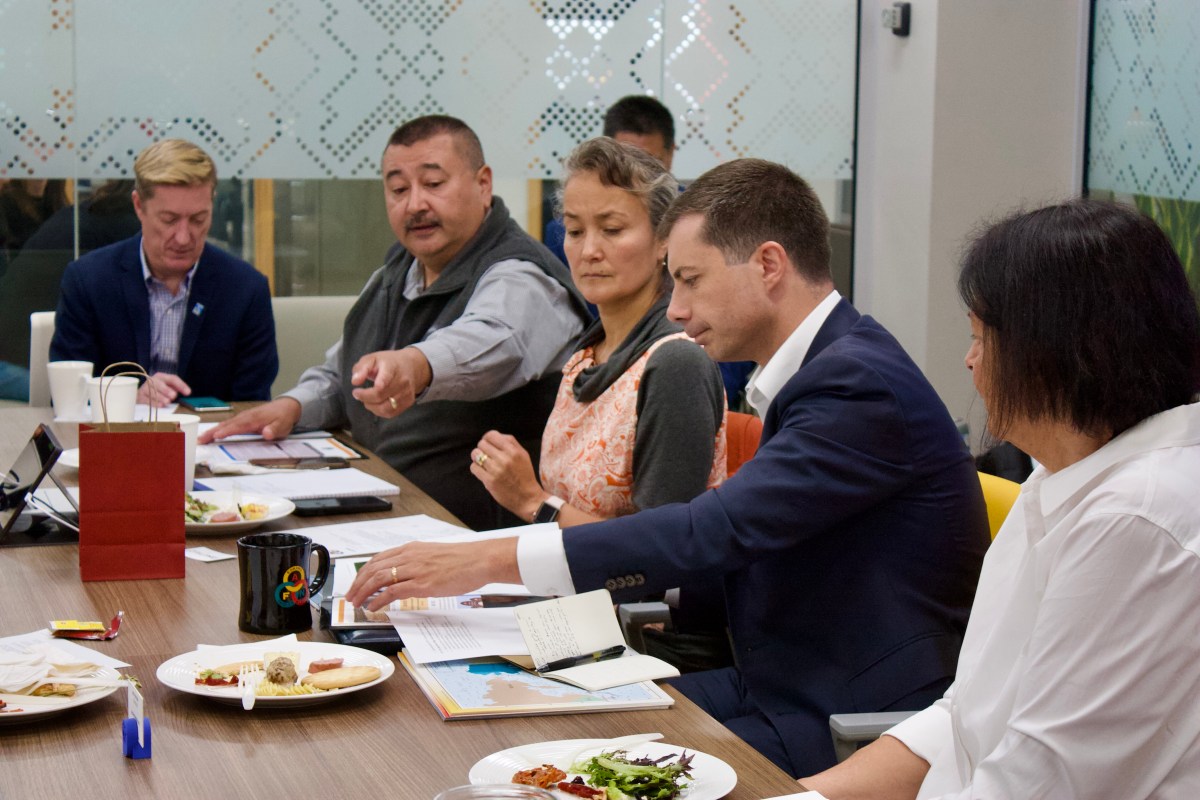
In Anchorage, Buttigieg heard from representatives of Native tribes, villages and Native corporations at a roundtable in the offices of the Alaska Federation of Natives. The federation’s president Julie Kitka, Chugach, according to a prepared statement, “emphasized the importance of reliable, affordable, and safe transportation infrastructure for accessing medical care, education, and economic opportunities in our communities.”
SUPPORT INDIGENOUS JOURNALISM. CONTRIBUTE TODAY.
“We appreciate Secretary Buttigieg’s commitment to meeting with us and listening to our concerns,” Kitka was quoted in the statement. “We appreciate Secretary Buttigieg’s dedication to working with us to improve access to essential resources and opportunities in Alaska, and we look forward to a successful collaboration.”
Buttigieg noted that some tribes, communities, or tribal entities have a lot of “batting practice,” when it comes to transportation grants while others are new to federal grants.
“We want to make sure we’re good partners. Whether this is your hundredth time dealing with the DOT or your very first,” he said.
Buttigieg brought several senior colleagues on the trip to ”follow up on some of these distinctive and unique needs. Even just making sure we do a good job of charting the difference between land-based tribes and tribes in the lower 48, and how they’re structured and the role of Native corporations and the structure for Alaskan tribes and their regional groupings here in Alaska.”
Buttigieg traveled to Kotzebue with Alaska’s U.S. Senator Dan Sullivan, a Republican, and next goes to Haines, in southeast Alaska, with Alaska’s senior U.S. Senator Lisa Murkowski, also a Republican. Buttigieg noted that when the infrastructure bill was being worked on, Alaska’s Congressional delegation included the late Rep. Don Young (whose seat is now filled by Mary Peltola, a Democrat). He said his understanding from Sen. Sullivan is that Alaska’s all-Republican delegation crossed party lines to vote for the Infrastructure bill.
“One great thing about a lot of infrastructure issues and a lot of tribal issues is they’re not necessarily predictable on partisan lines,” Buttigieg said.
Assistant Secretary Arlando Teller, Navajo, who accompanied Buttigieg, said he was pleased to announce that the Secretary last week signed the department’s updated tribal consultation policy, which had been unchanged for 22 years.
“It took some time to host consultation sessions, adjudicate the comments, and then run it through the internal system. Last week the Secretary did sign off on it, so it’s been updated, which is great,” Teller said.
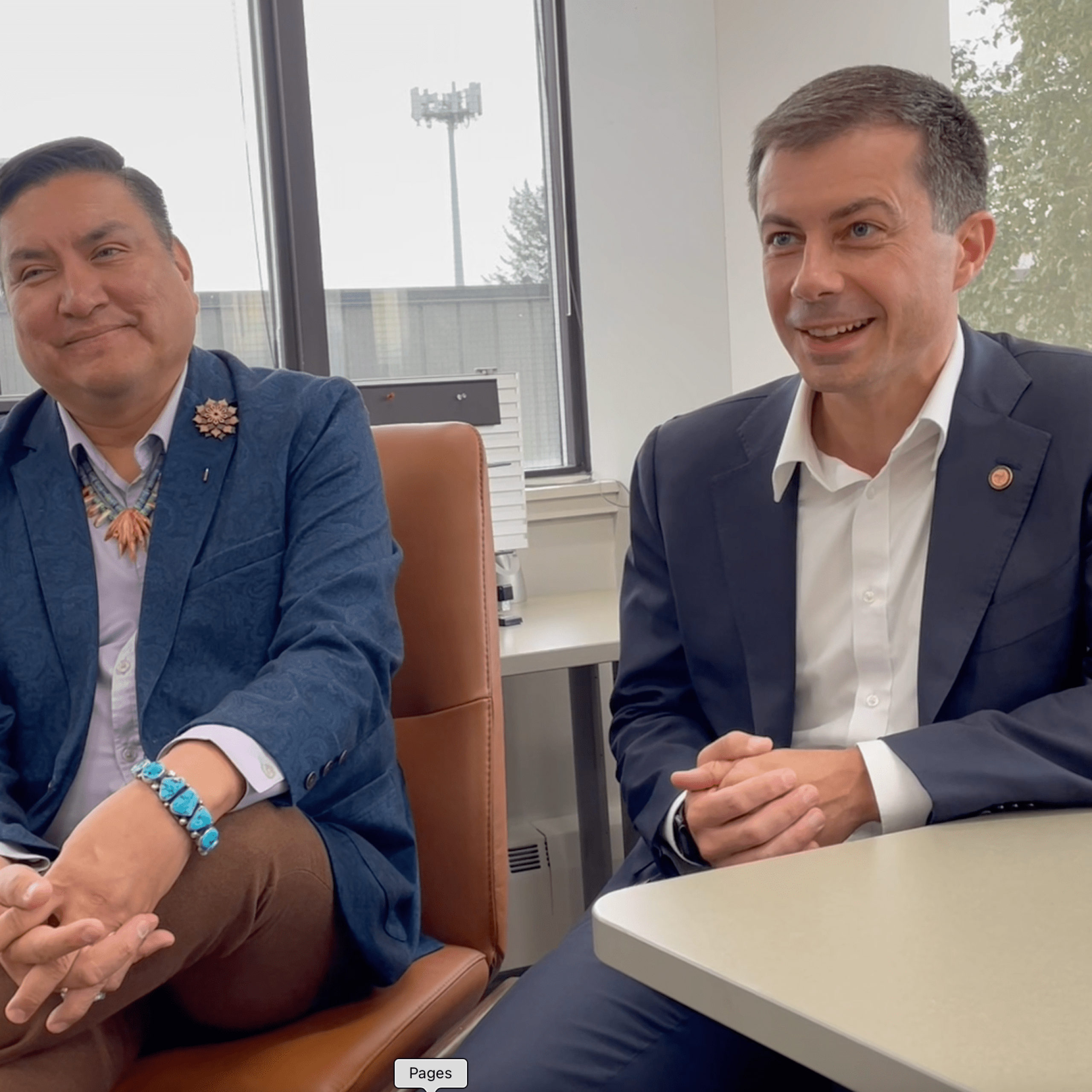
“And at the same time we started the Native Hawaiian Transportation Consultation Policy, first of its kind for our brothers and sisters on the Hawaiian Islands. The projected finalization of the Native Hawaiian consultation policy would be in 2025,” he said.
The consultation policy defines the Indigenous entities that are parties to consultation and “it defines the government-to-government consultation. It will help streamline the conversation between tribal leadership and the USDOT,” Teller said.
He added that he’s the department’s first Assistant Secretary for Tribal Affairs in the Office of Tribal Government Affairs. And that, he said, came about because of the staunch tribal leadership that long advocated for the opportunity to have a seat at the table.
“I sincerely appreciate those leaders such as Ron Allen, Jerry Hope, Mary Beth Clark, and there’s more that have been really pushing administrations to have a seat at the table when it comes to transportation. And it’s because of their leadership, I’m standing on their shoulders,” Teller said.
He encourages tribes to “submit, submit, submit for these millions of dollars that are out there for infrastructure. If it’s a road, if it’s a bridge, if it’s an airport, if it’s a port, if it’s a transit system, if it’s for rail and a school bus route, please submit a grant.”
He pointed to the importance of roads to kids getting a good education, the need for bridge inspections and rebuilds, and called tribal airports that deliver loved ones to medical specialists, “sleeping giants,” in importance.
Buttigieg’s team on Aug. 15 also announced the award of $196 million to fix or remove barriers to improve fish passage in culverts.
Sign up for ICT’s free newsletter.
“Outdated culverts and other infrastructure can cause roads to flood and severely restrict or altogether block fish passage, which is key to the health of fish runs and important to commercial and recreational fishing, and the health of tribal communities,” the department said in a prepared statement.
“In communities across the country where people depend on fishing for their livelihoods, culverts are vital infrastructure for ensuring fish passage,” Buttigieg was quoted in the statement. “Through this investment, we are repairing or removing hundreds of culverts nationwide, protecting jobs, mitigating the risk of flooding, and strengthening local economies.”
“The grants announced today will improve approximately 550 miles of stream habitat, often in the watersheds that support iconic fish runs in ecosystems including Yakutat Bay, the Puget Sound, the Columbia River, the Rogue River, the Chesapeake Bay, and Plymouth Harbor. Several fish species listed under the federal Endangered Species Act are expected to benefit from access to pristine habitat as a result of restored passage,” read the statement.
The department said the 59 awards announced Aug. 15 are located across 10 states and include all 14 tribal governments that applied. Buttigieg will next turn his attention to the ferry system that links southeast Alaska communities otherwise only accessible by plane or boat. The Alaska Marine Highway System recently was awarded a $200 million federal grant.

Our stories are worth telling. Our stories are worth sharing. Our stories are worth your support. Contribute $5 or $10 today to help ICT carry out its critical mission. Sign up for ICT’s free newsletter.