
Amelia Schafer
ICT
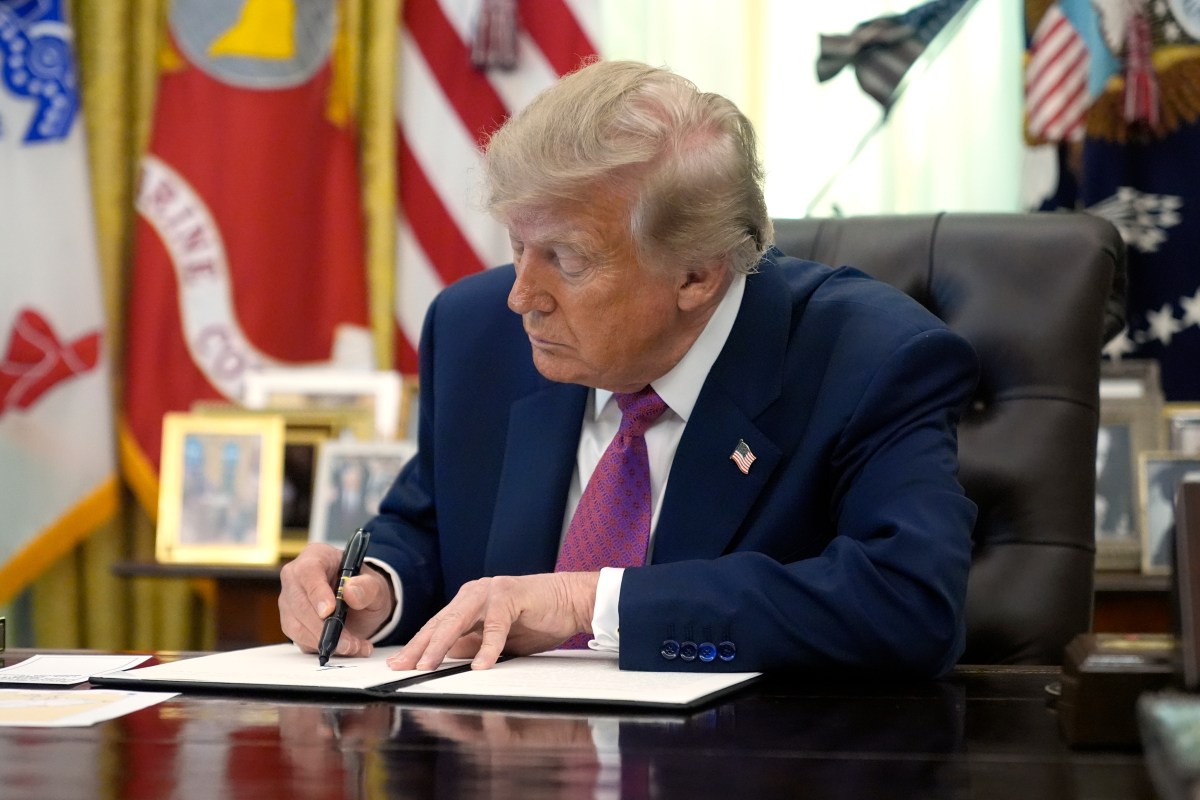
Amid an escalating trade war with Canada, President Donald Trump signed a declaration Thursday to rename Lake Ontario to “Lake America.” Canadian leaders and Indigenous voices spoke out against the idea.
The declaration ignores the Indigenous history crucial to the region and Lake Ontario name’s roots in the Haudenosaunee language family.
“It’s sufficient to say it’s an Indigenous Iroquoian word,” Scott Manning Stevens, who is Akwesasne Mohawk and associate professor of Native American and Indigenous studies at Syracuse University, told ICT.
Sources vary on exactly what sub-language of the larger Haudenosaunee family the word comes from, but agree that the word Ontario is derived from an anglicized version of a word from the Haudenosaunee language family.
According to the Chiefs of Ontario, a coalition of leaders from the First Nations in Ontario, the name Ontario comes from the Mohawk word Oniatari:io (or Kanadario) meaning “beautiful lake” or “sparkling water”.
Others claim the word is of Wendat/Huron origin, a language also part of the Haudenosaunee language family.
“Ontario comes from the Wendat word for lake,” Rebecca ‘Beci’ Wright, Wyandotte and a cultural researcher at the Wyandotte Nation Cultural Center told ICT. “Wendat is the language of our cousins the Wendat Nation who are located in Quebec.”
The original word likely would have been yǫtáreʔ‘io, or Ontari’io anglicized, Wright said.
In Waⁿdat and Wendat, yǫtáreʔ refers to “lake”, Richard Zane Smith, a Wyandotte artist and linguist, told ICT. In Wendat, ‘io means great, Wright said.
“I believe Trump is being dumb,” Smith told ICT. “He has no love for our mother earth. He typifies the conquest spirit of Andrew Jackson. Erase the Indigenous peoples, mine and pillage ‘til resources are gone and then move on.”
The executive order makes no mention of Indigenous people and claims that the United States has done more to protect the Great Lakes than Canada.
“The Lake has long been an integral asset to American exploration, settlement, commerce, and defense,” the executive order reads. “From the colonial period through the early republic, the Lake served as a critical artery for American trade, commerce, and military logistics…”
The province of Ontario was named after the lake, not the other way around, according to the Canadian Government, which acknowledged the word’s origins.
“In recognition of this flourishing economic resource and its critical importance to our Nation’s economy and its people, I am directing that the Lake officially be renamed as Lake America,” the executive order reads.
The executive order directs the Department of the Interior to update the lake’s name in the United States’ geographic naming service.
Canadian Prime Minister Mark Carney rejected the move, invoking the lake’s Indigenous roots and noting that the name predates both the Canadian Confederation and the U.S. Declaration of Independence.
“Canadians also know that naming reality means calling it Lake Ontario — then, now and always,” he wrote.
Nova Scotia Premier Tim Houston dismissed Trump’s move in a social media post, writing: “We’re into some real foolishness now. It’s Lake Ontario, buddy.”
Trump first spoke about the idea of changing the lake’s name after the United States announced a 50 percent tariff on $20 billion worth of Canadian goods over the weekend.
Trade negotiations between the United States and Canada have continued to deteriorate since last year. Trump has also suggested that Canada become the 51st state.
Canada responded with a retaliatory tariff on $20 billion worth of American goods.
Last year, First Nations artists told ICT they were struggling to adapt to the new tariffs.
This is the second time Trump has attempted to rename an international body of water. In January 2025, Trump signed an executive order to rename the Gulf of Mexico to the “Gulf of America”.
The Associated Press contributed to this report

