
ICT Staff
Native leaders recoiled Tuesday after President Donald Trump sharply reduced the size of two national monuments in Utah, undoing protections established by his Democratic predecessors on public lands that are sacred among many Native Americans.
“Indigenous people have fought for these sacred lands for generations,” former Interior Secretary Deb Haaland said in a statement. “The Trump administration is once again handing our sacred homelands and public lands over to billionaires and corporations.
Davina Smith-Idjesa, a citizen of the Navajo Nation and co-chair of the Bears Ears Inter-Tribal Coalition, said tribal leaders had braced for Monday’s reduction since Trump was elected to a second term. She said it was “heartbreaking” and accused federal officials of sidestepping their legal responsibility to consult with tribal nations that would be impacted.
“From a Navajo perspective, Bears Ears is not simply a piece of federal public land,” Smith-Idjesa said. “This is a living cultural site that holds our histories, our ceremonies, our traditional foods and medicines and our ancestors’ footprints.”
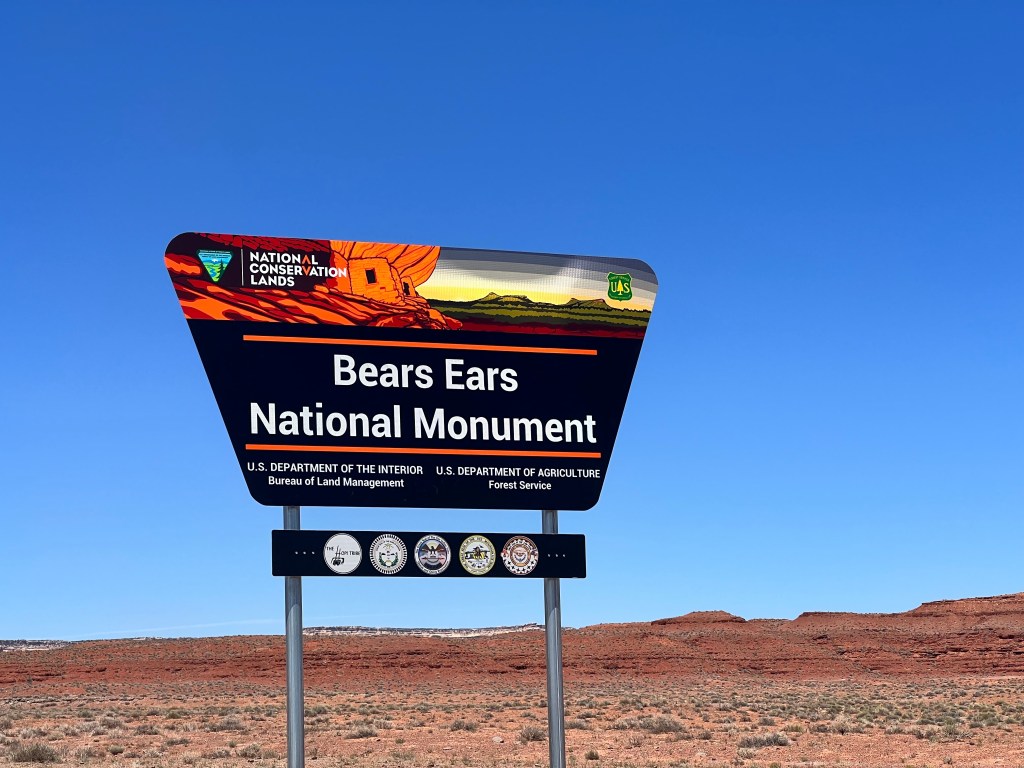
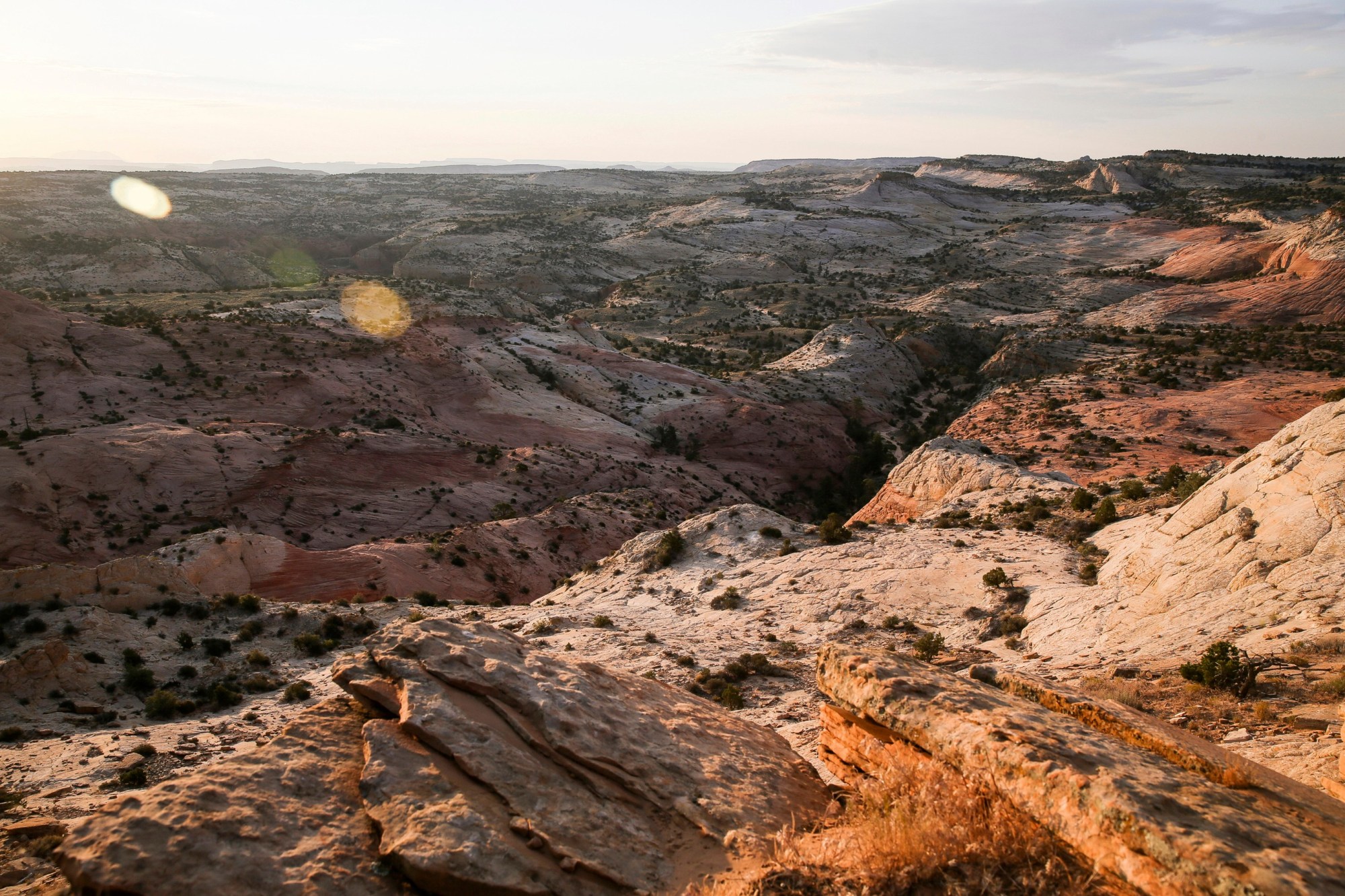
Bears Ears and Grand Staircase-Escalante national monuments in southern Utah have ancient cliff dwellings, petroglyphs and scenic canyons, as well as coal and uranium deposits that state officials want made available for development.
“These landscapes, they’re very integral to our lifeways,” said Emerson Hackford, 20 years old and a representative with the Bears Ears Youth Council. “[They] build teachings that are very specific to that landscape, and they’re very important to us culturally and spiritually… There’s hundreds of thousands of sacred sites out there.”
The Bears Ears Youth Council was formed in 2025 by the larger inter-tribal Bears Ears Coalition.
“When I saw the reductions, I was deeply disheartened,” Hackford, who is Northern Ute, told ICT. “To me this feels as an evident truth that Indigenous voices are being erased from the fight, that what matters to us is not being amplified. That our spirituality, our cultural practices, these things that are super integral to our lifeways. It’s just a lot of loss and a lot of grievance that tribal communities are feeling right now that are connected to the monument.”
Hackford said he fears the reductions will impact Indigenous communities abilities to pray and gather at these sacred sites.
“It’s not so much that I feel anger; it’s that I feel a sense of mourning and loss for that landscape,” Hackford said. “I’m scared that I’ll never be able to get to go out there and speak my prayers in my language again.”
Trump, a Republican, issued proclamations under the Antiquities Act to reduce their size by about 90 percent each. He took similar actions during his first term, but those were reversed by President Joe Biden, a Democrat.
The latest move comes as Trump and other Republicans have drastically reshaped the management of vast taxpayer-owned lands concentrated in Western states. Trump administration officials and congressional Republicans have sought to expand drilling, mining and logging on public lands, while removing protections for imperiled species and rolling back rules for conservation.
“They took the land from the people quite honestly,” Trump said at a signing event at the White House Monday. “We’re giving it back.”
The move completely blindsided tribal leaders, said Anthony Sanchez Jr. who sits on the Pueblo of Zuni Tribal Council and serves as the Bears Ears Commission Co-Chair.
“A lot of people are in shock at this time,” Sanchez Jr. told ICT. “I think a lot of it hasn’t already set in as to what’s actually starting there.”
Sanchez Jr. said the Bears Ears Coalition already was scheduled to convene at the monument for a regularly scheduled meeting Tuesday, but will now use the time to focus on understanding the significant reduction of protected land.
“When you look at the reduction of Bears Ears, it represents another chapter in the ongoing struggle we have to protect our Indigenous lands, cultural resources, and the sovereignty of tribal nations. And for us, we remain deeply concerned by those actions that diminish the significant places that you know that hold profound cultural, spiritual, historical meaning to us as A:shiwi people, but also other tribal communities.”
Tribal leaders feared something was coming, but couldn’t have anticipated just how significantly the lands would be reduced, Sanchez Jr. said.
“A 90 percent reduction in all these lands is just- it’s uncalled for, especially when it’s involving Bears Ears and Grand Staircase,” Sanchez Jr. said. “That’s a huge portion that was chunked out, and with our ancestral sites, they spread all over the area. So, culturally and spiritually connected to the area, it’s a huge concern for us.”
President Bill Clinton, a Democrat, established Grand Staircase-Escalante National Monument in 1996, and President Barack Obama, also a Democrat, created Bears Ears National Monument in 2016 under the Antiquities Act. The 1906 law gives presidents the powers to protect sites considered historic, archaeologically significant or culturally important.
The Navajo Nation Historic Preservation Department said the back and forth political changes every administration wastes resources.
“Grand Staircase-Escalante has already been through too many rounds of planning, litigation, boundary changes, and political reversals,” said Erik Stanfield, an anthropologist with the Navajo Nation Historic Preservation Department. “Every time the Monument is cut apart and put back together, proper land management gets delayed, public resources are wasted, and Tribes are asked to start over after years of consultation. We need stewardship and consistency, not reactionary politics.”
Voices in Congress also spoke against the reduction.
Arizona Sen. Ruben Gallego, Democrat, said in a statement, “[Monday’s] announcement is further proof that President Trump does not care about upholding our trust responsibilities or engaging in meaningful Tribal consultation. He’d rather sell off these areas of irreplaceable cultural and sacred heritage to the highest bidder.”
Gallego sits on the Senate Energy and Natural Resources Committee.
For tribal leaders and advocates, this is just the beginning.
“I think no matter what happens, we’ll continue to fight against policies and decisions that fail to honor the voices and knowledge of our cultural heritage as Indigenous people,” Sanchez Jr. said. “I think too often these actions reflect the belief that our history and traditions and sacred landscapes are somehow less important than competing interests, and we reject that notion. I said because this isn’t the first fight that we’ve been in when it came to our cultural protection, and you know, despite these challenges and direct setbacks, even as a community, we advocate to protect those areas.”
Hackford said the youth council is planning to work with coalition staffers on outreach programs and opportunities.
‘Big day for Utah’
Utah officials had long fought against the monument designations and argued that the state should be in charge of controlling its own lands. Trump in his first term reduced their size, calling their creation a “massive land grab.” Combined they spanned more than 3.2 million acres, an area nearly the size of Connecticut.
Trump reduced them Monday to less than 303,000 acres combined.
That’s a greater reduction than his first term, when he left Grand Staircase Escalante at 1 million acres and Bears Ears at 213,000 acres.
“This is a big day for Utah,” Utah Gov. Spencer Cox as he stood next to Trump at the White House. “These monument designations are supposed to be the smallest area as possible to protect the antiquities.”
Bears Ears was the first national monument created at the request of tribal nations that consider the land sacred. The landscape contains ancestral villages, ceremonial and burial sites and features in some tribes’ creation and migration stories. Its designation honored five tribes in the region — Navajo, Hopi, Zuni, Ute Mountain Ute and Uintah-Ouray Ute.
Home to hundreds of thousands of objects of cultural and scientific significance, Bears Ears is jointly managed by an agreement between tribal nations and federal agencies.
“Being on our national monuments, you can feel the spirit, and you can feel that our ancestors were there,” Hackford told ICT. “When you look at these ancient petroglyphs, when you look at these ancient cliff dwellings and all these ancestral sites, you just feel a sense of belonging, and you know that you that that is your home, and that you always that you will always belong there, and that spirit that is on the on these monuments is good medicine.”
Grand Staircase-Escalante consists of cliffs, canyons, natural arches and archaeological sites, including rock paintings. It holds large coal reserves, while the Bears Ears area has uranium.
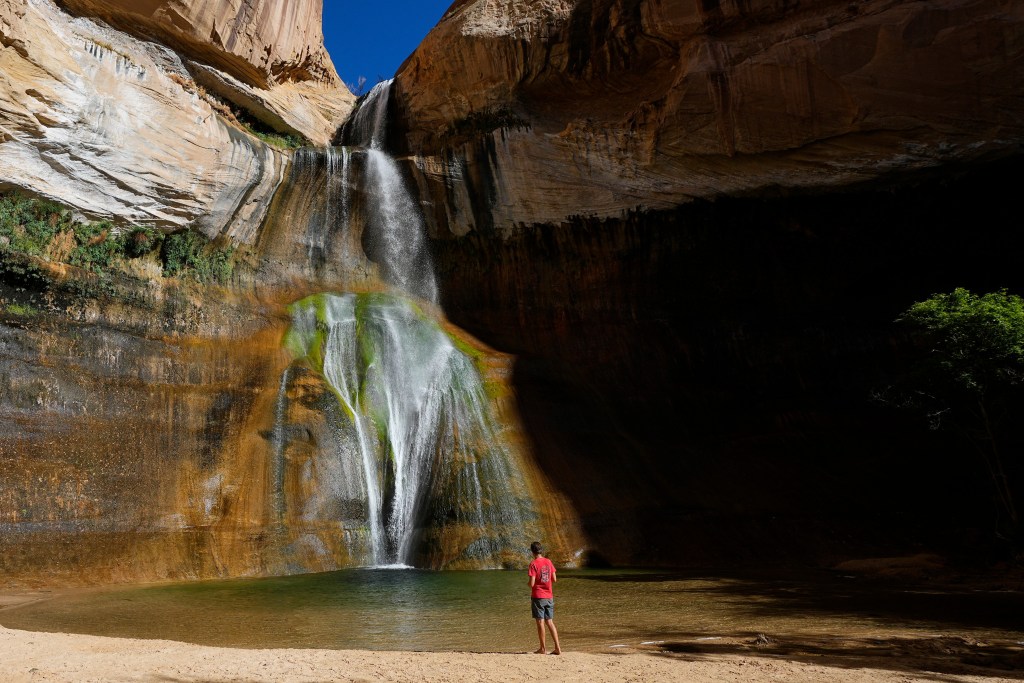
The national monument designation provides sweeping protections not just for significant geological features or artifacts but also for the surrounding landscape, banning drilling, mining and new construction nearby. Proponents of Trump’s move to downsize say the protective boundaries stretch too far and hinder mining for critical minerals.
Trump asserted Monday that people can not hunt, fish or “virtually not even walk” on the monuments. That’s false: Hunting, fishing, camping and other recreation are permitted under state and federal regulations, said Steve Bloch, legal director for the Southern Utah Wilderness Alliance, a conservation group.
Biden designated or expanded more than a dozen monuments and had a goal to conserve at least 30 percent of U.S. lands and waters by 2030.
Trump’s policies are largely the opposite: He wants to tap into the natural resource wealth of federal lands that total more than 100,000 square miles and offshore areas under federal control, such as in the Gulf of Mexico and off Alaska.
That’s drawn backlash from Democrats who warn of the wholesale disposal of treasured landscapes for commercial gain.
“Today’s executive action is another chapter in this administration’s war on the West,” Democratic Sen. Martin Heinrich of New Mexico said Monday. He added that Trump was “turning the Antiquities Act on its head.”
Matthew L. Campbell, deputy director of the Native American Rights Fund, said while the Antiquities Act allows presidents to declare public lands as national monuments, it doesn’t allow presidents to remove that federal status from lands previously designated as national monuments by former presidents.
“We’re really disappointed about the decision to revoke Bears Ears that happened yesterday,” he said. “I think there’s a sense of almost like grief. What was different this time is the president has purported to terminate the Bears Ears Commission, which is highly disrespectful and concerning, particularly because that was done without consultation.”
Former President Barack Obama created the commission in order to give tribes a greater role in managing Bears Ears. NARF represents three tribes within the Bears Ears Inter-Tribal Coalition – the Hopi, Ute Mountain Ute and Pueblo of Zuni tribes.
Campbell said the 10th Circuit of Appeals recently issued a decision in a lawsuit filed by the state of Utah, which sued the Biden Administration for restoring the Bears Ears national monument designation following Trump’s decision to rescind that designation during his first term in office. The court of appeals ruled that the lawsuit could move forward, Campbell said.
He said Bears Ears and Grand Staircase-Escalante are important sites for religious ceremonies by tribal people, as well as a place for them to find medicinal plants and hunt and fish for subsistence.
“This is part of the core of our mission here is to protect these types of places, these sacred, sacred places that are so important to our people for our culture, our history,” Campbell said.
Land sale proposals fell flat
Trump Interior Secretary Doug Burgum said last year that federal officials would review and consider redrawing monument boundaries as part of a push to expand U.S. energy production. Often, this growth comes at the expense of the Indigenous communities, Hackford, who’s from the Uintah and Ouray Reservation in north central-Utah, said.
“A lot of Utah lawmakers have been pushing for natural resource extraction,” Hackford said. “There’s this really big push by a lot of our politicians right now, like it’s completely ignoring Indigenous voices in these fights. The White Mesa Ute community has been speaking out for years against nearby uranium mining around Bears Ears National Monument and on the monument, we’ve outlined the dangers that have gotten into the water supplies. There are many people who will not even drink the water in White Mesa. This entirely feels like complete exploitation, and it’s intentional.”
Trump in his current term has used proclamations to lift commercial fishing prohibitions within expansive marine monuments in areas of the Pacific Ocean and in the Atlantic Ocean off the New England coast. Those monuments were created by Democratic and Republican administrations. The effort to boost the fishing industry, which has been challenged in court, marks a dramatic shift in federal policy by prioritizing commercial interests over efforts to allow the fish supply to increase.
Some Republicans have tried to sell or transfer federal lands to states or other entities. Those efforts have largely fallen flat: A push by some GOP lawmakers in the House to sell public lands ran into bipartisan opposition, while another proposal by Sen. Mike Lee of Utah to sell more than 3,200 square miles of federal lands was removed from Republicans’ big tax and spending bill.
The U.S. Supreme Court last year turned back a lawsuit from Utah officials who sought to wrest control of vast areas of public land within the state from the federal government.
The Associated Press contributed to this report.

