
WARNING: This story has photos of caskets and contains disturbing details about residential and boarding schools. If you are feeling triggered, here are healing-informed resources from the National Native American Boarding School Healing Coalition in the U.S. The National Indian Residential School Crisis Hotline in Canada can be reached at 1-866-925-4419 or the Lamathut Crisis Line at 1-800-721-0066. If you’re in Treaty 4 territory, call 306-522-7494.
Charles Fox
Special to ICT
FORT PECK, Montana — Lana Fourstar never forgot the words of her grandmother, Freda Redstone Fourstar.
“My Aunt Christine needs to come home. She should have never been out there. She should have never died out there. She needs to come home. Someday, somebody needs to bring her home.”
Finally, after 135 years, Christine Redstone along with Richard Morgan and Peter Howe were returned to their homeland on Tuesday, Sept. 8, to the Fort Peck Assiniboine and Sioux Tribes.
The three were part of a group that arrived at the Carlisle Indian Industrial School on April 15, 1890, after an 1800-mile journey to arrive at the school. During their time there, all three died of illnesses and were buried in the school cemetery.


On an especially windy day that some believed was the ancestors calling the children home, they completed the final leg of their return through the rolling hills and Badlands of North Dakota, arriving mid-afternoon in northeastern Montana.
At the eastern border of the reservation by the Big Muddy Creek Bridge a caravan of approximately 25 cars waited to welcome and escort the returning children.
Dana Buckles, 17, the great-grandson of Chief Leonard Crow Dog, sang an honor song for the repatriated students.
“It’s hard to know or even imagine what the pain or experiences they went through,” Buckles said while waiting for the group to arrive. “I couldn’t imagine being in their shoes. I’m grateful to live in the time I am today, and to be able to wear my moccasins or learn how to sing Indian. I’m just very grateful our culture’s still here.”
“It would be really difficult to be raised in one way of life, and then be taken away from your people, your families, and be converted to something that you’ve never, ever seen before,” she said.
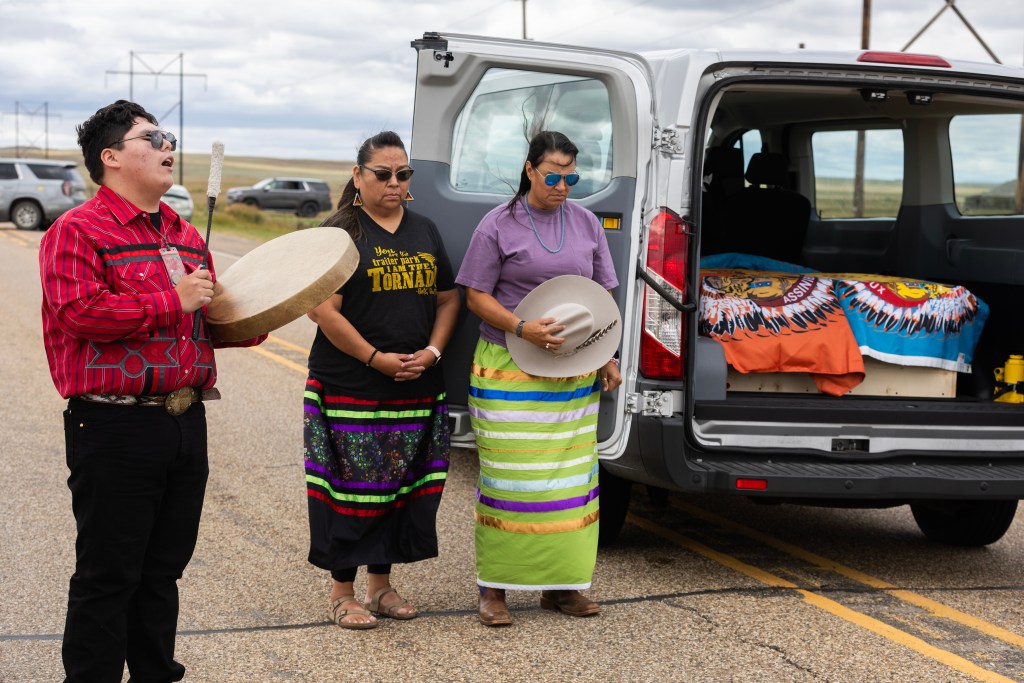
Since Richard Morgan and Peter Howe did not have living relatives, organizers stressed that “the community will become the family,” making sure that no child will come home alone.
Because there were no known photographs of Richard Morgan, this was especially important since organizers wanted to make sure he was not reduced to a forgotten student, a faceless name on a school record. It was necessary to organizers that these three children were recognized as children born out of love with dreams and aspirations they never were able to accomplish.
“There’s really no way to express it in English. We have relatives who are buried in boarding school cemeteries. They’ve not been brought home. They’re still buried there. And for these children to come back and to be laid to rest amongst their people is an important thing,” said Melissa Buckles as she waited with three generations of family members to welcome the returning students.
“Their spirits can’t rest until they come home,” she said. “And now they’ll be laid to rest properly in our way. And especially for the two little boys. It was important to show up for them because they have no living family… We are all family. We’re either related by blood or marriage here. So we’re all Mitákuye Oyás’iŋ. We’re all related.”
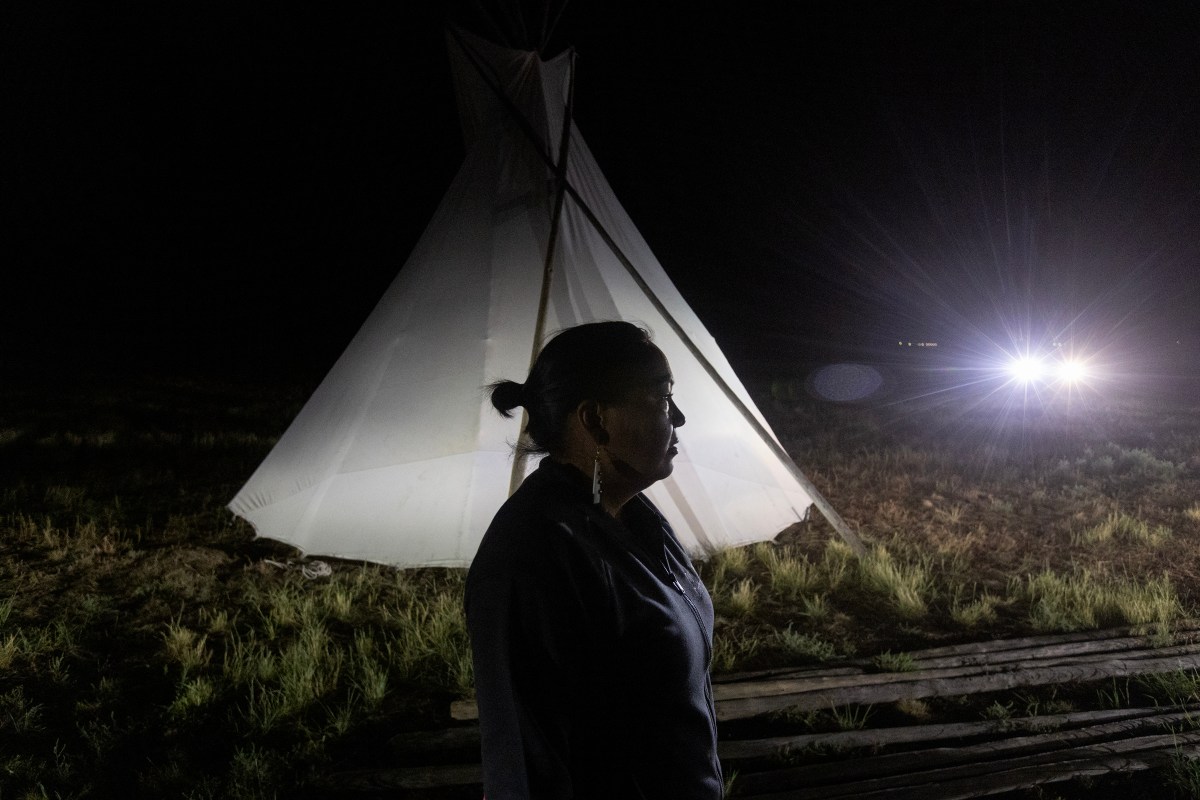
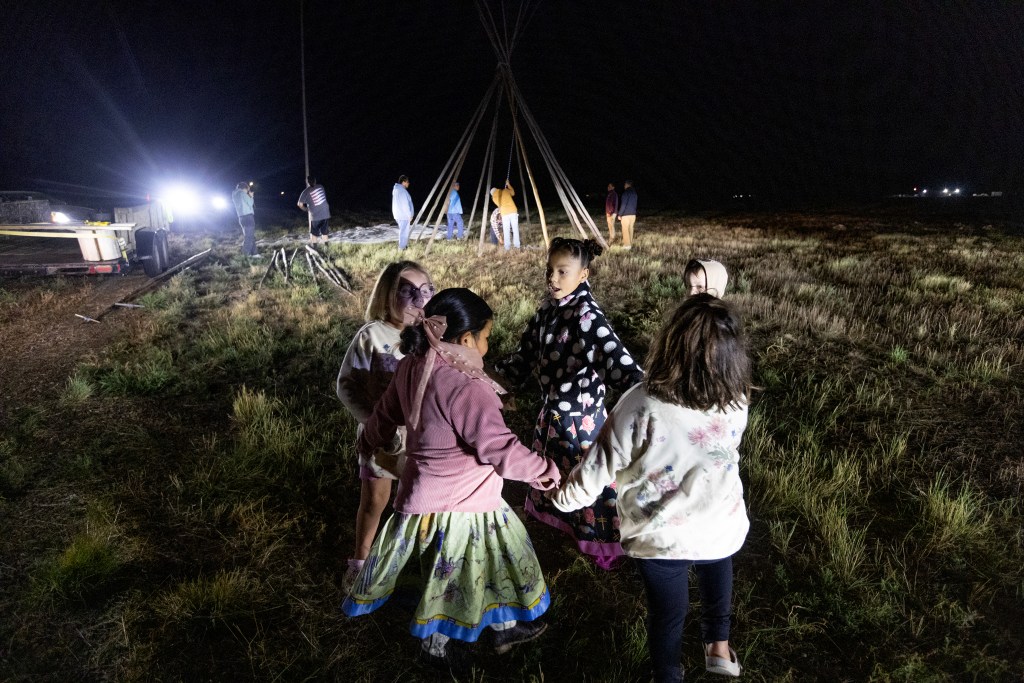
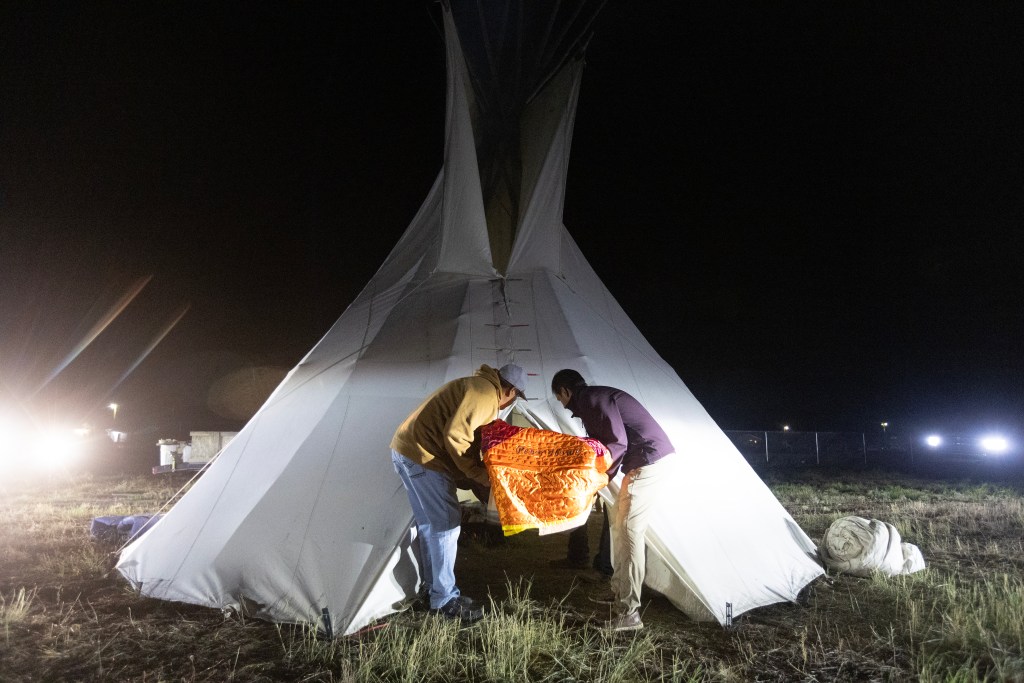
The two young men were taken to the tribal repatriation cemetery in Poplar where teepees were erected in the darkness that evening and a fire started for an all-night vigil prior to their reburial on Wednesday, September 9.
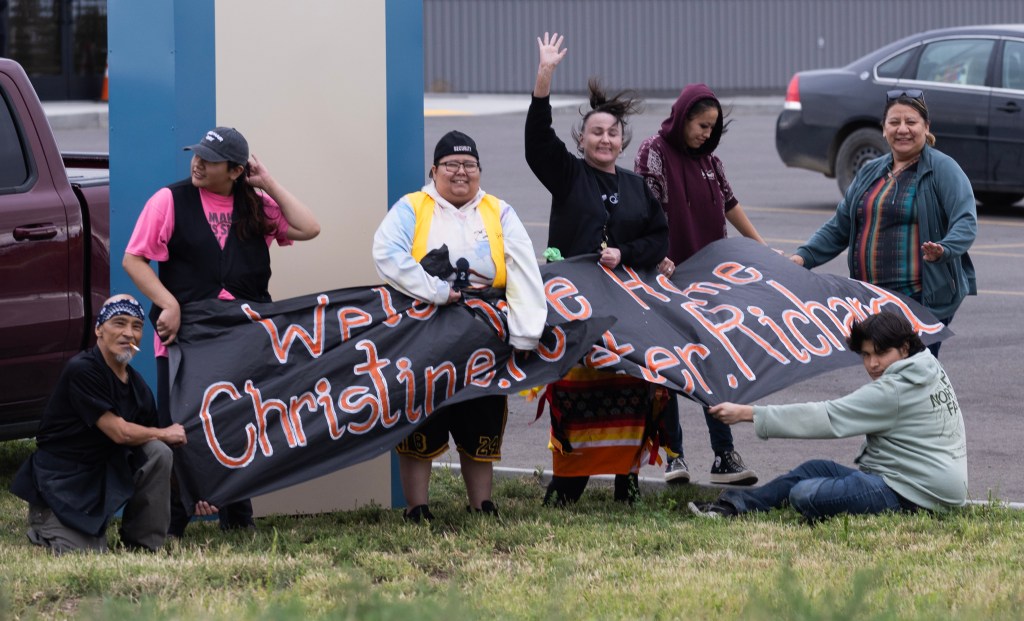
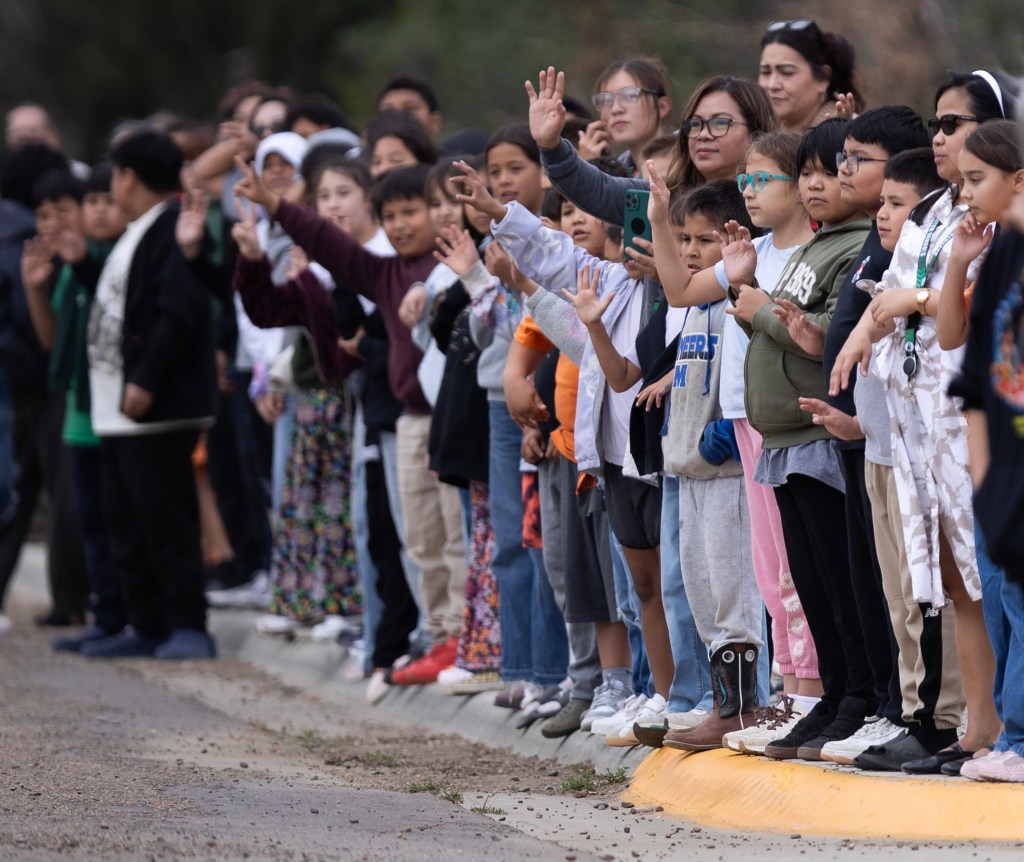
Christine was taken to the Freda Fourstar Community Hall in Frazer. Ironically, the building is named after the same relative who for decades discussed the need to bring her home. She will be buried at Oswego Catholic Cemetery where many of her family members are buried, on Sept. 10.
“It is meaningful for our people that we open it up for the opportunity for creative community efforts and, and they have a place to show support or a place for them to grieve and relate to what’s going on,” Dyan Youpee, the tribe’s cultural preservation director told ICT. “And also to educate our younger people about the process for us to repatriate and the ceremonies. The inheritance of cultural responsibility is embedded in all of our community people.”
She continued, “We have a sacred duty and a responsibility to make sure that all the community is involved or participates or even prays from afar for the safekeeping of these ancestors coming home.”
A procession of runners, equestrians, motorcycles, and runners will be led to the reburial of Morgan and Howe by police and fire trucks.
‘I just sobbed’
The return home came following a very emotional week in Carlisle, Pennsylvania.
The Carlisle Indian Industrial School was the first federally run, off-reservation boarding school for Native Americans. Approximately 8,000 Native American students attended the school in the government’s misguided attempt at forceful assimilation into White civilization by cutting all links in their cultural chain. It became the model for more than 400 schools across 37 states and territories in the U.S. and provided a blueprint for Canada’s notorious residential school system.
Retracing the footsteps of ancestors who never made it home can be a wrenching experience. This was especially true for the relatives of Christine Redstone.
“I started to get emotional the minute I walked into the cemetery, and then when I saw where she was buried for myself for the first time… it just hit me, and then it made me cry, and I dropped to my knees and I just sobbed because it was so overwhelming,” said Michael Redstone.

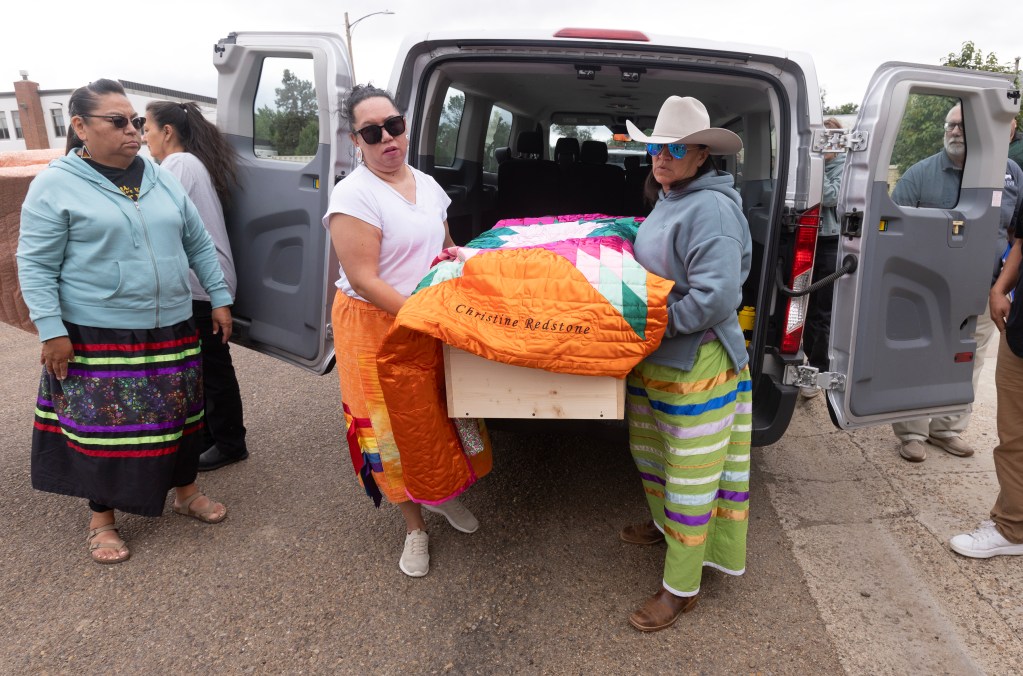
Lana Fourstar, another relative of Christine Redstone, initially felt anger when she first walked into the Carlisle cemetery but feeling quickly turned to empathy for all the students buried there.
“The mother in me kicked in. I wanted to be able to just hold them all, just hold them all in my arms, and let them know that even though I wasn’t their relative, we’re all relatives in the Native way, and that we’re here,” she said. “We’re here for you, and that I’m praying for you, and someday I hope you’re at your homelands. And I felt a sense of peace, and all I could do was just keep praying that day.”
As a mother of three, there was a time when she knew that those could have been her children dying in a faraway place so far from a mother’s love.
It was under the outstretched limbs of a large oak tree, often referred to as the “witness tree,” that had been on the barracks grounds since before the school opened that Michael Redstone found some sense of peace and resilience.
“And then I got to stand under a tree that had been here since the time Carlisle was first opened, and I was thinking, ‘This tree’s seen my grandmother walk by. Now this tree gets to see her granddaughters walk by,’ and I just thought that was kind of a full circle moment. We’re still here despite what they tried to do to get us to abandon our way of life, but here we are still. Family’s just as strong as ever.”
‘Deep gloom’
The 1890 Fort Peck group that Christine, Richard, and Peter were part of consisted of 43 children, 22 boys and 21 girls, and were part of a larger group of 126 students recruited in Montana from various tribes.
School founder and superintendent Richard Pratt seemed particularly excited by the Fort Peck group as he wrote the Commissioner of Indian Affairs on April 25, 1890.
“The party from Fort Peck is worthy of mention as being taken almost wholly from the Agency school and gives evidence of good work in education and care,” he wrote.
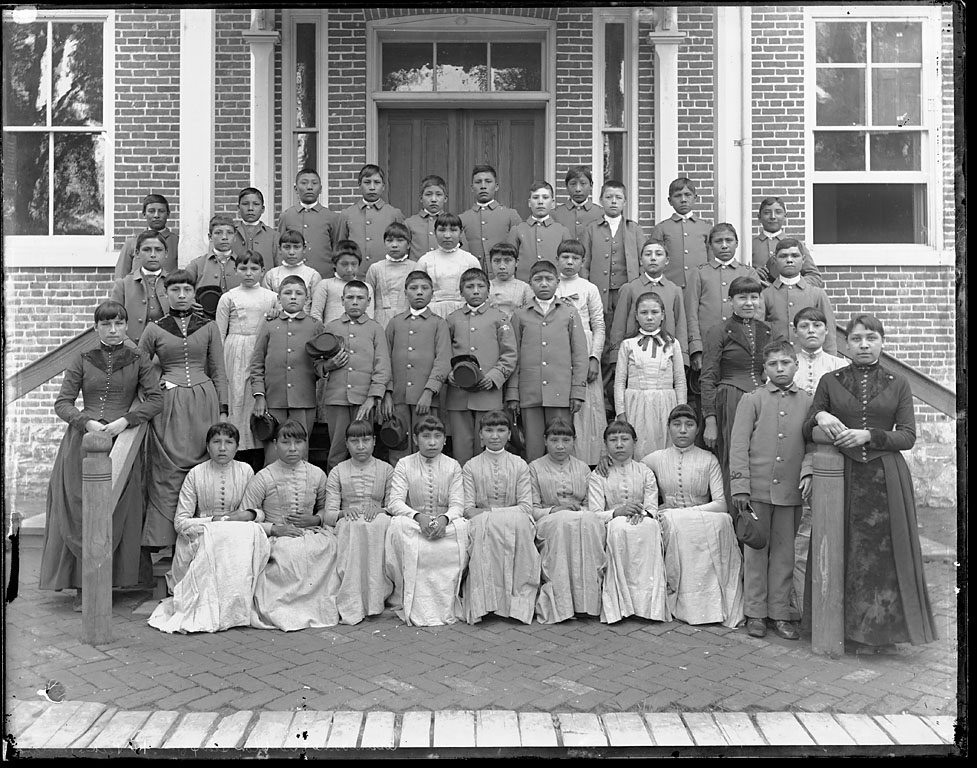
Nine years later, he would again write the commissioner, mentioning that 25 percent of that Montana group died either while at the school or shortly after being returned home, and he questioned whether there was enough care making sure healthy children were chosen.
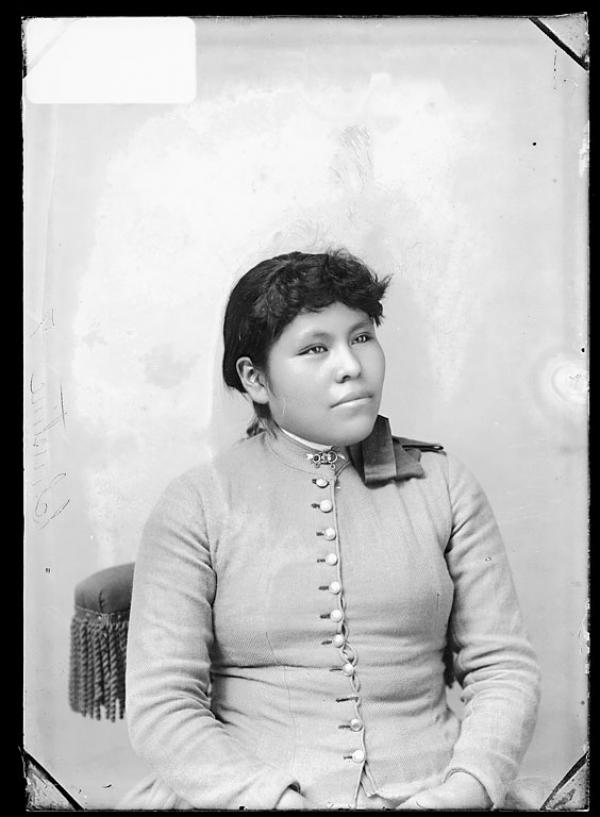
Christine was 15 when she arrived April 15, 1890. She expected to stay five years but after nine years at the school she died on July 19, 1899. The cause of her death is uncertain. Her student information card lists her as 5 feet tall and 96.5 pounds upon arrival at the school with both of her parents being deceased. Her records noted her stepfather lived at Porcupine Creek.
Four times during a five-year period, Christine stayed with the Russell family in Kemblesville located in Chester County of Pennsylvania as part of the school’s so-called “outing” program. The family obviously had grown close during the four summers she spent living with them.
Following her passing, Mrs. Russell sent a letter that appeared in the school newspaper, The Indian Helper, describing “the deep gloom” her death had cast over their family.
“Her sunny and affectionate disposition completely won our hearts, and she was to us as a daughter,” wrote Mrs. Russell, who had been writing a letter to Christine with a gift of money when she received news of her death.
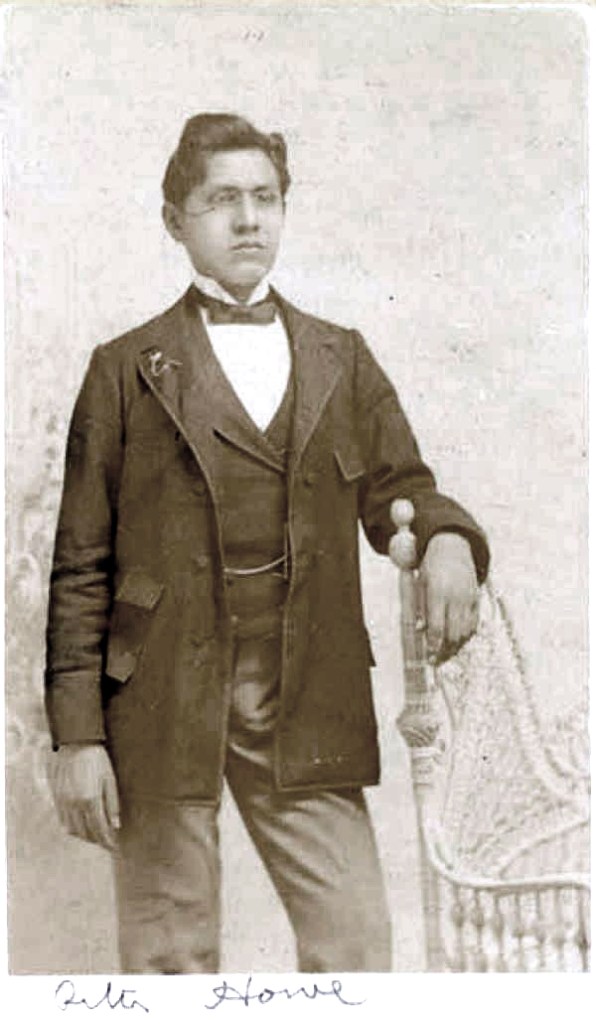
Peter Howe arrived in Carlisle at the age of 16. He died on June 5, 1896, after becoming ill while on the school’s outing program in Solebury, Pennsylvania. The school held a joint funeral for Peter and fellow student, Fred Senasche, both having died after a battle with tuberculosis, according to school records. Both were described as “patient, hopeful sufferers to the last” in the school newspaper.
Although he may be in a group photo of the Fort Peck students, there is no known individual photo of Richard Morgan. He arrived as a 17-year-old with Peter and Christine, but died less than a year later of tuberculosis on March 25, 1891.
While his father had died, he still had a mother and stepfather. According to the school newspaper, he opted to spend his final days at school where he felt he would receive care rather than travel home.
Ongoing battles
The return of the students has been a long journey and has involved efforts by two generations.
At the Redstone family’s request, Dyan Youpee’s father, Darrell “Curley” Youpee, who died in May 2021, had tried to initiate bringing Christine home at the family’s request. Dyan Youpee was finally able to bring her father’s efforts to fruition.
Now what her father had started she was able to see through to fruition.
It was not without its share of obstacles, however.
“The journey to bringing these children home has been marked by decades of institutional bureaucracy and resistance,” Dyan Youpee, told The Glasglow Courier in August. “Fort Peck Tribes have had to fight through exhausting consultation battles, difficult administrative policies, and rigid ‘closet living relative’ requirements just to reclaim their sovereign relatives.
“Repatriation is a living, breathing exercise in tribal sovereignty and grief.”
Not every tribe has been able to navigate the institutional process to an end considered appropriate.
In 2024 the Winnebago Tribe of Nebraska filed suit in federal court demanding that the U.S. Office of Army Cemeteries honor the tribe’s request to return the remains of two Winnebago boys who died at Carlisle more than a century ago.
The Army took over the Carlisle Indian Industrial School after it was closed in 1918.
The tribe argues that the federal Native American Graves Protection and Repatriation Act, or NAGPRA, a 1990 law that spells out tribal rights governing returns of objects and remains, should be followed.
The Army maintains that NAGPRA doesn’t apply at Carlisle and that Army protocols supersede it. In April, a federal appeals court sided with Winnebago and sent the case back to a lower court.
Winnebago says it will continue pressing its case. The tribe’s chairman, Coly Brown, has stated that, “NAGPRA is an important statute our relatives fought for.”

