Cordelia Kellie
Anchorage Press
Alaska Federation of Natives President Ben Mallott represents a changing of the guard at the advocacy organization.
Until 2024, the federation had the same president for more than three decades: Julie Kitka, who started her career at AFN in 1984.
Mallott, who previously served as AFN’s vice president for external affairs, also worked as an aide to U.S. Sen. Lisa Murkowski. He is now at the vanguard of a major change in leadership across many of the state’s Alaska Native institutions, as a new, younger generation steps into executive roles.
In advance of this year’s AFN convention this week, the Anchorage Press wanted to check in with Mallott, whose father, the late Byron Mallott, once held the same job.
Cordelia Kellie, a former Congressional staffer who’s now a doctoral student in anthropology at University of Alaska Fairbanks, conducted the interview, which covers policy, politics and some of the details of the convention itself — a huge yearly get-together that some people call Native New Year.
The conversation spanned a full hour, so this transcript has been edited for length and clarity.
Cordelia Kellie: Who does AFN specifically represent, and how does decision making work in the organization?
Ben Mallott: AFN represents the unified political interest of the Alaska Native community.
Our membership encompasses the majority of our regional corporations, regional nonprofits, our tribes, and also our village corporations. So, this year’s membership includes 11 regional corporations, 11 regional tribal nonprofits, 196 tribes, 156 village corporations. If you add in all the shareholders and tribal citizens, it’s about 160,000 as the membership. We are governed by a 38-member board, with about nine full-time staff.
Our convention is actually our annual meeting of our membership, and the most important day of our convention is resolutions — and those resolutions set our priorities. When I was staffer for Murkowski, I could go through resolutions and see where the Native community stood on different priorities going back decades.
CK: Your time at AFN spans more than 13 years. What is it about the mission that brought you to the organization? And what is it that brought you back after time away?
BM: It was the people that pulled me in. Just hearing all the different perspectives on all the regions, and then how (former AFN senior vice president) Nelson Angapak composed himself and put everything together. It opened my eyes to what AFN does, right?
We are, at a very high level, making sure that our communities are not forgotten about. That our communities, our organizations and corporations and tribes are still relevant within Congress and Juneau. Because we could be easily forgotten about.
Our entire public policy structure goes down to definitions: How they define Alaska Natives, how they define Alaska Native lands. The wrong definition or the removal of a definition could wipe out programs.
The quiet power of AFN and the subtle power that we have is to make sure that we’re working with the congressional delegation, making sure we have partnerships with multiple offices in D.C.
It’s not my voice. It’s not my words. It’s really how I could create the space, with the right person, at the right time, to make the right story — and that is amazing, when that all lines up. And Julie and Nelson were masters at that.
The statewide focus AFN takes — when our committees look at policy resolutions, we have to look at it from the tribal side, the regional corporation side, the regional nonprofit side. We have to look at how the state, federal governments view it. How the city governments, and our aunts and moms, how they look at it. So we have to look at every single aspect. And for me, it’s actually really fun to take all those different perspectives.
The trick, though, is not to get too frustrated by it. We just got done with our subsistence listening sessions, and this is probably one of the hardest things I’ve done. Just trying to stay calm — because you want to get angry. It’s not fair for our communities. And the anger is pointing at AFN. And I get that, great. I wish we had government officials in meetings with us, but it shows the need.
Our people have passion, and we need strategy to drive that. And I think AFN is part of that strategy. How can we organize our communities and make that right space, right time for communities to do what they do best and tell our story?
CK: What are some under-the-radar areas of AFN’s work?
BM: Our Get Out the Native Vote initiative — working with other voting organizations so that we’re not stepping on toes, and not duplicating efforts, on how we can work better and smarter together.
There’s also the partnerships that AFN builds. I was in D.C. with the Cherokee Nation, our nation’s largest tribe. We’ve supported Lumbee, our nation’s newest tribe. Having that network — when times get tough, you need friends, and that’s why AFN builds partnerships outside of just Congress, and the government.
CK: Any success stories that come to mind?
BM: The [AFN] Navigator Program, that’s been helpful. We started that during COVID. With a historic amount of funding, they’re people from each of the regions who could connect with some of the smaller AFN members that don’t have the capacity to actually apply for grants, to know grants are available.
CK: And that structure started with COVID, but then evolved to support members accessing historic levels of federal infrastructure funding, right?
BM: Now we’re doing it for voting, supporting our voting outreach in the regions.
The Navigators are also really good for us, too. Sometimes one of them will pick up something that’s happening in a community, and they’ll relay it. Or, sometimes we’ll need help finding someone from the region. So, it works both ways.
One of my big things: We hired a former congressional staffer — he actually has an appropriations tracker, and he summarizes all the different bills and puts in what’s relevant to Alaska. A law firm charges thousands of dollars for that. We do it for free. We do that so our membership can see what government’s funding, what they do for earmarks. We do webinars on that for membership.
CK: Are there other key issues that AFN is working on right now?
BM: Right now, everything is based on voting. When Alaska Native people don’t vote, it gives the government reason to ignore us. It all goes back to how our communities are represented. If you want to change government, if you’re unhappy with who’s on the Board of Fisheries, the Board of Game, the governor selects those names.
CK: This year’s convention theme is “Rooted in Land and Tradition.” Can you tell us about that?
BM: It goes back to subsistence, right? It’s our highest priority. We just prevailed in the Kuskokwim River case, which cost the four parties $2 million. That $2 million could have been spent elsewhere or on something better, and all we got was status quo.
As part of our subsistence listening sessions right now, we’re going to all the regions, 10 stops. I’m going to Ketchikan on Monday, out to Copper Center on Thursday, Craig later on this year. We’ve been to Utqiaġvik, Kotzebue, Nome, Dillingham, Kodiak, Juneau, Fairbanks.
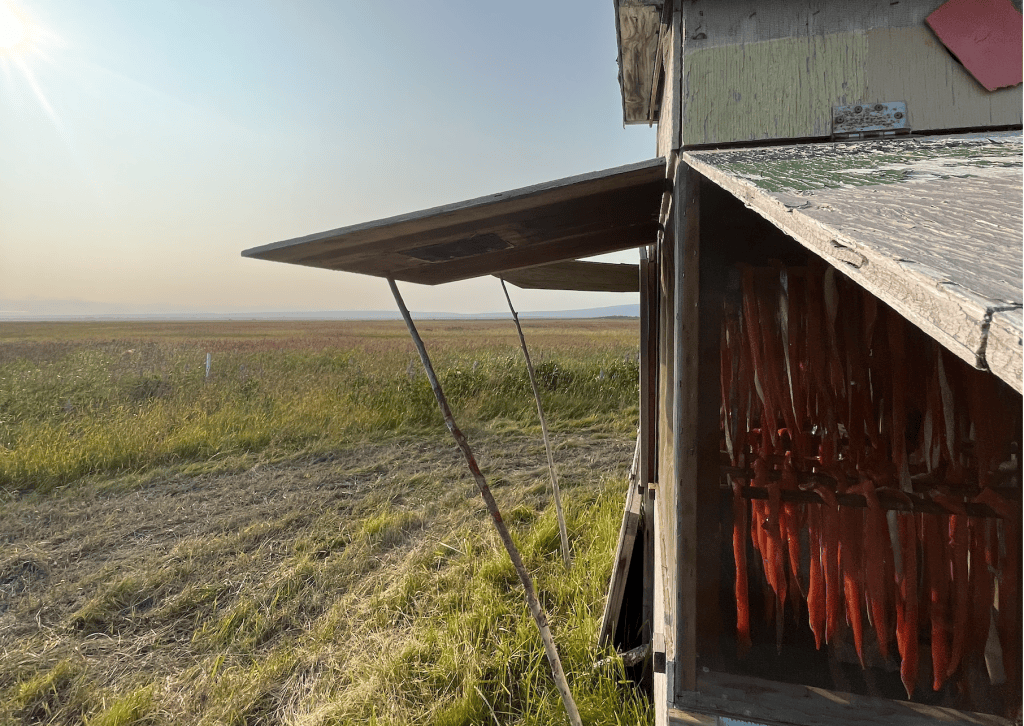
We passed a resolution in 2024 that says AFN will create a Native framework of subsistence and management. It had 11 different steps, and all 11 are incredibly complex, hard tasks to do. Part of these workshops is to figure out, really, what is a priority? What can come now? What comes later, and what do we need to build the right political environment for?
Subsistence is such a political and legally challenging complex subject. Definitions matter, commas matter. We started in 2022 with a nine-hour workshop. Now it’s down to an hour, but we still miss a lot.
CK: Could you quickly review the major events that have led to this point with subsistence?
BM: We are stuck in dual management. We’re stuck between federal and state management, and that is not fair for us, right? We are criminalized just for trying to live our ways of life, that Native people have lived for 10,000-plus years. We have lived, managed, adapted our ways of life to manage resources around us. We have everything to lose. When one user group — commercial, sport — feels like they’re not getting their way, they’re making us yield in our ways of life. That’s not fair for us.
If you look at Alaska, all our resources come from rural Alaska. They don’t come from Anchorage, Juneau, Fairbanks. Oil comes from the North Slope. Fishing comes from our communities. Alaska is built on rural Alaska. So, we have our priorities backwards. A really healthy Alaska should be a really healthy rural Alaska. Right now, our state can’t fund itself. Our state can’t fund education. Can’t fund public safety. Our state has failed our people. And because of that, they’re focusing where their priorities are, on urban centers.
So, in rural Alaska, if we’re the ones that get managed the most on subsistence and our ways of life are being impacted, we want to be able to manage our own resources. We want full management. We want to be able to be at the tables with our government to manage resources we want. So, eventually, we could have our own biologists in rural Alaska and actually build economies based on that management, and actually have a healthy rural Alaska.
So subsistence is not really just allocation. It’s also protecting our ways of life, and ensuring how our communities can survive for decades and centuries to come.
CK: Is there a real opening for meaningful discourse and, potentially, passage of constitutional amendment language on subsistence if we get a bipartisan House and Senate, and then Jonathan Kreiss-Tomkins as Governor?
BM: It’s going to be a while.
There is no trust in the state right now. The state has to rebuild that trust. Even if you passed a constitutional amendment that’s fair for us, our people don’t trust the state. It’s been eight years of not trusting. For our community, too, even if we pass a constitutional amendment, that’s just the key to get what we want. We still have to change hundreds of statutes to get where we want, right?
So, we get a constitutional amendment to recognize a Native preference. Then we’ve got to change the Board of Game, Board of Fisheries statutes to include Native seats. And we’ll be fought the whole way, on each of those bills. For AFN to even consider a constitutional amendment, I want to make sure that we have all of our statutes lined up.
CK: This is AFN’s 60th Convention. Over time, we’ve seen groups depart, but also rejoin in recent years. Why is it important to have a body that specifically represents all Alaskan Natives?
BM: Alaska has a different history in the United States. Our history, in terms of how Alaska has incorporated public policy, federal statutes, is different. We are so far removed from D.C., and so I think it’s one of the great powers of AFN to maintain that history, that relationship with Congress and the administration, that we have.
CK: What is the right balance between healthy disagreement and the traditional value of avoidance of conflict?
BM: I go back to the process. Being able to agree to disagree is a lost art in our community, that we don’t have any more. But I think the process — if you can agree to disagree on the floor, but the process allows it to go through anyways…it’s an unfair process to those smaller regions. So, I think process has been critical for AFN, in how we actually incorporate those safeguards.
CK: Is there anything that is lost if Alaska Native people don’t have a body that’s representative of all groups? Are there specific vulnerabilities?
BM: When we look like we’re divided, we get ignored, right? The ability to divide and conquer our communities is part of how (those opposed to Native sovereignty) win. So, for AFN to be the convener on common issues of unified political interest is one of our biggest ways to ensure that we don’t get divided and conquered.
CK: Are there lessons learned or ways that AFN is ensuring that groups feel heard, given that those were some of the issues cited by those that have left and rejoined?
BM: Process. We’ve worked hard to incorporate processes into our bylaws. We have a ‘divisive resolution’ policy now. If two regions find a resolution divisive, they can withhold it. We have, now, a pretty strict policy for how the board can endorse statewide candidates. Two-thirds vote, 14 days notice of all membership.
We’ve built some pretty strong processes to ensure that things can still go forward, but we’re doing our due-diligence in making sure everybody’s brought along in those. That’s taking time for the board to learn. I think the board’s getting it. Last year, I was really impressed by the resolutions, where there was some conflict. The delegates wanted to take a recess and actually go talk in the regions about it. And that was actually incredible to watch. Building that process is, I think, something I’m focused on at AFN. That reduces conflict, because we have a process to follow and everybody knows the process, everybody knows the lay of the land.
CK: (In terms of consensus), what about areas you might still be working through?
BM: Subsistence is one of the trickiest subjects. We’re mixing some of the most toxic political environments about tribal politics and fish politics into one. It’s a very fun process for me. (Laughs.)
It’s been fascinating to wade through that.
Sometimes we’re just too shy of a community. We don’t want to disrupt. But I think we need to be a little more vocal in our weight in the state. Native corporations, I think, brought in $27 billion in 8a (federal contracts). Alaska Native Tribal Health Consortium is one of the largest state employers. How much money do our housing associations bring to the state in terms of supplies, construction? How much money do our nonprofits bring to education funding?
If you add it all up, it’s probably more than half our state’s economy. We get pushed around by commercial fisheries that are probably a fraction of that of the economy. Alaska Natives, we actually aren’t telling our story. We aren’t pushing our weight the way we should.
CK: Why do you think that might be?
BM: Humility. I still get uncomfortable talking about myself. It’s not what I do. It’s not what we do. Other people do it all the time.
CK: Will we ever see a convention in Fairbanks again, or outside of Anchorage?
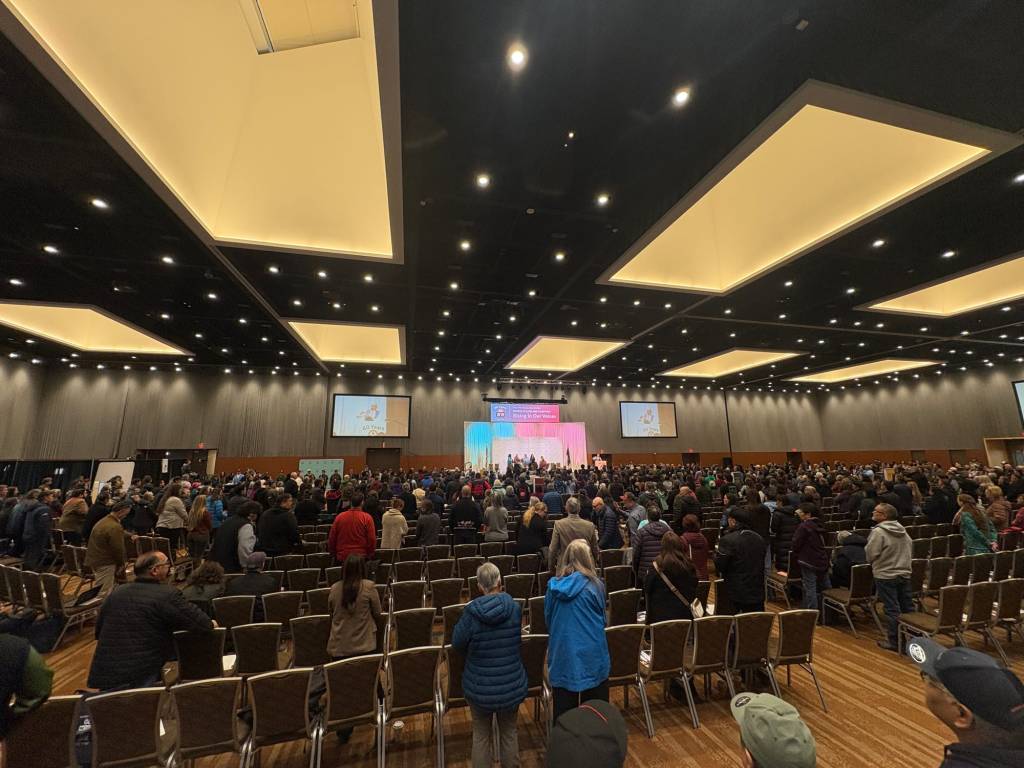
BM: I don’t know. We talked to Fairbanks about that. Our convention has become huge. We sold out arts tables in less than two hours. We don’t have enough rooms for a lot of our workshops and caucuses. The Dena’ina Center is too small for us now, and that’s the biggest convention center in the state. So, it’ll be hard for another community to match what Anchorage has, in terms of infrastructure.
One thing we’re talking about is having a smaller, mid-year conference, and moving that to Juneau, Fairbanks, maybe Ketchikan. But it’s really hard to pack everything — all the updates from federal and state officials — into a three-day agenda.
It’s AFN’s power to convene. Our biggest tool for AFN is our broadcast — it reaches over 100,000 people. Also recognize, too, that our convention is free to the public. Anybody can walk in. Other organizations charge a fee for those conferences. AFN, it’s who we are, it’s how we meet every year — how we build our unity is how we build our community. I don’t think I would ever want to charge for the convention.
CK: Are there conversations about other ways that AFN might evolve itself to the future?
BM: One of my wishes for AFN is to create, like, a Leadership Alaska program. Back in the day, my dad (Native leader Byron Mallott) and (Native leader) Willie Hensley, they all grew up together. There was real statewide camaraderie. As our organization has gotten so big, which is incredible, I think some of that camaraderie and statewide connection has kind of waned a little bit. So, how can we create support for mid-career, mid-level Alaska Native executives to create these types of networks from different regions working together?
I think that’s a really great space for AFN. I really value what the Alaska Humanities Forum has done with their Leadership Anchorage program. That’s something that I personally want to do here at AFN. When I have time to fundraise for it and get more staff, I’ll focus on that. But right now, I’m trying to focus on having a structure at AFN that will help guide us in our future.
CK: Yeah, and that feels like something that’s very special about Alaska and in our Alaska Native community — the benefit and opportunity to live alongside people and work alongside people your whole life.
Any other goals for your time as president?
BM: That’s a big question. Personally, subsistence. It was weird to go through my dad’s notes on this stuff, and see the same things happening again. We need to fix that. It’s unfair for communities. How we actually create a management structure that is a Native-led framework — that probably will take more than my lifetime. But if I could help start that process going forward, in education, in foundation, like my dad did, and Georgianna Lincoln, and Albert Kookesh, Al Adams, like they all did…
CK: What do you hope readers are left with, you know, in reading this interview?
BM: Come to our convention. It’s open. We do it for free for a reason: because we want others to also learn our ways of life. AFN’s about partnerships, building connections, and part of how we grow our communities and our state is by doing it all together. AFN’s never charged a cover for our main sessions. That’s because we want not only our community to meet the way we do — but also, we want our whole state to be at the table with us.
The AFN convention runs Thursday through Saturday at the Dena’ina Center in downtown Anchorage. More information here.
This story was originally published at Anchorage Press and republished with permission.