
Kevin Abourezk
ICT
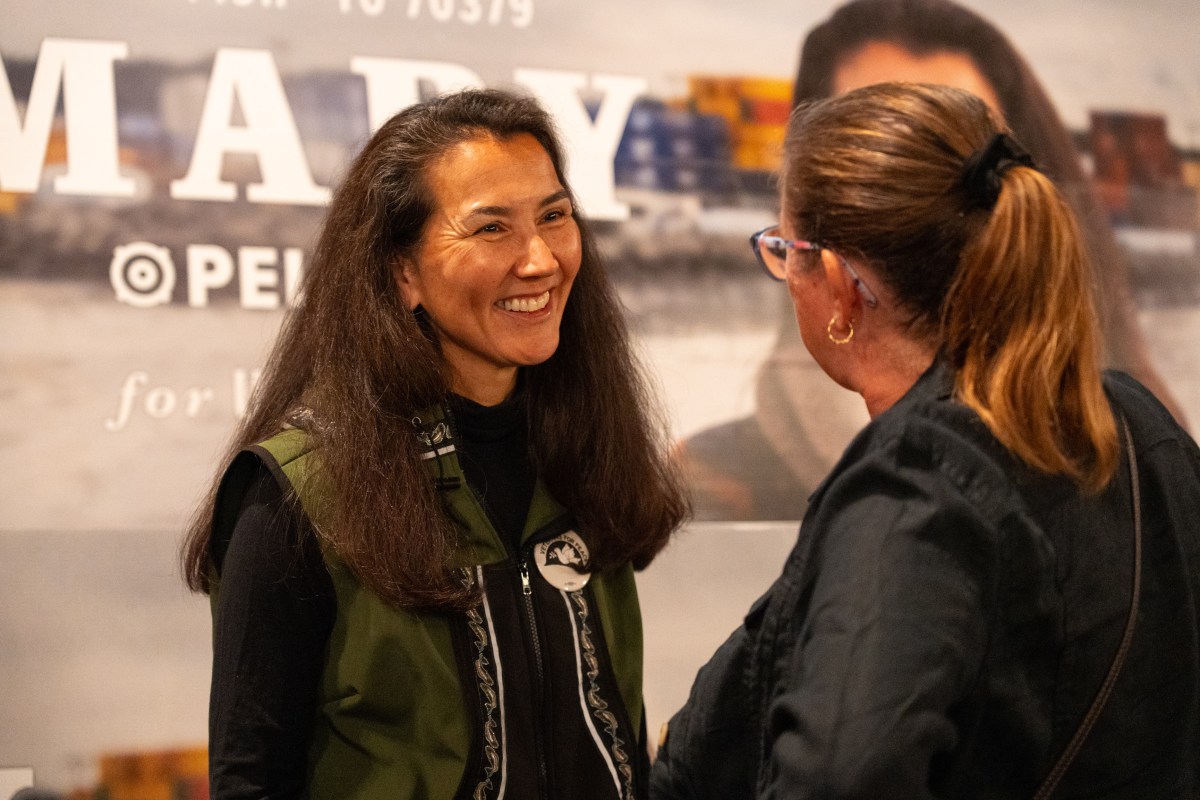
While 17 Native candidates will appear on Alaska’s primary ballots on Tuesday, most eyes in Indian Country will be focused on one name – former U.S. Rep. Mary Peltola.
Seeking the U.S. Senate seat currently held by Republican Dan Sullivan, Peltola, Yup’ik, is hoping to be elected the country’s first female Native U.S. senator, though if she wins she may have to share the title with Minnesota Lt. Gov. Peggy Flanagan, who won the Democratic nomination for an open U.S. Senate seat last week and leads in the polls against her Republican opponent Michele Tafoya. Technically, Flanagan, White Earth, could be the first since Minnesota is three hours ahead of Alaska.
Four Native men have served in the Senate, including former Oklahoma Sen. and current U.S. Secretary of Homeland Security Markwayne Mullin, Cherokee and Republican, and the late Ben Nighthorse Campbell, Northern Cheyenne.
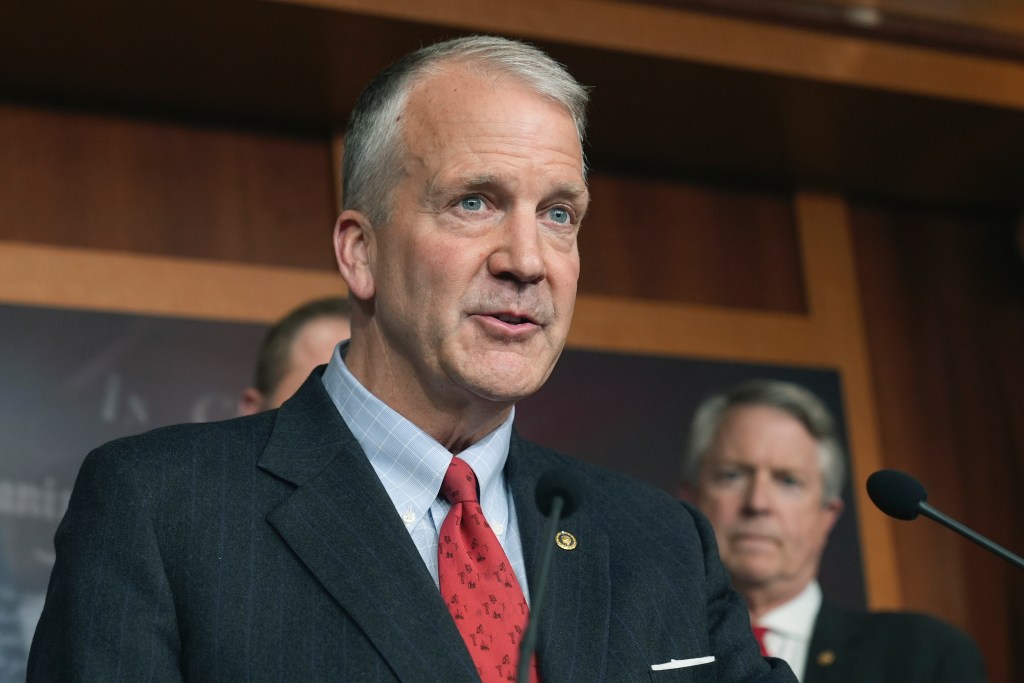
In Alaska, Peltola has outraised Sen. Sullivan (ICT will differentiate between the senator and another candidate for his seat whose name also is Dan Sullivan by adding the senator’s title before his name), having raised about $18.5 million for her campaign, compared with about $11.7 million for Sen. Sullivan. As of July 29, Sen. Sullivan had about $7.3 million in his campaign account, compared with about $4.6 million for Peltola, according to the Associated Press.
Most major general election polls show Peltola and Sen. Sullivan running neck and neck, according to the New York Times.
In Alaska, Native people are a key demographic, making up 17 percent of the state’s 740,000 residents. The state is home to approximately 40 percent of Indian Country — 229 of the 575 federally recognized tribes across the country are in Alaska.
Alaska voters will have to choose their favorite among 16 candidates for Senate and will be allowed to vote for candidates outside their own party affiliation as a result of the state’s unique ranked choice voting system, which requires all candidates for a given race to appear on the ballot, regardless of party affiliation.
Sen. Sullivan was first elected in 2014 after defeating Democratic U.S. Sen. Mark Begich and then won his 2020 reelection.
Peltola was first elected in a 2022 special election to replace longtime Republican congressman Don Young, who died after almost 50 years in office. She defeated Republicans Sarah Palin and Nick Begich in Alaska’s first statewide ranked choice voting election. She was elected to a full term later that year but lost her 2024 reelection bid to Nick Begich, who is the nephew of the former U.S. senator.
Neither the Sen. Sullivan nor the Peltola campaign spoke to ICT directly, but both shared statements with ICT.
“This is a race between Senator Dan Sullivan, who delivers real results for Alaska – rebuilding our military and Coast Guard, taking action on trawl bycatch, unleashing Alaska’s energy, and creating good-paying jobs for Alaska families – and Mary Peltola, who served two terms in Congress and never got a single bill signed into law,” Sen. Sullivan’s campaign spokesperson Nate Adams said in a statement to ICT. “The choice is clear, and Alaskans made their choice about Mary Peltola two years ago when they fired her.”
Peltola’s campaign told ICT that she is the only Senate candidate who would, if elected, “stand up to anyone to lower costs, take on the rigged system in D.C., and put Alaska first.”
“While Dan Sullivan has tripled his wealth in the United States Senate and voted to raise costs on Alaskans at every turn, Mary has been criss-crossing the state and meeting with Alaskans in every corner of the state – including Alaska Native communities – to discuss the best ways to restore abundance for the next generation of Alaskans,” the Peltola campaign said in its statement. “As a lifelong Alaskan and proud Yup’ik, Mary will fight to protect and expand the 8(a) program and will always stand up for Alaskans’ subsistence fishing rights, and grassroots support from every community will power her to victory this November.”
The “8(a) program” is a reference to the U.S. Small Business Administration’s 8(a) Business Development Program, which grants preference for federal contracts to tribal enterprises and Alaska Native Corporations. As a U.S. representative, Peltola, Sen. Sullivan and Sen. Lisa Murkowski, R-Alaska, sponsored legislation that removed a federal rule that required applicants for federal contracts to maintain offices in regions where they completed any awarded contracts – a rule that made it difficult for Alaska Native Corporations to compete for federal contracts in regions beyond their own.
David Leslie, Iñupiat, described himself as Alaska’s first queer Native congressional candidate and said this is his first run at public office.
“I’m running for Senate because I saw a distinct lack of people talking about the genocide in Gaza and how we need to end it,” he said. “Other candidates weren’t talking about how we must impeach and convict Trump and the vast amounts of corruption and white supremacy and Christian nationalism that is taking over our government. … We need someone with a clear voice willing to protect and defend not just Alaskan Native people, but all Americans from this fascist takeover.”
Besides Peltola and Leslie, 15 other Native candidates are seeking office in Alaska on Tuesday. They include:
- Saima Chase, Iñupiat, a Democrat seeking the District 40 Alaska House of Representatives seat
- Maxine Dibert, Koyukon Athabascan, a Democrat seeking the District 31 Alaska House of Representatives seat
- Neal Foster, Iñupiat, a Democrat seeking the District 39 Alaska House of Representatives seat
- Robyn Frier, Iñupiat, a Democrat seeking the District 40 Alaska House of Representatives seat
- Nellie “Unangiq” Jimmie, Yup’ik, a Democrat seeking the District 38 Alaska House of Representatives seat
- Reynold Okitkun, Village of Kotlik, a Democrat seeking the District 39 Alaska House of Representatives seat
- Dennis Robinson, Qawalangin Tribe of Unalaska, a Democrat seeking the District 37 Alaska House of Representatives seat
- Cade Woods, Curyung Tribal Council, an Independent seeking the District 37 Alaska House of Representatives seat
- Darren Deacon, Native Village of Kalskag, a Republican seeking the District S Alaska State Senate seat
- Bryce Edgmon, Yup’ik, an Independent seeking the District S Alaska State Senate seat
- Wayne Morgan, Aniak Traditional Council, an Independent seeking the District S Alaska State Senate seat
- Meda DeWitt, Tlingit, an Independent seeking to become Alaska’s governor
- Greta Schuerch, Iñupiaq, a Republican seeking to become Alaska’s lieutenant governor
- Christopher Steere, Iñupiaq, a nonpartisan candidate seeking to become Alaska’s lieutenant governor
- Bill Hill, Dena’ina Athabascan, a nonpartisan candidate for the U.S. House of Representatives

