
Kevin Abourezk
ICT
Tristan Douville understands the challenges of voting in rural Alaska, where Indigenous people live. Growing up on Prince Wales Island in the southeast Alaska Panhandle, the 27-year-old Tlingit man carries a driver’s license that shows the post office box for his village of Craig.
Because his license does not have a standard mailing address, he often is forced to provide additional documents proving his identity in order to vote.
“That presents challenges at a rate that makes it difficult to predict when I’ll be needed to provide a secondary form of identification or not,” he said.
He’s not alone.
Indigenous people across the United States are more likely than other populations to not have standard mailing addresses, and many live in remote places like rural Alaska and in parts of the U.S. Southeast.
It’s been 102 years since the passage of the Indian Citizenship Act, which granted Native people the right to vote.
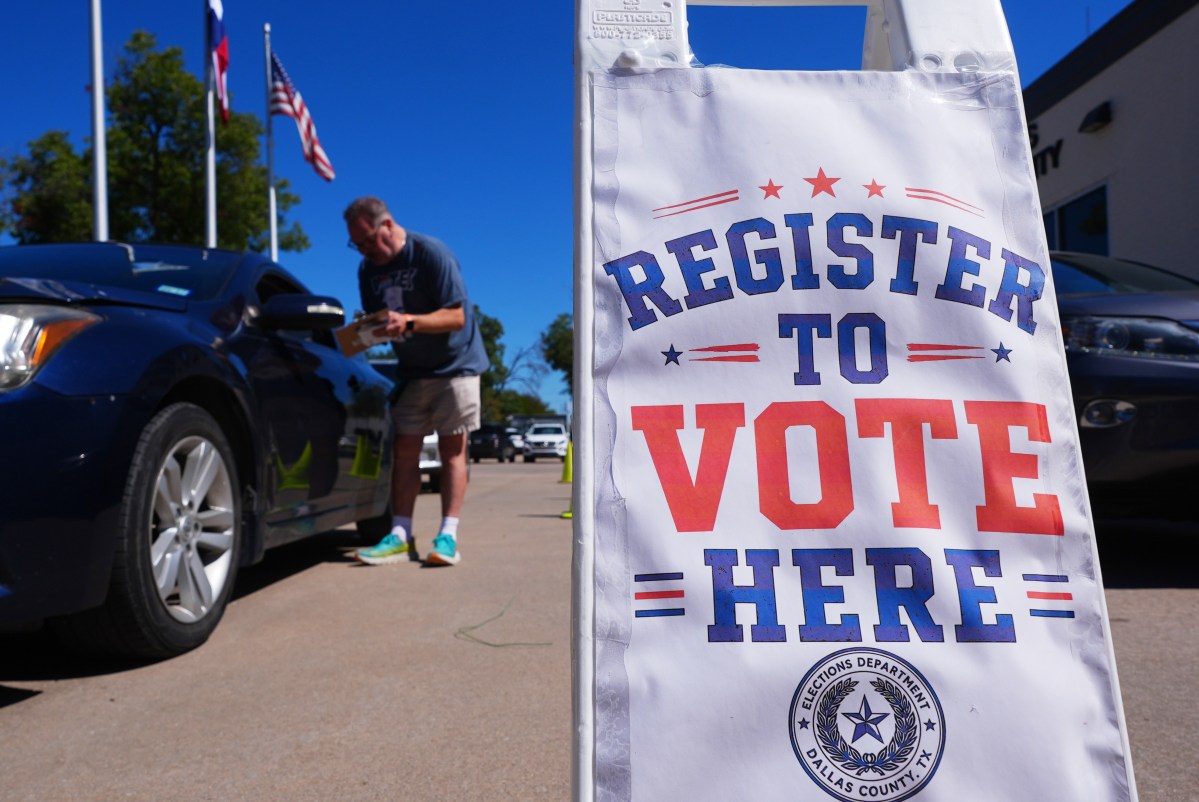
As it turns out, gaining the right to vote doesn’t necessarily mean easy access to voting, at least in Indian Country, according to a new report published recently by the Native American Rights Fund. The report, “Obstacles Persist: According to the Data: Barriers to political participation faced by Native American voters,” details trends in Native voting across the country as well as chronic problems facing those voters and potential solutions to those problems.
One of the key trends that the report identified was voter registration in counties with high Native populations declined by 59 percent from 2020 to 2024, compared to 22 percent nationally for the same period.
“It’s not that Native voters are not trying to vote,” said Megan Gall, principal and founder at Blockwell Consulting and a co-author of the report. “It’s not that Native voters aren’t trying to register. It is that there are blocks in the system throughout the voting process that sort of chip away at that.”
The report’s authors used information gathered from the U.S. Election Assistance Commission’s Election Administration and Voting Survey for 2020, 2022 and 2024. The report focuses on voting in 30 counties in which American Indians and Alaska Natives constitute more than 25 percent of the population, as well as on 13 focus states that have the highest overall American Indian and Alaska Native populations.
The report examined issues such as the number of provisional ballots cast in select counties and states.
Provisional ballots are “ballots of last resort,” Gall said.
They are given to voters whose voter registration status is in question and often are discarded when those voters’ status can’t be confirmed. The report found that in select counties the rate of provisional ballots that were rejected declined from 66 percent in 2020 to 41 percent in 2024.
But while the decline in rejected provisional ballots is positive for Native voters, it is still significantly higher than the national average of 25 percent.
“These things are happening everywhere in some sense, but they’re happening more in Indian Country in more pronounced ways,” Gall said.
Another persistent problem is the number of Native voters who are removed from voter rolls as a result of voter roll cleaning, which involves the removal of voters after their voting status has been challenged and the voter has failed to either prove their identity or have failed to respond to attempts to get them to do so.
The number of voter roll removal notices sent to voters in the 30 select counties with the highest Native populations grew from 178 percent from 2020 to 2024.
“Now again, it grew 40 percent nationally and in focus states, but a growth in 40 percent is nothing compared to a growth in 178 percent of these notices sent out,” Gall said.
In Indian Country, 90 percent of those voter roll removal notices went unanswered in 2024, according to the NARF report. Gall said challenges, such as nonstandard mailing addresses, exacerbate the problem of Native voters failing to respond to efforts to remove them from voter rolls.
“Oftentimes addresses are, you know, four miles past this mile marker, past this one bush, then it’s the next building,” she said. “Well, that piece of mail probably isn’t going to get to that voter, and so we see a lot of people falling off the rolls for that reason.”
Gall said one of the potential solutions to Native voters being removed from voter rolls is increased investment in ballot curing, a process by which voters’ identities can more easily be confirmed.
Allowing same-day voter registration is another potential solution to Native voters being prevented from voting, a mechanism that is rare in states with high Native populations, according to the NARF report.
Douville, special projects manager for the Central Council of Tlingit & Haida Indian Tribes of Alaska, is working this year on getting rural Alaska voters, especially Native voters, to show up at the polls for the Nov. 3 general election.
He said rural Alaskan voters face many other challenges to voting, including being forced to take plane rides to get to their polling places, and with unpredictable weather in late fall a bad snowstorm often prevents many of those voters from getting to their polling places.
“There are already so many barriers to voting in rural Alaska and especially for our Native people living in their traditional homelands and their Native villages,” Douville said. “So we really rely on things like mail-in voting and other ways that you can make your voice heard instead of sitting standing in line at a polling place, which isn’t just straight up not an option for many Alaskans living in rural Alaska.”
He said it’s been easier to get Indigenous voters excited about the November midterm elections than in previous elections, in large part because they are inspired by the historic run by Mary Peltola, Yup’ik, who is vying to become the first Native and Alaska Native woman elected to the U.S. Senate.
“How monumental it would be for those of us who are engaging in the civic process to see somebody who looks like us, who grew up like us, and who cares about the same things that we do, elected to the Senate and make history as a Alaska Native woman in the Senate?” he said.
