
Hesci, relatives.
A lot of news out there on this Monday. Thanks for stopping by Indian Country Today’s digital platform.
Each day we do our best to gather the latest news for you. Remember to scroll to the bottom to see what’s popping out to us on social media and what we’re reading.
Also, if you like our daily digest, sign up for The Weekly, our newsletter emailed to you on Thursdays. If you like what we do and want us to keep going, support and donate here.
Okay, here’s what you need to know today:
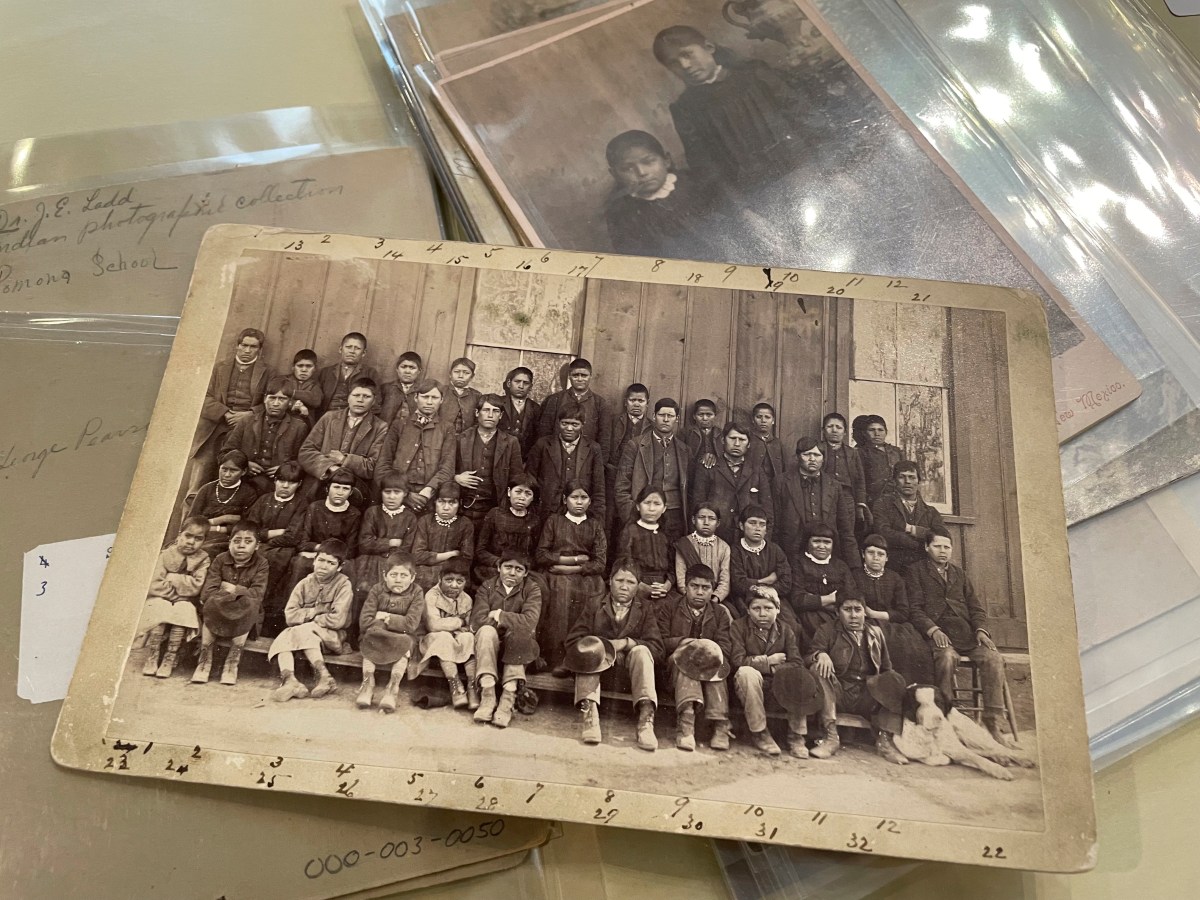
Boarding school review prompts calls for trauma support
Some members of Congress want to ensure that protections are put in place to address ongoing trauma as more information comes to light about the troubled history of Indigenous boarding schools in the United States.
A group of 21 Democratic lawmakers representing states stretching from the Southwest to the East Coast sent a letter last week to the Indian Health Service. They are asking that the federal agency make available culturally appropriate support services such as a hotline and other mental and spiritual programs as the federal government embarks on its investigation into the schools.
Agency officials said in a statement they are reviewing the request and discussing what steps to take next.
Advocacy groups say additional trauma resources for Indigenous communities are more urgent than ever… READ more.
—
SUPPORT INDIGENOUS JOURNALISM. CONTRIBUTE TODAY.
—
Navajo Nation issues vaccine mandate for tribal workers
WINDOW ROCK, Ariz. (AP) — All Navajo Nation executive branch employees will need to be fully vaccinated against the virus that causes COVID-19 by the end of September or be required to submit to regular testing, according to an executive order announced by President Jonathan Nez on Sunday.
The new rules apply to full, part-time and temporary employees, including those working for tribal enterprises like utilities, shopping centers and casinos. Any worker who does not show proof of vaccination by Sept. 29 must be tested every two weeks or face discipline.
“The bottom line is that we do not want to have another large surge in new COVID-19 cases that would harm our health care system and lead to more lives lost,” Nez said in a statement.
More than 80 percent of the tribe’s workers are already fully vaccinated but Nez said getting the rest inoculated is needed to ensure the workforce on the reservation can serve tribal members.
The tribe reported just 30 new cases on Sunday and no new deaths. The Navajo Nation was hard hit by the virus and closed its reservation for months last year. The tribe has confirmed 32,252 COVID-19 cases and 1,397 deaths.
Vaccine appointments are widely available.
Indigenous representation in TV
2021 has been a major year for Natives in television following two influential shows about Native communities. Actress Jana Schmieding appears in both productions and joins us to discuss Indigenous visibility in Hollywood. Plus, more on the wildfires burning in the Pacific Northwest.
Watch here:
—
Sign up here to get ICT’s newsletter
—
Reclaiming space
With a painted red handprint across her mouth, Rosalie Fish ran at her state championship meet in 2019 to bring awareness to the Missing and Murdered Indigenous Women crisis. As she stood among some posters, her then-girlfriend came up to hold her hand.
“I told her, ‘I don’t know if I can,’” said Fish, an enrolled citizen of The Cowlitz Indian Tribe and then a senior at Muckleshoot Tribal Schools on the Muckleshoot Reservation in Auburn, Washington.
“I was already experiencing racism at the time for representing Indigenous people… that already felt extremely vulnerable and isolating. And then to add the fact that I’m queer on top of it? I just kind of shut down from that idea,” she said.
Now a 20-year-old student at the University of Washington, Fish said it’s a moment she deeply regrets… READ more.
Teen’s ‘Remembrance Run’ from tribal school stirs emotions
YERINGTON, Nev. (AP) — The significance of his “Remembrance Run” didn’t sink in until Ku Stevens was finishing up the two-day, 50-mile trek across the high desert from Carson City to Yerington to honor the memories of ancestors who were removed from their families and sent to the Stewart Indian School.
The school that operated on the south edge of Carson City from 1890 to 1980. It was one of about 350 across the United States and Canada created to force the assimilation of Native Americans.
The Yerington High school senior’s great-grandfather, Frank “Togo” Quinn, escaped from the school three times — the first when he was 8 years old, more than a century ago.
Ku Stevens’ father Delmar, told the Las Vegas Sun he first started thinking about a decade ago about a way to help connect his son to his heritage.
Ku Stevens says his run was a lot easier than when his great-grandfather made his first escape in 1913. For one thing, he said, “They didn’t have Gatorade.”
—
FOLLOW ICT ON SOCIAL MEDIA: FACEBOOK, TWITTER, INSTAGRAM, TIKTOK.
—
#ICYMI: Lorraine Loomis, chairperson of the Northwest Indian Fisheries Commission, dies at 81
Women were just emerging as forces in Washington state politics in the 1970s when Lorraine Loomis stepped in as a commissioner of the newly formed Northwest Indian Fisheries Commission.
A one-time fish processor who became fisheries manager of the Swinomish Indian Tribal Community, Loomis by then was already deep into a 50-year fight to protect salmon habitat and fishing rights for Washington’s Indigenous people.
Her death on Aug. 10, 2021, at age 81, brought tributes from across the nation for her decades of work.
“She was really one of a kind,” Nisqually Tribe Chairman Willie Frank III — son of longtime civil and environmental rights leaders Billy Frank Jr. — said Saturday, Aug. 14, as he arrived at Swinomish for a memorial service for Loomis… READ more.
From social media:
Other top stories:
- Cherokee mural wins Girl Scout award:Cherokee Nation citizen Laurel Martich, who has been a Girl Scout since kindergarten, painted a mural that is representative of her heritage.
- A poor measure of need: Researchers urge update to decades-old federal poverty line.
- Bridging gaps in Indian Country, rural America: Oklahoma State University College of Osteopathic Medicine at the Cherokee Nation trains primary care physicians to work in rural and underserved communities.
- Why it takes months to subdue some wildfires: Explainer: ‘I’d say pray for rain.’
- A shameful history:Native historians are compiling what we know about boarding schools, a piece of history unknown or forgotten by many in the United States, though Native communities know it well.
What we’re reading:
- Isle Royale visitors weren’t always told its full Indigenous history. Now, Grand Portage Band and US flags fly together.
- Oklahoma’s Indian gaming industry pays record $167 million to state.
- Bodies of Paiute children believed to be buried at site of former Utah Indigenous boarding school.
We want your tips, but we also want your feedback. What should we be covering that we’re not? What are we getting wrong? Please let us know. Email dwalker@indiancountrytoday.com.

