
This story was originally published by Anchorage Press.
Nathaniel Herz
Anchorage Press
Amid a global spike in fuel costs, the tiny Northwest Alaska villages of Shungnak and Ambler reported some of the most eye-watering prices at the pump in the past few months — more than $25 per gallon for gas in both communities, located on the Kobuk River.
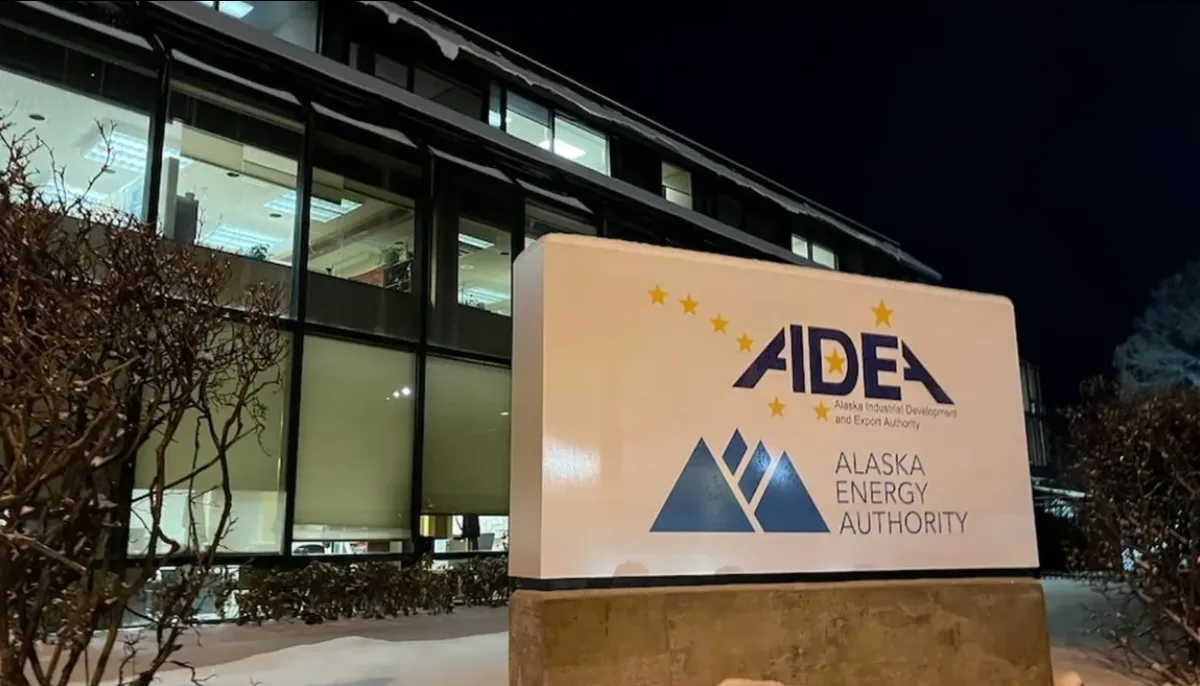
Enter the Alaska Industrial Development and Export Authority, or AIDEA. That’s the state-owned economic development corporation that hopes to build a mining road across the remote area where the villages are located, over the objections of conservation groups and some regional grassroots opposition.
In recent weeks, the authority has written $25,000 assistance checks to Shungnak, Ambler and a third village in the area, Kobuk, according to documents obtained by the Anchorage Press through a public records request.
The city government of Ambler, population 275, will discuss how to allocate the cash at a council meeting this week, the city clerk said Wednesday. In Shungnak’s case, the contribution went toward buying each household 42 gallons of gas or heating fuel, said Billy Lee, a member of the village’s tribal council, the entity that accepted the check.
That’s a little less than a small rural home might use during a month in the winter.
Up until AIDEA’s donation, Lee said, gas prices were so high that “none of us could even leave town to do any hunting or fishing or anything like that — we were kind of landlocked.”
“People were able to go out and get some fish and maybe a moose or two,” Lee said in a phone interview. “The feeling that I get is it was a real good gesture on AIDEA’s behalf.”
Lee said he didn’t know whether the contribution was initiated by AIDEA or a request from Shungnak. Fuel prices in the village have fallen sharply in recent weeks after a barge delivery, he added.
In Kobuk, a resident said the assistance money was divided between 33 households. Each received a credit for some $750 in fuel; diesel stove oil in the village is currently $15.45 a gallon.
Lawmakers, during Alaska’s annual legislative session earlier this year, took action to blunt the impact of higher fuel prices, offering support to school districts and $200 in supplemental oil-wealth payments to each resident.
Nonetheless, communities across the state beyond Kobuk, Ambler and Shungnak are facing painfully high prices and elected leaders have said they’re worried residents may struggle to get through winter.
Lower on the Kobuk River, residents of the village of Kiana pay $8.76 a gallon for gas and $9.53 a gallon for heating fuel, according to data collected by the Northwest Arctic Borough; villages farther south, in the Bristol Bay region, have reported fuel prices as high as $15 a gallon.
An AIDEA spokesperson said the agency’s executive director, Randy Ruaro, was traveling Wednesday, and he didn’t respond to emailed questions from the Press — including about who decided to issue the payments. The agency is a self-funded state corporation, meaning that while its assets belong to the public, its finances are technically separate from Alaska’s main operating fund and the Legislature’s budget process.
Information in the documents released by AIDEA to the Press shows that the money for Kobuk and Ambler came from an agency account dedicated to development of the mining road; that account data was not included in the payment records for Shungnak.
News of the assistance from AIDEA rippled across Northwest Alaska in recent weeks, in part because of the narrow scope and broader political implications of the donations from an agency with a statewide mandate.
Ambler, Shungnak and Kobuk are the three villages in the area of the upper Kobuk River — a remote region that happens to hold rich deposits of copper, zinc and cobalt. Mining companies have eyed the area for decades and one, Ambler Metals, earlier this year applied for a key permit to build a $1.3 billion mine.
The project is proposed in an area that’s more than 150 miles from Alaska’s road system.
Getting its valuable copper and zinc concentrate to market would require construction of a new 200-mile haul road across undeveloped land and part of Gates of the Arctic National Preserve — connecting Alaska’s Dalton Highway with the Upper Kobuk region.
AIDEA is leading development of the road project and spent the summer doing fieldwork to collect environmental data; construction has not started and litigation over permitting has been ongoing for years.
Its development efforts have support from the administrations GOP Alaska Gov. Mike Dunleavy and President Donald Trump, who mentioned the road at a Tuesday rally in Wasilla. Proponents say the project would bring employment and cash income to an area where full-time jobs are otherwise scarce — and could also lower prices of shipped-in goods like groceries and fuel.
Across the Northwest Arctic Borough, which extends 150 miles west of the Upper Kobuk to the Chukchi Sea coast, residents’ and elected leaders’ opinions about the road and mining projects are mixed and often nuanced — balancing potential economic benefits against risks posed by road construction and possible spills to the region’s longtime culture of subsistence harvests.
There are also strong pockets of grassroots opposition, with multiple local, Indigenous and conservation groups that have fought AIDEA’s plans for the road.
Observers who learned of AIDEA’s assistance contributions to the Upper Kobuk villages in recent weeks said the political implications were obvious.
“I’m sure there’s goodwill that’s intended to be built, but I’m fine with that,” said Craig McConnell, the borough Assembly president. “If the opposing side wants to make a contribution, they can do so and build the same goodwill. My interest is: Let’s help our people.”
While the whole borough is facing steep prices for fuel amid the global crunch, McConnell said the three Upper Kobuk villages are among those that most urgently need support — though he noted a fourth community, Noatak, could use help, too.
Noatak, population 570, is in a different watershed from the Upper Kobuk villages and wouldn’t be directly affected by the proposed road and mine. But its gas price is just as high: It was $24.95 a gallon this week, according to an employee at the store where it’s sold.
The village has not received any assistance from AIDEA, according to Tristan Ashby, Noatak’s tribal administrator. Community members there recently learned the agency had supported the other villages, Ashby said.
The high prices in Noatak, he added, have meant that some people who typically hunt in the fall haven’t been able to go out — or have waited to hunt by snowmachine instead of by boat so that they’ll use a little less gas.
“There are other villages that are in crisis,” Ashby said. “If there’s any assistance, we greatly appreciate that for reducing the cost or assisting those in need.”
Max Graham contributed reporting.
This story was originally published in the Anchorage Press. Subscribe here.
